"Competitor X is offering the same thing for half the price. Why should we pay more for your solution?" Every salesperson has heard this objection, felt that knot in their stomach, and struggled to respond without sounding defensive or desperate. The prospect has reduced your differentiated solution to a commodity comparison—and the lower price is winning.
Prospects compare line-item prices without considering implementation costs, long-term value, or risk factors. The salespeople who win these conversations don't compete on price—they reframe the discussion entirely.
This guide gives you three proven battlecard scripts for handling "they're cheaper" objections, along with the psychology behind why they work and how to adapt them to your specific competitive situations. Master these approaches, and you'll transform price conversations from deal-killers into deal-makers.
When a buyer says another option is cheaper, clarify the comparison before responding. Ask which requirements, implementation costs and outcomes are included. The answer determines whether you need a scope adjustment, a value explanation or an honest acknowledgement of the budget gap.
The Psychology Behind Price Objections
Understanding why prospects raise price objections helps you respond more effectively than having the perfect comeback. Most "they're cheaper" objections aren't really about price at all—they're about value perception, risk assessment, or negotiation leverage.
Value confusion occurs when prospects can't articulate the specific difference between your solution and cheaper alternatives. When value proposition isn't crystal clear, price becomes the default differentiator.
Risk minimization drives many price objections. Prospects often choose lower-priced options not because they're better, but because they're safer—if the cheaper option doesn't work out, at least they didn't waste much money. This risk-averse mentality particularly affects decision-makers who don't fully understand the technical differences between solutions and are protecting themselves from mistakes.
Negotiation tactics masquerade as genuine price concerns. Many prospects are trained to use competitor pricing as leverage, regardless of whether they'd actually switch to save money.
Budget constraints represent the most legitimate price objections. Some prospects genuinely can't afford your solution, regardless of value.
Pro Tip: When you hear "Competitor X is cheaper," pause before responding. Your first instinct might be to defend your pricing or immediately offer a discount—both mistakes. Instead, ask a clarifying question that reveals what's actually driving the objection: "Help me understand what you're comparing between the two options?" This question surfaces whether this is about price, value, or something else entirely.
Battlecard Script 1: The Total Cost of Ownership Reframe
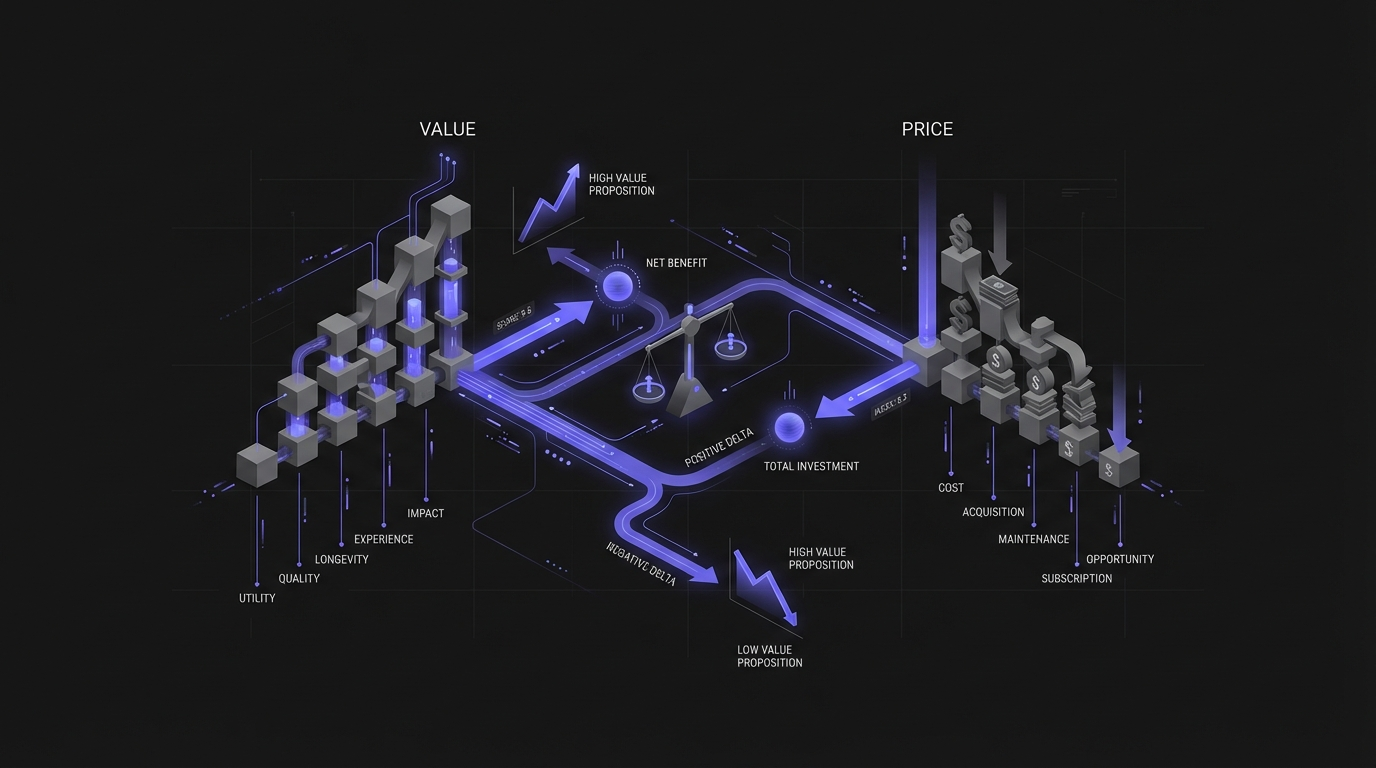
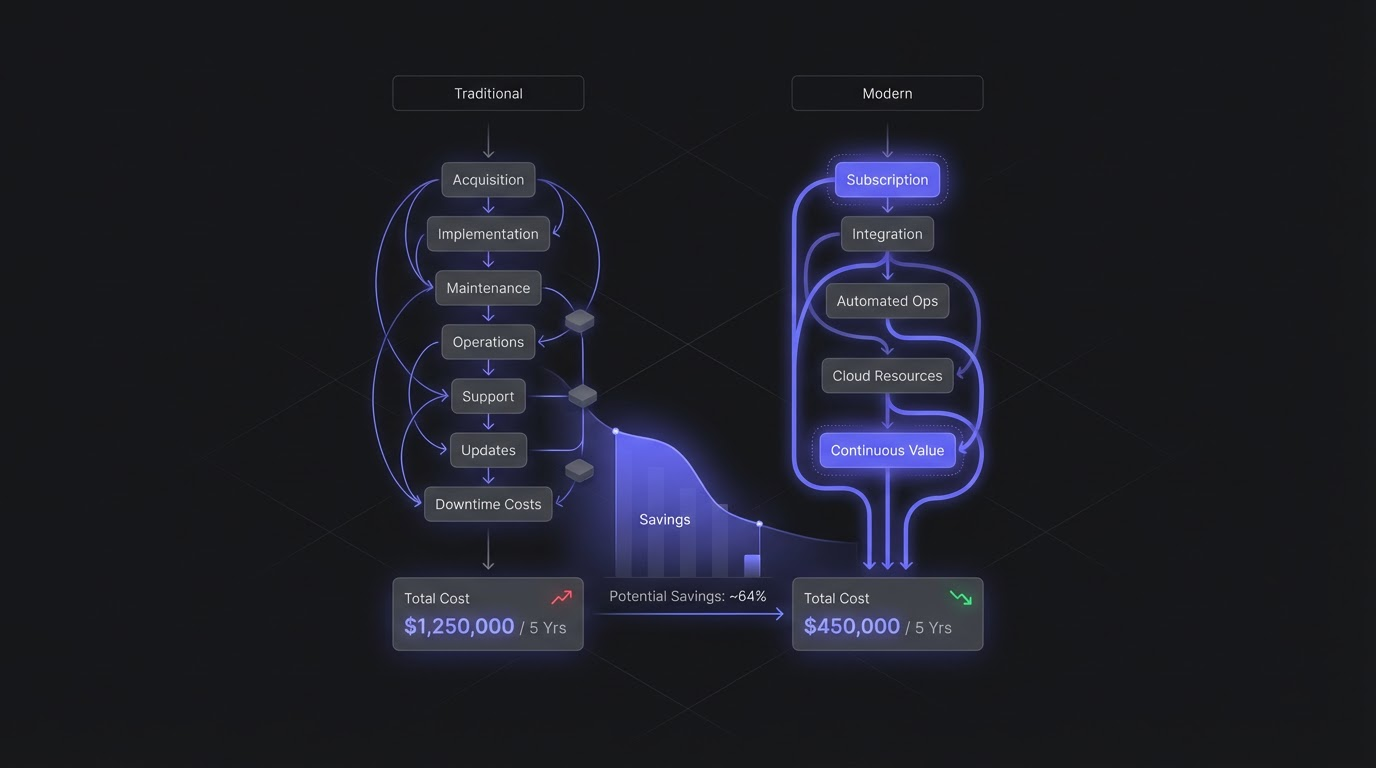
The most effective response to "they're cheaper" isn't to defend your price—it's to expand the cost comparison beyond the initial purchase price. The Total Cost of Ownership (TCO) script reveals hidden costs that prospects overlook when making superficial price comparisons.
The Setup: When a prospect mentions a cheaper competitor, acknowledge their observation while broadening the cost perspective: "I'm not surprised their upfront pricing looks attractive. Most of our customers initially compared us to [competitor] for the same reason. What they found when they looked deeper was that the implementation costs, ongoing expenses, and hidden fees made [competitor] more expensive over time."
The Framework: Break down TCO across five categories that cheaper competitors typically overlook:
Implementation costs include setup time, training requirements, data migration, and technical integration. "With [competitor], you'll need [specific implementation requirement] that typically costs [dollar amount] and takes [timeframe]. Our solution includes [included implementation support], which saves our customers [specific amount]." The more specific you are about competitor implementation requirements, the more credible your comparison becomes.
Ongoing operational costs include staffing, maintenance, updates, and incremental expenses that accumulate over time. "[Competitor] requires [specific ongoing requirement: additional staff, manual processes, third-party tools] that most companies underestimate. Our customers typically spend [specific amount] on these ongoing costs versus [competitor amount] with [competitor]." Use real numbers from customers who switched from the cheaper competitor.
Risk and remediation costs include downtime, security incidents, compliance failures, and recovery efforts. "When [competitor] experiences [specific problem type that they're known for], companies typically spend [specific amount] on remediation and lose [specific amount] in productivity. Our [specific feature or approach] prevents these issues entirely, which saved [customer name] [specific amount] last year." Specific, recent examples make these risks concrete rather than theoretical.
Scaling and growth costs include upgrade expenses, additional users, and expansion fees that accumulate as companies grow. "[Competitor's] pricing model charges for [specific scaling cost], which means you'll pay [specific additional amount] as you grow from [current state] to [future state]. Our pricing includes [included scaling benefit], which means [customer name] saved [specific amount] when they grew from [specific growth scenario]."
Switching costs include data extraction, retraining, process redesign, and business disruption if the cheaper solution doesn't work out. "If [competitor] doesn't work out, switching typically costs [specific amount] and takes [specific timeframe]. Many of our customers tried [competitor] first and ended up paying twice—once for [competitor] and again for a solution that actually worked." These switching costs create powerful risk aversion to choosing poorly.
The Close: Bring TCO back to a clear comparison: "When you add up implementation, ongoing costs, risk exposure, and scaling expenses, most companies find that [competitor] actually costs [specific percentage] more over [timeframe], despite the lower upfront price. Would it be helpful if I walked through a TCO analysis specific to your situation?"
Pro Tip: Create a simple TCO calculator spreadsheet that you can customize in real-time during sales conversations. Input the prospect's specific situation (user counts, usage patterns, growth plans) and show live calculations comparing your total costs versus competitor's total costs. Visual comparisons are far more persuasive than verbal claims.
Battlecard Script 2: The Risky Choice Revealed
The Risky Choice script positions cheaper alternatives as precisely that—cheaper, but riskier. This approach reframes price differences as insurance against specific, credible risks that materialize for companies choosing the lower-cost option.
The Setup: Acknowledge the price difference while signaling that it reflects different risk profiles: "You're right that [competitor] costs less upfront. The question is whether that lower price is worth the risks that come with it. Most of our customers considered [competitor] but decided those risks weren't worth the savings."
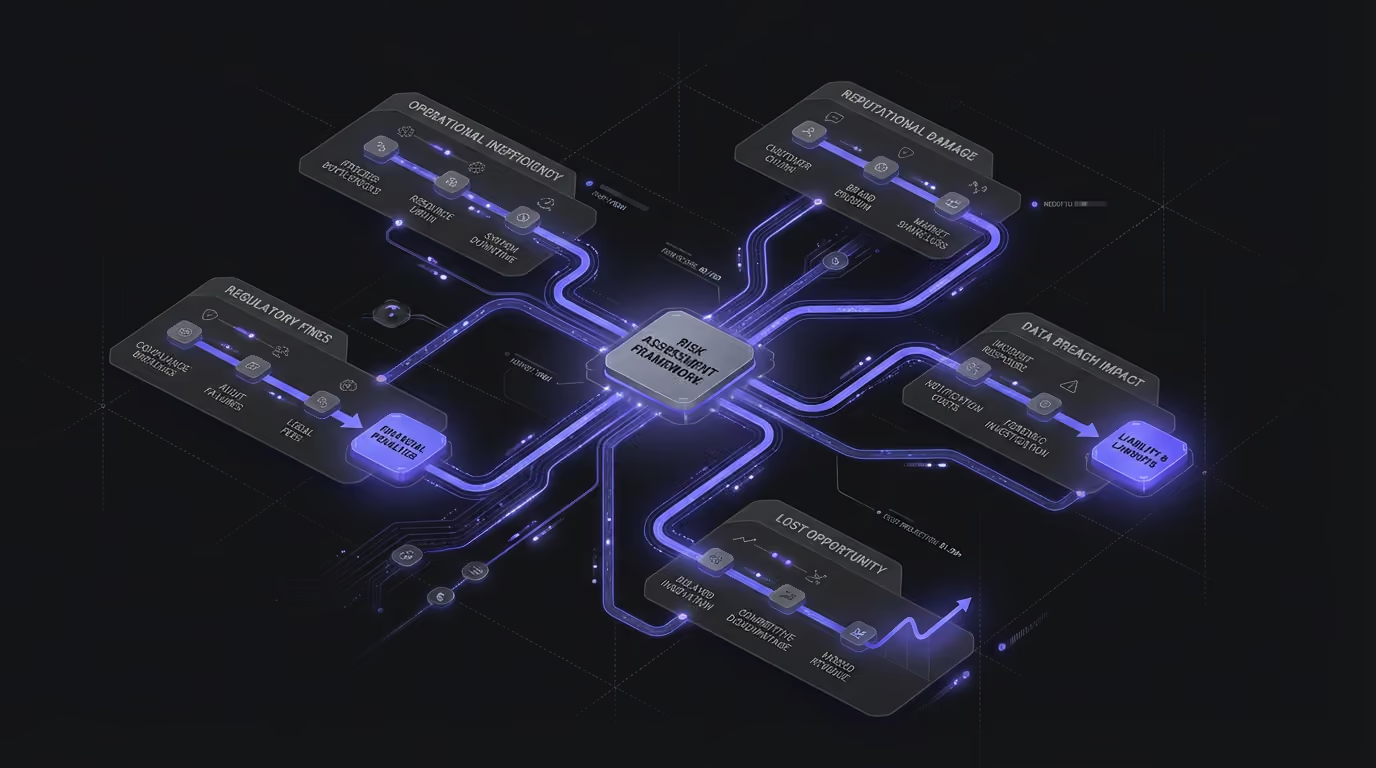
The Framework: Document specific, credible risks associated with the cheaper competitor. The most effective risks are those that have actually materialized for real customers—making them concrete rather than hypothetical.
Implementation and adoption risk: "[Competitor] requires [specific implementation challenge], which means [specific negative outcome: longer rollout, lower adoption rates, change resistance]. [Customer name] initially chose [competitor] but switched to us after [specific timeframe] because [specific adoption problem]. They lost [specific amount] in the process and still had to pay for a working solution." Real customer stories make these risks credible rather than speculative.
Performance and reliability risk: "[Competitor] experiences [specific performance issue: downtime, slow processing, feature gaps] under [specific conditions that the prospect likely faces]. [Customer name] learned this the hard way when [specific incident that caused business impact]. Our solution handles [specific scenario] without issues, which is why [customer name] switched after [specific negative experience]."
Security and compliance risk: "[Competitor] lacks [specific security certification or compliance feature], which creates risk for [specific regulatory requirement or business need]. When [customer name] faced [specific compliance audit or security review], [competitor] couldn't meet [specific requirement], which forced them to switch mid-contract at significant cost." Security and compliance risks particularly resonate with larger enterprises and regulated industries.
Vendor viability risk: "[Competitor] is [funded by/backed by specific investors with specific concerns] or has [specific business model risk: heavy dependence on one product, customer concentration issues, growth challenges]. If they're acquired or shut down, you'll be forced to switch at the worst possible time. Our [specific financial stability metric, customer count, growth rate] gives you confidence we'll be here for the long term." This risk particularly concerns decision-makers who've been burned by failed vendors before.
Support and service risk: "[Competitor] offers [specific support limitation: slow response times, offshore support, limited expertise]. When [customer name] had [specific critical issue], it took [specific timeframe] to resolve and cost them [specific business impact]. Our [specific support advantage: response time, expertise level, dedicated resources] means [customer name] typically resolves issues [specific timeframe and outcome]." Support risks resonate strongly with technical buyers and implementation teams.
The Close: Make the risk-reward tradeoff explicit: "For the [specific monthly/yearly savings] you'd get with [competitor], you're accepting [specific risk]. Is that a tradeoff you're comfortable making? Most of our customers decided that the peace of mind and proven results were worth the investment."
Pro Tip: Research actual customer experiences with the cheaper competitor—social media, review sites, and public case studies often reveal specific problems that you can reference credibly. "Companies using [competitor] report [specific issue] on [review platform]" is far more persuasive than theoretical concerns.
Battlecard Script 3: The Outcome Investment Reframe
The Outcome Investment script shifts the conversation from what you're charging to what the prospect will achieve. This approach works best when you can credibly demonstrate superior outcomes that justify premium pricing.
The Setup: Pivot from cost to return: "Price is definitely important. The more important question is which solution gives you the best return on that investment. Our customers typically pay more upfront but generate [specific outcome benefit] that makes the higher price irrelevant."
The Framework: Quantify the specific outcomes your solution delivers that the cheaper alternative can't match. The most powerful outcome comparisons are those that translate directly into business impact metrics.
Time to value acceleration: "[Competitor] typically takes [specific timeframe] to implement and start delivering results. Our customers are seeing value within [specific shorter timeframe], which means [customer name] started achieving [specific outcome] [specific timeframe] earlier. That faster time-to-value was worth [specific dollar amount] to them—far more than our price difference." Time-to-value particularly appeals to executives and project sponsors accountable for rapid results.
Productivity and efficiency gains: "[Competitor] requires [specific manual process or limitation], which costs [specific time or resource impact]. Our automation and [specific feature] eliminate that, which saved [customer name] [specific hours or FTE count]—equivalent to [specific dollar value] annually. That ongoing savings far exceeds our price difference." Productivity gains resonate with operational managers and implementation teams.
Revenue and growth impact: "[Competitor] lacks [specific capability that drives revenue], which limits [specific growth opportunity]. [Customer name] used our [specific feature] to achieve [specific revenue outcome] within [specific timeframe]. That single result delivered [specific ROI multiple] on their investment in our solution." Revenue impact is the ultimate outcome justification for premium pricing.
Risk reduction and compliance: "[Competitor]'s approach creates [specific risk: audit exposure, security vulnerability, compliance gap]. Our solution eliminates that risk, which saved [customer name] from [specific potential cost or regulatory penalty]. When you're dealing with [specific high-stakes scenario], that risk reduction is worth far more than our price difference." Risk reduction particularly resonates with compliance officers, security leaders, and regulated industries.
Competitive advantage: "[Competitor]'s [specific limitation] means you'll have the same capabilities as everyone else using their solution. Our [unique feature] gives [customer name] a competitive advantage in [specific business area], which they credit directly to our solution. In [specific market context], that advantage is worth far more than our price difference." Competitive advantage appeals to strategic leaders and differentiation-focused companies.
Scalability and future-proofing: "[Competitor] hits limitations at [specific scale or use case], which means you'll need to migrate or upgrade sooner. Our solution scales to [specific larger scope], which means [customer name] won't face disruption or additional costs as they grow. That long-term flexibility saved them [specific migration or upgrade cost] and avoided [specific business disruption]." Scalability appeals to growing companies and forward-thinking leaders.
The Close: Translate outcomes into return on investment: "When you factor in [specific outcome benefit], our solution delivers [specific ROI percentage or multiple] versus [competitor's ROI]. The higher price pays for itself through [specific timeframe and outcome]. Would it be helpful if I modeled the ROI for your specific situation?"
Pro Tip: Build outcome case studies for each of your key differentiating features. For each feature, document a customer who achieved measurable business impact, quantify that impact in dollars or percentages, and calculate the ROI multiple. These specific outcomes become powerful proof points in outcome investment conversations.
Adapting Scripts to Your Specific Competitive Situations
These three scripts provide frameworks, but the most effective responses are customized to your specific products, competitors, and customer situations. The process of adapting these scripts strengthens your competitive positioning and prepares your entire team for price objections.
Competitor research deep dives provide the raw material for customized scripts. For each major competitor, document their pricing model, implementation requirements, known limitations, customer complaints, and failure cases. Review sites like G2, Capterra, and TrustRadius often reveal specific customer experiences you can reference credibly. Social media searches for competitor name plus "problem," "issue," or "switch" frequently surface real customer pain points.
Customer interview programs capture authentic stories that make your scripts credible. Interview customers who switched from cheaper competitors: What problems did they experience? What did it cost them? What made them finally switch? How do they describe the difference? These authentic customer stories in their own words are far more persuasive than theoretical comparisons you construct yourself.
Financial modeling tools make your TCO and ROI claims concrete and defensible. Build spreadsheets that model total costs over 3-5 years for both your solution and key competitors, including all categories of costs: licensing, implementation, training, support, scaling, and risk. Similarly, build ROI models that quantify the business impact of your differentiating features. These models provide structure for your scripts and can be shared with prospects who want detailed analysis.
Objection handling roleplay refines your delivery and reveals weaknesses in your scripts. Practice price objection scenarios with sales teammates, customer success team members, or even friendly customers. Ask them to push back aggressively and identify where your reasoning feels weak or defensive. The most effective scripts evolve through this iterative refinement based on real feedback rather than theoretical construction.
Sales enablement integration ensures consistent execution across your entire sales organization. Document your customized scripts in sales battlecards that include the exact language to use, proof points and evidence, and guidance on when to use each approach. Include competitive intelligence sheets that summarize each competitor's pricing, limitations, and customer complaints. The most effective battlecards are living documents updated continuously based on real customer conversations and competitive developments.
Pro Tip: Record your actual sales conversations (with permission) and review how your team handles price objections. Which approaches resonate? Which fall flat? Where do prospects push back effectively? Use these real conversation insights to refine your scripts rather than relying on theoretical approaches that might not work in practice.
Common Mistakes That Undermine Your Positioning
Even the best battlecard scripts fail when delivered poorly. Avoiding common mistakes matters as much as having the right content in your scripts.
Defensive responses make price objections worse. When you sound defensive, angry, or dismissive about competitor pricing, you validate the prospect's concern and signal insecurity about your value. The most effective responses remain calm, confident, and curious—acknowledging the prospect's perspective while offering additional context that transforms their understanding. You're not arguing against their observation; you're expanding their frame of reference.
Immediate discounting reinforces that your price is negotiable rather than justified. When you immediately offer a discount in response to competitor comparisons, you confirm that your pricing was arbitrary rather than value-based. Better to hold firm on price while using TCO, risk, or outcome reframing to justify your positioning. If discounting becomes necessary, it should come after value justification, not before.
Feature-by-feature comparisons play into competitor strengths. Cheaper competitors often claim feature parity—your features might be better, but they have versions of everything. Feature comparisons devolve into checklist wars that cheaper options often win on paper. Instead, focus on outcomes, experiences, and results that exist beyond feature lists. The best conversations transcend features entirely to talk about business impact.
Overconfidence or arrogance alienates prospects. When you dismiss competitors as terrible or assert that only fools would choose them, you insult prospects who are genuinely considering those options. Effective positioning acknowledges competitor strengths while highlighting where your solution delivers superior value. You're not attacking competitors; you're helping prospects make fully informed decisions.
Generic claims without proof lack persuasive power. Saying "our solution is better" without specific evidence sounds like sales puffery. Every claim should be supported by specific examples, customer stories, metrics, or credible third-party validation. The more specific and recent your proof points, the more credible your positioning becomes.
One-size-fits-all responses miss prospect-specific context. The same script won't work equally well for every prospect, industry, or use case. The most effective salespeople adapt their approach based on what they've learned about the prospect's specific situation, priorities, and concerns. Customization shows you've been listening and makes your response feel tailored rather than rehearsed.
Pro Tip: After each price objection conversation, document what worked and what didn't. Which questions resonated? Which evidence changed the prospect's mind? Where did they remain unconvinced? These post-conversation notes build institutional knowledge that continuously improves your entire organization's objection handling over time.
Training Your Team on Price Objection Handling
Individual salespeople mastering these scripts helps, but organizational transformation requires systematic training and reinforcement. The most effective companies make price objection handling a core competency rather than an individual skill.
Battlecard development workshops involve your entire sales organization in creating and refining scripts. Instead of handing down scripts from marketing or sales leadership, facilitate collaborative sessions where frontline salespeople share what's actually working in their conversations. This collaborative approach produces better content and builds ownership and commitment to using the scripts consistently.
Peer learning sessions let top performers share their approaches with the broader team. Have your best objection handlers record roleplay videos or lead live training where they demonstrate their techniques and explain their thinking. These peer-to-peer learning moments are often more credible and impactful than training delivered by sales leaders or external consultants.
Call review programs provide ongoing coaching and refinement. Regularly review recorded sales calls where price objections surfaced, discuss what worked and what didn't, and identify patterns across conversations. These collaborative reviews create continuous learning loops where the entire organization gets smarter about objection handling based on real customer interactions rather than theoretical approaches.
Competitive intelligence sharing ensures everyone has access to the latest information about competitor pricing, limitations, and customer experiences. Create shared repositories where salespeople can document what they're hearing from prospects about competitors: new pricing offers, changing positioning, customer complaints, switching stories. This crowdsourced intelligence keeps your battlecards current and relevant.
Metrics and accountability reinforce the importance of objection handling. Track how often price objections come up, which approaches are most effective at overcoming them, and conversion rates when different scripts are used. Share these metrics widely and recognize top performers. When objection handling becomes a visible, measured competency, it gets the attention and focus it deserves.
Pro Tip: Create a "price objection win of the month" recognition where salespeople share stories of successfully overcoming price objections using specific scripts or approaches. These success stories reinforce what works, create competitive pride in objection handling, and build a library of real examples that newer salespeople can learn from.
Measuring the Impact of Improved Objection Handling
Like any sales capability, price objection handling should be measured and optimized over time. The right metrics reveal whether your battlecard scripts are actually improving outcomes or just making your sales team feel more confident.
Price objection frequency tracks how often these objections come up in the first place. If you're hearing "they're cheaper" in every conversation, your value proposition might be unclear or your pricing might be genuinely out of market. Successful objection handling should reduce objection frequency as your reputation and positioning improve, not just help you recover when objections occur.
Objection-to-opportunity conversion measures how often price objections progress to opportunities rather than stalls or losses. Track specifically which objection approaches correlate most strongly with continued engagement. The scripts that consistently convert objections into next steps should be taught more broadly and refined further.
Win rate against cheaper competitors shows whether your positioning is actually effective in head-to-head situations. Track win rates specifically in competitive situations where price was the stated differentiator. Improving these win rates demonstrates that your objection handling is working in the situations that matter most.
Discounting frequency and depth reveals whether your objection handling is reducing the need to discount on price. Effective objection framing should decrease both how often you discount and how deeply you discount when you do. Maintaining price integrity while winning deals is the ultimate sign that your value positioning is working.
Deal velocity impact measures whether better objection handling speeds up deals or slows them down. Some salespeople worry that detailed TCO analysis and ROI modeling will lengthen sales cycles. In practice, better objection handling often accelerates deals by resolving concerns decisively rather than leaving them to fester. Track whether deals with price objections close faster or slower after implementing your scripts.
Pro Tip: A/B test different objection handling approaches across your sales team. Have half the team use one approach while the other half uses a different approach, then compare conversion rates and deal outcomes. These controlled experiments reveal what actually works in your specific market rather than relying on generic best practices.
Conclusion: From Price Panic to Competitive Confidence
Price objections don't have to be deal-killers. With the right battlecard scripts and training, your sales team can transform "they're cheaper" conversations from desperate defenses into confident reframing that highlights your true value.
The companies that consistently win against cheaper competitors don't have better products or lower costs—they have better conversations. They don't panic when prospects mention competitor pricing. They don't immediately offer discounts. They don't argue feature-by-feature comparisons. Instead, they expand the conversation to total cost of ownership, reveal the risks behind lower prices, and focus on outcomes rather than inputs.
Your next sales conversation is an opportunity to put these approaches into practice. Listen for the price objection, pause before responding, and deploy the script that fits the situation. You'll find that most price objections aren't objections at all—they're requests for better understanding of the value you deliver. Provide that understanding clearly and confidently, and you'll win deals you might have lost before.
Ready to transform your competitive positioning? Start Free - Create a free Lensmor account and start using its event intelligence tools. Discover which competitors will be at your next trade show, analyze their pricing and positioning, and prepare your team to win when price objections arise.
Related reading: Learn more about event intelligence and trade show ROI
Related reading: pre-show competitor analysis template.