
You know exactly who your direct competitors are. You've memorized their feature lists, practiced your positioning against them, and scanned the exhibitor list to see which ones will be at your next trade show. But here's the uncomfortable truth: The competitors most likely to derail your deals at that show aren't the ones you're watching.
For a step-by-step framework, see our pre-show competitor analysis template.
These hidden competitors steal deals not because they're better, but because they're invisible to your competitive radar until it's too late.
This guide exposes the hidden competitors you're ignoring at trade shows, teaches you to recognize the less obvious threats, and shows you how to build competitive intelligence that captures the full landscape of alternatives your prospects are actually considering. The companies that master this approach don't just compete better—they compete smarter.
The alternative to your product may be another vendor, an internal workflow, a service provider or a different budget priority. Pre-show competitor research should include those options instead of stopping at the companies in your category.
The Iceberg Problem: Visible Versus Hidden Competition
Most companies focus their competitive intelligence on the visible portion of the competitive landscape: direct competitors offering similar solutions to similar customers. This makes sense—these are the companies you encounter in sales cycles, the ones analysts compare you against, and the ones you mentally benchmark against. But at trade shows, this narrow competitive focus creates dangerous blind spots.
Direct competitors represent the visible competition: companies in your category, targeting similar use cases, with overlapping feature sets. These are the competitors you research extensively, the ones whose booths you visit, and the ones whose messaging you know intimately.
Adjacent solution providers offer capabilities that overlap partially with your core value proposition. They might not be direct substitutes, but they solve enough of the same problems that prospects consider them as alternatives. For example, a dedicated email marketing platform might compete against a comprehensive marketing automation suite for companies that only need email capabilities. These adjacent providers often have stronger positions in specific niches or use cases that make them surprisingly formidable competitors.
Manual or homegrown alternatives represent one of the most overlooked competitive threats. Many prospects, especially larger enterprises, have built internal solutions or cobbled together combinations of tools that they're actively using rather than buying your solution.
Pro Tip: Ask prospects in trade show conversations what they're currently using to solve the problem your product addresses. The answers often reveal competitors you never considered: spreadsheets, email, manual processes, or combinations of tools you don't think of as competitive. These alternatives are far more entrenched than you realize.
The Adjacent Competitors You're Overlooking
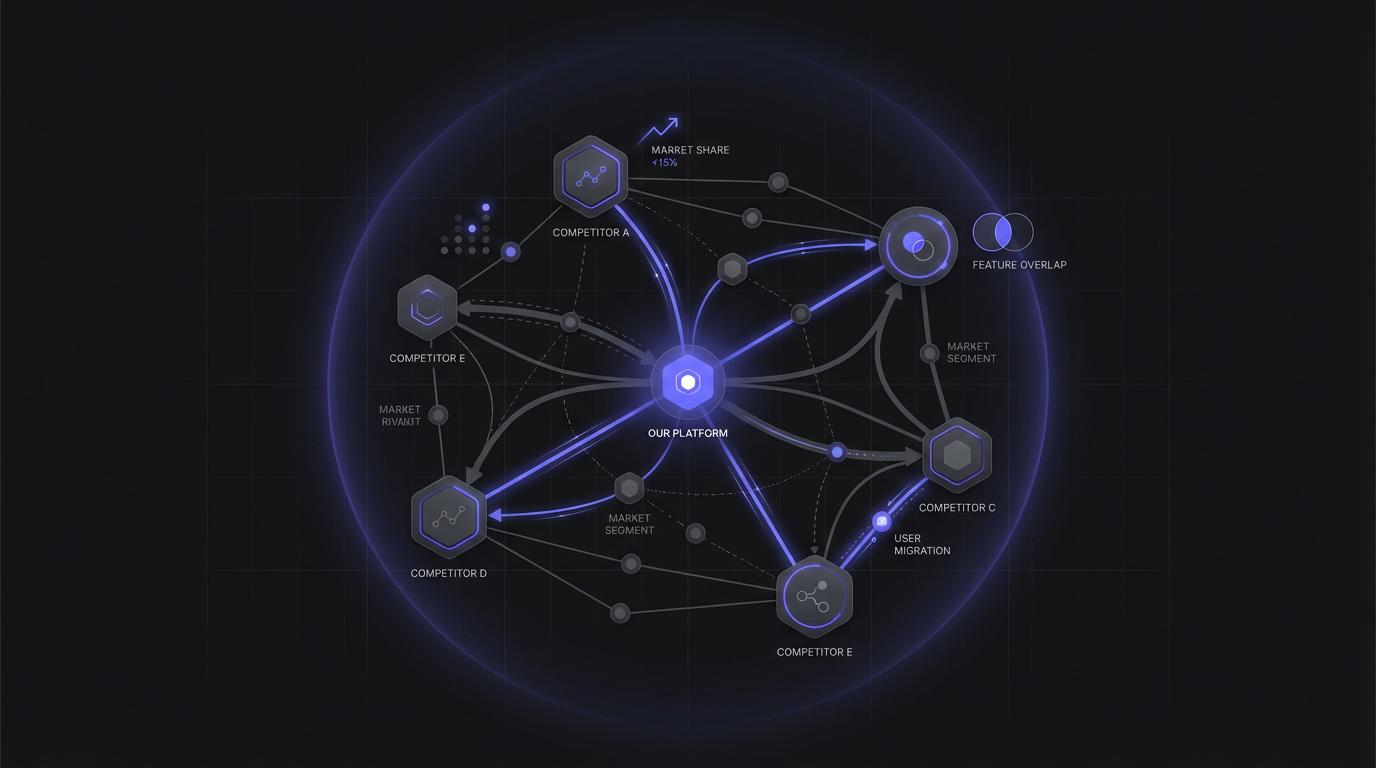
Adjacent competitors pose a particularly insidious threat because they don't fit your mental model of "competition." They're not in your analyst category, they don't appear in competitive comparison matrices, and they rarely come up in sales conversations—until they do, and you've already lost the deal.
Platform competitors offer your specific capability as one feature within a broader platform. A standalone analytics tool competes against a CRM with built-in reporting. A specialized project management tool competes against broader collaboration suites. These platform competitors often have disadvantage in depth but massive advantage in distribution and integration—prospects choose them because they'd rather have one adequate solution than multiple specialized ones.
DIY tool competitors provide no-code or low-code tools that let prospects build their own solutions to problems you address. Companies using workflow automation tools, database platforms with custom interfaces, or business intelligence tools with drag-and-drop dashboards are effectively building your product rather than buying it. These DIY competitors are especially dangerous because prospects become emotionally invested in their custom solutions—recommending your product feels like criticizing their work.
Service provider competitors include agencies, consultants, and managed service providers who offer what you sell as a service rather than a product. A marketing automation platform competes against agencies that manage campaigns manually. A cybersecurity tool competes against managed security service providers. These service competitors lose on scale and consistency but win on customization and personal attention—especially attractive to larger enterprises with complex requirements.
General-purpose tool competitors solve your specific problem with tools designed for broader purposes. Spreadsheets are the ultimate general-purpose competitor, but the list includes communication tools (Slack competing with project management), design tools (Figma competing with specialized prototyping tools), and documentation tools (Notion competing with specialized knowledge management platforms). These general-purpose tools have widespread adoption, familiarity, and often lower cost—making them formidable alternatives.
Pro Tip: Map the full solution ecosystem for your prospects' problems, not just your product category. What are all the ways companies currently solve this problem? What tools do they already have that could be stretched to cover this use case? What workarounds have they created? This ecosystem mapping reveals competitors you'd otherwise miss.
The New Entrants Flying Under Your Radar
Established competitors are predictable—you know their history, their patterns, their strengths and weaknesses. But new entrants bring unpredictability: fresh messaging, aggressive pricing, novel approaches, and most dangerously, the ability to shape prospect perceptions before you even know they exist.
Startups exhibiting for the first time often bring dramatically different messaging and positioning that resonates with prospects tired of established vendors' same-old conversations.
International competitors expanding into new geographies may be established players in their home markets but unknown to you until they appear at your key trade shows. These competitors often bring different business models, pricing structures, or feature priorities that disrupt local competitive dynamics. They may have advantages in specific verticals, use cases, or regulatory environments that make them surprisingly strong competitors despite lack of local brand recognition.
Pivot companies are established businesses that have shifted focus into your category. They might have started in adjacent markets and gradually expanded into your space, or they might be actively pivoting toward new opportunities. These competitors bring existing customer bases, brand recognition, and financial resources that pure startups lack—making them particularly dangerous when they target your category.
Stealth mode competitors have been operating quietly, building capabilities and customer bases without traditional marketing or visibility. By the time they exhibit at trade shows, they often have mature products, referenceable customers, and proven approaches—they just haven't been on your radar. These companies are particularly dangerous because they've been learning and refining in obscurity, often developing differentiated positioning that established competitors struggle to respond to.
Pro Tip: Monitor LinkedIn activity and job postings in your category for companies hiring aggressively for roles related to your product. Rapid hiring often indicates growth and investment that precedes public visibility. Similarly, watch for content marketing from new voices discussing your category's problems—these often signal companies about to go public with their offerings.
The Budget Competitors You're Not Watching
Some of your most dangerous competitors aren't product alternatives at all—they're alternative uses of the same budget. Every prospect has finite resources, and choosing to invest in one initiative often means deferring or abandoning another. These budget competitors are particularly insidious because they're not product comparisons at all—they're priority comparisons.
Internal initiatives compete for the same budget as your product. A company choosing between purchasing your solution versus hiring more staff, expanding into a new market, or investing in other product development faces a priority decision, not a product comparison. Your competitor isn't another vendor—it's another priority.
Complementary technology purchases represent another invisible competitive threat. The prospect evaluating your solution might also be considering investments in adjacent technologies. When budget constraints force trade-offs, they might choose the complementary technology that integrates with their existing stack rather than your specialized solution. These trade-offs happen invisibly to you—you see a stalled deal, not a competitive loss to an alternative priority.
Maintenance and renewal costs compete with new investments. Many companies face pressure to reduce overall technology spending even as individual vendors compete for new budget. In this environment, renewing existing contracts, increasing security spending, or maintaining legacy systems competes directly with new purchases. Your product isn't competing against another product—it's competing against the status quo and overall budget austerity.
Pro Tip: Ask budget questions early in trade show conversations: "What other priorities are competing for this budget?" "What happens if this project doesn't get funded?" "What's your process for prioritizing new investments versus existing commitments?" Understanding the budget landscape reveals competitive threats you'd otherwise miss.
Recognizing Hidden Competitive Signals in Conversations
Hidden competitors reveal themselves in trade show conversations—if you know what to listen for. Prospects rarely say "we're considering this alternative vendor you've never heard of." Instead, they drop clues that become obvious in retrospect if you're listening for them.
Vague timeline references often indicate hidden competitive threats. When prospects say things like "we're exploring options," "we're in early stages," or "we're not sure when we'll make a decision," they might be evaluating alternatives you don't know about. These vague timelines suggest they're still mapping the full landscape rather than moving toward a decision among known options.
Feature fixation on specific capabilities sometimes indicates they've been talking to adjacent competitors. When a prospect emphasizes a specific feature or capability that's core to another type of solution, they may be comparing you against an alternative that approaches the problem differently. For example, a prospect asking a CRM vendor about advanced analytics might be comparing against dedicated analytics tools.
Budget resistance without clear rationale can signal competing priorities. When prospects express budget concerns without specific financial constraints, they might be weighing your solution against other uses of the same money. Understanding what else is competing for their budget reveals competitive threats that aren't product-based at all.
Reference requests for unusual use cases sometimes indicate they're considering alternative solution types. When prospects ask for case studies in industries, company sizes, or use cases that aren't your typical customer profile, they may be exploring whether your flexible enough to compete against more general-purpose solutions they're also considering.
Technical constraint emphasis sometimes reveals DIY or internal solutions. Prospects who focus heavily on integration capabilities, data ownership, or customization requirements might be comparing your solution against internal development efforts or DIY tools. These constraints often reflect existing approaches that your solution needs to displace.
Pro Tip: Train your booth team to ask "what else" questions that surface hidden competitors: "What other approaches are you considering?" "What would happen if you stayed with your current approach?" "What other priorities are competing for this budget?" These questions reveal the full competitive landscape rather than just the direct competitors you already know about.
Building Comprehensive Competitive Intelligence
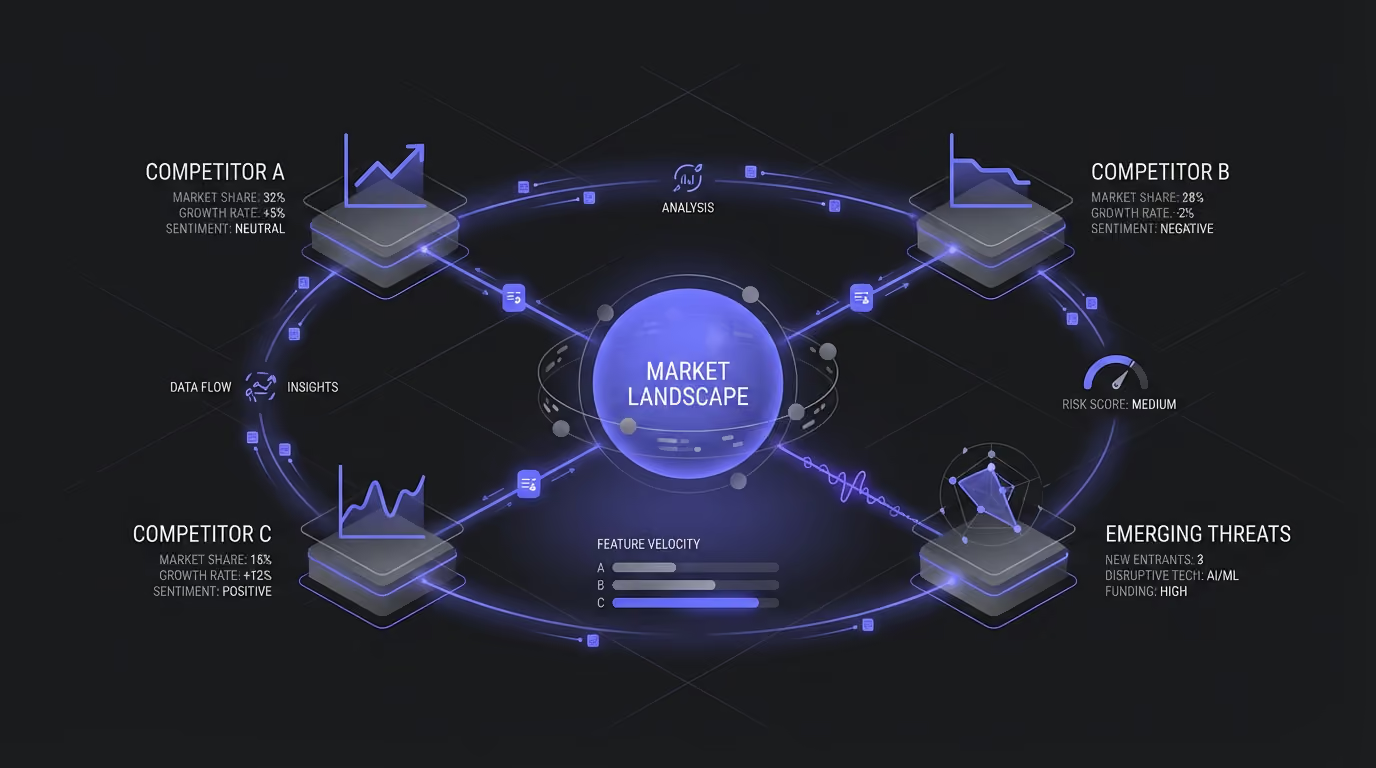
Capturing hidden competitors requires expanding your competitive intelligence beyond direct competitors to include the full ecosystem of alternatives prospects might consider. This broader intelligence transforms how you position, sell, and win at trade shows.
Solution ecosystem mapping identifies all the ways prospects currently solve the problem your product addresses. Map direct competitors, adjacent solutions, general-purpose tools, manual processes, and service providers. For each alternative, document what problems it solves well, where it falls short, and which types of prospects find it appealing. This mapping reveals white space where your differentiation matters most and threats where you're vulnerable to alternatives.
Budget landscape analysis understands what else competes for your prospects' spending. What other initiatives typically take priority? What complementary solutions get purchased instead? What internal investments consume budgets that might otherwise go to your solution? Understanding the budget landscape helps you position your solution as the right priority, not just the right product.
Content and conversation monitoring captures signals from emerging competitors before they're widely known. Monitor content marketing, conference presentations, and social media conversations for companies discussing your category's problems. Often, new competitors establish thought leadership before launching products—giving you early warning of threats on the horizon.
Customer feedback analysis reveals competitors you're missing. Ask lost prospects about alternatives they considered. Ask current customers what they evaluated before choosing you. Ask your implementation team what other tools customers use alongside your solution. These conversations frequently surface competitors that never appear in standard competitive research.
Event intelligence platforms like Lensmor provide comprehensive visibility into which companies are exhibiting, attending, or influencing conversations at trade shows. These platforms reveal not just direct competitors but adjacent solution providers, international entrants, and new companies you might not discover through traditional research.
Pro Tip: Create a simple competitor intelligence log where you capture every alternative mentioned by prospects, regardless of whether you consider it a "real" competitor. Review this log quarterly to identify patterns—prospects consistently mentioning the same alternative probably indicates a real threat you should address explicitly in your positioning and messaging.
Positioning Against Hidden Competitors
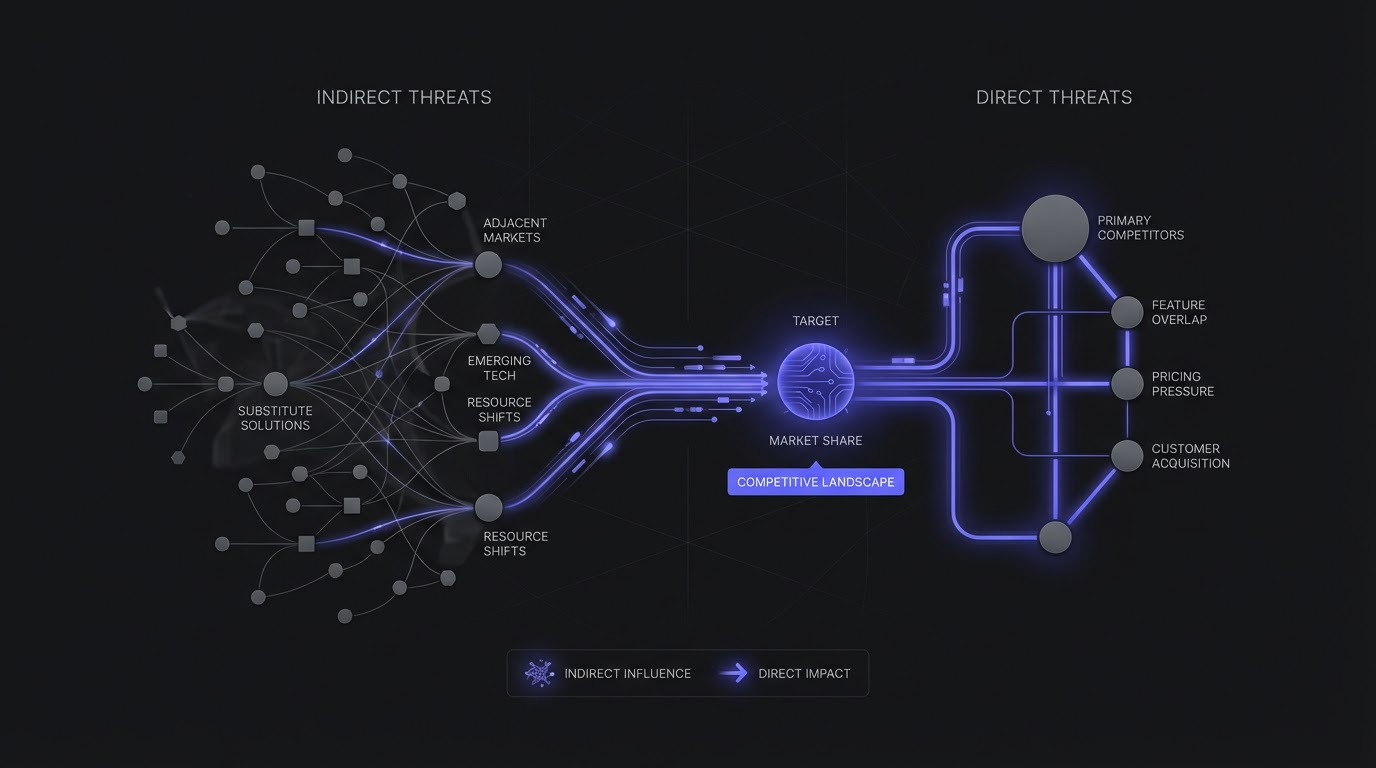
Once you've identified hidden competitors, how do you position against them without sounding defensive or obsessive about alternatives? The most effective positioning acknowledges legitimate use cases for other approaches while highlighting where your specialized solution delivers superior outcomes.
Category reframing helps prospects think about the decision correctly. When competing against platform competitors, reframe the conversation from "this feature versus that platform" to "best-of-breed capability versus general-purpose adequacy." When competing against manual processes, reframe from "buying a tool versus doing it yourself" to "scalable solution versus limited manual approach." The right frame makes your advantages obvious rather than something you need to explain repeatedly.
Use case specificity highlights where your solution excels while acknowledging where alternatives might work fine. "For companies just getting started with [problem], a spreadsheet works fine. But once you hit [specific threshold], our solution delivers [specific outcome] that manual approaches can't match." This specificity positions you as the right choice for specific situations rather than trying to be the right choice for everyone.
Proof points and outcomes should be specific and supportable. Use documented customer results with a clear baseline, period and scope; otherwise show the workflow difference without claiming a numerical improvement.
Emotional connection differentiates beyond feature comparisons. Hidden competitors often win on rational grounds—adequacy, familiarity, lower cost. Counter with emotional benefits: confidence in critical moments, peace of mind from specialized support, pride in using best-in-class tools. These emotional connections often tip decisions in your favor when feature comparisons feel ambiguous.
Integration and coexistence acknowledges that your solution might exist alongside other tools rather than replacing them entirely. "We integrate seamlessly with [platform competitor] for companies that need both our specialized capability and their broader platform." This positioning removes either/or decisions that often favor the platform competitor and positions your solution as complementary rather than threatening.
Pro Tip: Create simple competitive one-pagers for your top hidden competitors that include: who they are, why prospects consider them, where they work adequately, where they fall short, and how to position your solution against them. Train your booth team to reference these natural conversationally rather than sounding defensive.
Monitoring Hidden Competitors Over Time
Hidden competitors don't stay hidden forever. New entrants become established. Adjacent solutions move closer to your category. Internal priorities shift. Continuous monitoring ensures you're not surprised by competitors that were invisible just months ago.
Quarterly competitive landscape reviews keep your intelligence current. Schedule regular reviews where you update competitor profiles, add newly discovered alternatives, and reassess threat levels based on recent prospect feedback. These reviews prevent competitive blind spots from developing over time and ensure your positioning reflects the current reality rather than historical understanding.
Trade show reconnaissance provides real-time competitive intelligence. Walk the show floor, attend competitor sessions, listen to hallway conversations, and collect competitor materials. What messaging are they using? What draws crowds to their booths? What are attendees saying about them? This on-the-ground intelligence is current, specific, and actionable—far more valuable than research conducted months before the event.
Lost prospect debriefs capture competitive intelligence you'd otherwise miss. When prospects choose alternatives, conduct loss interviews to understand what they chose instead and why. These conversations frequently reveal competitors you didn't know about, positioning approaches that resonate, or gaps in your own messaging that leave you vulnerable to specific alternatives.
Team intelligence sharing ensures competitive insights don't stay trapped in individual conversations. Create simple systems for booth staff to share what they're hearing from prospects about competitors: shared notes, daily debriefs, or messaging channels for real-time updates during events. The most valuable competitive intelligence often comes from dozens of small conversations rather than formal research.
Pro Tip: Assign competitive intelligence ownership to a specific person for each major trade show. This person coordinates pre-show research, leads on-the-floor reconnaissance, synthesizes findings into actionable insights, and updates competitive intelligence materials after the event. This accountability ensures continuous improvement rather than repeated mistakes.
Conclusion: From Narrow Focus to Full Awareness
Most companies approach trade show competition with tunnel vision, focusing exclusively on direct competitors while ignoring the broader landscape of alternatives that actually influence prospect decisions. This narrow focus creates dangerous blind spots—hidden competitors who steal deals precisely because you're not watching for them.
The companies that consistently win at trade shows don't just know their direct competitors better. They understand the full ecosystem of alternatives prospects consider: adjacent solutions, platform competitors, manual processes, new entrants, and budget priorities. They position against these alternatives naturally, acknowledge where other approaches work fine, and highlight where their specialized solution delivers superior outcomes. They monitor continuously, update their understanding regularly, and adjust their messaging based on what prospects are actually saying.
Your next trade show is an opportunity to expand your competitive awareness. Map the full solution ecosystem. Ask prospects about alternatives you're not considering. Position against hidden competitors as naturally as you do against direct ones. You'll find that comprehensive competitive intelligence transforms not just your win rate, but your entire understanding of the market you're competing in.
Ready to see the full competitive landscape at your next trade show? Start Free - Create a free Lensmor account and start using its event intelligence tools. Discover which competitors are attending, analyze their positioning, and monitor the full ecosystem of alternatives your prospects are actually considering.
Related reading: Learn more about event intelligence and trade show ROI
Related reading: the complete guide to trade show intelligence.


.avif)