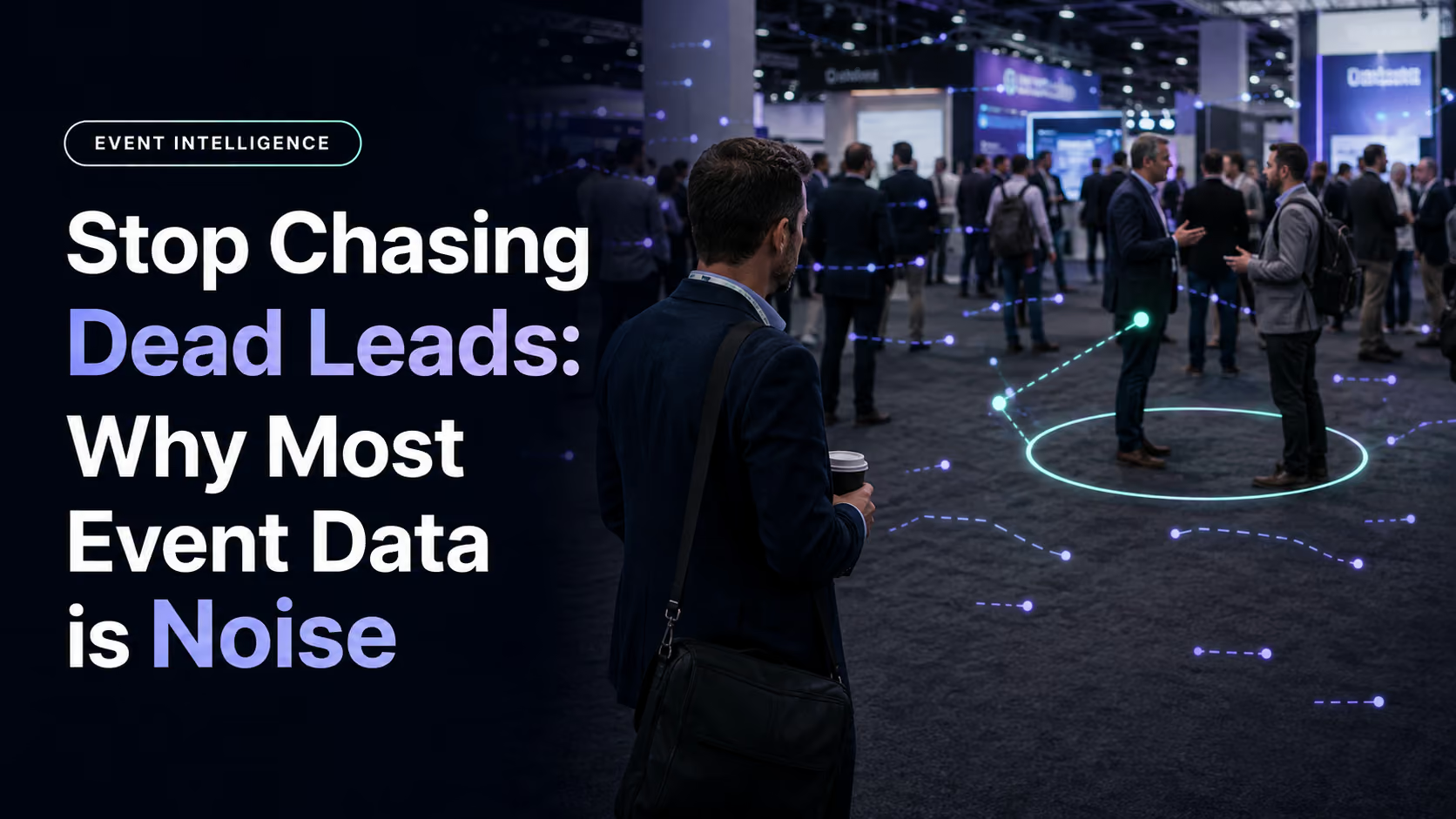
Your team returns from the trade show with 847 leads. Sales is energized, marketing claims victory, and your CRM bulges with new contacts. Three months later, you've converted exactly three of those leads into opportunities. The rest went silent—unresponsive to emails, unreachable by phone, nonexistent in your pipeline.
Contact volume and buying intent answer different questions. Qualify need and fit, then connect a relevant record to an agreed next action.
This guide exposes why event data is so noisy, teaches you to distinguish signal from noise, and shows you how to focus your follow-up on leads that actually convert. The companies that master this approach don't just collect more leads—they collect the right leads and convert them at 3-5x the industry average.
A contact list becomes useful when each record carries relevant context. Review account fit, the conversation or participation evidence, and the next action before passing event contacts to sales. A collected name alone does not establish buying intent.
The Event Data Quality Crisis
Event lists can contain buyers, suppliers, competitors, students and people with no active project. Review the audience and qualification context instead of assigning the same follow-up priority to every record.
This data quality crisis stems from structural features of how trade shows operate. Event organizers prioritize attendance metrics, incentivizing the collection of as many contacts as possible regardless of quality. Booth scanners, badge readers, and business card drops make data collection frictionless but mindless—attendees exchange information for swag, entries to drawings, or simple politeness without expressing genuine interest.
Pro Tip: Track collected contacts, sales-accepted leads and opportunities using consistent definitions and reporting windows. A low conversion rate is a reason to inspect fit, qualification and follow-up, rather than proof of one universal noise threshold.
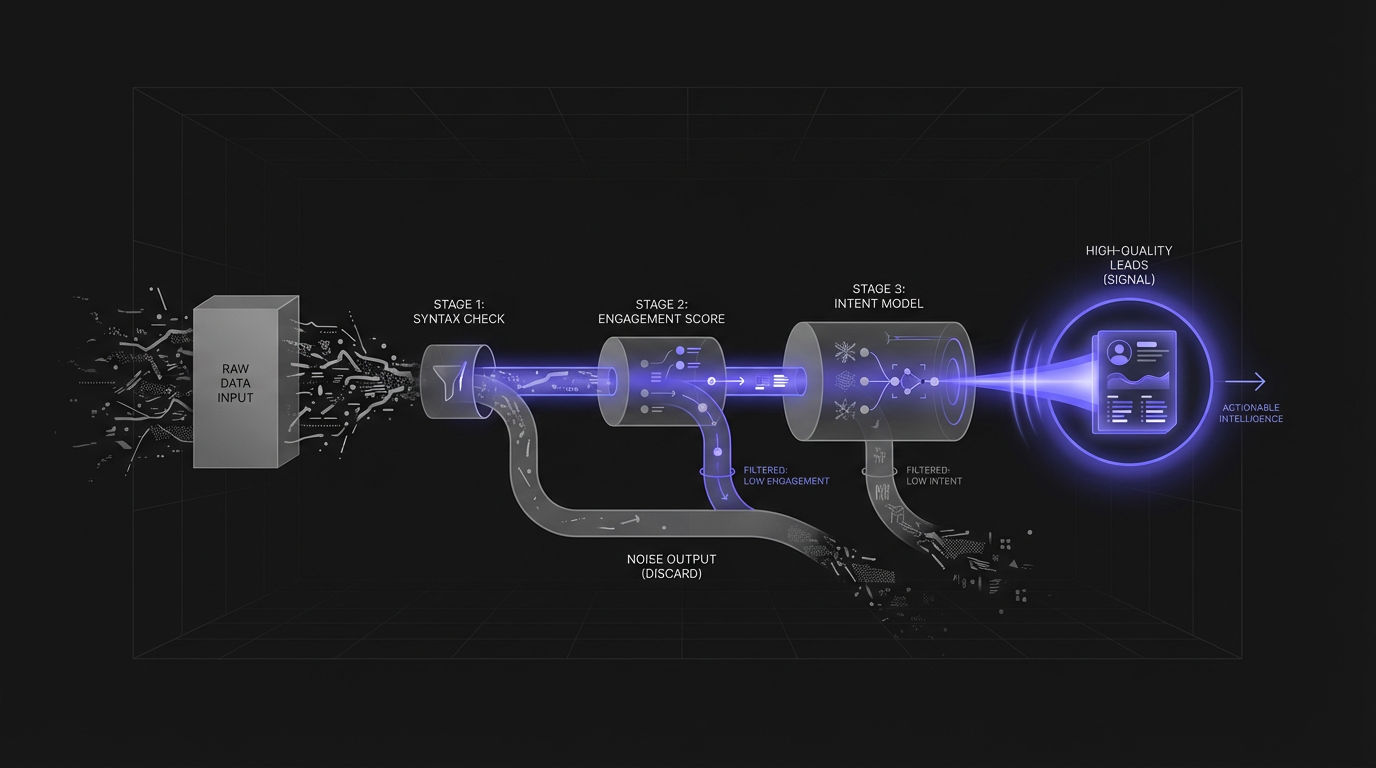
Why Traditional Event Data Fails
Understanding why event data performs so poorly requires examining the mechanics of how it's collected. The fundamental problem is that most event data collection optimizes for the wrong metric—contact volume rather than buying intent.
Badge scanning represents the most common but least valuable data collection method. Booth scanners capture attendee information automatically when badges are presented, removing friction but also removing intent signals. They don't indicate interest, just proximity.
Business card drops at fishbowls or entry forms suffer from similar intent problems. Attendees drop cards for prize drawings, content downloads, or out of social obligation when sales representatives ask. The contact information is real, but the buying signal is nonexistent. These leads look the same in your CRM as genuine prospects, creating a massive filtering challenge for sales teams.
Session and presentation attendance data provides slightly better signal but remains problematic. Attendees choose sessions based on topic relevance, speaker reputation, or convenient timing—not necessarily buying intent. A prospect attending your educational session might be researching for a project that won't have budget for years, or might be a student exploring career options rather than a decision-maker evaluating solutions.
Demo and product interaction data represents the highest-quality traditional collection method, but even here intent signals are ambiguous. Attendees demo products for curiosity, competitive research, industry education, or simple novelty. Without explicit qualification, a demo attendee might be a competitor's employee, a consultant researching your category, or a prospect whose company has no budget or timeline for your solution.
Pro Tip: Ask what prompted the visitor’s interest and what timeline they are working toward. Record the answer and agreed next step; measure the effect on your own qualification process.
The Intent Signals That Actually Matter
Not all event data is created equal. The contacts worth pursuing share specific characteristics that distinguish them from the noise. Identifying these intent signals transforms your post-show follow-up from spray-and-pray volume outreach to targeted engagement with prospects who actually buy.
Explicit project timelines represent the strongest buying signal. Attendees who can articulate when they need to implement a solution, when budget becomes available, or when their current contract expires are actively moving toward a purchase.
Budget authority confirmation separates tire-kickers from buyers. Attendees who confirm they have or control budget for this type of solution represent fundamentally different opportunities than those who need to convince someone else to fund the purchase. Authority questions don't need to be aggressive—simple queries about decision-making processes and funding sources reveal where prospects sit in buying cycles.
Active problem urgency drives immediate buying behavior. Prospects experiencing acute pain that needs resolution in the next 1-6 months represent entirely different opportunity profiles than those exploring solutions for hypothetical or future scenarios. Listen for language about current problems, failed implementations, expiring contracts, or regulatory deadlines—these indicate urgency that drives conversion.
Specific use case alignment reveals genuine need versus curiosity. Attendees who can describe detailed scenarios for how they'd use your solution, what problems it would solve, and what outcomes they want are significantly more likely to convert than those with generic interest.
Competitive context provides valuable qualification intelligence. Attendees who mention which alternatives they're considering, what they like or dislike about current solutions, or what other vendors they've talked to reveal they're in active evaluation mode. These prospects are comparing options and moving toward decisions—they just need to understand why your solution is their best choice.
Post-show engagement behavior confirms pre-show intent signals. The strongest leads continue engaging after the event—responding to emails, accepting meeting invitations, attending webinars, or requesting additional information. This behavior validates pre-show interest and separates actual prospects from those who were simply polite during conversations.
Pro Tip: Create a simple lead scoring rubric for event leads with 5-10 intent signals, each worth 1-3 points. Set a threshold score for immediate sales follow-up versus nurture marketing. After each event, refine your scoring based on which signals actually correlated with opportunities in your previous events.
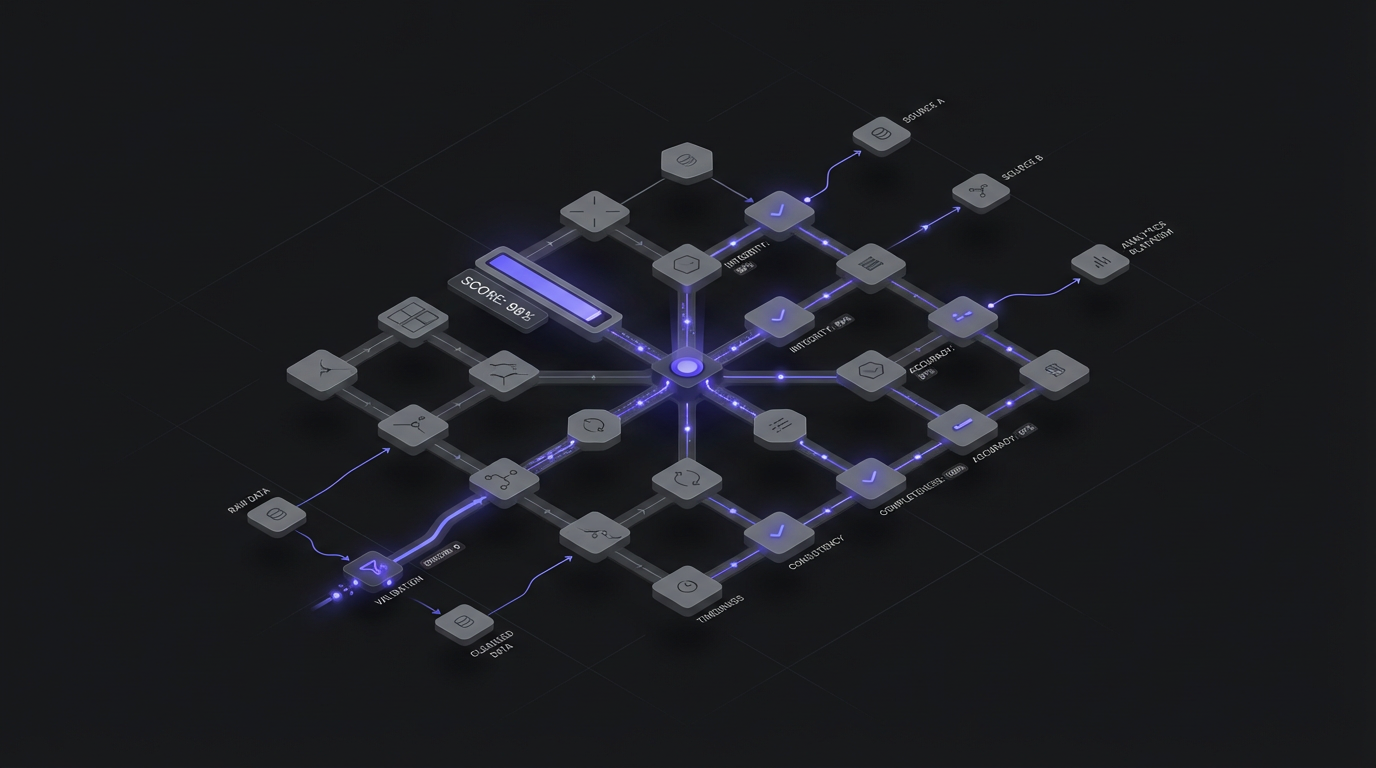
Real-Time Qualification: Filtering Noise Before It Enters Your CRM
The most effective approach to event data noise is preventing it from entering your systems in the first place. Real-time qualification during conversations separates high-intent prospects from data noise before you ever scan a badge or collect a card.
The two-question framework provides immediate qualification in under 60 seconds. After establishing rapport and understanding the attendee's context, ask: "What's driving your interest in this type of solution right now?" followed by "What's your timeline for making a decision?" The first question reveals problem urgency and current situation, while the second confirms they're in active buying mode rather than casual research.
Active listening for urgency clues often provides more accurate qualification than direct questions. Listen for language about current problems, failed implementations, expiring contracts, upcoming audits, competitive pressures, or regulatory deadlines. These contextual clues indicate active buying cycles more reliably than explicit timeline questions that many prospects answer vaguely regardless of actual intent.
Disqualification techniques save time for both parties. When conversations reveal clear mismatch—wrong industry, wrong role, no budget, no timeline—gracefully disqualify immediately. "It sounds like our solution might not be the right fit for your current situation. Would you mind if I followed up in six months when you're closer to making a decision?" This respectful approach preserves brand relationship while protecting sales resources from dead-end follow-up.
Rapid verification of BANT criteria (Budget, Authority, Need, Timeline) doesn't require an interrogation. Simple conversational questions reveal qualification status: "Who else is involved in this decision?" "How have you budgeted for this project?" "What problems are you trying to solve?" "When do you need to have something in place?" Prospects who can answer these questions conversationally are significantly more likely to convert than those who can't.
Pro Tip: Train your booth team to aim for 3-5 high-quality conversations per hour rather than 15-20 superficial badge scans. One qualified prospect with genuine intent is worth more than 50 unqualified contacts that will never convert. Quality over volume transforms event ROI.
Building a Data Quality Framework for Events
Improving event data quality requires systematic approaches to collection, validation, and scoring. The most effective companies treat event data as a strategic asset rather than a byproduct of attendance, implementing frameworks that consistently yield higher-quality prospect information.
Pre-show data quality planning establishes standards before the event begins. Define exactly what qualification criteria matter for your business: company size, industry, role, budget range, timeline, use case fit. Create a simple lead scoring system that booth staff can apply conversationally. Document these standards and train your team to use them consistently—data quality improves dramatically when everyone understands what "qualified" means for your specific context.
Role-based qualification recognizes that different attendees provide different value. C-level executives might not provide detailed technical information but represent strategic opportunities. Technical implementers might lack budget authority but provide crucial evaluation insights. Instead of applying blanket qualification rules, develop role-specific approaches that capture the right information from each type of attendee you're likely to encounter.
Progressive data collection builds prospect profiles over multiple interactions rather than trying to capture everything at once. An initial conversation might establish basic context and interest. A follow-up conversation at the booth could dig deeper into technical requirements. A demo might reveal specific use cases and urgency. This progressive approach feels natural to prospects while building increasingly complete qualification profiles.
Real-time collaboration tools help booth teams share context about conversations they've had with the same attendee. When multiple team members interact with the same prospect across an event, shared notes prevent redundant questions and reveal patterns in what the prospect is asking or sharing. This collective intelligence often surfaces qualification signals that individual conversations miss.
Pro Tip: After each event, conduct a data quality review comparing your leads collected to opportunities created. Identify which qualification criteria predicted actual conversion and refine your framework accordingly. Continuous improvement based on actual outcomes transforms event data quality over time.
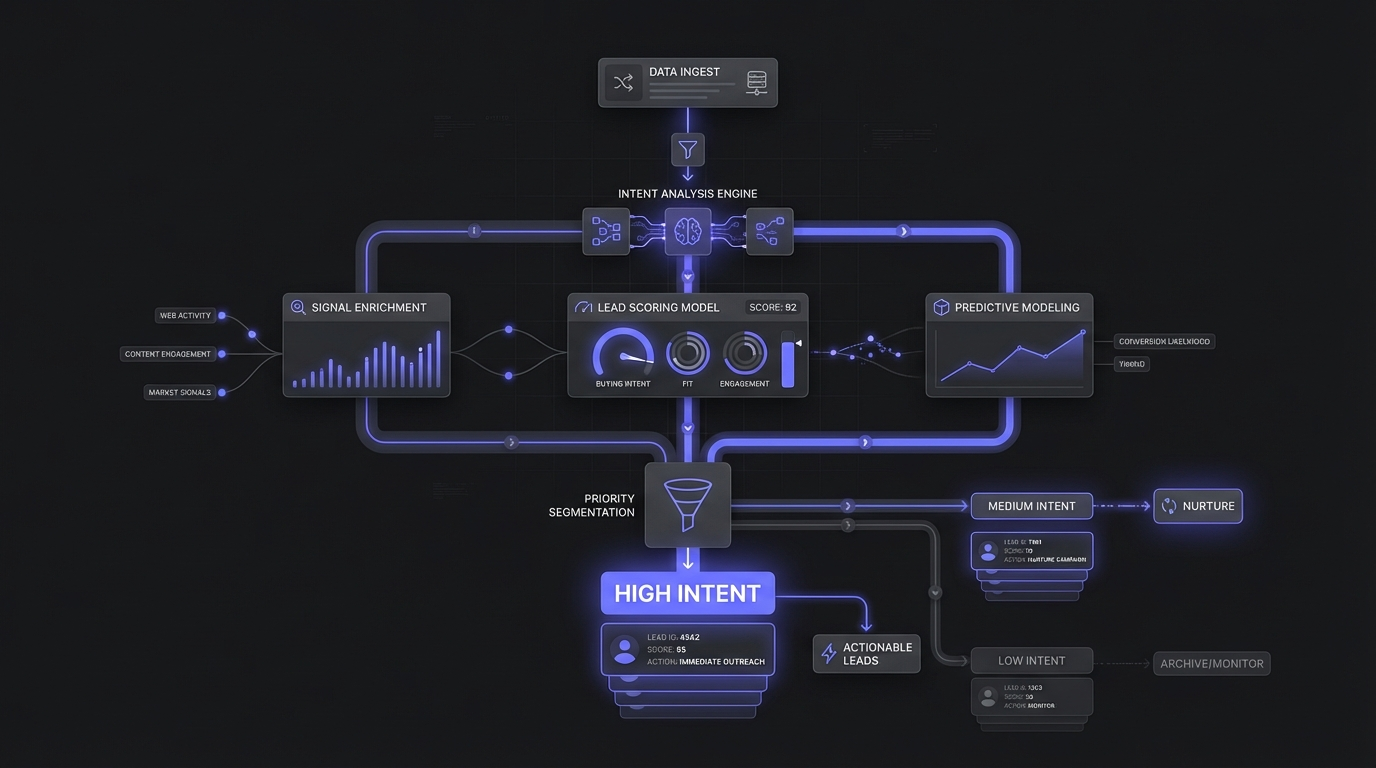
Post-Show Triage: Separating Signal from Noise
Even with excellent real-time qualification, some noise inevitably enters your systems. Post-show triage processes rapidly separate high-intent prospects from data noise before your sales team invests significant time in follow-up.
Rapid response windows capitalize on event momentum while efficiently filtering for intent. Send a personalized follow-up email within 24-48 hours that requires some form of response to continue engagement: "Should we schedule that demo you requested?" or "Would you like me to send the case study you asked about?" Prospects who respond to these specific, relevant follow-ups demonstrate genuine intent; those who don't are unlikely to convert regardless of additional outreach.
Multi-channel engagement testing reveals intent through responsiveness. Try email first for most leads, but follow up with LinkedIn connection requests or phone calls for high-priority contacts. Prospects who engage across multiple channels demonstrate significantly higher intent than those who don't respond to any outreach.
Value-driven follow-up content filters for genuine interest versus casual curiosity. Instead of generic "thanks for stopping by" messages, send specific, relevant content based on your conversation: the case study you discussed, the pricing information they requested, or the technical specification they asked about. Prospects who engage with this specific content are far more likely to convert than those who respond to generic outreach.
Sequential qualification steps progressively invest more time with prospects who demonstrate increasing intent. Start with low-touch automated outreach. Those who qualify through engagement receive semi-personalized messages. The most responsive prospects get direct sales outreach and meeting invitations. This approach reserves expensive sales time for leads who've demonstrated genuine interest through their behavior.
Pro Tip: Set clear follow-up timelines for different lead tiers. Hot leads with explicit intent signals get contacted within 24 hours. Warm leads with some qualification get contacted within a week. Cold leads with minimal qualification receive nurture content but no direct sales outreach until they demonstrate additional interest.
Technology Solutions for Event Data Quality
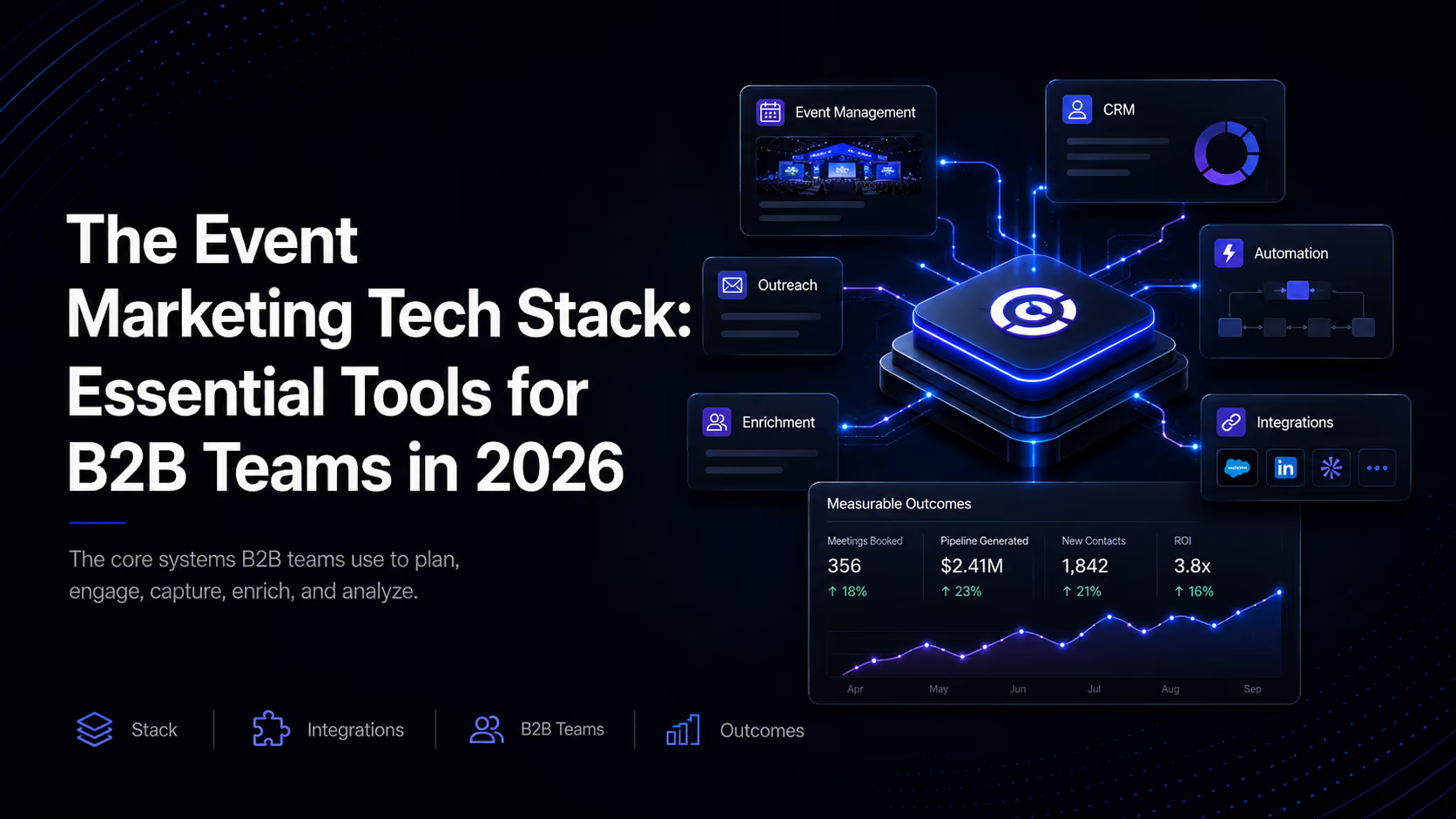
The right technology stack can dramatically improve event data quality by automating qualification, enriching contact information, and prioritizing follow-up based on intent signals rather than collection order.
Event intelligence platforms provide pre-show intelligence about who's attending and what they care about. Platforms like Lensmor analyze exhibitor lists, attendee predictions, and historical participation patterns to identify which prospects are likely to attend and what they're likely to be interested in. This pre-show context helps booth teams prioritize their time and qualification efforts on the highest-value attendees rather than treating all contacts equally.
Badge scanning with integrated qualification adds intent capture to data collection. Instead of simple contact capture, modern badge scanning systems can prompt booth staff with qualification questions, capture responses, and automatically score leads based on their answers. This ensures consistent qualification across all booth staff and creates structured data that can be used for prioritization and scoring.
Contact enrichment platforms verify and augment event contact data before follow-up begins. Email validation, LinkedIn profile matching, and company firmographic data add context that helps prioritize leads and personalize outreach. Enriched data also identifies obviously bad contacts—fake emails, students, consultants, competitors—before sales teams waste time chasing them.
CRM integration and automation triggers appropriate follow-up based on lead qualification scores. High-scoring leads generate immediate sales tasks and calendar invites. Medium-scoring leads enter automated nurture sequences with escalating personalization based on engagement. Low-scoring leads receive newsletter content and occasional re-qualification touches but no direct sales investment.
Analytics and attribution measure which events, lead sources, and qualification approaches actually produce revenue. Track leads through to closed-won revenue to understand which events deliver ROI, which qualification criteria predict success, and which follow-up approaches convert best. This data continuously improves your event strategy and data quality approaches over time.
Pro Tip: Use scenario arithmetic before buying technology. In a hypothetical program, $50,000 divided by 10 opportunities is $5,000 per opportunity; at the same spend, 13 opportunities would be about $3,846 each. The extra opportunities are an assumption to test, not a promised technology outcome.
Cultural Transformation: Quality Over Volume Mindset
The deepest barrier to improving event data quality isn't technology or process—it's mindset. Many organizations have built cultures around volume metrics: leads collected, meetings scheduled, demos delivered. Transforming to quality-over-volume approaches requires shifting how success is measured and rewarded.
Leadership alignment on quality metrics sets the tone for the entire organization. When executives celebrate high-quality opportunities rather than lead volume, when marketing messaging emphasizes conversion over collection, when sales compensation rewards closing not activity—these cultural signals cascade through the organization. Without leadership alignment, well-intentioned booth staff revert to volume behaviors because that's what they believe the organization values.
Sales and marketing collaboration ensures that event data quality is a shared responsibility rather than something that happens "out there" on the show floor. Marketing's role isn't just generating leads—it's generating qualified leads that sales can actually close. Sales's role isn't just working leads—it's providing clear feedback on what qualified means in practice and which leads actually convert. This collaboration requires regular communication, shared metrics, and joint planning before events.
Customer-centric storytelling reinforces the importance of quality over volume internally. Share stories of customers who were initially low-volume leads but converted because they were highly qualified. Celebrate team members who had fewer but better conversations at events. Recognize instances where disqualification saved time and resources. These stories make quality-over-volume tangible and memorable across the organization.
Process transparency helps everyone understand how event data flows through the organization and where quality breaks down. Share conversion metrics, show examples of good versus bad leads, invite booth staff to listen to sales follow-up calls, and create feedback loops where sales can tell marketing what actually worked. When everyone sees the full picture from collection to close, they understand why quality matters.
Pro Tip: Create a "quality hero" recognition program for booth staff who exemplify qualification excellence. Celebrate the team member who had the highest conversion rate from their event leads, not the one who collected the most contacts. Small recognition rewards shape behavior more effectively than large metrics reports.
Measuring Event Data Quality: Metrics That Matter
You can't improve what you don't measure. Most organizations track event lead volume but miss the metrics that actually indicate data quality and business impact. The right measurement framework focuses on outcomes rather than outputs.
Conversion rate by event provides the most fundamental quality metric. Of the leads collected at each event, what percentage convert to opportunities within 90 days? Events with consistently low conversion rates either attract the wrong audiences or suffer from poor collection practices—either way, they deserve scrutiny and improvement.
Lead quality score distribution reveals whether qualification standards are being applied consistently. If every lead receives roughly the same quality score, qualification isn't actually happening—everyone's getting passed through. Effective qualification creates clear distribution: some leads score high, many fall in the middle, and some are clearly disqualified. This normal distribution indicates genuine discrimination between different quality levels.
Sales acceptance rate tracks whether sales agrees with marketing’s qualification. Record rejection reasons and review criteria together; compare similar programs instead of treating one percentage as a universal pass mark.
Time to first opportunity indicates how quickly high-intent leads convert after events. High-quality leads typically engage quickly and progress to opportunity status within days or weeks. Low-quality leads languish in the pipeline for months before eventually closing or, more commonly, going dark. Fast conversion indicates strong intent and good fit; slow conversion suggests marginal prospects who may never actually buy.
Pipeline velocity comparison contrasts event-sourced opportunities with other sources. Event leads should move through pipeline at least as fast as other sources if not faster—they've already met your team in person and expressed interest. If event leads move slower than other sources, they're likely lower quality despite the face-to-face interaction.
Revenue per event ultimately measures whether event data quality translates to business results. Track not just leads collected or opportunities created, but actual closed-won revenue attributed to each event.
Pro Tip: Create an event scorecard that tracks 5-7 key metrics for each event: leads collected, qualified leads (above scoring threshold), opportunities created, pipeline velocity, and closed revenue. Review these scorecards after each event to identify patterns, celebrate successes, and target areas for improvement.
The Future of Event Data: From Collection to Connection
The event industry is slowly but surely recognizing that the traditional model of massive data collection and minimal qualification is broken. Leading organizations are shifting toward approaches that prioritize meaningful connections over contact volume, creating event experiences that naturally attract and identify high-intent prospects.
Pre-show engagement platforms are transforming how events work by facilitating connections before the show floor opens. Instead of waiting to see who wanders by your booth, these platforms let you identify likely attendees, initiate conversations, and schedule meetings in advance. Prospects who engage pre-show demonstrate significantly higher intent than random booth visitors—and they convert at correspondingly higher rates.
Interactive booth experiences naturally filter for engagement and interest. Instead of static displays and passive attendees, successful booths create interactive experiences that require participation: hands-on demos, challenge-based activities, consultation sessions, or interactive assessments. Attendees who invest time and energy in these experiences demonstrate genuine interest rather than casual curiosity.
Intent-based networking platforms use AI and behavioral data to connect attendees with relevant exhibitors based on stated interests, needs, and goals rather than random booth traffic. These platforms function like dating apps for B2B connections—both parties express interest in connecting based on relevant criteria, dramatically increasing the likelihood of meaningful conversations.
Post-show community building extends event relationships beyond the show floor. Instead of one-and-done follow-up, leading companies build ongoing communities around event themes: discussion groups, content series, virtual roundtables, and peer networks. These ongoing engagements nurture relationships while continuously revealing which prospects are actively interested versus those who were momentarily curious.
Pro Tip: Experiment with one new intent-focused approach at your next event rather than trying to overhaul everything at once. Maybe you focus on pre-show outreach to schedule meetings. Maybe you redesign your booth experience to require active participation. Measure the impact and iterate based on results—incremental improvement beats ambitious failure every time.
Conclusion: From Lead Collector to Opportunity Creator
The event data quality crisis isn't inevitable—it's a choice. Organizations can continue collecting thousands of contacts that mostly go nowhere, or they can transform their approach to focus on quality rather than volume. The difference isn't just better follow-up processes—it's fundamentally different ways of thinking about what events are for and what success looks like.
The companies that win with events don't just collect more contacts than their competitors. They collect better contacts, qualify more rigorously, follow up more intelligently, and ultimately convert a much higher percentage of event interactions into revenue. They recognize that a booth conversation with a genuine prospect is worth infinitely more than a badge scanner full of random contacts.
Your next event is an opportunity to put this into practice. Train your team on qualification, implement real-time scoring, focus follow-up on high-intent prospects, and measure outcomes rather than outputs. You'll find that fewer but better leads transform not just your event ROI, but your entire team's relationship with events as a channel.
Ready to improve event contact quality? Start Free to research relevant events, accounts and contact sources. Check fit and qualification in your own process before deciding which prospects deserve sales follow-up.
Related reading: Learn more about event intelligence and trade show ROI
Related reading: trade show lead qualification template; also see the complete guide to trade show intelligence.