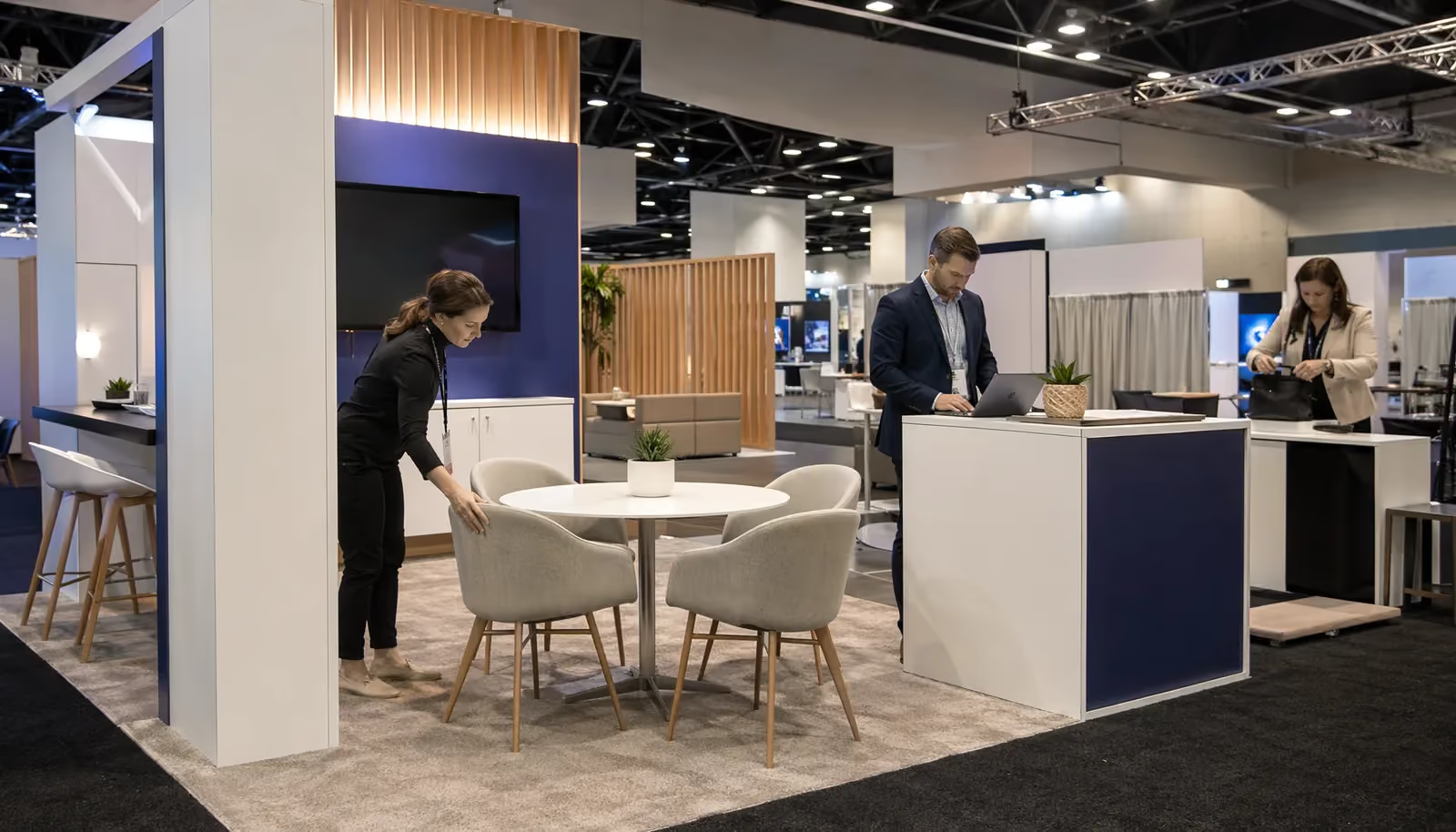
The average B2B company spends $276,000 on trade shows annually. Most of that money goes into booth design, logistics, and swag—and generates pipeline that can't be traced back to the event.
The B2B companies that consistently justify their event budgets don't get lucky. They build systems. They start planning six weeks out, not six days. They measure pipeline generated, not booth visitors counted.
This article breaks down three real-world trade show marketing examples—Gong, HubSpot, and Salesforce—each using a fundamentally different strategy. Together, they illustrate the range of what doing trade shows right actually looks like.
Example 1: Gong — Pre-Event Intelligence at Dreamforce 2023
Gong's revenue intelligence platform helps sales teams analyze conversations and close deals faster. At Dreamforce 2023, they didn't show up hoping the right prospects would walk by their booth. They engineered exactly who would show up—and when.
The Core Idea: Fill Your Calendar Before Doors Open
Six weeks before the event, Gong launched a dedicated landing page with a single offer: schedule a 30-minute booth meeting and receive Gong-branded AirPods (retail: $249). The catch was simple—you only received the AirPods if you attended the scheduled meeting. This mechanic generated 820 meeting requests and, after qualification filtering, 600 confirmed meetings before the event started.
The landing page worked because of four elements: a value-focused headline ("See how revenue leaders capture $2M+ in previously invisible pipeline"), direct calendar booking with auto-sent invites, social proof with specific numbers, and a three-question qualification form filtering out low-intent visitors.
Simultaneously, Gong sent personalized direct mail to 300 high-value target accounts: a handwritten note referencing a specific pain point, a Gong-branded portable charger, and a one-pager case study from a company in their industry. 18% booked meetings. Another 12% stopped by without scheduling.
Pro Tip: Gong's calendar invite included a Google Maps link to the exact booth location, the rep's cell number, and a rep photo. No-show rate dropped from a typical 40% to 18%.
During the Event: The Live ROI Calculator
For walk-up traffic, Gong's reps ran 10-minute ROI calculations on an iPad. Five questions—number of reps, average deal size, current win rate, calls per week, recording percentage—generated a live projection: "Based on a 5% win rate improvement, your team could generate $2.4M additional annually." Prospects left with a printed PDF showing their specific numbers.
Over three days, Gong ran 380 ROI calculations. 220 became qualified leads (58% qualification rate). 94 scheduled follow-up demos within 30 days.
After the Event: 24-Hour Personalized Follow-Up
Every scheduled meeting attendee received a personalized email within 24 hours—not a template, but a custom message referencing specific conversation points from structured notes taken during each meeting. The result: 64% open rate, 28% click-through to the calendar link.
The Outcome: 1,200 qualified leads, 42% lead-to-opportunity conversion within 60 days, $2.3M pipeline generated, and a 12x event ROI.
The single biggest factor? Knowing who would attend before they arrived. Gong spent 40+ hours manually researching attendees to build their target list. This intelligence enabled everything else: pre-booked meetings, personalized direct mail, and account-specific follow-up that converted at 4 to 8 times the industry average.
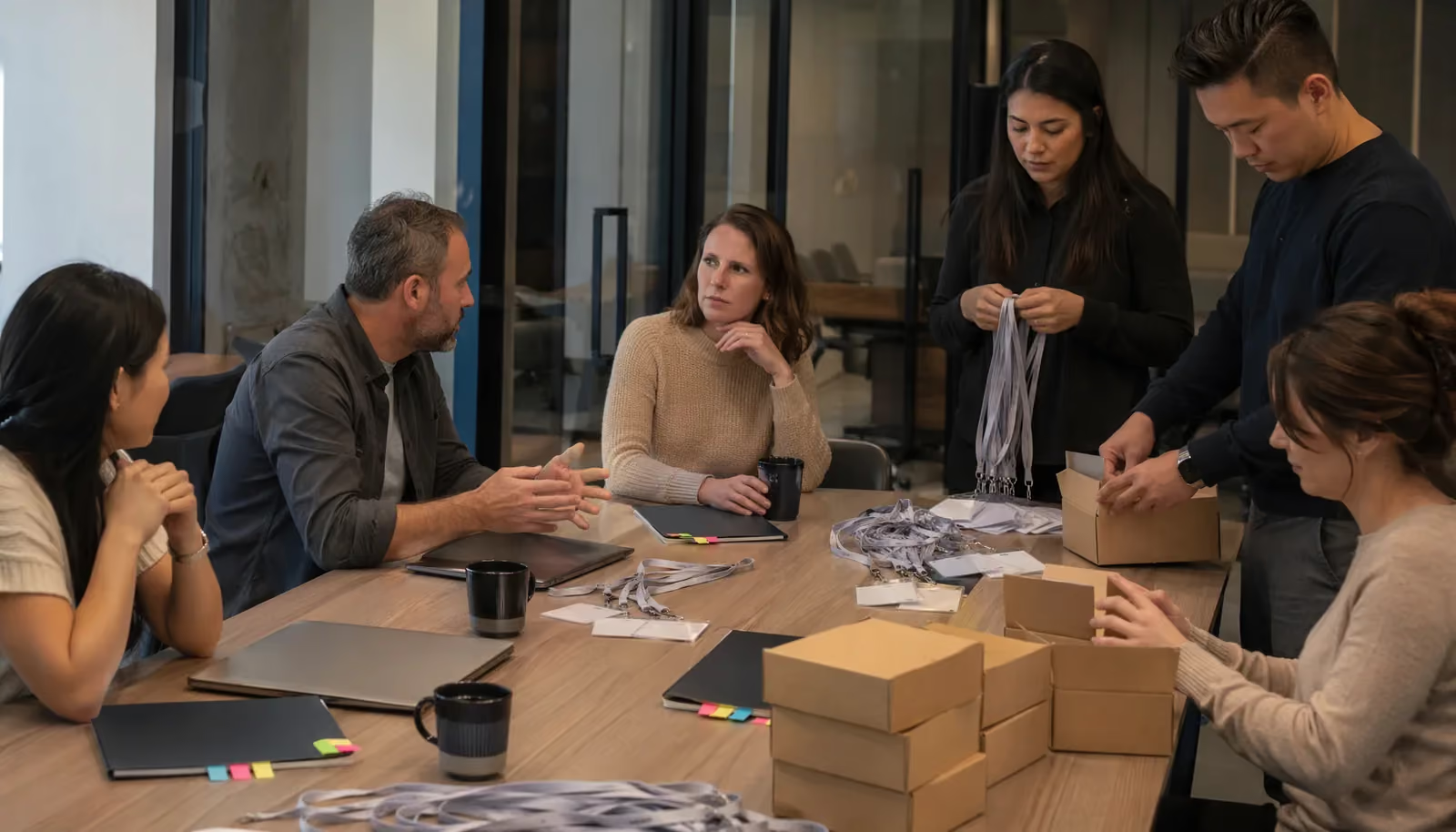
Example 2: HubSpot — The Content-Led Booth at SaaStr Annual
HubSpot has built a distinct trade show presence at events like SaaStr Annual with an approach that runs counter to most B2B trade show marketing: no product demos, no badge scanners, no pressure. Just value delivery first.
The Core Idea: Give Before You Ask
Instead of showing prospects their software, HubSpot offers prospects something immediately useful. At SaaStr and similar events, this takes the form of free live marketing assessments—15-minute sessions where HubSpot experts review a prospect's actual website, email strategy, or CRM setup and provide specific, actionable feedback.
This flips the standard trade show interaction. Instead of a rep asking "what are your pain points?" and pivoting to product features, HubSpot reps start with expertise. The prospect leaves with specific, usable insights. The rep learns exactly where the prospect struggles—which is the most valuable sales intelligence possible.
Execution: Workshops Over Demos
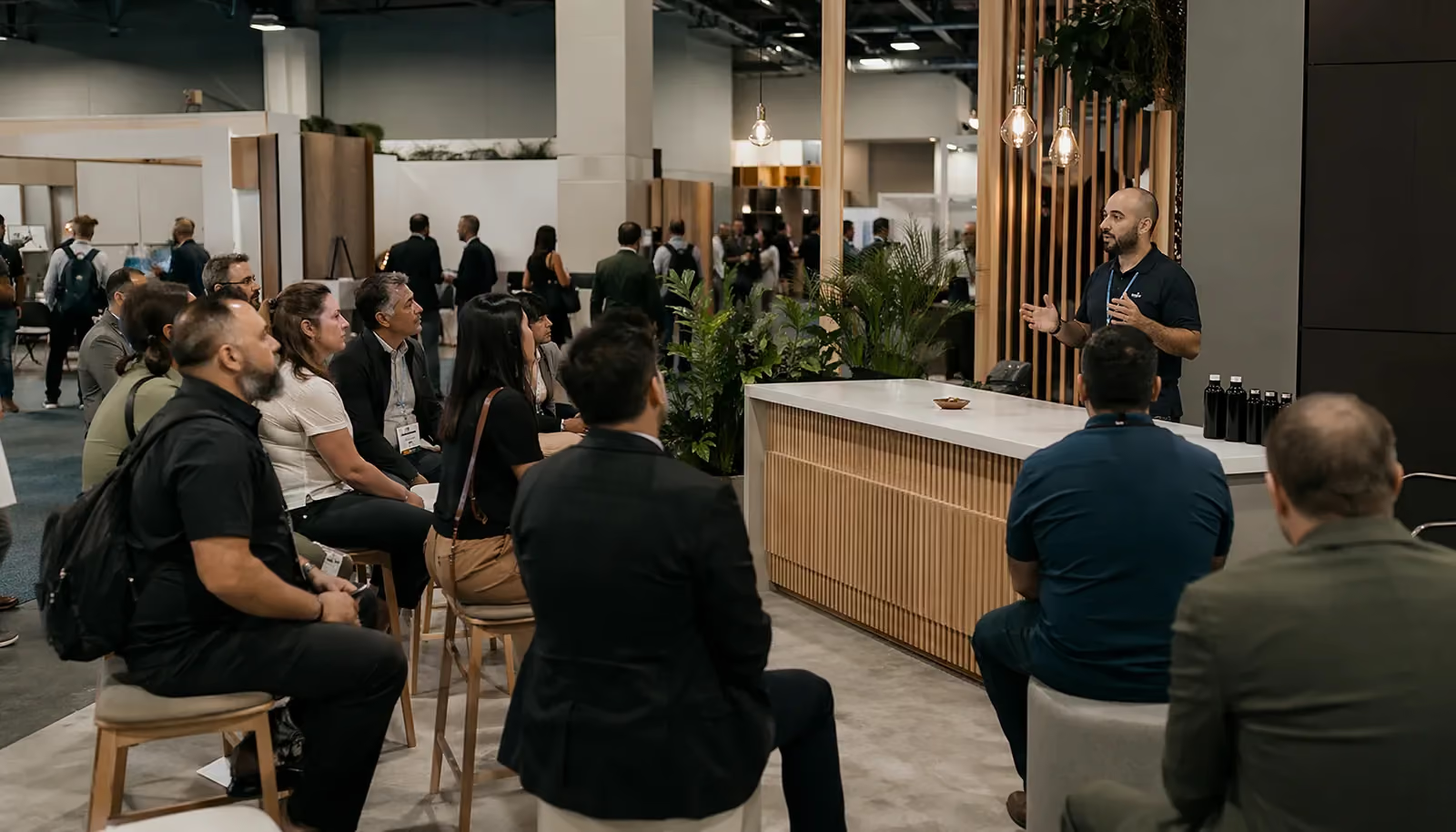
HubSpot booth spaces function more like mini-conference stages than product showcases. Sessions run on rotation: "5 SEO mistakes your competitors are making," "Audit your lead gen setup live." Attendees opt in to watch or participate. The format draws walk-up traffic organically—crowds attract more crowds.
Recording short-form clips from live sessions for post-event social content is a documented HubSpot practice. A 10-minute live session generates 5 to 7 shareable clips, extending reach beyond event attendees and driving traffic to gated resources weeks after the event ends.
Lead Capture: Gated Downloads Over Badge Scans
Rather than scanning badges, HubSpot captures leads through gated content downloads. QR codes throughout the booth lead to specific resources—pillar guides, templates, tools like Website Grader. Prospects self-select based on interest, which makes follow-up sequences far more relevant than a single generic sequence for all badge scans.
A prospect who downloaded the "CRM Audit Template" is in a different nurture sequence than one who downloaded the "Email Deliverability Guide." This content-based segmentation is what makes HubSpot's post-event conversion rates significantly above average.
Pro Tip: HubSpot pre-promotes their booth sessions on social media before the event, creating demand from attendees who weren't planning to stop by. "We'll be running live website audits at booth 312—book a slot before they fill up" generates pre-event scheduling that mirrors Gong's calendar-booking approach but through a content lens.
The Takeaway: HubSpot's trade show strategy applies their inbound methodology to physical events. Lead with value, capture through content, and nurture through relevance. This approach attracts the right buyers—the ones who want to learn—and builds relationships that convert months after the event ends.
Example 3: Salesforce — Customer Storytelling at Scale
Salesforce brings a different scale and approach to events where they exhibit. Their core tactic offers lessons that apply far beyond enterprise budgets: lead with customer outcomes, not product capabilities.
The Core Idea: Your Customers Are Your Best Sales Team
At events like AWS re:Invent—where Salesforce maintains a major booth presence showcasing Salesforce on AWS integrations—the experience centers on customer testimonials and live customer sessions rather than product demos led by company reps.
Booth visitors encounter video stories from companies explaining specific business outcomes: reduced sales cycle, improved forecast accuracy, higher rep productivity. Not "feature X enables Y," but "we used this to solve Z, here's exactly how." The difference in credibility is significant. Prospects trust peers far more than they trust vendor sales teams.
Gamification via Trailhead
Salesforce brings their Trailhead learning platform to physical booth experiences through quizzes, badge-earning challenges, and guided scavenger hunts. At major events, Trailhead "trails" guide attendees through different parts of the booth with digital rewards at each checkpoint.
This accomplishes two things. First, it keeps attendees engaged longer—important at large events where booth visits average 2 to 3 minutes without a structured experience. Second, it provides qualified engagement data. An attendee who completed a 20-minute Trailhead trail has demonstrated significantly higher intent than one who picked up a pen and left.
Pro Tip: Salesforce offers "Success Cloud" consultation slots—20-minute sessions with senior solution architects, bookable in advance. The scarcity (limited daily slots) and specificity (personalized to a company's industry and use case) create demand that generic product demos cannot match. Treating expert access as a scarce resource rather than a free service changes how prospects perceive the value of a booth conversation.
Ecosystem as Differentiator
A unique element of Salesforce's booth presence is their AppExchange partner ecosystem. At major events, AppExchange partners showcase integrations alongside the core product, demonstrating a complete solution stack rather than a standalone platform. For enterprise buyers evaluating total solution fit—not just point solutions—this positions Salesforce as a platform decision rather than a product decision.
The Takeaway: Salesforce's approach removes the adversarial dynamic of vendor versus buyer. When a customer explains what your product did for their business, you're not selling—you're facilitating peer learning. For companies with strong customer success stories, centering your trade show presence around customer voices (with customers present or on video) can outperform any demo.
What Each Strategy Does Best
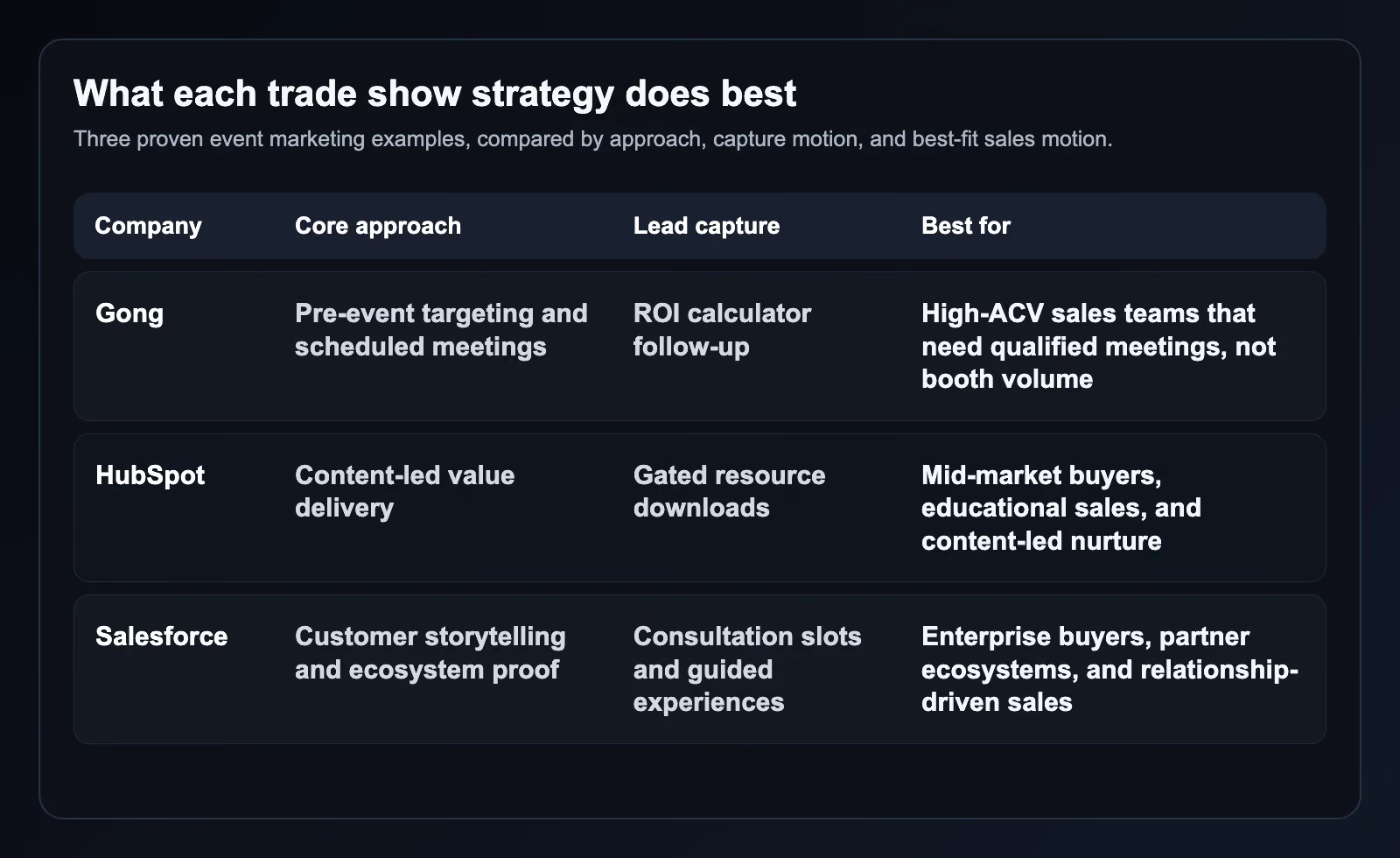
All three strategies differ in execution. But they share three non-negotiable fundamentals:
Start before the event. Gong pre-booked 50% of meetings six weeks out. HubSpot promotes booth sessions on social before the event. Salesforce coordinates customer speakers months in advance. If your preparation starts the week of the show, you've already lost.
Lead with value, not product. None of these companies open with "let me show you our software." They lead with ROI projections, expertise delivery, or peer success stories. The product is the solution to a problem you've first helped prospects recognize.
Measure pipeline, not attendance. Badge scans, booth visitors, and handshakes are vanity metrics. Opportunities created within 60 days is the number that tells you whether the event worked.
The Hidden Variable: Pre-Event Intelligence
Across all three examples, the companies generating the most pipeline from events share one advantage: they know who will attend before doors open.
Gong invested 40+ hours manually researching attendees to build their target list. HubSpot invests in events like SaaStr because they know their buyer ICP attends predictably. Salesforce coordinates customer speakers by identifying which of their enterprise accounts will have key decision-makers present.
This intelligence enables personalized outreach, pre-booked meetings, and relevant content instead of hoping the right people walk by.
The challenge for most companies: attendee lists arrive late or not at all, and building that intelligence manually doesn't scale. Lensmor helps B2B teams identify which of their target accounts will attend upcoming trade shows so you can start planning pre-event outreach weeks before doors open—not after.
Related reading: complete trade show marketing guide and event marketing strategies that convert.
Conclusion
Trade show success isn't luck. Gong engineered 600 pre-booked meetings through landing pages and direct mail. HubSpot turned their booth into a value-delivery machine that prospects sought out. Salesforce removed the sales dynamic entirely by letting customers do the talking.
The common thread: intentional system design, not reactive booth staffing. Before your next event investment, identify which of these three models fits your sales motion—and start building that system six weeks out.
Start Free — Start using Lensmor's event intelligence platform today. Predict attendee lists, discover relevant events, and enrich contact data for your next trade show.