Product note (checked July 2026): this guide compares workflows, not a permanent price sheet. Product packaging and availability change, so confirm current details directly with Vendelux.
That's the moment most B2B teams start looking for alternatives.
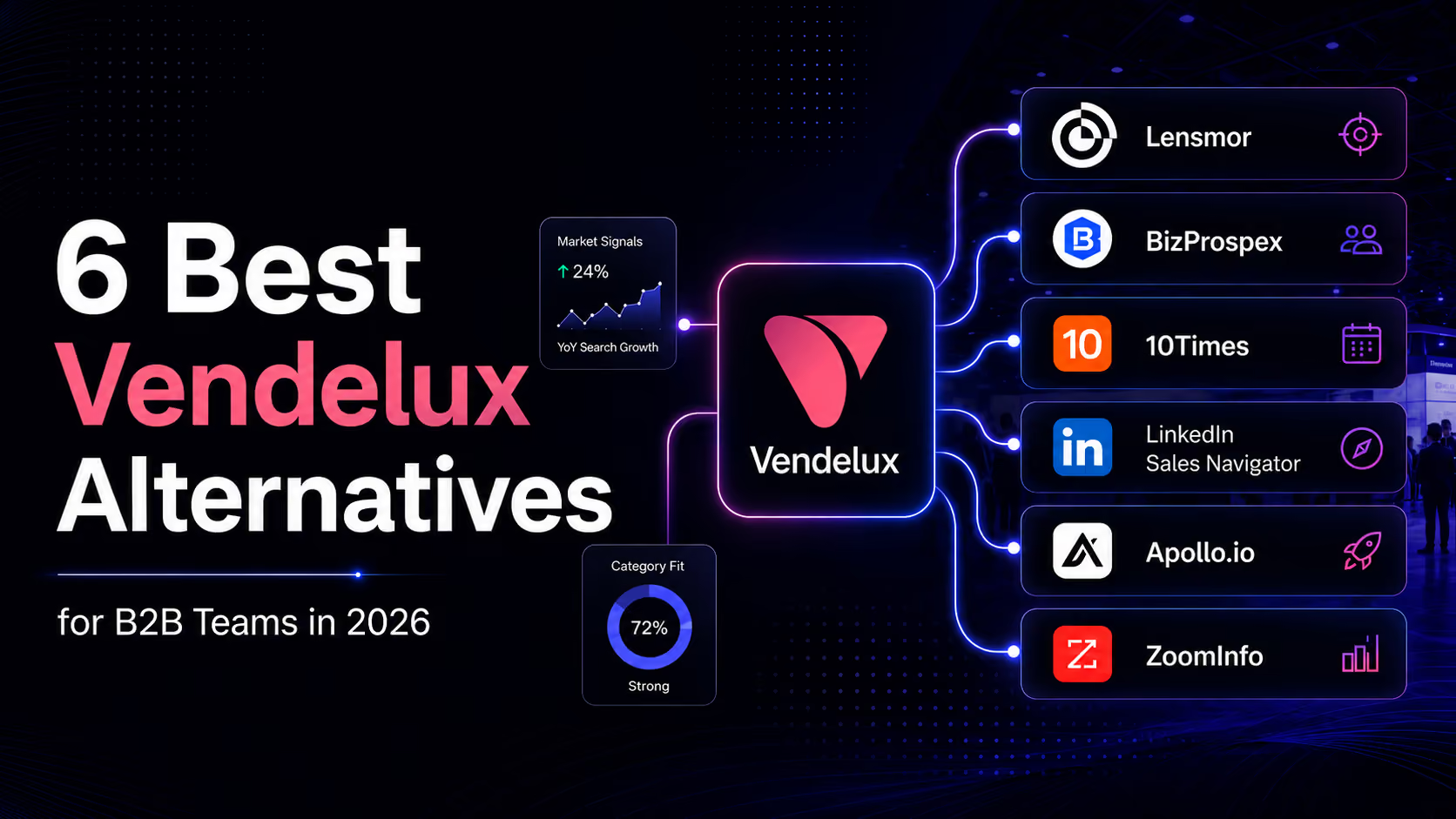
This guide covers six alternatives to Vendelux, ranging from purpose-built platforms to exhibitor list services to general sales intelligence tools. We'll be honest about what each one does well and where it falls short — because the right tool depends entirely on how your team actually operates.
What Vendelux does
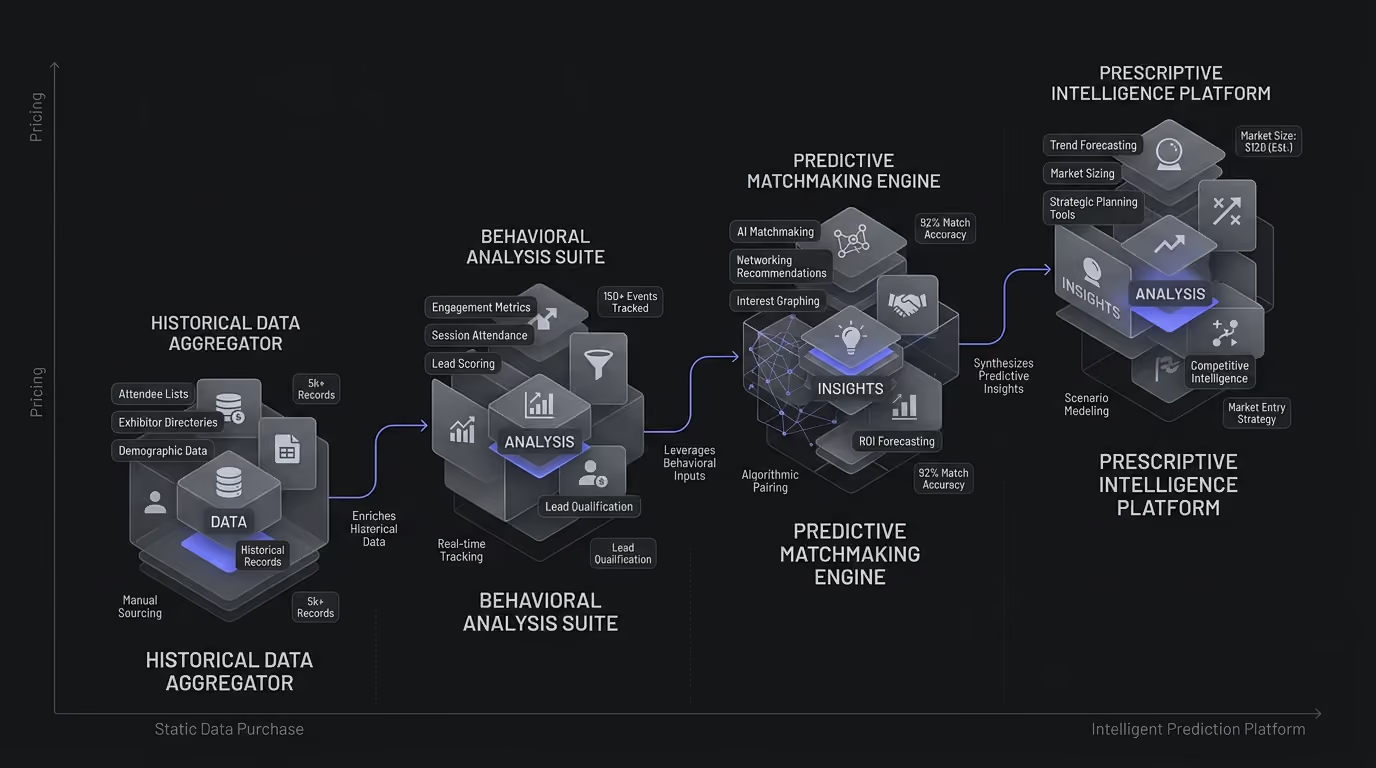
Vendelux positions its platform around event marketing and attendee intelligence: planning event activity, starting conversations earlier, and measuring event ROI. The relevant question for an alternative is not a historic list price; it is whether the vendor’s current data, workflow, and commercial model fit the events your team works.
The 6 Best Vendelux Alternatives
Here's how the six alternatives compare before we dig into each one:
At a glance
- Lensmor: event-led account research and pre-show workflow preparation.
- BizProspex: a possible fit for a one-off data-list workflow.
- 10Times: a possible starting point for event discovery and directory research.
- LinkedIn Sales Navigator, Apollo, and ZoomInfo: broad prospecting or enrichment tools that can complement an event list.
1. Lensmor — Best Purpose-Built Alternative
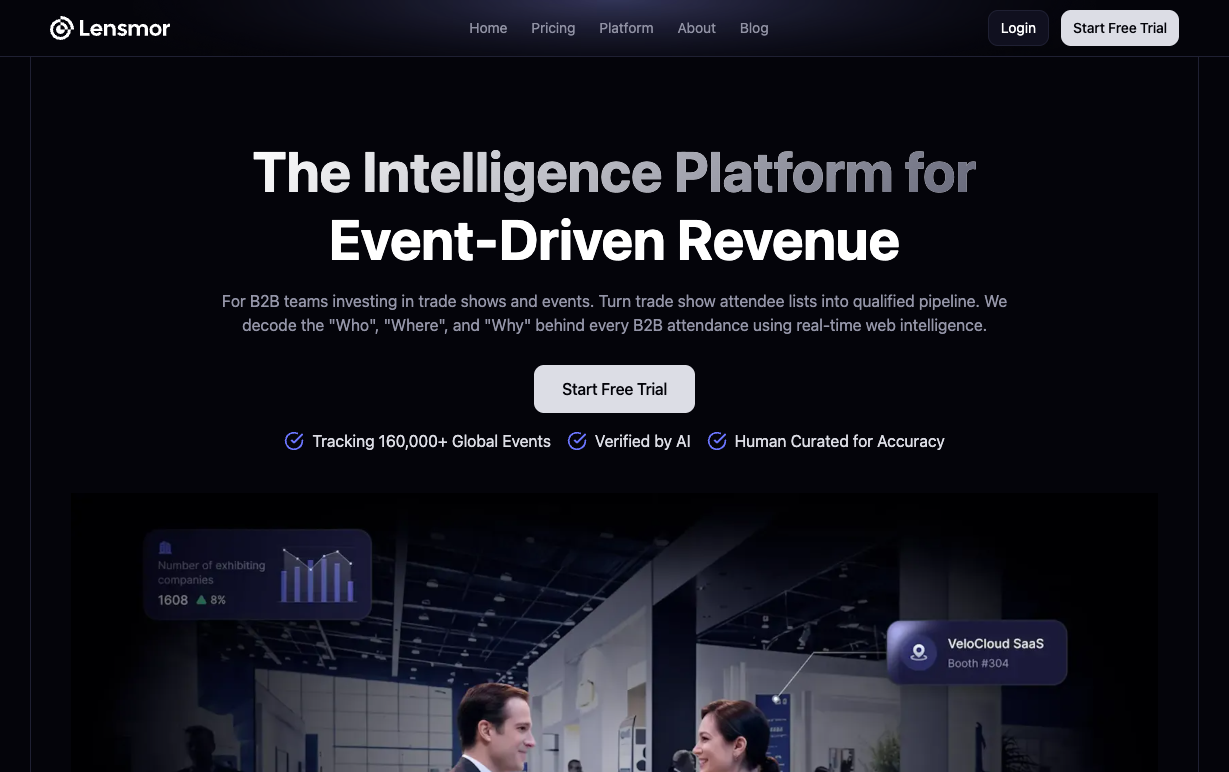
Lensmor is the most direct replacement for Vendelux: a purpose-built event intelligence platform designed specifically for B2B teams that exhibit at or attend trade shows. It covers the same core use cases — identifying which companies and prospects will be at an upcoming show, enabling pre-event outreach, and enriching contact data before you arrive.
How it works: Search for an upcoming trade show in Lensmor's database. The platform's attendee prediction engine analyzes historical attendance data, exhibitor participation patterns, and social signals to forecast which companies are likely to send representatives. Filter by ICP criteria — industry, company size, geography — to build a targeted pre-show prospect list. Export contacts with verified emails and LinkedIn data, and start outreach weeks before the show.
Strengths: Because Lensmor is built specifically for event intelligence, the workflow reflects how event sales teams actually think. The reverse discovery feature is particularly useful for annual planning: instead of starting with "which shows should we attend?", you start with "which shows do our best customers and target accounts exhibit at?" and build your calendar from there.
Limitations: Event coverage continues to expand across major North American and European trade shows. Major North American and European trade shows are well covered. Some niche industry events or smaller regional shows may have limited data — and the team is actively expanding coverage based on user feedback.
Pricing: Confirm current pricing and availability directly with the vendor; plans can vary by contract, event scope, and region.
Best for: B2B sales and marketing teams that want dedicated event intelligence without the Vendelux price tag — especially teams running 3–15 shows per year who are building out their event strategy.
Pro Tip: Use Lensmor's reverse discovery at the start of your annual planning cycle, not just before individual shows. Knowing which shows your ICP consistently exhibits at is the highest-leverage input for your event calendar.
2. BizProspex — Best for One-Off List Purchases
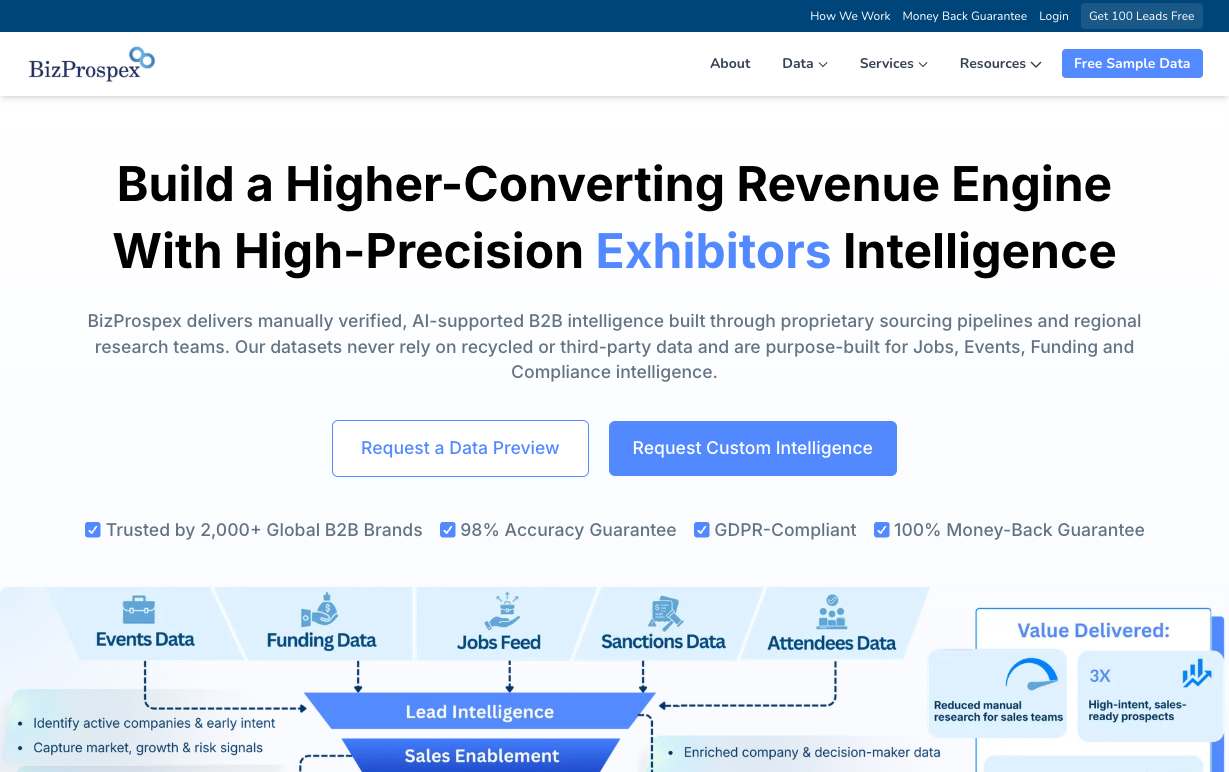
BizProspex takes a fundamentally different approach. Rather than a platform for ongoing intelligence workflows, it sells you a custom-built list of exhibitor or attendee data for a specific show — and you pay per list, not per year.
How it works: You tell BizProspex which trade show you're targeting and what data you need (exhibitor contacts, attendee data, or both). Their team manually verifies and builds the dataset, delivering it as a CSV or CRM-importable file. They cover major events like CES, MWC Barcelona, and Canton Fair, and will build custom lists for events outside their standard catalog.
Limitations: You're buying a static snapshot, not a living platform. The list is accurate at delivery, but it doesn't update as registrations change closer to the event. There's no built-in enrichment, no ICP filtering interface, and no CRM integration — that processing happens on your end after delivery.
Best for: Teams doing 1–4 shows per year who need exhibitor or attendee data for a specific event without committing to a recurring subscription. Also a practical test run before evaluating a full platform.
Pro Tip: When placing an order, specify your ICP criteria upfront — industry, company size, job titles. A filtered list of 200 highly relevant contacts is significantly more actionable than a raw dump of 2,000 exhibitors, and usually costs less.
3. 10Times — Best Free Starting Point
10Times is a global trade show and conference directory covering hundreds of thousands of events worldwide. It's not a prospecting platform in the same sense as Vendelux, but it's one of the most useful free resources for exhibitor discovery and preliminary show research.
How it works: Search for a specific event or browse by industry and geography. 10Times surfaces exhibitor lists (where available), attendee demographics, and show history. The free tier gives basic access; paid plans unlock more detailed exhibitor data and export capabilities.
Strengths: The breadth of coverage is hard to match for a free tool. If you need a quick read on who exhibits at a particular show, or you're building a longlist of relevant events in your industry, 10Times gives you a credible starting point. It's particularly useful for international shows that more specialized platforms don't cover deeply.
Limitations: Data depth is inconsistent. For major shows, exhibitor lists are reasonably complete. For smaller or regional events, the data can be sparse or stale. 10Times is a directory, not an intelligence platform — there's no attendee prediction, no ICP filtering, and no enrichment built in. You're doing the analytical work manually.
Pricing: Confirm current pricing and availability directly with the vendor; plans can vary by contract, event scope, and region.
Best for: Early-stage event strategy research, building a longlist of relevant shows to evaluate, or supplementing data from a primary platform for international events.
4. LinkedIn Sales Navigator — Best for Teams Already in the LinkedIn Ecosystem
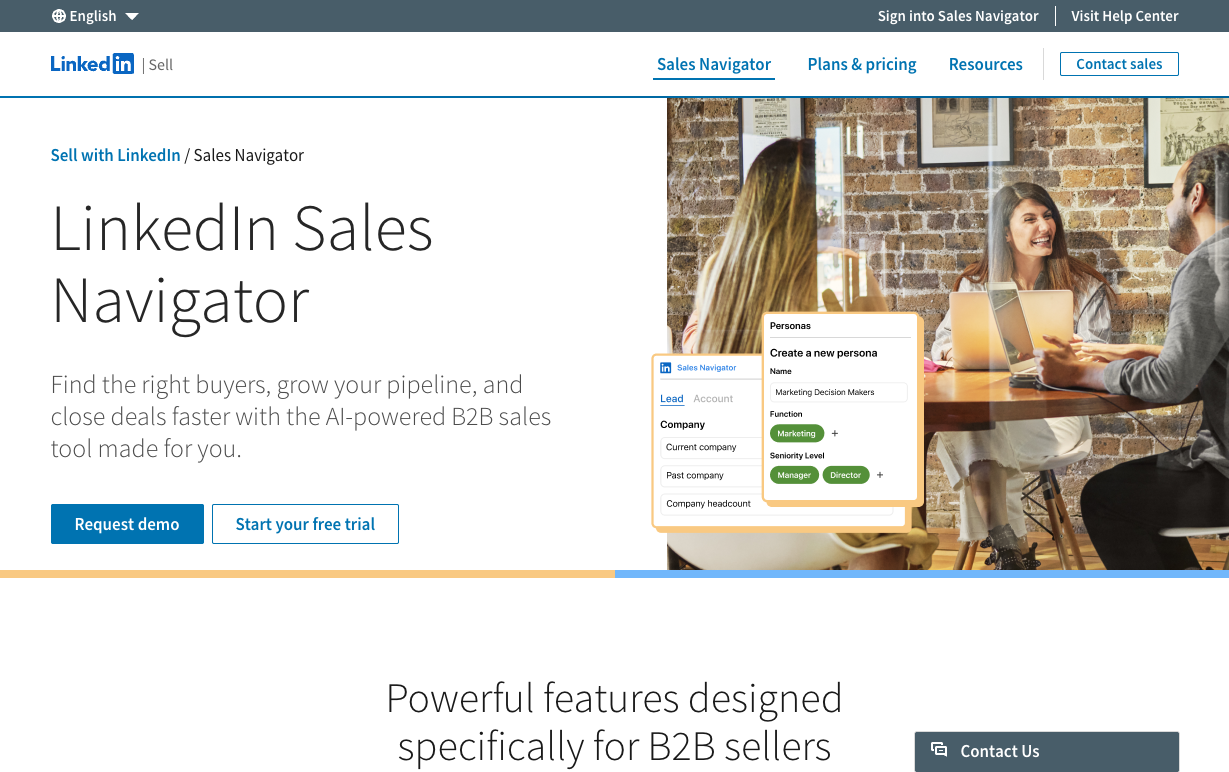
LinkedIn Sales Navigator isn't designed for trade show intelligence, but a surprising number of B2B teams use it as their primary pre-show research tool. The logic is practical: if you can filter LinkedIn's database by company, role, and geography, you can approximate who's likely to attend an industry event.
How it works: Build a saved search in Sales Navigator targeting the profile of your ideal trade show attendee — relevant industries, job functions, company sizes, and geographies tied to the show's audience. Cross-reference the show's industry focus, then reach out via LinkedIn InMail or save the accounts for your CRM sequence.
Strengths: If your team is already using Sales Navigator for outbound, this adds zero incremental cost or tool switching. Contact data quality is generally strong because it's LinkedIn-sourced. For events that draw from a clearly defined professional community — HR tech shows, sales conferences, DevOps events — the signal can be surprisingly usable.
Limitations: This is a workaround, not a purpose-built solution. LinkedIn doesn't know who's registered for a specific event — you're inferring attendance based on professional profile and geography, not actual registration data. The process is manual and time-intensive. For large multi-industry shows, the signal degrades quickly and it becomes hard to separate real attendees from noise.
Best for: Teams that already pay for Sales Navigator, run 1–2 targeted shows per year, and don't want to add another tool to their stack. Works best for shows with a clearly defined professional audience.
Pro Tip: Combine Sales Navigator with the show's official exhibitor list. Export the exhibitor company names, then use Sales Navigator to find the right contacts at each company. Neither source alone is as effective as both together.
5. Apollo.io — Best for Contact Enrichment After List Building
Apollo is a contact intelligence and sales engagement platform with a large B2B contact database. Like Sales Navigator, it's not built for trade show intelligence — but it's widely used by event teams for contact enrichment once they have an exhibitor or attendee list from another source.
How it works: Start with a list of companies you know will be at an upcoming show — from the show organizer, 10Times, or BizProspex. Import those company names into Apollo. Use Apollo's filtering to surface the right contacts at each company (decision-makers matching your ICP). Export a verified contact list with emails and direct dials, then run outreach through Apollo's sequencing or your existing CRM.
Strengths: Apollo's contact database is extensive, and the enrichment workflow is fast once you have a company list to work from. The free tier is functional for light use, and paid plans are a fraction of Vendelux's price. Built-in sequencing tools mean you can go from list to outreach in a single platform.
Limitations: Apollo solves "who should I reach at this company?" but not "who will actually be at this show?" You're enriching based on company affiliation, not registration data. Email verification is solid but not perfect. There's no event-native context — Apollo doesn't know anything about trade show calendars.
Best for: Teams with an exhibitor list in hand who need fast, affordable contact enrichment. Works well layered on top of BizProspex data or 10Times exhibitor exports.
6. ZoomInfo — Best for Enterprises Already on the Platform
ZoomInfo is the enterprise standard for B2B contact and company intelligence — more data, more integrations, and more features than almost anything else on this list, with pricing to match. If your company already has a ZoomInfo contract, it's worth exploring what event-adjacent intelligence you can extract before buying a separate tool.
How it works: Similar to Apollo but at enterprise scale. ZoomInfo tracks real-time intent signals (which companies are actively researching specific topics), technographic data, and firmographics. For event use cases, you'd use it to enrich an exhibitor list or build a prospect list based on ICP criteria likely to overlap with a show's audience.
Strengths: If you're already paying for ZoomInfo, the marginal cost of applying it to event intelligence is zero. Data quality at enterprise scale is strong. Intent signals can help prioritize pre-show outreach — companies actively researching your category are higher-priority targets even in a general list.
Best for: Enterprise companies already under a ZoomInfo contract who want to apply it for event prospecting as one of several use cases — not as a standalone Vendelux replacement.
How to Choose
The right tool comes down to show frequency and what role event intelligence plays in your overall go-to-market:
1–3 shows per year, no platform needed: BizProspex for lists, 10Times for free research. Combine with Apollo for enrichment. Total cost: a few hundred dollars per show.
3–15 shows per year, want a platform: Lensmor. Purpose-built, affordable, free trial to validate before committing.
Already deep in Sales Navigator or Apollo: Use those first. Build the workflow manually for one show cycle and measure the results before deciding whether a dedicated platform is worth adding.
Enterprise, already have ZoomInfo: Start with ZoomInfo. If event intelligence becomes a priority use case and ZoomInfo's general data isn't sufficient, evaluate Lensmor as a complementary layer.
One pattern holds across all of them: the teams that convert pre-show intelligence into actual pipeline start the process 4–6 weeks before the event, not the week before. The tool matters less than the timing.
Related reading: Lensmor vs Vendelux comparison and event intelligence platform comparison.
Conclusion
Vendelux is expensive because it's specialized. But the use case it solves — knowing who's going to be at a trade show before you arrive — is achievable at every price point if you know which tools to combine.
Start Free — Search upcoming trade shows, predict who's attending, and build your pre-show prospect list. No credit card required.