Start with the job you need the software to do. Compare Lensmor and Vendelux for pre-show event and account research; 10Times for event discovery; ZoomInfo and Demandbase for broader account context; Grip and Swapcard for organizer-enabled networking; and Cvent iCapture for on-site lead capture.
These eight products cover different parts of an event program. The comparison below separates those tasks before looking at pricing and data access.
Event intelligence software comparison
| Tool | Primary user | Main job | Organizer dependency / access | Data inputs | Export or handoff | Pricing basis |
|---|---|---|---|---|---|---|
| Lensmor | Sales / field marketing | Pre-show event and account research | Independent research; depth varies by event | Exhibitors, public participation signals and available Visitor records | Selected records to supported exports / integrations | Basic $499/month or $4,990/year; credits apply. |
| Vendelux | Event / revenue teams | Event discovery and portfolio planning | Independent research; validate your event sample | Vendor event and attendee intelligence; verify source labels | Lists, campaigns and CRM workflows; confirm plan | Request pricing. |
| 10Times | Event researchers | Find candidate events | Directory browsing; listing completeness varies | Event directory and event / organizer listings | Confirm commercial data access separately | Public browsing; verify paid data terms. |
| ZoomInfo | Sales / revenue operations | Company and contact enrichment | Not tied to one organizer; event dataset not verified here | General B2B company and contact data | Confirm package, fields and CRM integration | Request a quote. |
| Demandbase | ABM / revenue teams | Account engagement and prioritization | Depends on your configured data and integrations | Account, intent and engagement signals | Account workflows; confirm event-data inputs | Platform + per-user pricing; request a quote. |
| Grip | Organizers / exhibitors | Networking and matchmaking | Organizer adoption and permissions affect access | Participation and engagement within the event platform | Confirm exhibitor access and export permissions | Request a scoped quote. |
| Swapcard | Organizers / exhibitors | Event networking and exhibitor leads | Event setup and purchased access matter | Event profiles, connections and captured leads | Confirm integration and lead-export entitlement | Confirm event and package pricing. |
| Cvent iCapture | Exhibitor / field teams | Capture and qualify leads onsite | Works across third-party shows; check badge compatibility | Badge / business-card captures and rep-entered qualification | Lead capture and CRM handoff | Request pricing for your workflow. |
Source review: October 20, 2026. Vendor pages are linked for checking; current Swapcard package and export entitlements were not verified. Vendor descriptions are not independent accuracy tests. No same-event, eight-vendor benchmark was performed; event coverage, exports and final entitlements need a pilot or written confirmation.
What does event intelligence software help you do?
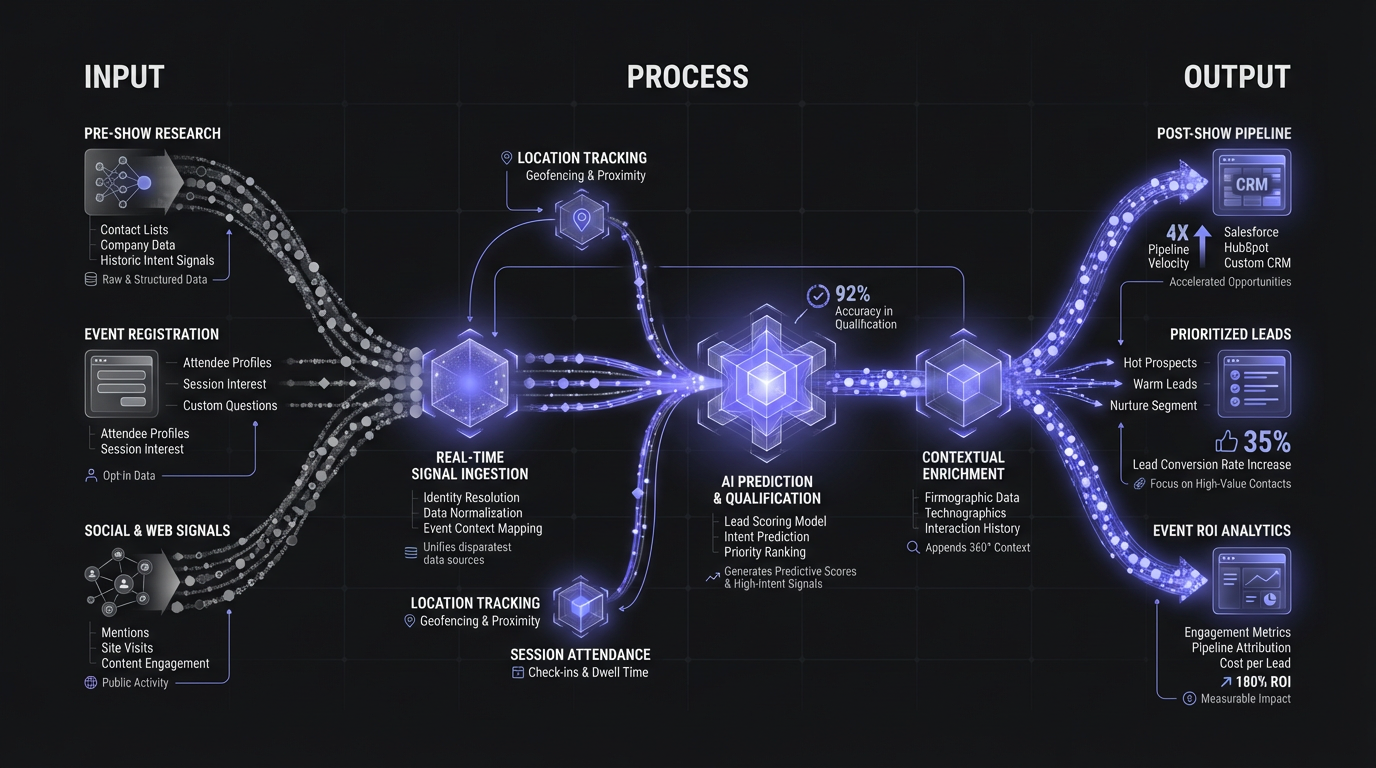
Event intelligence software helps teams research events, company participation and relevant contacts, then use that context in planning and follow-up. A company listing, an inferred attendance signal and a confirmed meeting are different evidence types. For the definitions and operating framework, read the trade show intelligence guide.
How to read this comparison
We compare the primary user, job, organizer dependency, data inputs, handoff and pricing model. We do not score unrelated products against a single feature list. A missing event-specific claim means it was not established in this review, rather than proof that a vendor lacks the capability.
For a pilot, use the same two events and target-account criteria. Ask for source dates, source labels, available fields, export rights, recurring fees and usage charges. Review a small sample in your CRM before signing an annual contract.
Eight tools, grouped by the job you need
Pre-show research and event discovery
1. Lensmor — Pre-show event and account research
Lensmor helps B2B revenue teams turn trade show research into contact-ready sales workflows before the event starts. Its event intelligence combines Exhibitors, Social Signal Attendees, and Visitor data so teams can move from event discovery to relevant accounts, decision-makers, and verified contacts in one workflow.
How it works. Search relevant events, review Exhibitors and public-signal attendees, and add available Visitor data where offered. An unlock provides the available records, not a complete attendance guarantee. Reveal needed contact fields separately, then export selected contacts to the supported destination.
Strengths. Lensmor combines global event discovery, Exhibitor intelligence, Social Signal Attendees, high-value Visitor data, reverse company-to-event research, ICP-based account analysis, verified contact enrichment, and flexible activation. Teams can connect results to HubSpot, Salesforge, Instantly, Pipedream, n8n, Make, Zapier, or Webhook-based workflows.
Limitations. Event and contact coverage can vary by show and region. The current AI Agent focuses on exhibitor discovery, account analysis, and contact-ready research; outreach execution remains in the team's connected sales and automation tools.
Pricing. The official pricing page lists 2,000 free signup Credits. Basic is $499/month or $4,990/year with 35,000 Credits each month. Growth is $14,900/year with 1,500,000 Credits per annual term, and Enterprise uses a custom annual agreement. Event access uses two stages: 2,000 credits unlock Exhibitors and Social Signal Attendees, and 3,000 additional credits add Visitor data.
Best for: B2B sales, field marketing and agency teams researching available event, exhibitor and contact records before outreach. Check the exact event coverage before committing.
Pro Tip: Use reverse event discovery during annual planning: start with your target accounts, see where they exhibit, then prioritize the shows with the strongest ICP overlap before committing budget.
Watch the workflow
Watch the current Lensmor product tour to evaluate the workflow behind the feature list: find an event, inspect its audience, research contacts and export a selected group. Compare those steps with the specific job you need the tool to do.
Watch on YouTube · 3:34
2. Vendelux — Event discovery and portfolio planning
Vendelux combines event discovery, audience research and portfolio planning for event and revenue teams. Its current product site also describes campaigns, list building and CRM workflows; evaluate the required package rather than assuming discovery is its only job.
How it works. Start with your target accounts and a candidate event portfolio. Review the vendor’s event and attendee intelligence, then confirm source labels, freshness and access for the specific shows you are buying.
Strengths. A focused option for teams connecting an event portfolio to account lists and CRM reporting. Test its coverage and campaign workflow against your own requirements; this review did not measure comparative accuracy.
Limitations. Vendelux uses quote-based plans, so teams cannot compare total cost from a public dollar figure alone. Its strength is portfolio and attendee intelligence; buyers should verify the depth, freshness, and exportability of data for their specific events during a pilot.
Pricing. Vendelux publishes plan capabilities but asks buyers to request pricing. See the official pricing page.
Best for: Large enterprises (500+ employees) with dedicated event marketing teams and the budget to match. If you're managing a global event portfolio and need executive-level reporting, Vendelux is purpose-built for that use case.
3. 10Times — Global event discovery
10Times is a public event directory for researching candidate trade shows and conferences. Use it to build an initial shortlist, then verify the edition and organizer details.
How it works. Browse by industry and location, inspect listings and follow the available event or organizer sources. A company appearing in a past listing does not establish participation in a new edition.
The discovery workflow pairs well with Lensmor's reverse event search: use 10Times to identify event categories and geographies worth monitoring, then use Lensmor to go deeper on specific shows with exhibitor, account, and decision-maker research plus contact-ready exports.
Strengths. A starting point for public event discovery and checking what information is available before a deeper research purchase.
Limitations. Listing completeness and freshness need verification. A public directory entry is not evidence of complete attendee or contact coverage.
Pricing. Public browsing is available. Verify the terms and price of any commercial data access directly.
Best for: Field marketing and competitive intelligence teams that want global event coverage and competitive show-tracking without enterprise platform costs.
Pro Tip: Run a 10Times competitor search 90 days before your annual event planning cycle. Pull every event where your top three competitors exhibited in the past 12 months, then map it against your own calendar to find strategic white space — shows where you would have category presence without a direct competitor on the floor.
Broader account research and ABM
4. ZoomInfo — General B2B company and contact research
ZoomInfo is a broad B2B company and contact intelligence platform. Include it when your main gap is account or contact context around a list of events you already know.
How it works. Use the company and contact data available in your package to research an event-derived account list. Event-specific coverage and filtering were not established in this review; ask the vendor to demonstrate those requirements on your shows.
Strengths. It may fit an existing general prospecting workflow. Confirm contact fields, allowed usage, export limits and CRM integration in the proposed package instead of assuming that an event dataset is included.
Limitations. ZoomInfo is a broad GTM intelligence platform rather than a purpose-built event portfolio tool. Buyers should test event coverage in their regions and confirm which data, intent, enrichment, and workflow capabilities are included in the proposed package.
Pricing. ZoomInfo does not publish a universal dollar price on its official pricing page; packages and add-ons require a quote.
Best for: Teams that already use ZoomInfo for general prospecting and want to add event context without adopting a new tool. Not ideal as a standalone event intelligence solution.
5. Demandbase — Account context for ABM
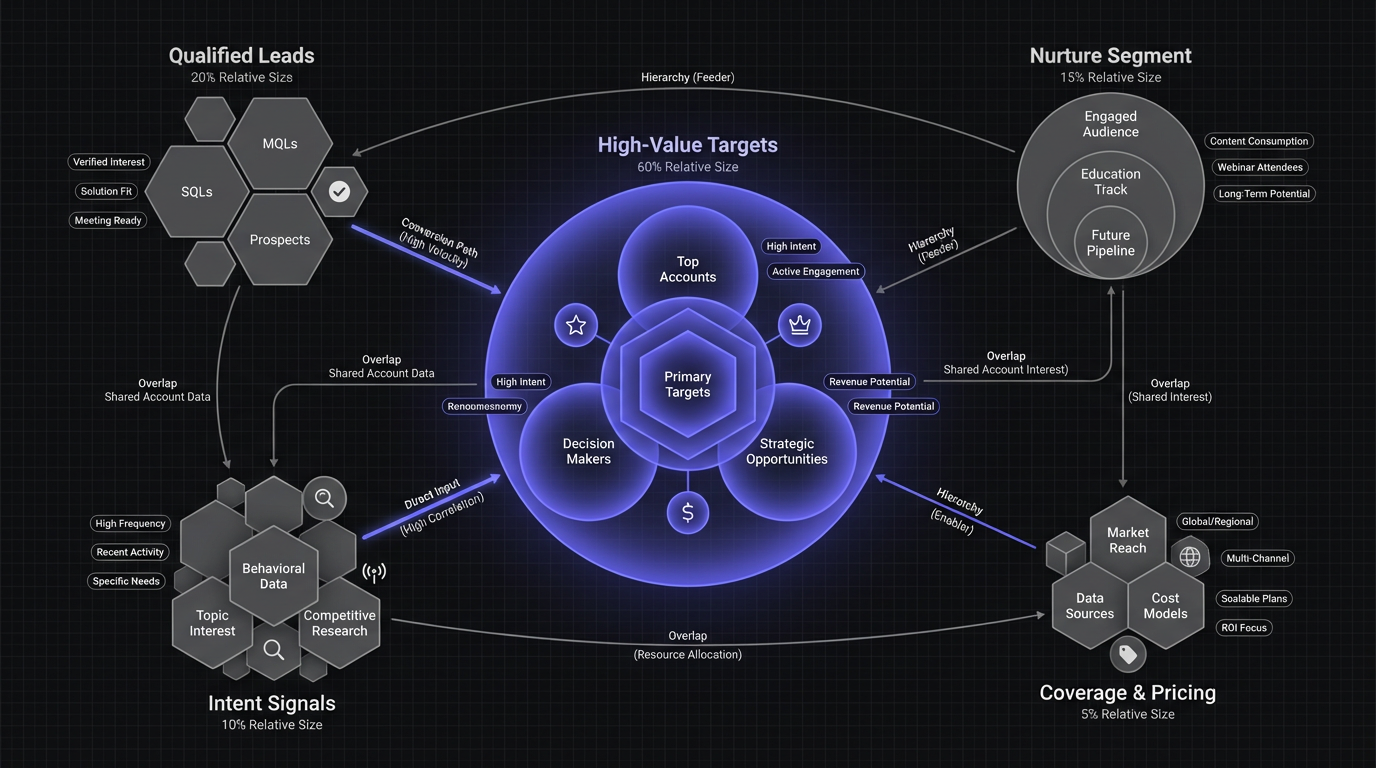
Demandbase is an account-based GTM platform. Its role here is account prioritization and engagement context around an event program, rather than a replacement for event discovery.
How it works. Use configured account, intent and engagement data alongside your event campaign. Ask how event participation and offline activity enter the system; browsing intent alone does not confirm attendance or purchase intent.
Strengths. If you're already running an ABM strategy, Demandbase can place event activity alongside account engagement, intent, and buying-group context. That combined view can help teams prioritize accounts when the underlying signals are available and relevant.
Limitations. Demandbase is a broad account-based GTM platform, so it may be more platform than a team needs when event discovery and attendee research are the only requirements. Confirm how event signals enter the product and how they connect to the team's existing data and workflows.
Pricing. Demandbase uses customized platform and per-user pricing. See the official pricing page and request a scoped quote.
Best for: Enterprise ABM teams that want event signals as part of a broader intent-driven strategy. Not practical as a standalone event intelligence solution.
Organizer-enabled networking
6. Grip — Organizer networking and matchmaking
Grip focuses on networking and matchmaking for events. Evaluate it as an event experience and engagement platform rather than an independent directory of unrelated trade shows.
How it works. Organizers configure the event experience; available participant profiles and engagement can support recommendations and connections. Exhibitors should confirm which audience, meeting and engagement features their event makes available.
Strengths. Useful to evaluate when the organizer has adopted Grip and you need networking or engagement within that event.
Limitations. Organizer adoption, permissions and event configuration affect access. Validate your event’s exports and data rights; do not assume access to a global third-party attendee list.
Pricing. Request a scoped quote or confirm exhibitor access with the organizer.
Best for: Companies that frequently exhibit at events running on Grip's platform. If your key conferences use Grip, the engagement data is valuable. Otherwise, look elsewhere.
7. Swapcard — Event networking and exhibitor leads
Swapcard provides an event platform with networking and exhibitor lead workflows. Its relevance depends on the event setup and the exhibitor access you can obtain.
How it works. Review available event profiles and connections, capture leads where enabled, and confirm how the event’s permissions and package affect your data access.
Before buying an add-on, ask the organizer or vendor which fields, exports, integrations and lead-management features are included. An upgrade does not remove every organizer or event dependency.
Strengths. Evaluate it for event networking and exhibitor lead handling when your shows use Swapcard.
Limitations. This review did not verify current self-service upgrade terms or universal CRM entitlements. Confirm them for the exact event and package.
Pricing. Confirm organizer licensing and any exhibitor package or add-on charges.
Best for: Exhibiting teams that want to extract maximum value from shows already running on Swapcard — especially for CRM sync, lead qualification, and post-show analytics.
Pro Tip: Pair Swapcard with Lensmor. Use Lensmor to research the event, exhibitors, target accounts, and decision-makers before the show; use Swapcard to track booth engagement during the event. Together they connect pre-show planning with on-site execution.
On-site lead capture
8. Cvent iCapture — On-site lead capture
Cvent iCapture supports standardized lead capture for exhibitors at third-party events. Captured records and qualification context can then enter a follow-up workflow.
How it works. Test supported badge, business-card and manual capture methods before the show. Configure qualification questions and record the next step while the conversation is fresh.
Cvent distinguishes iCapture for third-party shows from LeadCapture for events managed in Cvent. Confirm badge compatibility, field mapping and the receiving CRM workflow rather than assuming session-level data is included.
Strengths. A focused option for standardizing capture and qualification across a field team’s shows.
Limitations. Capture supports follow-up after contact; it does not by itself establish pre-show account coverage, individual attendance or buying intent.
Pricing. Request pricing for your capture, enrichment and CRM requirements. Do not assume it requires a bundled event-management contract.
Best for: Enterprise exhibitors running high volumes of trade show activations who need a standardized, CRM-integrated lead capture workflow across their entire field team.
Pro Tip: Build iCapture's custom survey questions before each event — not the morning of setup day. Pre-loading your qualification criteria (company size, buying timeline, current tech stack) ensures every rep asks the same questions, and that sales ops does not spend two days cleaning up inconsistent post-show data.
How to Choose the Right Event Intelligence Platform
The right tool depends on three factors that have nothing to do with feature checklists.
First, where does your event strategy break down? If your problem is "we don't know which events to attend," start with discovery and portfolio tools such as Vendelux or Lensmor's reverse discovery. If your problem is "we attend the right events but target the wrong accounts," use Lensmor for exhibitor, account, and decision-maker research. If your problem is "we have the data but can't activate it fast enough," prioritize integrations and workflow automation.
Second, what's your realistic budget? This category has major price variation. Compare total annual cost with the event spend and workflow it can actually improve. Use a pilot to estimate research hours saved, incremental qualified meetings, data coverage, and integration effort; do not rely on a universal percentage benchmark.
Third, how many events do you run per year? For a small program, compare pay-per-event and lightweight options. For a larger portfolio, test whether centralized analytics, permissions, and annual pricing reduce total operating cost.
Before an annual commitment, ask for a trial, sample or scoped pilot. Compare source dates, account fit, usable export fields and research time on the same event. Track meetings separately from data coverage; access to a record does not guarantee a meeting.
Conclusion
Event intelligence is becoming essential for B2B teams that rely on trade shows. The practical difference is whether a team arrives hoping for traffic or arrives with a prioritized account list, relevant contacts, and booked meetings. Measure that difference with your own qualified-lead cost and pipeline data.
Choose the product group that matches the current gap in your program. For a single-product workflow, explore Lensmor event discovery and exhibitor research; for an alternative-focused shortlist, see Vendelux alternatives.
To see how the workflow applies to real event markets, explore the refreshed RSAC 2026 recap and 2027 exhibitor planning guide and NAB Show 2026 recap and 2027 prospecting guide.
Start free with 2,000 credits and turn your next trade show into a prioritized, contact-ready pipeline before the doors open.
Related reading: the complete guide to trade show intelligence.


.avif)