.w-richtext ol{overflow:visible!important;padding-left:2.5rem!important}
Most SDRs spend 40% of their week on accounts that will never buy. The problem is not effort — it is targeting. Here is how to build a prospecting system that puts you in front of the right people, on the right channels, at the right time.
TLDR
- Define your ICP before you touch a single outreach tool
- Multi-channel sequences (email + phone + LinkedIn) consistently outperform single-channel plays
- Personalization is the #1 factor separating high-converting outreach from noise
- Event-based prospecting compresses months of outreach into hours of face time
- Measure outcomes (meetings booked, pipeline generated) not activity (calls dialed)
What Is B2B Sales Prospecting?
B2B sales prospecting is the process of identifying, researching, and reaching out to potential buyers who fit your ideal customer profile. It sits at the very beginning of the sales cycle and is typically owned by SDRs, BDRs, or early-stage founders doing their own outreach.
What is b2b prospecting in practice? You are finding companies and contacts that have a real chance of buying, then opening conversations with them before a competitor does. Business to business prospecting differs from B2C because you are selling to buying committees, longer sales cycles, and higher contract values.
The goal is not "more conversations." The goal is more conversations with people who can actually sign a contract. Every minute you spend on a bad-fit account is a minute stolen from a qualified one.
B2B Prospecting vs. Lead Generation
These terms get used interchangeably, but they describe different motions. Lead generation is a marketing function. It attracts inbound interest through content, ads, webinars, and SEO. Leads come to you.
Prospecting is an outbound sales function. You go to them. You research accounts, find the right contact, craft a message, and initiate the conversation. Prospecting is proactive; lead gen is reactive.
The best B2B prospecting strategies combine both. Marketing generates demand and surfaces intent signals. Sales uses those signals to prioritize outbound. Neither works as well in isolation.
Inbound vs. Outbound Prospecting
Inbound prospecting means working leads that have already raised their hand. They downloaded a whitepaper, visited your pricing page, or attended a webinar. Your job is to qualify and convert them quickly.
Outbound prospecting means reaching people who have not yet engaged with your brand. You are cold. You need a reason to reach out, a relevant message, and persistence. It takes an average of 8 to 12 touches to get a response from outbound prospects.
Most B2B teams need both. Inbound fills the top of funnel with warmer leads. Outbound lets you target specific high-value accounts that may never find you organically.
How to Build a B2B Sales Prospecting Plan
A sales prospecting plan is not a CRM workflow or a list of tools. It is a documented system that tells your team who to target, how to reach them, and what success looks like week over week.
Without a prospecting plan, reps default to whoever is easiest to find on LinkedIn. That is how you end up with a full activity log and an empty pipeline.
Step 1 — Define Your Ideal Customer Profile (ICP)
Your ICP is the single most important input to your entire prospecting operation. Get this wrong and nothing downstream will save you.
A useful ICP covers: company size (employee count and revenue), industry or vertical, specific pain points your product solves, budget range, and the decision-maker title you need to reach. If you sell to marketing directors at B2B SaaS companies with 50 to 200 employees, write that down. If you sell to VP Operations at manufacturing firms doing $10M+ revenue, write that down instead.
Do not make it aspirational. Base it on your last 10 closed-won deals. Look at what they have in common. That pattern is your ICP.
Step 2 — Set SMART Prospecting Goals and KPIs
SMART goals for prospecting should be specific, measurable, and time-bound. "Do more outreach" is not a goal. "Book 12 qualified meetings per month from outbound" is a goal.
Break it backwards. If you need 12 meetings and your meeting-booked rate from positive replies is 50%, you need 24 positive replies. If your positive reply rate is 8%, you need 300 prospects contacted per month. Now you know your weekly volume.
Tie KPIs to outcomes, not inputs. Calls made is a vanity metric. Meetings booked is a pipeline metric. Cost per qualified meeting tells you whether your process is sustainable.
Step 3 — Build and Enrich Your Prospect List
Your list is only as good as your data. Start with your ICP criteria and pull contacts from LinkedIn Sales Navigator, Apollo, ZoomInfo, or Bombora (for intent data). Build lookalike lists from your best customers.
B2B data prospecting means going beyond name and email. You want firmographic data (company size, revenue, tech stack), intent signals (recent funding, job postings, G2 competitor reviews), and contact-level data (direct dial, verified email, LinkedIn URL).
Enrich every record before it enters your sequence. A prospect with a wrong email or outdated title wastes a sequence slot and tanks your deliverability. Clean data is not optional; it is the foundation.
Step 4 — Choose Your Channel Mix
Single-channel outreach is dead for most B2B segments. The question is which combination works for your buyer.
For high-ACV enterprise deals, phone + email + LinkedIn is the standard. For mid-market SaaS, email + LinkedIn + video often outperforms. For SMB with shorter cycles, email sequences with phone follow-up can be enough.
Match your channel mix to where your buyers spend time and how they prefer to be contacted. A VP of Engineering does not respond to InMails the same way a VP of Sales does. Your b2b outbound sales strategy should reflect buyer behavior, not your team's comfort zone.
Step 5 — Design Your Outreach Sequences
A sequence is the series of touches a prospect receives across channels over a defined period. Most effective sequences run 14 to 21 days with 8 to 12 touchpoints.
Structure matters. Day 1 might be a personalized email. Day 3 a LinkedIn connection request with a note. Day 5 a phone call. Day 8 a follow-up email referencing a specific signal. Day 12 a short video. Day 15 a breakup email.
Personalization at scale does not mean writing every email from scratch. It means having 2 to 3 personalized sentences per message that reference something specific: a recent hire, a LinkedIn post, a product launch, or a shared connection.
Proven B2B Prospecting Techniques That Still Work
Tactics change. Channels shift. But these sales prospecting techniques continue to produce pipeline in 2026 because they are grounded in buyer psychology, not platform gimmicks. The best b2b prospecting methods layer multiple approaches depending on deal size and buyer type.
Cold Email Outreach
Cold email remains the highest-volume channel for most outbound teams. But the bar for what gets a reply has risen sharply.
What works now: short emails (under 120 words), one clear ask, personalized first lines tied to a buying signal, and proper sender infrastructure (dedicated domains, warmup, authentication). Generic templates with "I noticed your company" openers get deleted or flagged as spam.
Your b2b outbound sales strategy for email should include A/B testing subject lines weekly, rotating sending domains, and segmenting sequences by persona. One sequence for CTOs, another for VPs of Sales. Same product, different angle.
Cold Calling
Cold calling still works because most prospects receive far fewer calls than emails. The inbox is a warzone. The phone is comparatively quiet.
Top-performing SDRs time-block 60 to 90 minutes daily for calling. They research 5 key facts about the prospect before dialing. They lead with a relevant observation, not a pitch. "I saw you just expanded your sales team by 4 reps. Usually that means pipeline targets went up. Is that accurate?" opens doors.
Phone connects are rare (expect 5 to 15% connect rates). But conversations are high-signal. A 3-minute call gives you more qualification data than 6 emails.
LinkedIn Social Selling
LinkedIn has over 900 million members, and 80% of B2B leads reportedly come through the platform. That statistic alone justifies investing time here.
Social selling is not sending connection requests with a pitch in the note. It is engaging with prospect content, sharing relevant insights, building familiarity before you ever ask for a meeting.
The sequence: view their profile, engage with a post (genuine comment, not "Great post!"), send a connection request with no pitch, share a relevant resource via DM after they accept, then ask for 15 minutes once rapport exists. This takes longer per prospect but converts at 2 to 3x the rate of cold InMails.
Video Outreach
Video outreach via Loom or Vidyard can 3x reply rates versus text-only cold email. It stands out because so few reps bother.
Record a 45 to 60 second video. Show their website or LinkedIn profile on screen. Reference something specific. State one clear reason to talk. End with a low-friction ask ("Would a 15-minute call this week make sense?").
Personalized thumbnails with the prospect's name or company logo increase open rates significantly. The effort signals that you are not spraying hundreds of templates. That signal alone earns attention.
Referrals and Warm Introductions
Referrals are the most underused prospecting channel relative to their conversion rate. A warm intro from a mutual connection bypasses all trust barriers that cold outreach has to fight through.
Build referral asks into your post-deal process. After a successful onboarding, ask: "Who else in your network faces the same challenge you had 3 months ago?" Frame it around their peers, not your pipeline.
Track referral sources in your CRM. Some customers consistently produce high-quality introductions. Treat them like a channel and nurture accordingly.
Content Marketing as a Prospecting Channel
Content is not just a marketing function. SDRs can use content as a prospecting tool by sharing relevant articles, case studies, or data in their outreach.
Write a cold email that leads with a genuinely useful insight. Attach a one-page PDF with benchmarks relevant to the prospect's industry. This positions you as a resource, not a quota-chaser.
Original LinkedIn posts also serve as inbound magnets. If you publish content that your ICP finds useful, prospects come to you pre-warmed. The compound effect over 6 months is significant.
Account-Based Prospecting
Account-based prospecting is most effective for complex, long-cycle deals with multiple decision-makers. Instead of spraying outreach across hundreds of accounts, you concentrate resources on 20 to 50 named accounts.
Start by tiering accounts. Tier 1 (5 to 10 accounts) gets fully custom messaging and research. Tier 2 (20 to 30 accounts) gets persona-level customization. Tier 3 (50+ accounts) gets segment-level personalization with light customization.
Map the buying committee at each Tier 1 account. Identify the economic buyer, the champion, the technical evaluator, and any blockers. Run coordinated multi-threaded outreach across the committee. One person ignoring you does not kill the deal when you have 3 other threads open.
Event-Based Prospecting
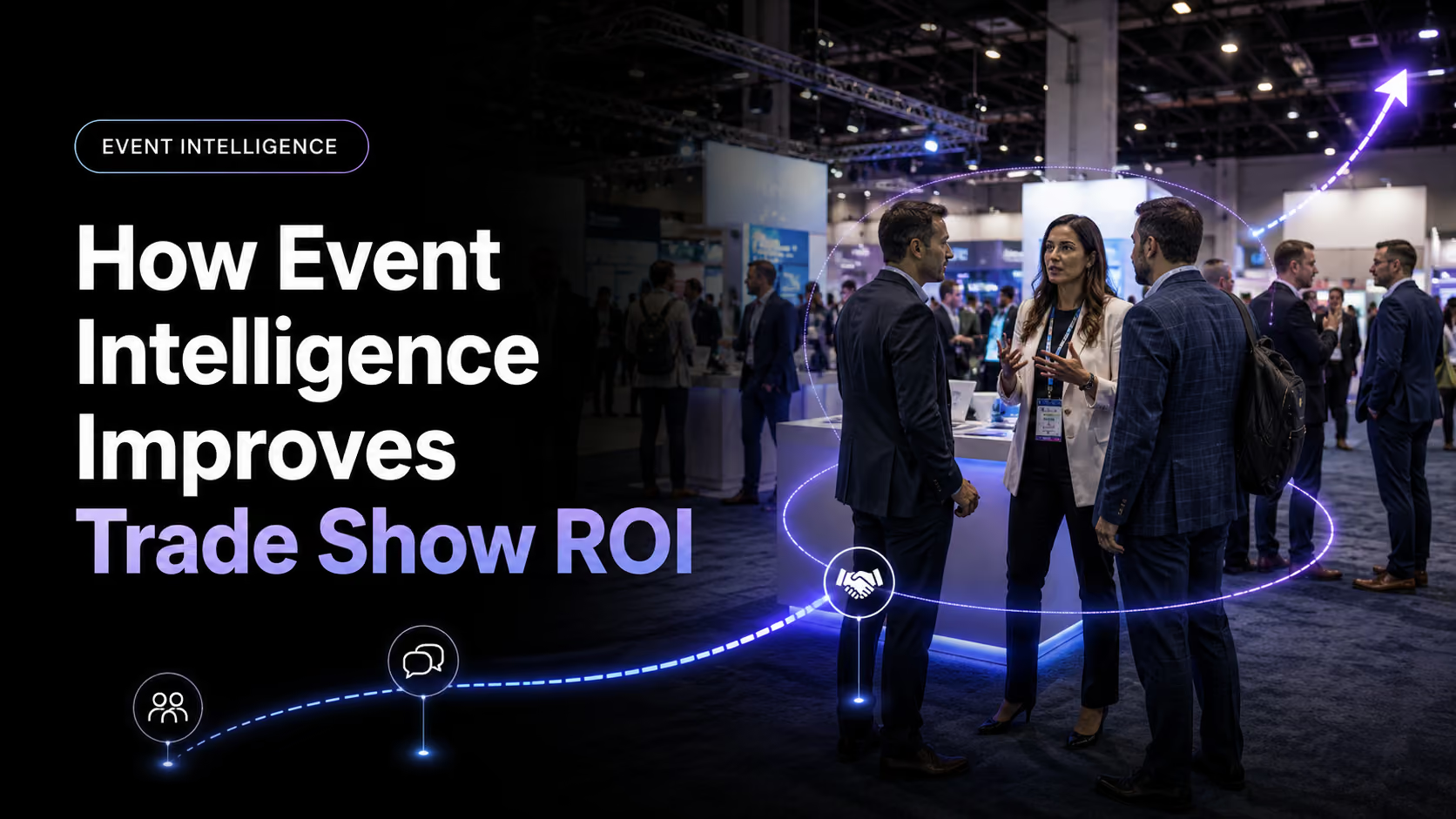
Event-based prospecting compresses months of outreach into hours of face time. A single trade show puts you in the same room as hundreds of qualified buyers who have already self-selected by attending.
The problem is that most event leads die within 48 hours without a structured follow-up and capture system. Reps scan badges, collect business cards, and dump them into a spreadsheet that never gets worked. That is not prospecting. That is waste.
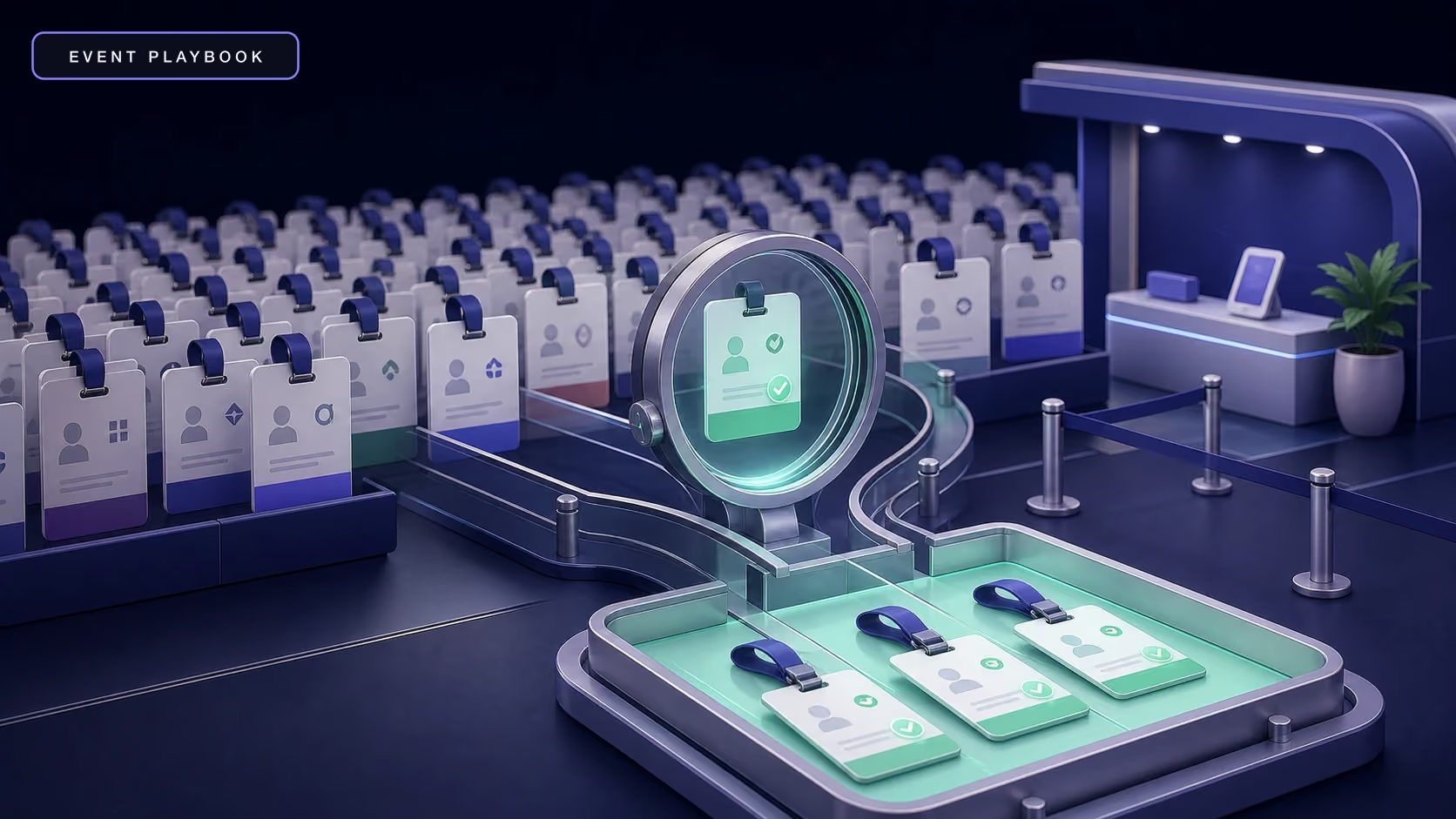
The fix is pre-event research and same-day follow-up. Before the event, review the exhibitor and attendee lists. Identify which attendees match your ICP. Book meetings in advance. At the event, capture leads with context (what they said, what they need, what they asked about). After the event, trigger sequences within 24 hours while the conversation is still fresh.
If you want to understand what a trade show actually delivers for pipeline, start there before committing budget. Then review a trade show checklist before you book booth space so you are not scrambling the week before. For tactical capture methods, read how to collect leads at a trade show. And for the broader picture of turning events into revenue, explore event marketing strategies that move pipeline.
Lensmor is a trade show lead capture platform that scans exhibitor lists before events, surfaces attendees who match your ICP, and feeds verified contacts into your CRM the same day. It turns the scanning-badge chaos of a trade show floor into structured pipeline.
See how Lensmor works → lensmor.com
B2B Sales Prospecting Tools 2026

The tooling landscape is crowded, but most outbound stacks fit into a few categories: data providers, sequencing platforms, dialers, and enrichment layers.
For b2b data prospecting and contact enrichment, Apollo, ZoomInfo, Cognism, and Lusha remain the leaders for verified emails and direct dials. Bombora and 6sense provide intent data so you know which accounts are actively researching your category. LinkedIn Sales Navigator is still the primary tool for finding decision-makers and building targeted lists.
For sequencing and automation, Outreach, Salesloft, Instantly, and Smartlead handle multi-step email sequences at scale. Mixmax works well for teams running outreach directly from Gmail. For cold calling, Orum, Nooks, and PhoneBurner offer parallel dialers that multiply connect rates.
For signal-based prospecting, tools like Autobound and Keyplay track buying signals (job changes, funding rounds, hiring velocity, tech stack changes, G2 competitor reviews) and surface them to reps in real time. Clay has become a popular orchestration layer that connects data sources, enrichment, and personalization into a single workflow.
For event-based lead capture specifically, Lensmor identifies ICP-matched attendees from exhibitor lists and syncs captured contacts into your CRM with full context from the conversation.
CRM remains the backbone. HubSpot for SMB and mid-market. Salesforce for enterprise. Everything else feeds into one of those two.
Prospecting KPIs: What to Measure and Why?
You cannot improve what you do not measure. But measuring the wrong things creates perverse incentives. Here is how to structure your prospecting metrics into three tiers.
Activity Metrics
Activity metrics tell you whether reps are doing the work. They are necessary but insufficient.
Track: emails sent per day, calls made per day, LinkedIn touches per day, and new sequences started per week. These confirm effort. They do not confirm effectiveness.
Use activity metrics as a floor, not a ceiling. If a rep is below minimum activity, that is a coaching conversation. If activity is high but pipeline is flat, the problem is targeting or messaging, not effort.
Quality Metrics
Quality metrics tell you whether the right work is happening with the right people.
Track: positive reply rate (target 8 to 12% for cold outreach), meeting-booked rate from positive replies (target 40 to 60%), ICP-fit rate of meetings booked (what percentage of meetings are with true ICP accounts), and email deliverability rate (should stay above 95%).
A good response rate for cold outreach varies by channel. Email positive reply rates of 5 to 12% are normal. LinkedIn acceptance rates of 20 to 40% are healthy. Phone connect-to-conversation rates of 5 to 15% are standard.
Pipeline Metrics
Pipeline metrics connect prospecting to revenue. This is what leadership actually cares about.
Track: meetings booked per rep per week, lead-to-opportunity conversion rate, cost per qualified meeting, pipeline value generated from outbound, and average days from first touch to meeting booked.
The north star is pipeline generated divided by fully loaded cost of your outbound operation. If one SDR costs $8K per month fully loaded and generates $200K in pipeline, your ROI is clear.
Common Prospecting Mistakes to Avoid
Targeting too broadly. No ICP means you are guessing. Spray-and-pray burns domains, wastes rep time, and teaches the market to ignore you.
Sending generic templates. If your email could be sent to any company in any industry, it will not get a reply. Personalization is the minimum bar in 2026, not a differentiator.
Stopping after 2 touches. It takes 8 to 12 touches to get a response. Most reps quit after 2 or 3. The follow-up emails are where meetings get booked.
Measuring activity instead of outcomes. 100 calls means nothing if zero meetings were booked. Optimize for meetings and pipeline, not dials and sends.
Skipping post-event follow-up. You spent $15K on a booth and collected 200 badge scans. If those leads are not in a sequence within 48 hours, you wasted the budget.
Ignoring data hygiene. Bounced emails and wrong numbers are not just inefficient. They damage sender reputation and reduce deliverability for every future campaign.
Conclusion
A strong B2B sales prospecting system is not about adding more tools or sending more emails. It is about precision: right account, right contact, right message, right channel, right timing. Start with your ICP, build outward from there, and measure what matters.
If trade shows and live events are part of your channel mix, do not let that pipeline die in a spreadsheet. Lensmor gives you the capture infrastructure to turn event conversations into CRM-ready opportunities before your competitors even upload their badge scans.