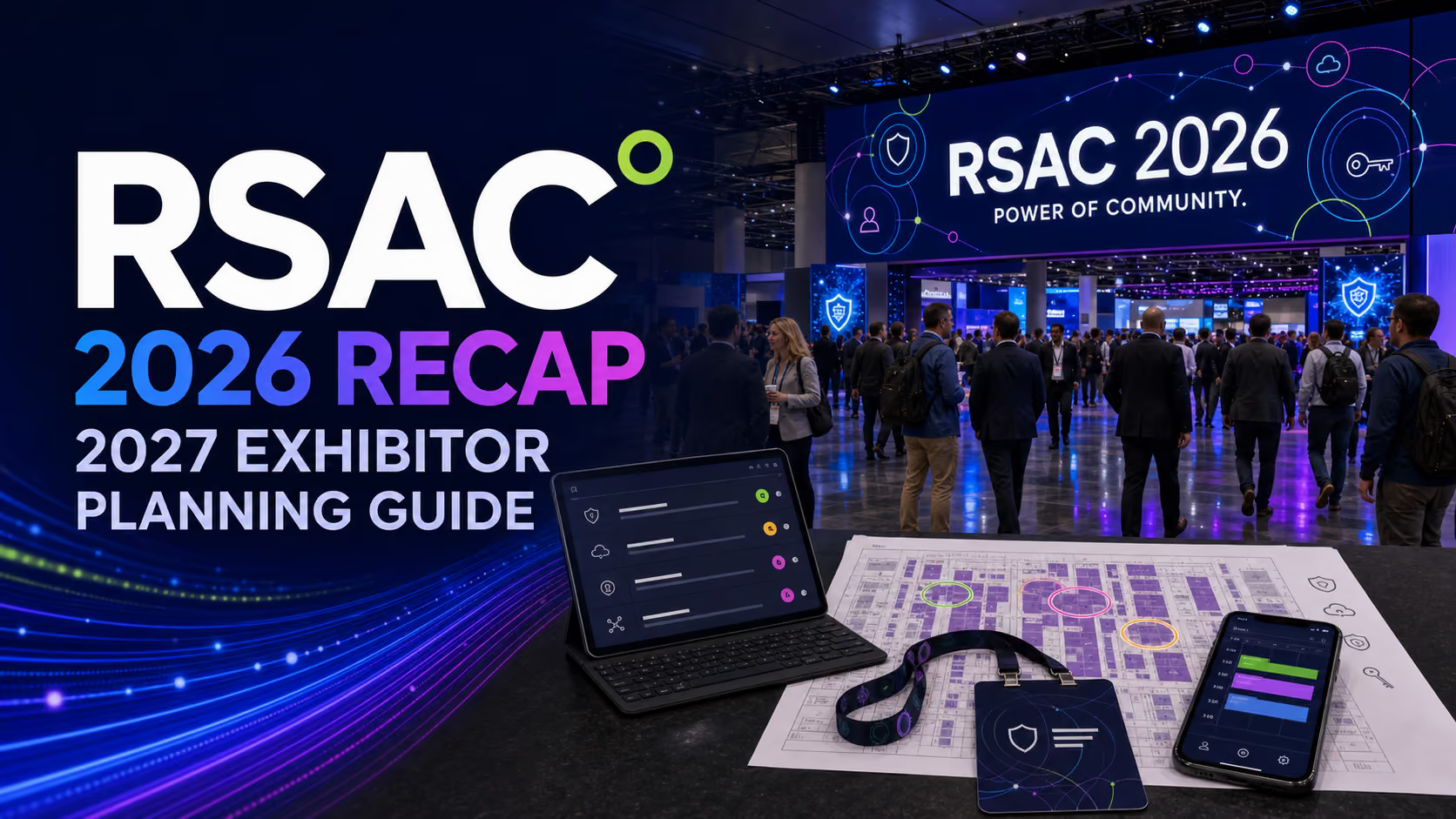
Updated July 2026: RSAC 2026 has concluded. According to the official closing report, the event drew 43,500+ attendees, 700+ speakers, 600+ exhibitors, and participants from more than 100 countries. RSAC 2027 returns to San Francisco April 5-8.
RSAC 2026 turned Moscone Center into a concentrated map of the cybersecurity market. Agentic AI, offensive and defensive cyber capabilities, and resilience emerged as major themes, while the exhibitor floor showed where established platforms and newer vendors were investing.
For B2B teams, the durable lesson is that the event's value begins before the doors open. The 2026 landscape can now serve as a research baseline for RSAC 2027: identify the right companies early, map competitive positioning, and book focused conversations before calendars fill.
This refreshed guide combines the 2026 recap with the preparation workflow teams can carry into 2027.

What RSAC 2026 Looked Like on the Ground
RSAC 2026 ran March 23-26 at Moscone Center in San Francisco. The event drew 43,500+ attendees and featured 600+ exhibitors across categories including Identity & Access Management, Cloud Security, Detection & Response, and GRC.
The exhibitor mix tells you everything you need to know about the market's current priorities. Tier-1 vendors like Palo Alto Networks, CrowdStrike, and SentinelOne command island booths the size of small apartments. But the action for B2B teams often happens in the startup zone and mid-market sections, where newer vendors are spending aggressively to prove market fit and decision-makers are hungrier for conversations.
For companies selling to the security market — think SaaS platforms, professional services firms, infrastructure vendors, or anyone whose ICP is a CISO or VP of Security — RSA isn't just an education event. It's a 72-hour sales sprint where every conversation is compressed and every door is slightly more open than it would be on a cold call.
Pro Tip: RSA Conference's Innovation Sandbox competition (featuring ten finalists competing for the title of most innovative security startup) is one of the best places to spot emerging vendors before they become your competitors or acquisition targets. Map the finalists to your market position before you land.
The RSA Conference 2026 Exhibitor Landscape
Before you build your intelligence plan, you need to understand who actually exhibits at RSA — and why it matters that the list changes every year.
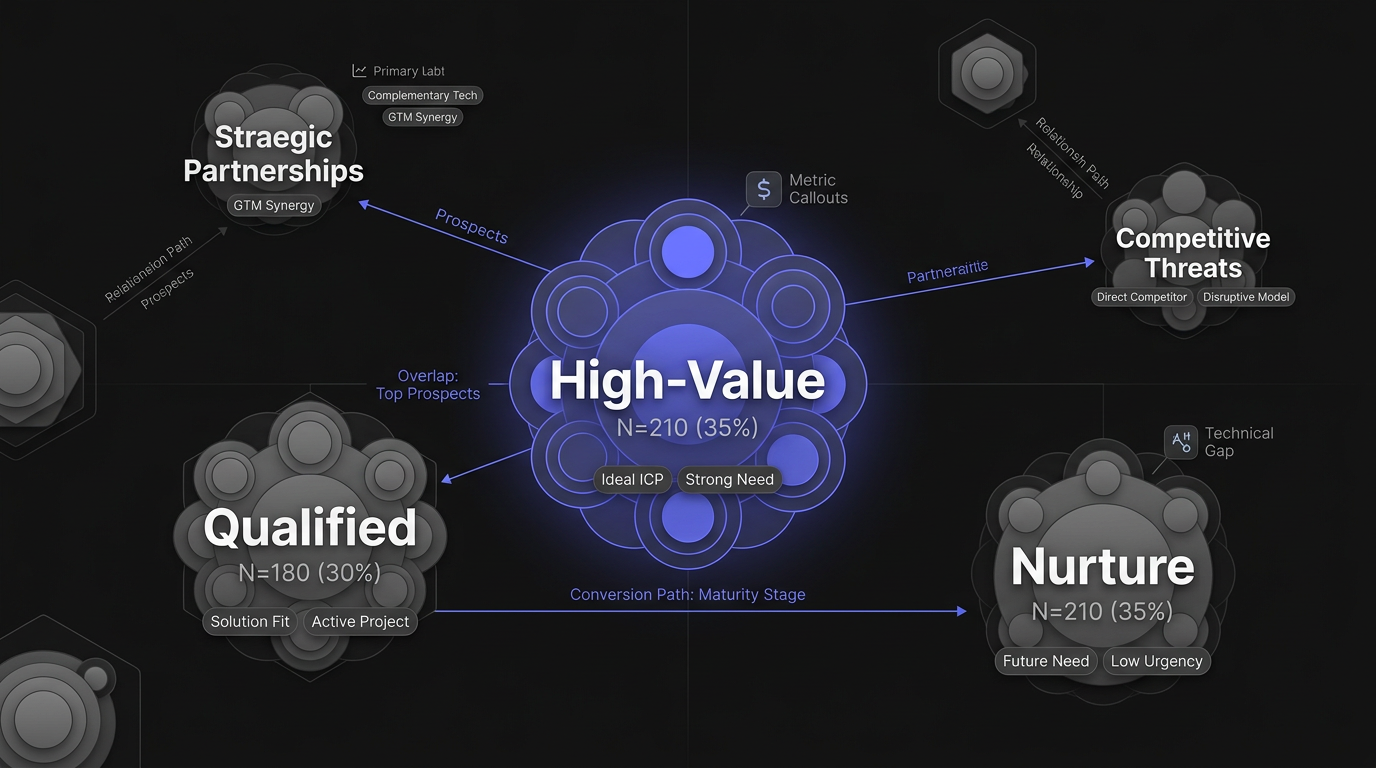
Why does this categorization matter? Because not every RSA exhibitor is a prospect, a competitor, or a partner for your business. Walking the floor without a clear taxonomy of who's there means you'll spend half your time in conversations with no strategic value.
Pro Tip: Pull the official RSA exhibitor list as soon as it goes live — usually 6–8 weeks before the event — and tag every company in three columns: Prospect, Competitor, or Partner/Channel. This single exercise will save your team 10+ hours of reactive booth-hopping on the expo floor.
How to Prepare for RSAC 2027 Using the 2026 Landscape
The highest-leverage intelligence work happens before you ever step onto the expo floor. Here's the framework, in order of priority.
Map exhibitors to your ICP before you leave your desk
Start with the full RSA exhibitor list and filter down to companies that match your ideal customer profile. If you sell to security operations teams, you want the SIEM vendors, the MDR providers, and the SOC tooling companies — not the compliance platforms targeting GRC teams.
For each target company, you want to know three things before you arrive: Who's going to be at their booth (reps only, or leadership?), what they launched in the last 6–12 months (booth messaging reflects current priorities, not last year's pitch), and whether they're in your customer base, pipeline, or neither.
Lensmor helps teams combine RSAC exhibitor research with predicted attendee and account signals, so they can identify the right companies and decision-maker contact paths before the next event. Build the RSAC 2027 target-account plan in Lensmor.
Identify the "second-tier" exhibitors worth your real attention
Everyone watches Palo Alto Networks and CrowdStrike. The smarter intelligence play is in the middle tier — companies with $20M–$200M in ARR, actively expanding their partner ecosystem or looking for strategic relationships.
These companies typically exhibit in 10x10 or 20x10 booths on the outer perimeter of the expo hall. Their leadership is usually on the floor (not just scheduled in rotation), and they have real decision-making authority to make commitments on the spot. One conversation with the right VP of Partnerships from a Series C security vendor can unlock a channel deal worth 10x more than a dozen badge scans from enterprise targets who aren't in active buying cycles.
Research competitive booth positioning before the floor opens
At RSA, proximity matters. Exhibitors spend real money on booth placement strategy — vendors who want to intercept traffic from a competitor's booth will position themselves in the adjacent space deliberately. Before you arrive, study the floor plan and identify where your top five competitors are exhibiting, and who's neighboring them.
This tells you two things: where your competitors are directing their demo energy, and where prospects who just left your competitor's booth will be walking next. That foot traffic pattern is a map of warm conversations waiting to happen.
Pro Tip: RSA typically releases the interactive floor map 4–6 weeks before the event. Screenshot it, annotate it with competitor and priority target locations, and build your team's daily walking route around high-value clusters rather than random floor wandering.
Building Your RSAC 2027 Hit List
The hit list is the operational core of your pre-show intelligence work. It's a prioritized list of specific people you want to find — not companies, but individuals with names, roles, and reasons for the conversation.
Here's the three-tier structure that works:
Tier 1 — Book before the show (target 5–10 confirmed meetings). These are your highest-value prospects and partners — people you can identify by name using attendee data or LinkedIn research. Reach out 3–4 weeks before RSA to request a brief meeting at their booth or at the conference café. RSA has enough meeting space in the hallways and partner lounges that serious conversations usually happen off the expo floor anyway. Anyone worth a Tier 1 slot is worth a calendar invite, not a "find you on the floor" message.
Tier 2 — Find at the booth (target 10–15 conversations). Mid-priority targets where you know the company but haven't identified the specific individual yet. Your job on the floor is to determine the right person within the first 90 seconds of arriving at their booth and get a real conversation, not a demo queue slot.
Tier 3 — Serendipitous intelligence (expect 20+ encounters). Everyone else who ends up in a meaningful conversation — the speaker hallway exchange, the lunch line conversation, the session Q&A where someone asks a question that signals they're a buyer for exactly what you sell. These are harder to plan but disproportionately valuable because your guard is down and so is theirs.
For the lead capture mechanics on the floor itself — apps, CRM syncing, conversation note-taking — we've covered that in a separate guide. The intelligence framework here is specifically about who you're targeting and why before you scan a single badge.
The pre-show outreach window most teams miss
Here's something counterintuitive: the best meetings at RSA Conference are often booked three weeks before the event opens, not arranged on the expo floor.
Decision-makers at RSA are in back-to-back sessions, customer dinners, and partner briefings from 7 AM to 10 PM. By the time someone finally has a free moment to talk at your booth, they're mentally saturated. But three weeks before the event, they're planning their schedule. That's when a short, specific LinkedIn message — "I know you'll be at RSA, we're working on [specific problem in your space], worth 15 minutes?" — has a response rate that would look insane in any other context.
The hit list doubles as your outreach list. For every Tier 1 target, the playbook is: identify the person by name, research what they've posted or presented recently, send a personalized note referencing something specific, and include a clear ask. Not "would love to connect," but "are you free for 15 minutes on March 24 at 2 PM near the North Hall café?"
What RSAC 2026 Revealed on the Expo Floor
Once you're in the hall, intelligence gathering shifts from research mode to observation mode. A few things worth tracking actively:
Queue length as market signal. At a show the size of RSA, crowd density at a demo station tells you something real. If a vendor you've never heard of has 20 people watching their demo on day one, that's not random. Find out what they're showing and why it's pulling traffic.
Booth messaging evolution. Every major exhibitor spends tens of thousands of dollars on messaging strategy. The taglines, the metrics highlighted, the personas featured in the graphics — all of it reflects what's testing well with buyers right now. If the platform vendors are leading with "consolidation," that's a market signal, not just a brand choice.
The Innovation Sandbox finalists. RSA's annual competition features ten startups selected by a senior practitioner judging panel. The winner often predicts a category movement 18–24 months out. It's worth attending the presentations even if none of the ten are directly relevant to your current business.
After RSA: Converting Intelligence into Pipeline
The show closes, everyone flies home exhausted, and 79% of trade show leads never receive any follow-up at all. Don't be in that 79%.
The intelligence you gathered has a half-life. Conversations are freshest in the 48 hours after the event closes. Competitor notes stay relevant for the next quarter's strategy review. Relationship signals — who was genuinely friendly, who mentioned a problem you can solve, who asked you to send something specific — decay fast if you don't act on them within a week.
The short version: within 24 hours of returning, triage your notes into three buckets. Immediate follow-up: met someone with clear buying signals, send a personal note today. Nurture sequence: good conversation, no immediate signal, add to a 30-day drip. Intelligence file: competitive or market information worth preserving for future reference, not an outreach target.
For the full post-show playbook with segmentation, timing cadences, and CRM hygiene, see our guide on following up on trade show leads. And for a comparison of lead retrieval tools to capture conversations on the floor, see the 8 best lead retrieval apps for trade shows.
RSAC 2026 has concluded, but the operating lesson remains current: teams that map exhibitors, build a ranked account list, and pre-book meetings are far less dependent on random floor traffic. That same preparation should begin early for RSAC 2027.
One more thing worth noting: the intelligence value of RSA extends beyond the expo floor. The sessions, the keynotes, and the hallway conversations between security practitioners tell you where the market is heading in ways that booth demos never will. Budget time for at least two or three sessions that aren't directly relevant to your immediate pipeline — that's usually where you find the insight that shapes your strategy for the next twelve months, not just the next quarter.
For the media technology sector, see our NAB Show 2026 recap and 2027 planning guide.
Editorial note: This is an independent intelligence guide, not an official RSA Conference publication. Exhibitor lists, floor plans, and program details are published by RSA Conference LLC and subject to change. For official information, visit the RSA Conference website directly.


.avif)