The exhibitors who walk away with a full pipeline don't get lucky. They start preparing three months before the show opens.
Trade shows are expensive. A 10x10 booth at a mid-size industry event runs $3,000–8,000 in space fees before you add travel, logistics, and staff time. And yet 81% of trade show attendees have buying authority. That's one of the highest concentrations of qualified prospects you'll find in any channel.
The catch: the advantage only materializes if you show up prepared. Companies that treat trade shows as "show up and see what happens" reliably find themselves standing in a half-empty booth counting badge swipes at the end of day two.
This guide covers every phase — choosing the right show, building your 90-day timeline, designing a booth that stops people, running pre-show outreach, working the floor, and following up in a way that actually converts.
TL;DR
- Choose shows by attendee ICP fit, not brand name or show size
- Start preparing 90 days out: logistics, design, and outreach all take longer than expected
- The goal on the floor is qualified conversations, not badge scans
- Segment leads in real time, not at the end of the day
- Use a 90–180 day attribution window when measuring ROI
Why exhibiting at a trade show still works in 2026?
Digital outreach is getting harder. Inboxes are noisier. LinkedIn engagement has declined. Google Ads CPCs keep climbing quarter over quarter.
Trade shows solve a problem digital can't: they put you in the same room as buyers who already raised their hand by showing up.
What trade shows give you that digital channels don't?
Definition: Trade show exhibiting is the practice of renting floor space at an industry event to display products, demonstrate services, and have face-to-face conversations with buyers, partners, and industry contacts.
Face-to-face interaction compresses the trust timeline. A 10-minute conversation at your booth can do more work than six months of email nurturing. According to the Center for Exhibition Industry Research, 92% of trade show attendees say they're there primarily to see new products and solutions. They came to evaluate vendors. That's a different receptivity than someone who clicked an ad.
There's also the co-location effect. At a well-chosen show, your ICP is concentrated on a single floor for two or three days. Every conversation is a warm one. You're not interrupting anyone — you're exactly where they expected to find you.
Are trade shows worth it for B2B? The numbers
The average cost per lead at a trade show is $212, according to CEIR. That's higher than some inbound channels — but lead quality tends to be better. These are contacts who saw your booth, had a real conversation, and opted in to follow-up.
The mistake most companies make is measuring trade show ROI inside a 30-day window. B2B deals take time. Industry data consistently shows 90–180 days is the accurate attribution window for trade show leads. A deal that closes five months after the show is still the show's ROI. Compress that window and every event will look like it underperformed.
How to choose the right trade show to exhibit at?
Not every trade show deserves your budget. The wrong show wastes money. The right show compounds. The decision comes down to three variables: attendee fit, competitive density, and your own readiness to execute.
Four questions to ask before you commit
Who actually attends? Request the attendee demographics report from the organizer. Look for job titles, company sizes, and industries. If the attendee profile doesn't match your ICP, the show doesn't match your goals — regardless of its brand name.
What's the exhibitor-to-attendee ratio? A show with 500 exhibitors and 2,000 attendees is oversaturated. One with 200 exhibitors and 5,000 attendees gives you more meaningful floor time. The ratio matters more than total attendance numbers.
What do past exhibitors say? Find two or three companies who've exhibited at the show before — not competitors, but adjacent vendors. Ask what the leads were like and whether they'd return. Five minutes of that conversation is worth more than any official prospectus.
Can you actually win here? If your direct competitors dominate the show with large custom booths and a decade of brand presence, a 10x10 popup display won't compete. Either budget to compete properly, or find a show where you have room to stand out.
How to read a trade show prospectus?
Organizers publish prospectuses that lead with total attendance and brand reach. Ignore those numbers and go straight to the attendee breakdown: job-level split (decision-maker vs. practitioner vs. student), geographic spread, and company size distribution. Also look at the floor plan — where are the high-traffic areas and where do exhibitors go to die? Booth location within the show is a meaningful variable.
Pro Tip: Ask the organizer for the attendee list from last year's event (many will share a sample or anonymized version). You can cross-reference it against your own CRM to see if your actual customers attended — which is a much stronger signal than demographic averages.
Trade show planning checklist: 90 days to show day
Trade show preparation fails most often not from bad strategy but from bad sequencing. Things take longer than expected — booth production, shipping logistics, hotel blocks, pre-show outreach. If you start planning six weeks out, you'll spend the last two weeks scrambling.
The checklist below runs in reverse from show day.
Booth logistics and design
Your booth has three seconds to communicate what you do and who it's for. If someone walking past can't answer "what is this company and why would I stop?" in the time it takes to pass your booth, you've lost them.
The single most common booth mistake is trying to communicate too much. A tagline that covers your full product suite across three verticals tells nobody anything. One clear value statement — specific enough to be relevant, broad enough to start a conversation — will outperform comprehensive messaging every time.
Keep the demo station clear and easy to walk into. Remove chairs that face away from the aisle. Anything that creates a physical barrier between your staff and passing traffic reduces engagement.
Pre-show marketing and outreach
Most exhibitors wait until they're on the show floor to start conversations. The exhibitors who consistently outperform start three to four weeks earlier.
The attendee list (where available) is a prospecting list. Run it against your ICP criteria and reach out before the show with a specific reason to meet: a product demo, a relevant use case, a free analysis. Don't send a generic "we'll be at Booth 412" email — nobody responds to those. Personalize to their company or role.
LinkedIn is worth the investment for trade show prep. A pre-show post that announces your presence and creates urgency ("we're doing live demos of X — DM to book a slot before they fill up") will pull meetings from people who never would have stopped at your booth cold.
Researching attendees before the show
Knowing who is going to be in the room before you get there changes how you prepare. If you can identify which registered attendees match your ICP, you can prioritize your outreach, brief your staff on specific targets, and set up meetings that fill your calendar before day one.
Lensmor helps B2B teams identify which event attendees match their ICP before the show — so you arrive with a prioritized target list, not a spreadsheet you're building on the plane.
Briefing and training your booth staff
The gap between a well-briefed team and an unbriefed one shows immediately on the floor. Staff who don't have a clear opening line, a qualification framework, and a lead capture process will wing it — and winging it means inconsistent conversations and leads that don't convert.
Run one real practice session before the show. Cover: how to open a conversation with someone walking past, the two or three questions that qualify a lead, how to demo in under five minutes, and what happens to the lead after the conversation ends.
Pro Tip: Assign booth roles explicitly. "Two people working the aisle, one running demos, one on scheduled meetings" is a better structure than "everyone just talk to people." Defined roles prevent clustering (three staff talking to one visitor while others walk past unengaged) and ensure coverage throughout the day.
Designing a trade show booth that stops people
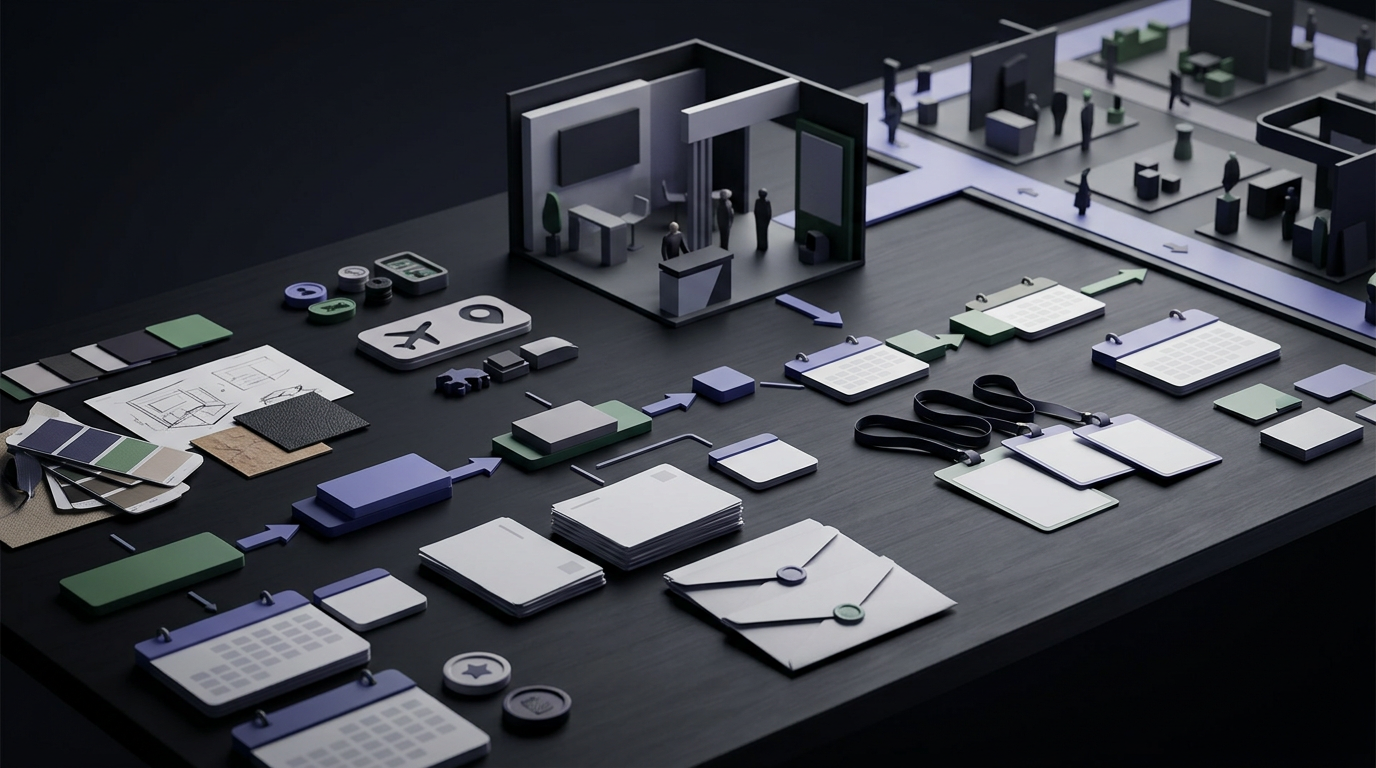
What the best trade show booths have in common
The booths that consistently draw the most foot traffic share a few structural features:
- Height. A display that reaches 8–10 feet is visible from further down the aisle. Most 10x10 booths max out at 8 feet per venue rules, but using that full height is still an advantage.
- One dominant visual. Not a grid of product shots, not a logo surrounded by text. One image, one message, visible from 20 feet away.
- Open floor plan. No tables or counters blocking the aisle edge. The more open and inviting the space, the more people will step inside rather than glancing as they pass.
- A working demo. Motion draws attention. A screen showing a live product demo, a video loop, or an interactive display pulls eyes in a way that static graphics don't.
Common booth design mistakes that cost you leads
Too much copy. Nobody stops to read a wall of text at a trade show. Every word you add to your signage reduces the chance of any of it being read.
Chairs facing inward. Chairs behind a table with staff seated creates an "us vs. them" dynamic. It makes the booth feel like an office, not an invitation. If you need seating for demos or long conversations, put it to the side or back of the booth, not at the entrance.
Giveaways with no qualifier. Candy bowls and stress balls pull in everyone — including a hundred badge swipes from people who will never buy from you. If you're going to use a giveaway to drive traffic, tie it to a brief conversation or business card exchange.
How to work the trade show floor
Opening conversations without being that exhibitor
The fastest way to lose someone is to lead with a pitch. The second fastest is to ask "can I tell you about what we do?" Nobody says yes to that.
The conversations that go somewhere start with a question that's relevant to them. "What's bringing you to the show this year?" "Are you here looking at solutions in [your category] or something else?" These open the conversation without triggering the "I'm being sold to" instinct.
Once someone engages, you have about 60–90 seconds to figure out if they're worth a longer conversation. Listen more than you talk. The best trade show reps spend the first two minutes asking questions, not explaining features.
Qualifying conversations in real time
Not every person who walks into your booth is a buyer. Qualifying fast — ideally in the first three questions — is a skill that separates top trade show performers from average ones.
A simple framework:
- What do you do? (role and company — is this your ICP?)
- What problem are you here to solve? (or "what's the main thing you're looking for at the show?")
- Are you evaluating solutions right now, or more exploratory? (timeline and buying mode)
If the answers put them in your ICP with an active evaluation, go deeper. If they're exploratory but a fit, that's a warm lead for post-show follow-up. If they don't fit, close politely and move on — your time is a limited resource.
Collecting leads: how trade show lead generation actually works
Badge scanners capture contact data but nothing else. The lead that comes from a badge scan with no notes attached is almost worthless by the time you're following up a week later.
What separates actionable trade show leads from badge scan noise:
- A note on the conversation. What did they say was their main problem? What did they respond to in your pitch?
- A next step. Did you agree to send them something specific? Did they ask to see a case study? Did they want to book a demo?
- A qualification tier. Hot (active evaluation, ICP match, decision-maker), warm (ICP match, not actively evaluating), cold (non-ICP or no follow-up agreed).
Enter those notes immediately after each conversation — not at the end of the day. Memory degrades fast on a busy show floor.
Pro Tip: Use a shared notes doc or CRM mobile app where every staff member logs leads in the same format. Running a debrief at the end of each show day to review and triage the day's leads keeps follow-up quality high and prevents anything falling through.

After the show: follow-up that converts
Segmenting your leads: hot, warm, and cold
The first 72 hours after a trade show are when follow-up has the most impact. By day five, the memory of the conversation has faded for both sides. By day ten, you're competing with everyone else they met at the show.
Segment before you send a single email.
Lensmor integrates with your CRM to enrich trade show leads with firmographic and intent data — so you can tier your follow-up list in minutes rather than manually researching each contact.
The first 72 hours after the show
For hot leads: send a personal email that references something specific from the conversation — a problem they mentioned, a feature they responded to. Generic "great to meet you at the show" emails get ignored. The email should contain one clear next step (a calendar link, a specific asset, a question that opens a reply).
For warm leads: send a relevant resource rather than a meeting request. A case study from a company in their industry, or an article that addresses the problem they mentioned, starts the relationship without pressure.
For your team: run a debrief within 48 hours while the show is still fresh. What worked, what didn't, which booth elements drew traffic, which conversations converted. That debrief feeds directly into next year's preparation.
Measuring trade show ROI the right way
Stat: B2B deal cycles average 84 days (Salesforce). Using a 30-day attribution window for trade show leads will make every event look like it underperformed.
Track four numbers:
- Total leads captured — the raw count from badge scans and manual entries
- Qualified leads — contacts who matched your ICP and had a substantive conversation
- Pipeline entered — opportunities created with a dollar value attached
- Closed deals — revenue traced back to the show contact, with a 90–180 day window
Calculate cost per qualified lead (total show cost divided by qualified lead count) and compare it against your other acquisition channels on the same metric. You may find trade shows are more expensive per lead but cheaper per closed deal — because conversion rates from show conversations tend to be higher.
Build a simple spreadsheet that tracks each lead from capture through close. It's the only way to know, definitively, whether the show was worth it.
The bottom line on trade show exhibiting
Trade shows reward preparation and penalize improvisation. The companies that consistently generate pipeline from events don't have bigger booths or bigger budgets — they have a tighter process: the right show chosen months in advance, pre-show outreach started four weeks out, a briefed team that qualifies fast, and a follow-up system that moves hot leads to pipeline within 24 hours.
Every phase of that process is learnable and repeatable. The first time you exhibit, the goal is to build the process. By the second or third show, the process should be running itself.
Related reading: how to plan a trade show and first-time exhibitor checklist; also see the complete trade show lead generation guide.