2026 event status: The HIMSS 2026 edition beginning March 9, 2026 has concluded. This page is maintained as a 2026 reference for exhibitors, sessions, market research and planning the next edition. Confirm future dates, registration and program changes through the official event source.
What Is HIMSS 2026?
HIMSS 2026 — formally the HIMSS Global Health Conference & Exhibition — is the flagship annual event of the Healthcare Information and Management Systems Society, one of the most influential nonprofit organizations in global health IT. Held March 9-12, 2026 at The Venetian Convention Center in Las Vegas, the conference brings together health system executives, clinical informaticists, technology vendors, policymakers, and digital health innovators for four days of education, networking, and deal-making.
HIMSS has been running its annual North American conference since the 1960s and has grown into one of the largest healthcare gatherings in the world. In recent years, attendance has consistently exceeded 35,000 registered participants, with over 1,200 exhibiting companies filling more than 1 million square feet of exhibit hall space.
The 2026 edition continues a multi-year expansion into artificial intelligence, interoperability, cybersecurity, and value-based care technology — areas that now dominate the healthcare IT investment landscape. Unlike single-track specialty conferences, HIMSS casts a wide net: clinical informatics leaders sit alongside EHR implementation teams, health equity researchers present next to cloud infrastructure architects, and startup founders pitch on stages that enterprise CIOs walk past on their way to keynotes.
Why HIMSS 2026 Still Matters
For health IT vendors and startups, HIMSS is one of the highest-concentration venues in the world for reaching hospital decision-makers. No other event puts 35,000+ health system stakeholders — including budget-holding CIOs and clinical informatics leaders — in one place over four days. The exhibit floor generates an extraordinary volume of qualified conversations that would take months to replicate through outbound sales alone.
For health system leaders, the depth and breadth of educational content is unmatched. Over 600 sessions means substantive content for every role, from frontline nursing informatics staff to C-suite strategy. The conference also serves as a forcing function for competitive intelligence — seeing what peer institutions are deploying and which vendors are gaining traction is strategic information difficult to gather elsewhere.
For digital health investors, HIMSS functions as a de facto deal-sourcing environment. Startup pitching events, co-located investor programming, and informal hallway conversations with founders and buyers offer an efficient way to assess market traction across health tech categories.
For policymakers and regulators, HIMSS provides unfiltered feedback from practitioners and technologists about the practical effects of mandates and programs — information that is genuinely valuable in shaping implementation guidance.
Beyond formal sessions, the networking value is substantial. HIMSS facilitates tens of thousands of scheduled meetings through its event app. The informal density of hallway, dinner, and evening conversations creates relationship-building opportunities that take years to replicate in day-to-day work.
Who HIMSS 2026 Was Built For
HIMSS 2026 is designed for professionals across the healthcare technology ecosystem:
- Health system executives — CIOs, CMIOs, CNIOs, and their leadership teams evaluating technology strategy
- Clinical informaticists — Professionals working at the intersection of clinical practice and IT systems
- Health IT vendors and startups — Companies seeking to connect with hospital buyers and demonstrate solutions
- Digital health investors — VCs and strategic investors sourcing deals and assessing market trends
- Consultants and integrators — Advisory professionals supporting health system digital transformation
- Government officials and policymakers — Regulators seeking practitioner feedback on mandates and programs
- Payers and insurance technology teams — Organizations working on claims, prior authorization, and data exchange
- Nursing informatics professionals — Clinical staff focused on technology-enabled care delivery

Who Is Attending
HIMSS draws a uniquely diverse professional community. The core audience consists of health IT professionals from hospitals and health systems, but the conference has expanded significantly to include vendor representatives, consultants, government officials, payers, and investors.
Typical attendance spans 35,000–45,000 registered attendees representing 90+ countries, with over 1,200 exhibiting companies on the show floor. Over 600 educational sessions are offered across four days, spanning tracks on:
- AI in clinical decision support
- Digital transformation
- Nursing informatics
- Cybersecurity
- Interoperability and FHIR standards
- Population health
- Revenue cycle management
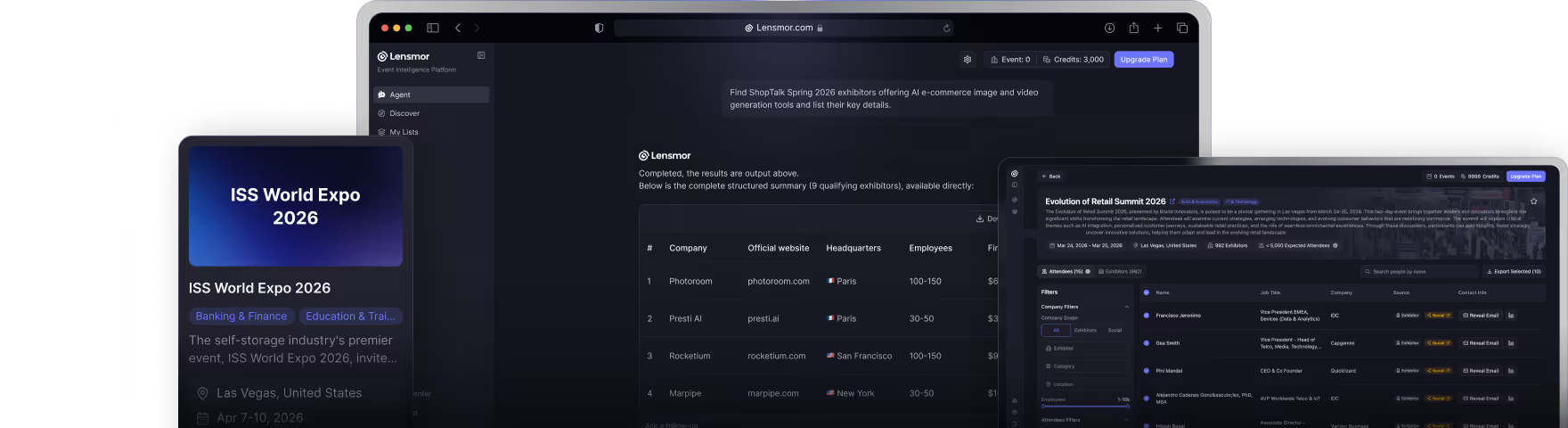
Want to know which companies are exhibiting? Lensmor tracks exhibitor profiles, booth data, and product categories for HIMSS and 1,000+ other trade shows.
Sponsors & Exhibitors
Explore the HIMSS 2026 exhibitor and attendee overview to review available event data as you build your account shortlist.
The HIMSS exhibit hall is one of the most consequential gatherings of health technology vendors in the world. More than 1,200 companies exhibit across roughly 1 million square feet of floor space, spanning established enterprise vendors and early-stage startups.
Major categories represented on the exhibit floor include:
- Electronic Health Records (EHR) and clinical documentation platforms
- Cybersecurity and compliance solutions
- Cloud infrastructure and data management
- AI and machine learning clinical tools
- Interoperability and FHIR-based integration platforms
- Revenue cycle management and payer-provider data exchange
- Remote patient monitoring and telehealth
- Population health and care coordination tools
Diamond and Platinum sponsors typically include a mix of large health IT incumbents — companies like Salesforce Health Cloud, Deloitte, and major EHR vendors — alongside newer entrants competing for mindshare among health system buyers.
Lensmor provides real-time exhibitor intelligence for HIMSS, including company profiles, product categories, and booth locations. Research exhibitors before you arrive to build a targeted meeting list.
Speaker Lineup & Keynotes
HIMSS 2026 features a robust slate of keynote and general session speakers drawn from health system leadership, the technology industry, policy, and clinical practice. The 2026 lineup reflects the organization's emphasis on AI-powered clinical applications and cybersecurity resilience.
Key themes driving session content include:
- Artificial Intelligence in Healthcare — Sessions examining how AI is reshaping diagnostics, clinical documentation, prior authorization, and patient triage. Practical case studies from health systems that have deployed large language models in production are a particular focus.
- Cybersecurity and Healthcare Resilience — Following high-profile ransomware attacks on US health systems, cybersecurity content receives an elevated profile. Sessions cover zero-trust architecture, incident response playbooks, vendor risk management, and HIPAA compliance.
- Interoperability and FHIR Implementation — With CMS and ONC interoperability rules driving mandate deadlines, significant content covers FHIR API adoption, patient data access, and the practical challenges of connecting legacy infrastructure.
- Digital Health Equity — A growing track examines how technology can address — or inadvertently worsen — health disparities, covering broadband access, algorithm bias, culturally competent care tools, and community health worker technology.
Full Agenda & Featured Events
HIMSS 2026 runs March 9-12, 2026 across four packed days at The Venetian Convention Center in Las Vegas. The agenda includes over 600 educational sessions across multiple concurrent tracks.
Featured programming includes:
- Keynote and General Sessions — High-profile speakers addressing the state of healthcare technology, AI adoption, and system resilience
- HIMSS Innovation Showcase — Early-stage startups demonstrating products across diagnostics, remote monitoring, care coordination, and payer-provider data exchange
- Venture+ Program — Dedicated programming for startups and investors, including pitch competitions and deal-sourcing events
- Health 2.0 Track — Now integrated into HIMSS, this track focuses on emerging digital health innovation
- Exhibit Hall Hours — Over 1 million square feet of exhibit space with scheduled demos, product launches, and exhibitor-led sessions
- Networking Events — Evening receptions, dinners, and informal meetups across Las Vegas venues
Pro tip: Plan your session schedule in the HIMSS app before arriving. Popular sessions fill quickly, and the volume of options is paralyzing without a pre-made shortlist.
Registration & Ticket Pricing
HIMSS offers multiple badge types to match your conference goals:
- Full Conference — Access to all 600+ educational sessions, keynotes, exhibit hall, and networking events. This is the most comprehensive (and most expensive) option.
- Exhibits-Only — Access to the exhibit hall floor without session entry. Suitable for attendees focused on vendor meetings and product demos.
- Specialty Tracks — Focused passes for specific content areas
Key registration details:
- Early-bird rates typically close 90 days before the event — register early for significant savings
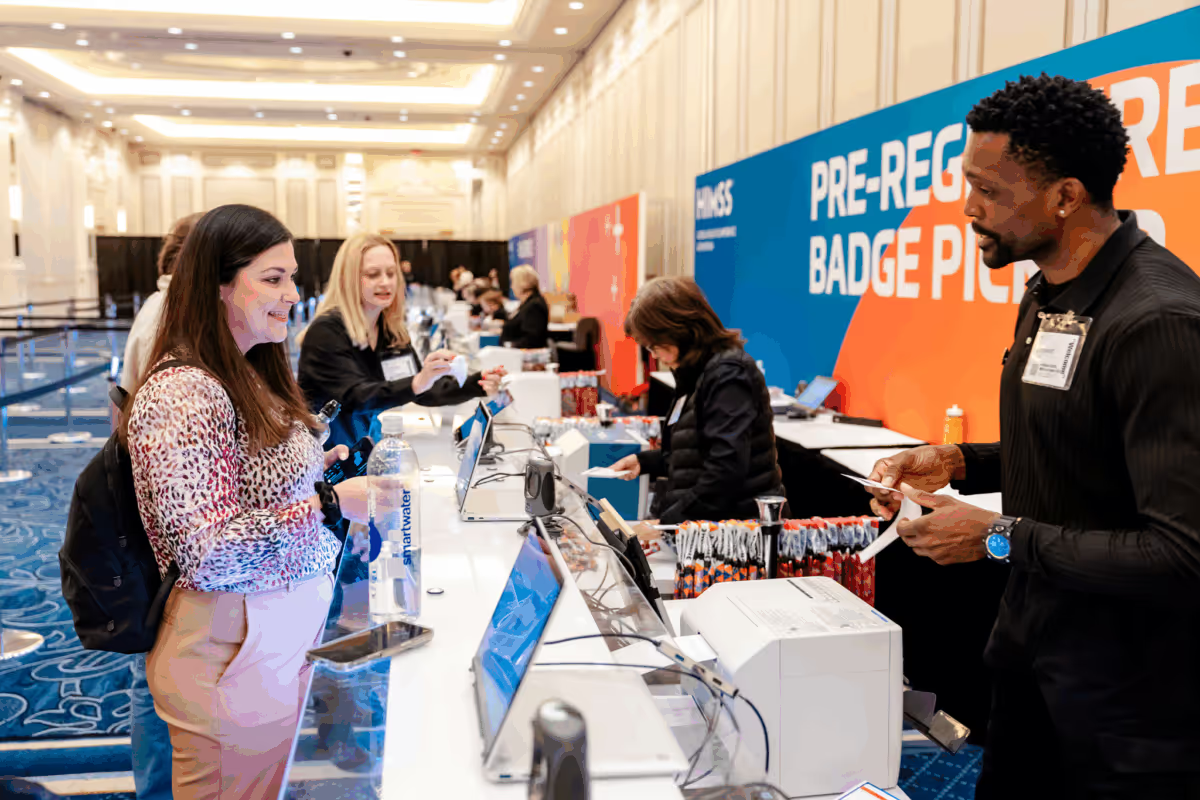
- Badge pickup lines at peak hours (Sunday afternoon, Monday morning) can be lengthy. Arrive early or use the mobile badge option if available.
- HIMSS typically publishes a housing block with negotiated hotel rates. Use this block if available, as non-block room rates during the conference spike dramatically.
Travel essentials:
- Venue: The Venetian Convention Center, Las Vegas
- Airport: Las Vegas Harry Reid International Airport (LAS) — approximately 3.5 miles / 10–15 minutes by car
- Getting around: Rideshare (Uber, Lyft), taxis, and the Las Vegas Monorail are all practical options. The Monorail can be faster than ground-level rideshare during peak congestion.
- On-site navigation: Allow 15–20 minutes to walk between the farthest exhibit hall sections. Comfortable footwear is essential — attendees report walking 8–12 miles per day.
- Accommodation: The Venetian and Palazzo book up early (often by late October). Alternatives within 10–15 minutes include the Wynn, Encore, Resorts World, and Hilton Grand Vacations Club.
Turn the 2026 Record Into Useful Research
Use archived exhibitor, sponsor and agenda information to understand the market, compare companies and prepare for the next edition. Separate facts announced for 2026 from assumptions about a future program.
Priority areas
- electronic health records and interoperability
- cybersecurity and infrastructure
- clinical AI and digital health
- revenue cycle, patient experience and operations
Questions that improve vendor and partner conversations
- Which care setting, workflow and user population are supported?
- What evidence, regulatory and privacy requirements apply?
- How does the solution integrate with EHR and identity systems?
- Which implementation and clinical validation steps are required?
Relevant stakeholders
- health-system executives
- clinical informatics and IT
- security and data leaders
- procurement and digital health teams
Record the reason each company fits, the evidence still needed and one owned next step. Lensmor can help organize public exhibitor and company information into a reviewable account list with verified decision-maker contacts. Event participation is context, not proof of purchase intent, so keep human review before outreach.
Frequently Asked Questions
How large is HIMSS, and what are the typical attendance numbers?
HIMSS is one of the largest healthcare conferences in the world. The annual North American conference typically draws 35,000–45,000 registered attendees, with over 1,200 exhibiting companies and representation from 90+ countries. The exhibit floor alone spans roughly 1 million square feet — comparable in scale to some of the largest consumer trade shows.
Is HIMSS primarily a vendor event or an education event?
Both, and the tension between the two identities is part of what makes HIMSS unique. The conference offers over 600 accredited educational sessions spanning clinical informatics, policy, AI, cybersecurity, and more — content that stands independently of vendor marketing. The exhibit hall is a major commercial environment where vendor-client relationships are established and deals move forward. Attendees can prioritize either aspect depending on their goals.
What should a first-time attendee prioritize?
Plan your session schedule in the HIMSS app before arriving — popular sessions fill quickly. Prioritize one or two specific areas of focus rather than trying to cover everything. Block dedicated time for the exhibit floor separate from session time. Budget at least one evening for informal networking, where some of the most valuable HIMSS conversations happen.
How should I prepare to meet exhibitors effectively?
Research companies before arriving. Know which vendors are relevant to your organization's current priorities and have a clear set of evaluation criteria. Lensmor helps you research exhibitors before arriving — filter by industry, company size, and product category to build a target list. Walking in with a pre-qualified list of 10–15 companies makes the exhibit floor far more productive than wandering.
Are there opportunities for startups at HIMSS?
Yes. HIMSS actively supports startup participation through its Venture+ program, the Health 2.0 programming track (now integrated into HIMSS), and dedicated innovation showcase areas. Pitch competitions provide early-stage companies visibility with health system buyers and investors. Many health IT accelerator cohorts use HIMSS as a launchpad for market entry.
What is the difference between HIMSS North America and HIMSS Europe?
HIMSS runs two major annual conferences. The North American conference is held each spring (historically in Las Vegas, Chicago, or Orlando) and is significantly larger in scale and commercial activity. The European Health Conference & Exhibition is held in a European city — Copenhagen in 2026 — and attracts a strong contingent of European health system leaders, NHS and government officials, and international health IT vendors. The two events share thematic alignment but are programmatically independent.

Shirley An
Shirley An is a Growth Marketing specialist at Lensmor, writing about trade shows, event prospecting, and B2B growth. Lensmor helps teams identify ICP-matched exhibitors and likely attendees, and find verified decision-maker contacts for outreach before the event.