If you're comparing Lensmor and ZoomInfo, you're probably trying to answer a simple but important question: should your team use a broad sales intelligence database, or a tool built around a specific trade show workflow?
Product note (checked July 2026): this guide compares workflows, not a permanent price sheet. Product packaging and availability change, so confirm current details directly with ZoomInfo.
That distinction matters.
ZoomInfo is built for broad B2B company and contact intelligence. Lensmor is built for pre-show event intelligence around a specific show. The overlap is real, but the operating context is different.
Lensmor combines Exhibitors, Social Signal Attendees, and Visitor intelligence to surface high-intent accounts and verified decision-makers before outreach begins. Its high-value Visitor layer helps reveal prospects that static exhibitor lists and public social signals miss.
If your team is working from a trade show list, that difference changes the buying decision.
Short answer
Here is the fastest practical split if you are scanning options before buying:
That is why these two tools can complement each other, but they are usually bought for different operating problems.
Choose ZoomInfo if your team needs a large B2B database for ongoing prospecting, enrichment, account research, territory building, and outbound list creation across many markets.
Choose Lensmor if your team already knows the trade show that matters and needs a faster way to identify target exhibitors, review account fit, check contact paths, and prepare event-specific follow-up.
For general sales intelligence, ZoomInfo is the broader platform.
For trade show prospecting, Lensmor is usually the more practical fit because the work starts with an event, not a blank market search.
Many teams can use both. ZoomInfo can support broad account research. Lensmor can sit on top of a specific event workflow and help the team decide what to do first.
What each product is built to do
The cleanest way to separate the two tools is this:
ZoomInfo answers: "Which companies and contacts fit our broader sales motion?"
Lensmor answers: "Which companies at this event should we work before the show, and what should sales do next?"
That difference shapes the product experience.
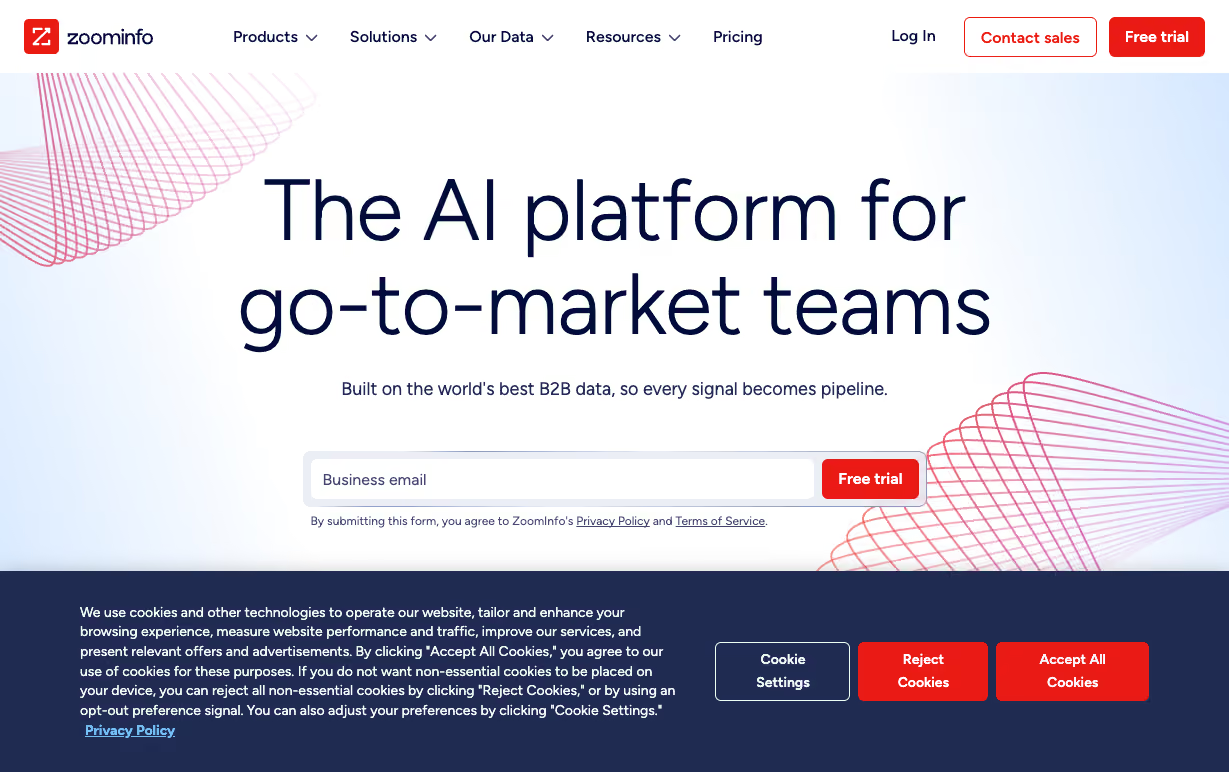
ZoomInfo is a horizontal sales intelligence platform. It supports company search, contact discovery, enrichment, intent signals, sales workflows, and go-to-market data operations.
Lensmor is a narrower pre-show execution tool. You start with a trade show, event list, or exhibitor universe. From there, Lensmor helps narrow the field into companies worth reviewing, with fit reasons, contact-path logic, and first-message direction.
Here is the practical split:
Which teams fit each tool
ZoomInfo is usually the better fit if your company needs a broad sales intelligence layer. That often means multiple territories, many outbound segments, large CRM enrichment needs, and ongoing account research.
Lensmor is usually the better fit if your team attends a smaller number of shows and wants each show to produce a clearer sales plan.
The middle case is common. A team may already have ZoomInfo, Apollo, LinkedIn Sales Navigator, or Clay. The remaining problem is still event workflow. They have data, but they do not have a clear answer to: which exhibitors deserve sales time this week?
That is where Lensmor is useful.
Pricing and buying motion
Lensmor publishes its current plans on the pricing page. Compare current credits, exports, integrations, and coverage against the events your team plans to work.
The real pricing difference is not only the number. It is the decision type.
ZoomInfo is usually a platform decision. Lensmor is usually a campaign or operating decision around events.
If the company needs a broad data foundation, ZoomInfo may justify the larger buying motion. If the team wants to make one event more useful for sales, Lensmor is often easier to test.
Data and workflow differences
Trade show prospecting is not normal list building.
A standard outbound list might be built around industry, geography, headcount, title, technology, or growth signal. A trade show list has another layer: event context.
That context changes the work.
ZoomInfo can help with company and contact research. It is strong when the rep knows what to search for.
Lensmor is built for the step before that search becomes useful. It helps narrow the event universe into a smaller reviewed queue so sales does not waste time opening every company one by one.
A few examples make the difference clear:
Real-world scenarios
The comparison gets easier once you map it to actual teams.
SDR team building monthly outbound lists
If the team is prospecting across many industries and needs a large data source, ZoomInfo is closer to the job. The team needs market coverage more than event workflow.
ZoomInfo is the better fit here.
Founder preparing for one major trade show
A founder who already knows the show does not need a giant sales intelligence system first. The immediate question is which exhibitors or companies deserve time before the event.
Lensmor is the better fit here.
RevOps team cleaning CRM records
If the problem is account enrichment, duplicate cleanup, missing firmographics, or broad contact coverage, ZoomInfo is the better fit.
That is a data operations problem.
Sales team attending 6 to 10 shows a year
This is one of the clearest Lensmor cases. The team has enough event volume to need a system, but the main pain is not database access. It is deciding who to work before each show.
Lensmor is usually the better match.
Enterprise with ZoomInfo already in place
This team may still use Lensmor. ZoomInfo can remain the broad data layer. Lensmor can help structure the event-specific workflow around selected shows.
That is the most likely "use both" scenario.
Should you use both?
Sometimes, yes.
This is more plausible with ZoomInfo than with many event tools because ZoomInfo and Lensmor sit at different layers.
ZoomInfo can be the broad company and contact intelligence system.
Lensmor can be the event workflow layer that helps decide which accounts at a specific show deserve attention.
But most small teams should not start by buying everything.
If the team cannot already name the events that matter, start with broader market research.
If the team can name the event and is stuck turning it into pipeline, start with Lensmor.
The honest question is: where is the actual bottleneck, data coverage or event execution?
Final verdict
ZoomInfo and Lensmor are not trying to solve the same whole problem.
ZoomInfo is a better fit for teams that need broad B2B sales intelligence, enrichment, market coverage, and contact research across many segments.
Lensmor is a better fit for teams that already know the event and now need a cleaner path from exhibitor list to pre-show sales action.
For trade show prospecting, Lensmor is usually the more direct tool. For general go-to-market data, ZoomInfo is the broader system.
The honest test is simple.
If your team needs a database to find companies and contacts across a market, look at ZoomInfo.
If your team has an event list and needs to decide who sales should work before the show, Lensmor is the better fit.
Related reading: event intelligence platform comparison.