
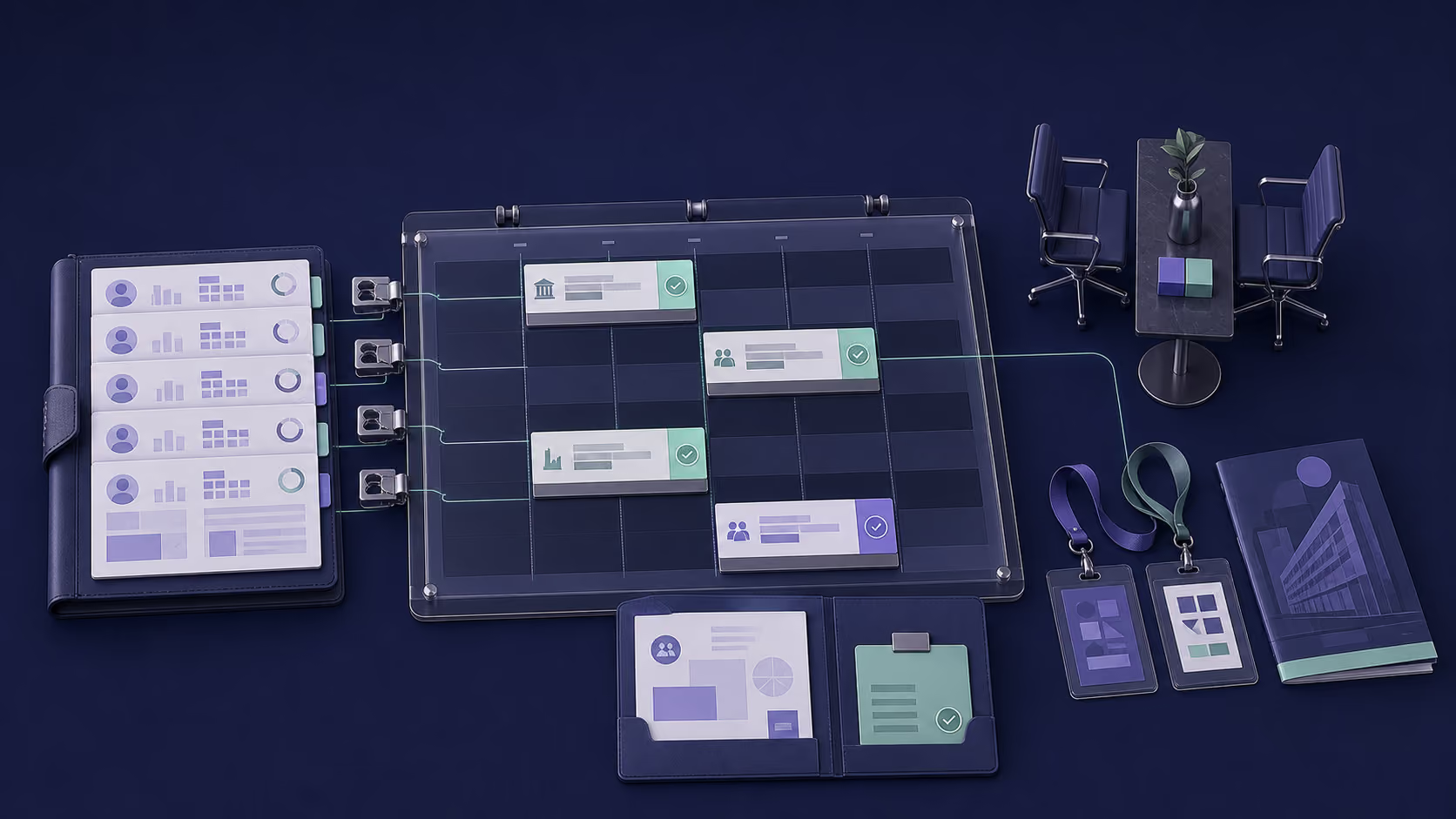
Most teams do not miss trade show meetings because they forgot to send enough invites.
They miss because the account list is weak.
The team starts with a raw exhibitor directory, a vague idea of who might matter, and a last-minute push to contact everyone at once. That usually creates noise, not meetings.
If you want better trade show meetings, the job starts before outreach.
You need a smaller target account list that sales can trust.
Short answer
The fastest way to book better meetings before a trade show is to stop treating the exhibitor list like a finished lead list.
Start with the official exhibitor source, narrow it to one product lane or buyer motion, then rank a smaller batch of companies by fit, public buying signals, and contact path. That gives sales a list they can actually work before the event opens.
More invites do not fix a weak list. Better target selection does.
Why most pre-show meeting plans break
Teams usually know the event.
They usually have some kind of list.
What they do not have is a clear answer to three practical questions:
- which companies are worth time this quarter
- who looks like a buyer, partner, distributor, or integrator
- what the first contact path should be before the show
Without that layer, the outreach plan gets messy fast.
One rep wants direct buyers. Another wants channel partners. Marketing wants booth traffic. Leadership wants meetings on the calendar. The list becomes a compromise between several goals, which means nobody fully trusts it.
That is why "book more meetings" is usually the wrong first instruction.
The real first instruction is "build a meeting-ready shortlist."
Start with the official exhibitor list, not a fantasy attendee list
For most teams, the cleanest pre-show input is still the official exhibitor list.
It is company-level, public in many cases, and available earlier than most person-level event data.
That matters because the pre-show window is where account research is still useful. If your team waits for attendee-level access, sponsorship exports, or scattered badge-scan data, the planning window often gets too short.
The exhibitor list is not enough on its own.
But it is a safer place to start.
It tells you which companies have already decided this event matters enough to spend budget, show up, and be visible in a category your team already cares about.
That is a better starting point than chasing a bigger but less reliable list.
What actually helps book meetings before the event
Meeting prep gets better when the list does four jobs at once:
1. It narrows the event to one commercial lane. 2. It explains why each shortlisted company belongs there. 3. It suggests a realistic contact path. 4. It marks what still needs human review.
That is what turns event data into pre-show pipeline work.
If the list cannot do those four things, the team is still doing event admin, not sales prep.
Build the pre-show target account list in five steps
1. Pick one lane first
Do not start with the whole show.

Start with one lane your team can actually act on:
- machine tools
- robotics and automation
- packaging machinery
- semiconductor equipment
- regional channel partners
- one named product category inside the event
That one decision removes a lot of noise.
The goal is not to describe the event well. The goal is to decide which slice of the event matters for this motion.
2. Split companies by role, not just category
A company can belong to the right event category and still be the wrong target.
The first useful split is usually role-based:
- direct target account
- distributor or channel route
- integrator or implementation partner
- adjacent company worth watching
- hold for later
This matters because meeting strategy is different for each one.
A direct target may deserve a pre-show email and a proposed time slot.
A distributor may need a partner angle first.
An integrator may be better handled as a booth conversation instead of a cold outreach sequence.
3. Add fit reasons and public buying signals
If a row does not explain itself, sales will not trust it.
Each shortlisted account should carry one plain-English fit reason and a small set of public signals, such as:
- visible product line overlap
- region or market fit
- recent expansion into the segment
- partner or distributor language
- repeated participation in the same event category
- public evidence that the company is active in the lane you care about
You are not trying to predict revenue with perfect confidence.
You are trying to give the team a defensible reason to work one account before another.
4. Decide the contact path before outreach begins
Not every shortlisted company needs the same motion.
A useful pre-show sheet should suggest the first path:
- pre-show email
- LinkedIn review first
- booth visit during the show
- partner route
- hold pending more evidence
That one field is underrated.
It stops teams from sending the same message to every company on the list and calling it personalization.
5. Work a small batch before scaling
You do not need the whole event cleaned before you know whether the direction works.
Start with 10 to 20 accounts.
If sales looks at that batch and says, "Yes, these are the right companies, and I understand why they are here," then you can scale the process.
If they do not trust the first batch, scaling the full show will only produce more waste.
What a meeting-ready sheet should include
The useful output is not a giant export.
It is a reviewed account queue with just enough context to support a meeting ask.
This is the difference between a meeting plan and a directory export.
What not to promise
There are a few claims that make pre-show content sound stronger than it is.
Avoid these:
- guaranteed meetings
- private attendee-list claims
- personal-email promises without a lawful source
- the idea that one large list automatically becomes pipeline
That kind of language is not only risky. It also hides the real work.
Pre-show meeting prep is about narrowing the event to a set of accounts your team can inspect, prioritize, and approach with a reason.
Where Lensmor fits
Lensmor is useful when the event is large enough to create noise but still important enough that your team wants a real pre-show motion.
That can mean a manufacturing show, an automation event, a packaging expo, or a semiconductor event where the raw exhibitor list is too broad to hand directly to sales.
Lensmor helps by turning one event input into a smaller reviewed target-account batch:
- one commercial lane at a time
- company-level fit reasons
- public buying-signal notes
- suggested contact paths
- a structure that sales can inspect before outreach starts
That does not replace human judgment.
It gives the team a better first pass, earlier.
CTA
If you have one show and need better meetings before it starts, do not begin with a bigger list.
Begin with a smaller one that your team can actually work.
Request a first-event-pack walkthrough for one show, one product lane, or one exhibitor list. Lensmor can review a smaller account batch, explain why each company belongs there, and suggest the next contact path before outreach begins.
Related reading: how to find buyers before a trade show and how to prove trade show ROI earlier.



.avif)