Most trade show ROI reports arrive too late.
The team spends months preparing for the event, scans badges for a few days, then waits for pipeline to show up in the CRM. By the time someone asks whether the show worked, the useful planning window is already gone.
That is why proving trade show ROI should not start after the booth is packed up.
It should start before the show opens, with a clear account plan your sales team can inspect.
Short answer
You prove trade show ROI earlier by defining which accounts the event should help you reach, ranking those accounts before the show, and tracking whether the team moved them into real next steps.
That does not mean pretending every target account will book a meeting.
It means replacing a vague event goal like "generate leads" with a tighter plan: which accounts matter, why they matter, how your team will approach them, and what counts as progress before, during, and after the show.
Why post-show ROI reports feel weak
Post-show reports usually lean on easy numbers:
Those numbers are not useless. They just do not explain whether the team spent time on the right accounts.
A show can produce hundreds of scanned badges and still miss the companies that mattered most. It can also produce a small number of conversations that are commercially useful, even if the badge count looks modest.
That is the problem with starting ROI measurement after the show.
You end up measuring what happened, not whether the event plan was pointed at the right market.
Build the ROI plan before the show
Start with the account question
Before you think about dashboards, ask a simpler question:
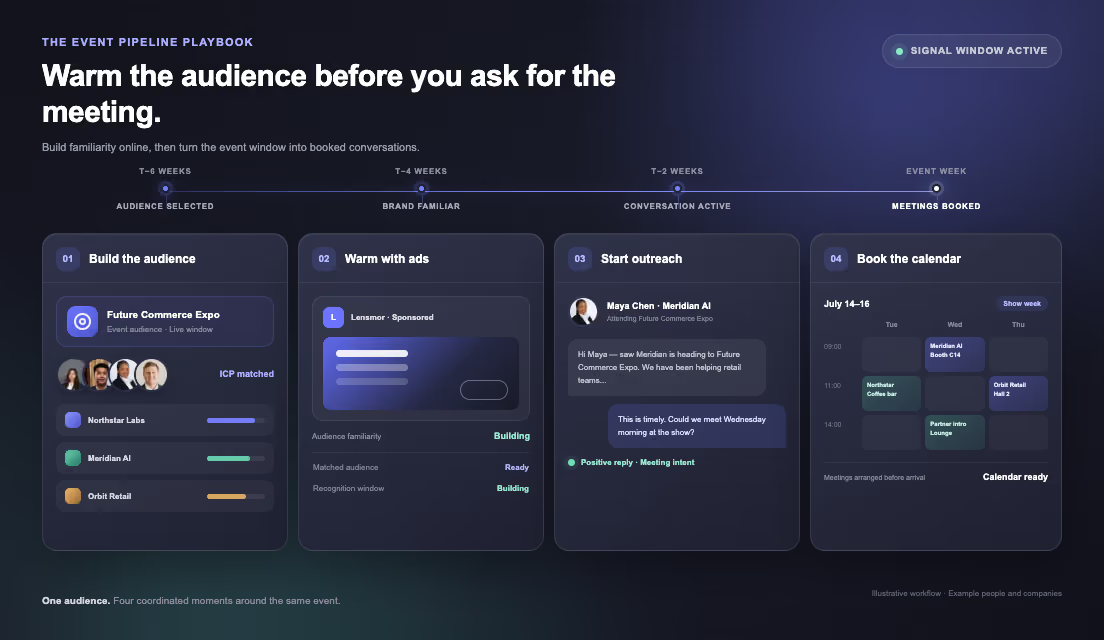
Which accounts would make this event worth the time?
For a manufacturing team, that might mean machine tool OEMs, automation integrators, metrology vendors, or regional distributors.
For a packaging company, it might mean machinery suppliers, line-upgrade buyers, system integrators, or channel partners.
For a semiconductor team, it might mean equipment vendors, materials companies, test suppliers, or factory automation providers.
The event ROI plan gets sharper when the account universe is named before the show. Otherwise, sales and marketing end up debating lead quality after the fact, when it is harder to change anything.
Use the exhibitor list as planning data
The official exhibitor list is often the best place to start because it is public, company-level, and available before the event.
It is not a finished lead list.
It is planning data.
An exhibitor has already signaled that the category matters enough to show up. That alone does not prove purchase intent, but it gives your team a safer starting point than a random prospecting export.
The job is to turn that raw list into a smaller account plan.
That plan should answer:
Once those questions are answered, ROI becomes easier to inspect because the event has a target set, not just a lead pile.
Build a pre-show ROI scorecard
A useful scorecard should be simple enough for sales to use.
Start with five fields.
This scorecard is not meant to predict revenue with perfect confidence.
It is meant to make the event plan reviewable.
If sales disagrees with the first 20 accounts, that is useful feedback. It means you can fix the targeting before the team burns the event week on the wrong conversations.
What to measure across the event
What to measure before the show
Pre-show ROI is not revenue yet.
It is evidence that the event is being turned into a real commercial motion.
Track metrics like:
These are not vanity metrics if they change what the team does next.
The point is to know whether the event is creating a focused sales queue before the show, not just a larger spreadsheet after it.
What to measure during the show
During the event, the scorecard should help the team avoid random activity.
Track whether priority accounts were actually touched:
That last one matters.
A good event plan should make it easy to drop weak accounts. If every row stays "high priority" after the show, the team probably did not learn enough.
What to measure after the show
Post-show ROI still matters. It just should not be the first time you inspect the event.
After the show, connect the pre-show plan to outcomes:
The cleanest ROI story is not "we got 300 leads."
It is closer to this:
"We identified 40 target accounts before the event, sales approved 22, we reached 15 during the show, 8 moved into follow-up, and 3 are now in proposal review."
That kind of story is easier to trust because the path is visible.
A practical ROI workflow
Here is a simple version your team can run for one show.
1. Pick one commercial lane
Do not start with the full event.
Choose one lane your team can actually sell into, such as machine tools, packaging machinery, semiconductor equipment, industrial automation, or regional distributors.
2. Pull the official exhibitor source
Use the public exhibitor list or official show directory as the starting file.
Keep the source URL and date. The source note matters later when someone asks where the account came from.
3. Build a first 20-account shortlist
Do not clean the whole show first.
Start with 20 accounts. Add the fit reason, public signal, target type, and suggested contact path for each one.
4. Ask sales to accept, reject, or revise
This step is where ROI work becomes real.
If sales accepts the batch, the show has a usable target set. If sales rejects it, you learn that before the event, not three weeks later.
5. Draft first outreach angles
Do not hand sales a blank sheet.
For each accepted account, add a practical first angle: why this account, why this event, and what next step makes sense.
6. Track movement by account
Use account movement as the main event ROI thread.
Did the target account move from identified to reviewed, contacted, met, followed up, proposal, or closed?
That is more useful than only counting raw leads.
What not to claim
Trade show ROI content gets risky when it promises more certainty than the data can support.
Avoid claims like:
The stronger claim is more modest:
A reviewed pre-show account plan helps your team spend the event on better-fit accounts, move faster on the right rows, and explain what happened afterward.
That is useful enough.
Where Lensmor fits
Lensmor helps teams turn one event list into a pre-show account plan.
That usually means:
The goal is not to inflate the lead count.
The goal is to make the event plan easier for sales to trust before the show starts.
If your team is preparing for a manufacturing, automation, packaging, or semiconductor show, Lensmor can build a first reviewed batch from the exhibitor list and help you see whether the event is worth deeper outreach.
Turn Your Event List Into a Sales Plan
Most teams waste 70% of event ROI because they have no account plan when doors open. Lensmor helps you build a reviewed account shortlist 4-6 weeks before the show.
→ Get Your Free Pre-Show Plan
Related reading: trade show ROI measurement framework.