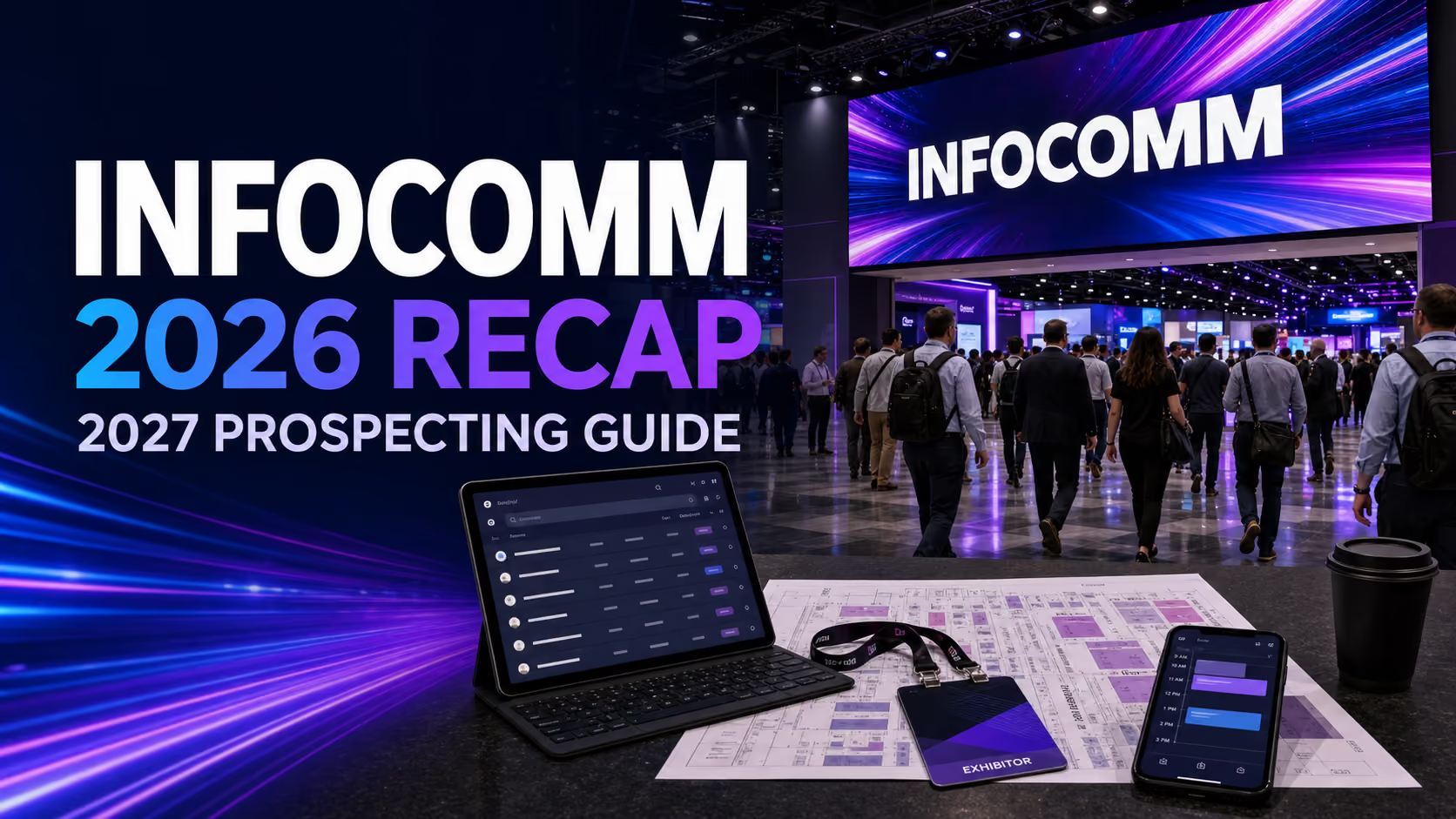
Updated July 2026: InfoComm 2026 has concluded. The official post-show results report 28,132 verified attendees from 94 countries, 807 exhibitors, and 395,500 net square feet of exhibits. InfoComm 2027 moves to Orlando, with education June 12-18 and exhibits June 16-18.
InfoComm 2026 showed how quickly Pro AV buying priorities are shifting across collaboration, intelligent displays, audio, AI-driven control, and integrated experiences. For B2B teams, its exhibitor landscape remains a useful account map rather than a page that becomes obsolete when the show closes.
This refreshed guide combines the 2026 results with the prospecting lessons teams can carry into InfoComm 2027: which segments mattered, how the floor was structured, and how to turn a large exhibitor universe into a ranked meeting and follow-up plan.
InfoComm 2026: Results and Fast Facts
InfoComm is organized by AVIXA, the global trade association for the Pro AV industry, and it's the largest Pro AV trade show in North America. Nearly half of all attendees carry active budget authority for new products and services — which makes this one of the most commercially dense trade shows on the B2B calendar.
Who Attended InfoComm 2026
Understanding the audience composition is the foundation of a useful prospecting strategy. InfoComm draws a specific mix of roles that rarely appear together at general tech conferences.
System integrators are the largest attendee segment. These are the companies that design, install, and maintain AV systems for corporate offices, universities, hospitality venues, and government facilities. They attend InfoComm to evaluate new product lines, meet manufacturer reps, and get certified on new equipment. If your company sells components, software, or services that integrators pass through to end clients, this is your primary buyer segment.
Corporate IT and AV managers represent the end-user buyer — the people who ultimately approve purchase orders. These attendees come with real budget and real timelines. They evaluate which integrators and vendors to put on their approved lists for the year. Getting a product demo in front of this segment at InfoComm can compress a six-month procurement cycle.
AV consultants and designers influence specifications without making direct purchases. A consultant who specifies your product in a corporate headquarters design effectively mandates the purchase for every integrator who bids the project. This segment is small but high-leverage.
Higher education technology officers attend in significant numbers because universities run some of the most complex AV environments outside broadcast — lecture halls, distance learning infrastructure, stadium scoreboards, and campus-wide digital signage. Longer procurement cycles, but large deal sizes.
Broadcast and production professionals represent a growing segment as the line between broadcast-quality AV and enterprise AV continues to blur. IP-based video production, remote collaboration infrastructure, and live streaming technology all overlap with traditional Pro AV categories at InfoComm.
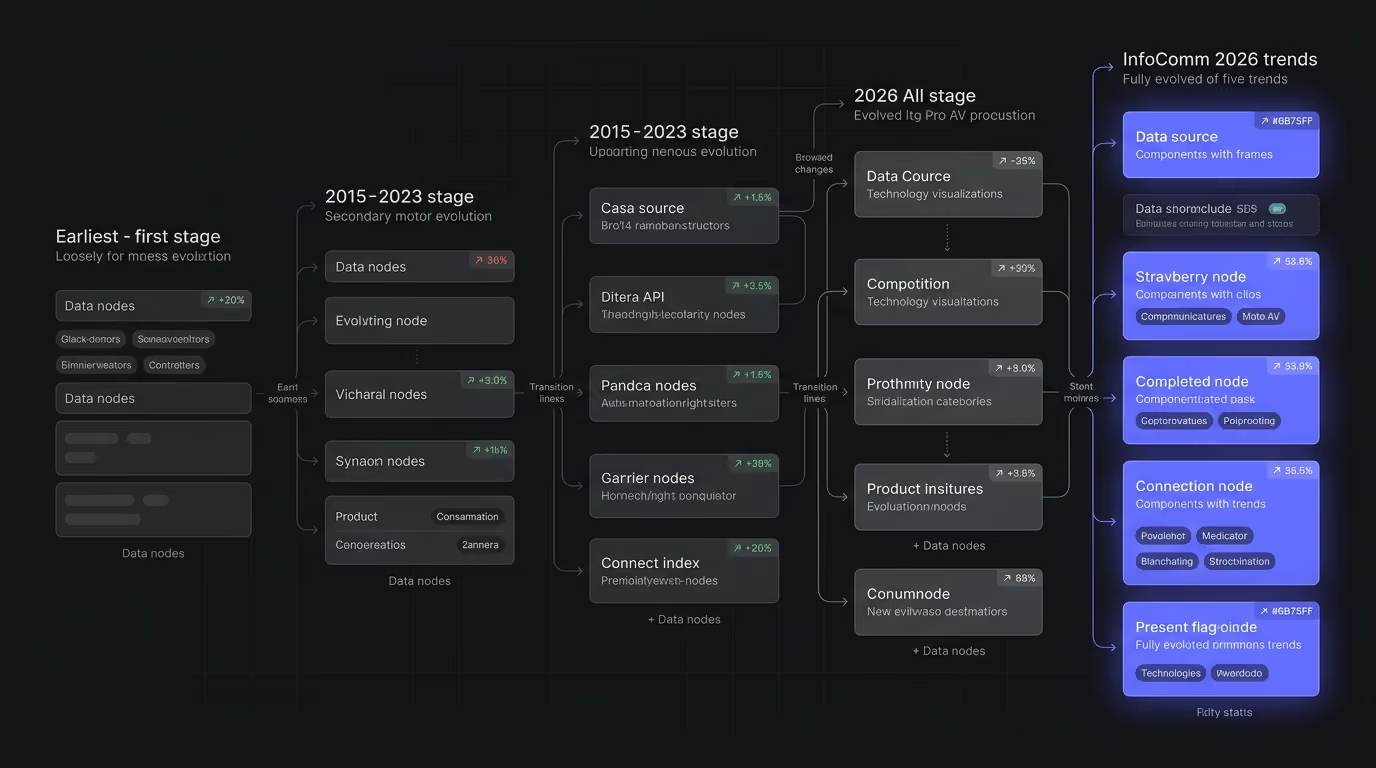
5 Tech Trends That Defined InfoComm 2026
The 2026 show floor did more than display products: it revealed where the industry was heading. These five themes shaped the conversation and remain useful signals for teams planning InfoComm 2027.
1. AV over IP at Scale
The shift from dedicated AV hardware to IP-based signal distribution is no longer an emerging trend — it's the new baseline. At InfoComm 2026, the conversation moves from "should we go AV over IP" to "which IP architecture, and how do we manage it at enterprise scale." Dante (Audinate), SDVoE, and IPMX are competing frameworks, each with a significant exhibitor ecosystem. Companies with network management expertise are finding a new market in AV infrastructure.
2. AI-Driven Collaboration Technology
AI is reshaping the conferencing and collaboration segment faster than any other area of Pro AV. Camera auto-framing that tracks active speakers, transcription and translation baked into room systems, and AI-generated meeting summaries delivered to the CRM — these are shipping products, not roadmap promises. Crestron, Yealink, Neat, and a cohort of software-first challengers will be demonstrating AI-enhanced room systems that promise to reduce IT support burden while improving meeting quality.
3. Direct View LED Displacing Projection
Large-format projection is losing ground to direct view LED in corporate boardrooms, auditoriums, and higher education spaces. The price per square foot of DVLED has dropped enough to be competitive for installations under 200 inches diagonal — a threshold that covers the majority of commercial AV projects. Samsung, LG, Sony, Leyard, and Planar each brought a significant DVLED presence to InfoComm 2026.
4. Unified Communications Platform Integration
The enterprise is not returning to purpose-built video conferencing hardware. Microsoft Teams Rooms, Zoom Rooms, and Google Meet hardware have become the default specification for new builds, and the hardware ecosystem has responded. At InfoComm 2026, the interesting question is no longer "does this work with Teams" — it's which hardware vendors have built deep enough integrations to earn Microsoft or Zoom certification and the sales channel advantages that come with it.
5. Sustainability and Energy Efficiency
Facility managers and corporate sustainability teams are increasingly involved in AV procurement decisions. Power consumption data, recyclability specifications, and manufacturer take-back programs are becoming table stakes for enterprise RFPs. Expect exhibitors to compete on sustainability credentials alongside performance specs — particularly in the digital signage and large display categories where power draw is significant.
Key Exhibitor Categories and Who to Watch
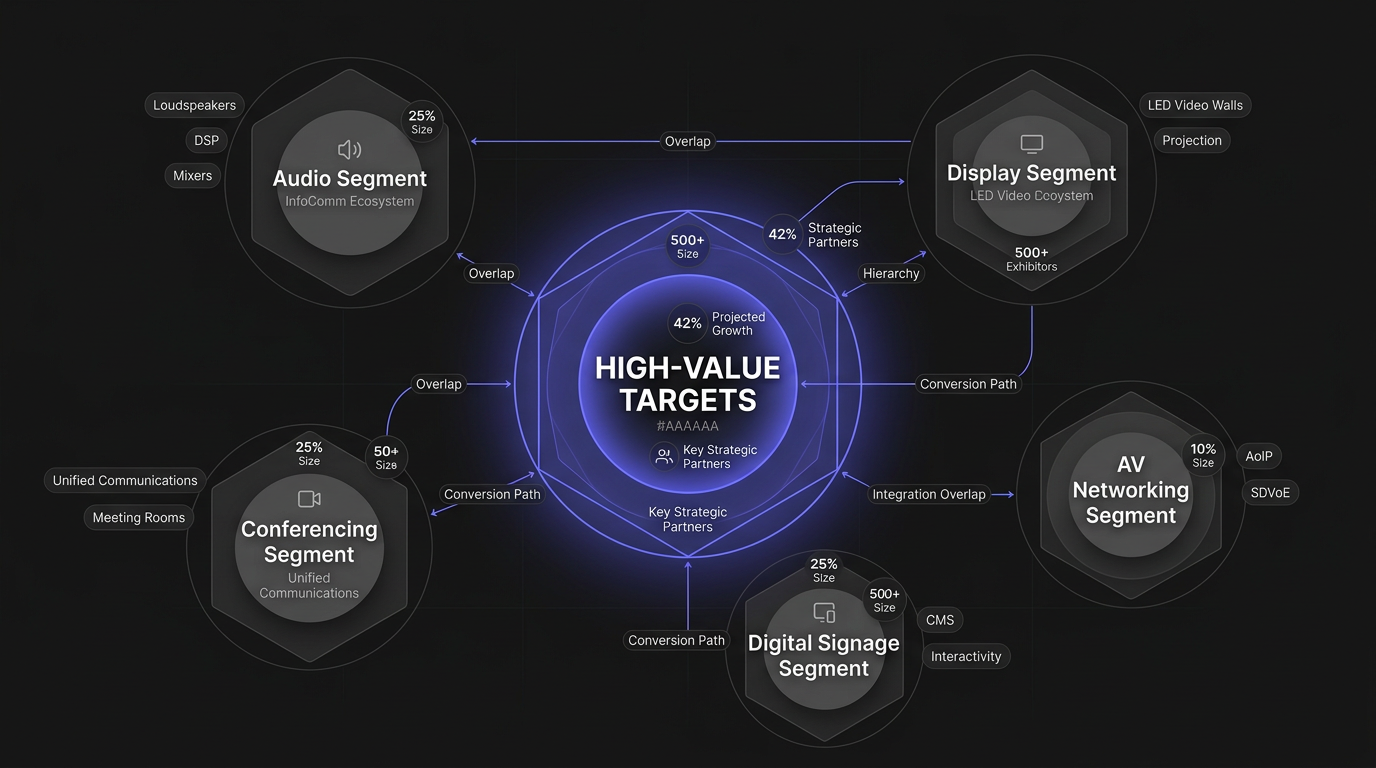
InfoComm 2026's 800+ exhibitors organize into distinct product categories. Here's how the show floor breaks down and which companies anchor each segment.
Audio Systems
The audio segment is the most established category at InfoComm, with a clear hierarchy of brands that system integrators have trusted for decades.
Shure was the Headline Partner, with its Microflex Advance conferencing microphone line, MXA ceiling and table arrays, and IntelliMix DSP reinforcing a major installed-audio presence. Biamp, QSC, and Harman Professional (JBL, Crown, BSS, dbx) rounded out the tier-one installed audio group.
Sennheiser and Audio-Technica anchor the premium microphone segment, particularly for boardrooms, broadcast, and performing arts venues. Bose Professional focuses on the installed sound market for retail, hospitality, and corporate environments.
Displays and Large-Format Visualization
Samsung, LG, Sony, and Sharp NEC Display Solutions dominate the commercial display segment. In the specialized visualization tier, Barco leads for control rooms and simulation environments, while Leyard and Planar compete head-to-head in fine-pitch DVLED for corporate and enterprise applications.
Conferencing and Collaboration
Crestron, Extron, and AMX (Harman) form the traditional control system tier, each with deep integration capabilities and large installed bases in corporate and government environments. Yealink and Neat represent the next generation of AI-native room systems — both have grown aggressively by shipping with deep Teams and Zoom integrations as default rather than afterthought.
Poly (HP) and Logitech bring enterprise IT channel strength to the collaboration hardware segment, targeting IT buyers who prefer consolidated vendor relationships over specialist AV brands.
Digital Signage and Content Management
BrightSign, Stratacache, Four Winds Interactive (FWI), and Poppulo compete for the enterprise digital signage CMS market. This segment has consolidated significantly and the remaining players compete on content workflow, analytics, and integration depth rather than player hardware specs.
AV Networking and Infrastructure
Audinate (Dante) maintained a broad ecosystem presence at InfoComm — not only as an exhibitor, but as an embedded technology referenced across other booths. ZeeVee, Haivision, and Exterity represented the IPTV and video distribution segment for large campuses and hospitality environments.
InfoComm 2026 Floor Plan: What the Layout Revealed
InfoComm 2026 occupies the North and Central Halls of the Las Vegas Convention Center for the exhibit floor (June 17–19). Education sessions run throughout the show period in the West Hall.
Pro Tip: The Central Hall entrance is where Samsung, LG, and Sony typically anchor with large island booths — useful as navigation landmarks. Most AV networking and control system exhibitors cluster in the North Hall sections closest to the Central Hall connection.
The official floor plan publishes approximately 8–10 weeks before the show opens. For teams that want to pre-map target exhibitors before the floor plan is released, reverse-searching the exhibitor list by company name gives you booth numbers for scheduling pre-show meeting requests.
B2B Prospecting Lessons from InfoComm 2026
A 30,000-person trade show is not a prospecting environment by default — it becomes one only if you build your target list before the doors open.
Step 1: Build Your Target Exhibitor List
Start with the full InfoComm 2026 exhibitor list and filter by the account segments your team is targeting. If you sell to system integrators, filter for integrators. If you sell to AV manufacturers, filter for OEM-tier exhibitors. If you're targeting corporate end-users who send procurement teams, filter for attending companies rather than exhibitors.
Lensmor aggregates exhibitor data across major trade shows and lets you filter by company size, industry vertical, and geography — turning a raw list of 800 exhibitors into a shortlist of 40 that actually match your ICP.
Step 2: Research Each Target Before You Arrive
Cold introductions at booths are low-conversion. A rep who can say "I noticed your team just expanded your digital signage practice in the Southeast — we've been working with three integrators in Atlanta who ran into the same scaling challenge" has a significantly higher chance of booking a real conversation than one walking up blind with a business card.
For each target company on your shortlist: check recent job postings (signals where they're investing), review their current tech stack for integration fit, and identify the specific people likely attending. Pre-book a meeting request through InfoComm's official app if the target is also exhibiting.
Step 3: Map Your Coverage by Day
InfoComm exhibits run three days. Most experienced attendees structure coverage by hall section rather than trying to cross the entire floor each day — the LVCC is large enough that unplanned navigation wastes significant time.
Day 1 (June 17): Highest-priority targets, largest booths (less crowded in the morning) Day 2 (June 18): Mid-tier targets, follow-up conversations from Day 1 connections Day 3 (June 19): Wrap-up meetings, lower-priority targets, missed contacts from earlier days
Pro Tip: Book the highest-priority meetings in the first two hours of each morning. By mid-afternoon on Day 1, the major booths are running demos on loop and access to senior decision-makers becomes significantly harder.
Step 4: Enrich and Route Leads Before You Leave Las Vegas
The most common failure mode at InfoComm: leaving with a stack of badge scans and a vague plan to follow up "next week." By the time you're back in the office, the half-life of a warm trade show introduction is already declining fast.
Build the follow-up queue on the last evening of the show. Sort contacts by tier, assign each to the right account owner, and write the first follow-up message while the conversation is still fresh. For a systematic framework that converts event contacts into pipeline, see our guide on following up on trade show leads.
3 Planning Lessons for InfoComm 2027
Pro Tip: Match your team's expertise to the audience segment. InfoComm has distinct buyer types — system integrators speak a different language than corporate IT managers, who think differently from AV consultants. The strongest booth teams have reps who can credibly engage each segment. Generalist pitches at a highly technical show get filtered out quickly.
Pro Tip: Use education sessions as soft prospecting. The 250+ education sessions and AVIXA certification programs in the West Hall draw the most technically senior practitioners in specific areas. Showing up at a session on AV-over-IP architecture or large venue audio design puts you in a room full of people actively building expertise in that domain — a very different conversation starter than a cold booth visit.
Pro Tip: Arrive with competitive analysis already done. InfoComm is the most concentrated place to observe competitor product positioning in Pro AV. Teams that arrive without a systematic plan for competitive intelligence gathering leave having watched demos but learned nothing structured. Build a simple capture template before you go: competitor name, booth number, key messaging, new products announced, pricing signals from conversation. See our pre-show competitor analysis template for a format that takes 20 minutes to complete per competitor.
How to Plan the Next InfoComm with Lensmor
The official 2026 exhibitor list is now a historical account map. For 2027 planning, the next directory will again provide company names and booth context, but teams will still need company size, tech stack, hiring signals, funding context, and decision-maker research to decide which accounts deserve attention.
Lensmor's trade show intelligence aggregates enriched exhibitor profiles across InfoComm and 40+ other major B2B events — giving you the data layer that turns a 807-exhibitor list into a ranked, prioritized prospecting queue before you book your flights.
Build the InfoComm 2027 target-account plan in Lensmor using the 2026 exhibitor landscape as a starting point.
Conclusion
InfoComm 2026 brought together Pro AV buyers, integrators, and technology manufacturers at substantial scale: 28,132 verified attendees from 94 countries and 807 exhibitors. The commercial lesson is not the crowd size alone, but the value of turning that concentrated market into a ranked account and meeting plan.
The teams that extract the most value are the ones who treat the three days on the show floor as the execution of a plan built weeks earlier — not as the starting point. Exhibitor research, targeted meeting scheduling, competitive intelligence planning, and a pre-built follow-up queue are what separate teams that return with leads from teams that return with business cards.
For a comparable post-show analysis of the broadcast and media technology sector, see our NAB Show 2026 recap and 2027 planning guide. To compare major B2B event research platforms, explore our event intelligence tools guide.


.avif)