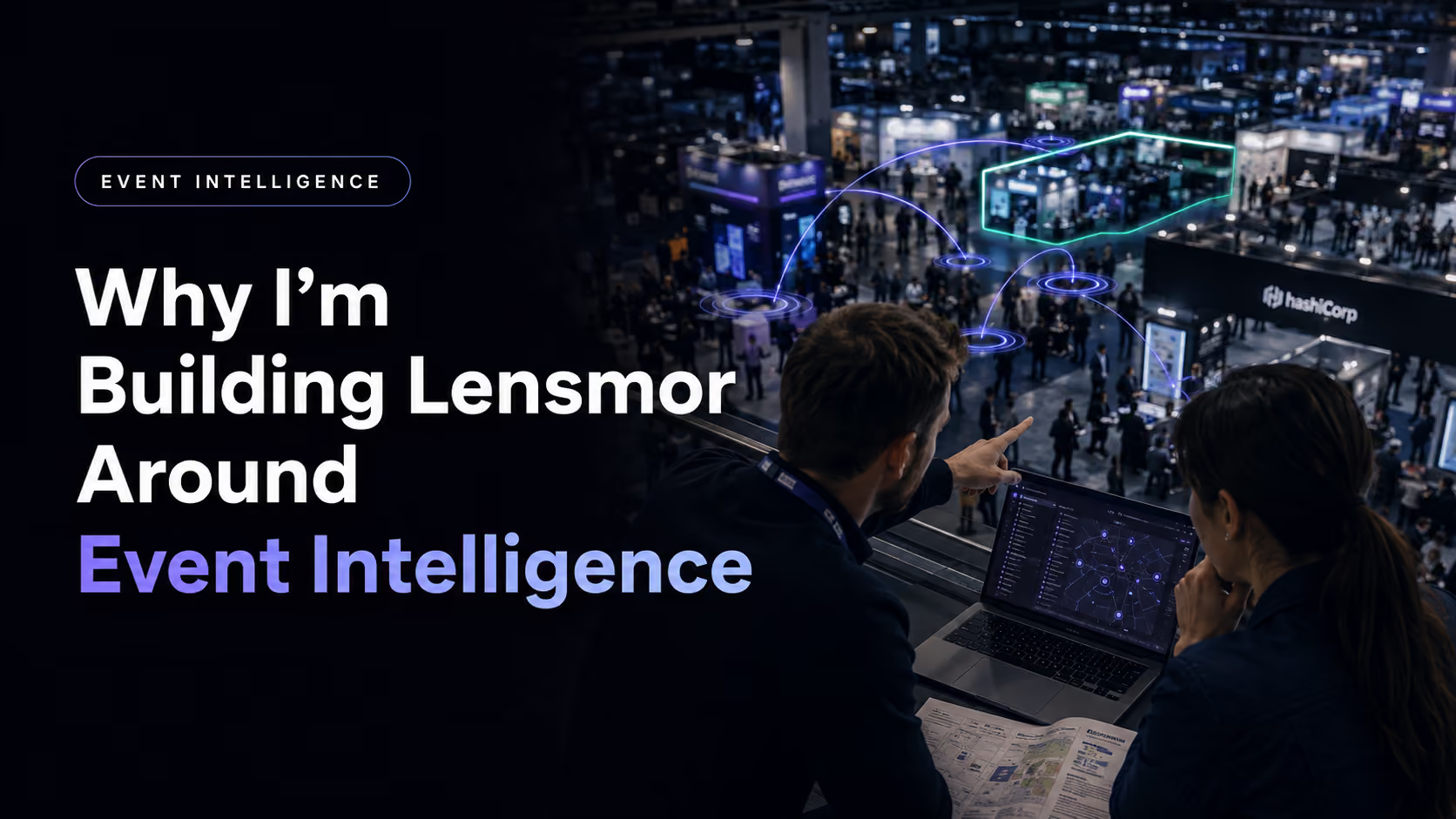
I'm building Lensmor around event intelligence because trade shows expose market timing that static sales databases usually miss. A company that is exhibiting, sponsoring, speaking, or sending key people to a show is not just another row in a contact database. It is showing intent, budget, priority, and timing in a public place where a relevant conversation can happen.
A few weeks ago, I was in Chicago for Automate 2026.
I met Jason there, and he gave me a piece of advice I did not expect to keep thinking about: if you are trying to build a category, you need to get better at founder storytelling.
My first reaction was probably the predictable product-founder reaction.
I wanted to talk about the product. I wanted to talk about data sources, enrichment, attendee prediction, event coverage, search workflows, and exports. Those things are concrete. They are easier to explain than a market belief.
But Jason was right.
If I only talk about what Lensmor does, I am describing software. If I talk about what I am seeing at events, why the old workflow is starting to fail, and how I think B2B teams should work differently, then Lensmor becomes part of a bigger operating shift.
This article is my attempt to make that shift clear.
This article is the founder's category thesis. For a practical definition and workflow, use the trade show intelligence guide. To compare available platforms, see the event intelligence tools comparison.
What is event intelligence?
Event intelligence is the practice of using trade show signals to identify the right companies, people, and outreach timing before an event starts. It turns public event data into GTM context: who is showing up, why they may be relevant now, and what kind of conversation makes sense before the booth opens.
That last phrase matters: before the booth opens.
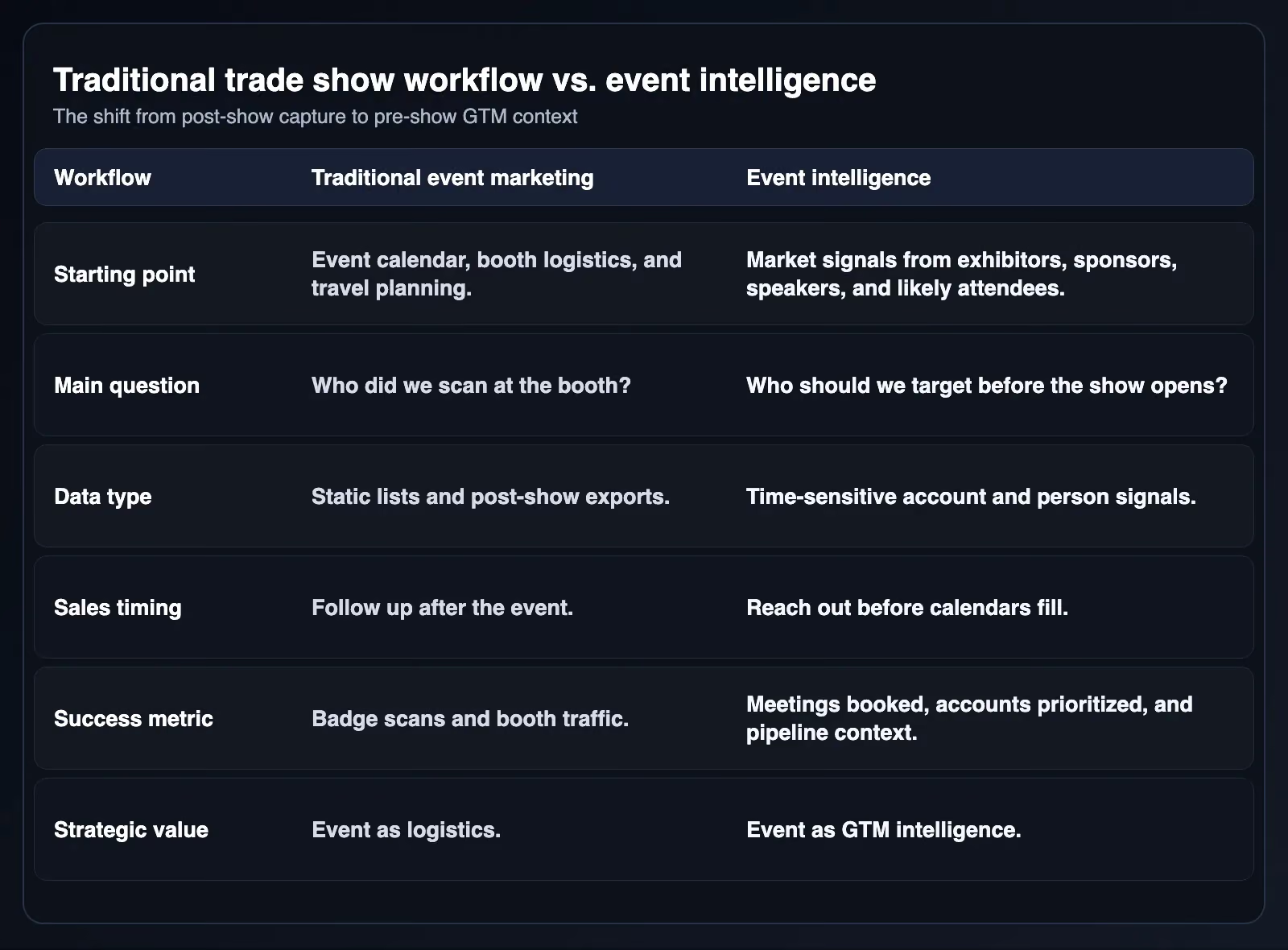
Most event work is still managed like logistics. The team chooses a show, books a booth, ships materials, books flights, prepares the scanner, writes a follow-up sequence, and hopes the right people walk past.
That workflow leaves too much to chance.
If a B2B team spends $40K on a show and walks away with 12 serious target-account conversations, the rough cost is $3,333 per serious conversation. If the same show creates 25 planned meetings because the team mapped accounts, contacts, and pre-show outreach ahead of time, the cost drops to $1,600 per serious conversation.
The booth did not become cheaper. The event became more intentional.
Cvent's trade show statistics roundup captures the pressure around trade show cost, sales outcomes, and quality conversations. Research organizations like CEIR exist because exhibitions are already measurable business channels. The strange part is that many GTM teams still treat event data as something to clean up after the show, instead of intelligence to act on before the show.
That is the gap I care about.
Why the old trade show workflow is breaking
The traditional trade show workflow starts when the best timing has already passed.
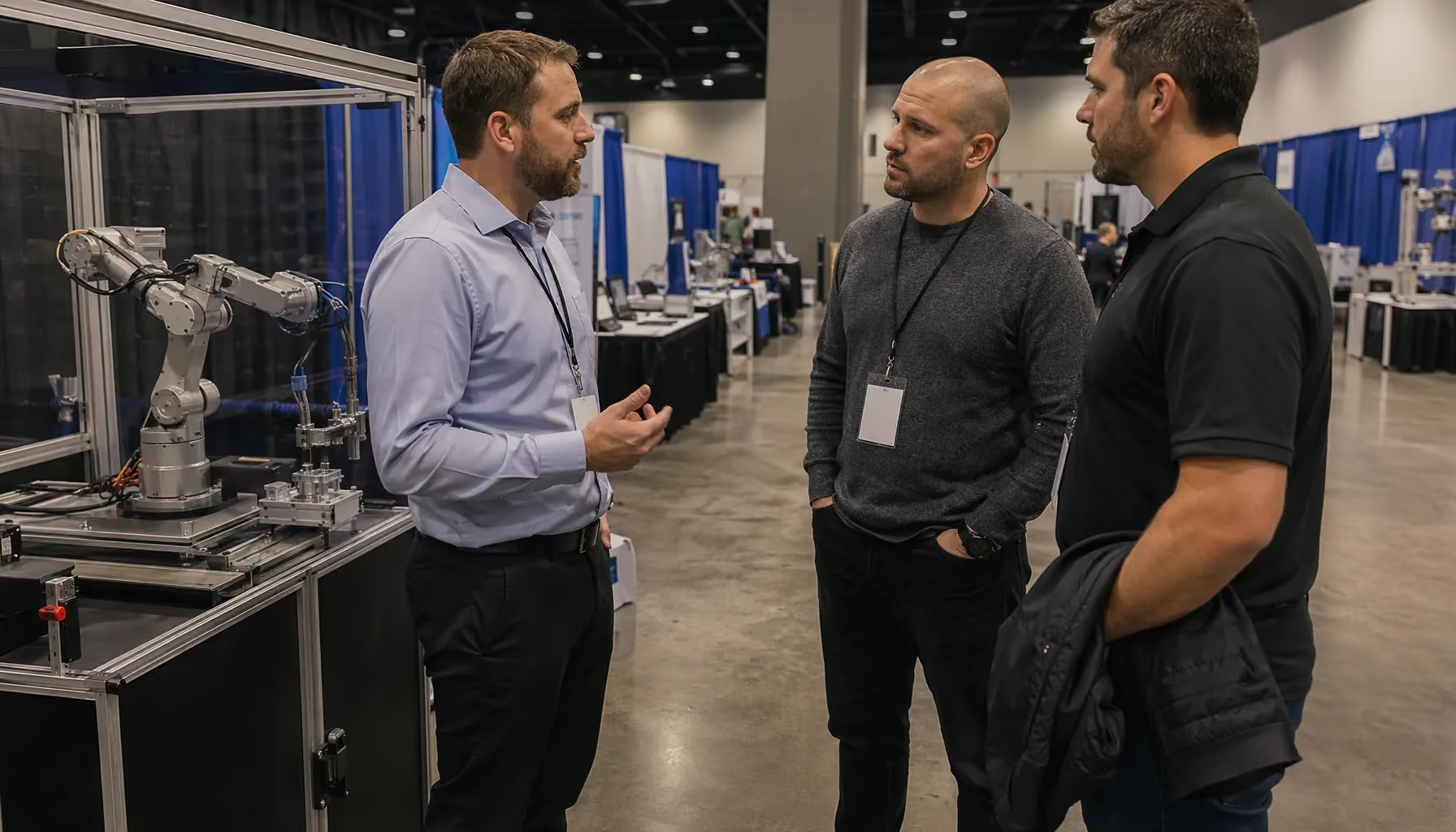
At Automate 2026, I spoke with around 100 exhibitors. Some had large booths and polished demos. Some were smaller teams using the event to test a market. Some had strong sales teams on-site, but no clear system for deciding which companies mattered most before they arrived.
The pattern was easy to see.
Many teams still run events like this:
- Choose a show based on reputation, habit, or internal pressure.
- Prepare the booth and sales team.
- Wait for booth traffic.
- Scan badges and collect business cards.
- Follow up after the event.
- Try to decide later whether the event was worth it.
I understand why this workflow exists. It is simple. It maps to the physical event. It gives the team something to report.
But it has two structural problems.
First, post-show follow-up is crowded. By the time someone returns from a major event, they have been scanned, emailed, added to nurture campaigns, and pulled back into their normal work. The event context fades quickly.
Second, the workflow treats every conversation as if the event created the opportunity. Often, the opportunity existed weeks earlier. The event only made it visible.
Pro Tip: If your first serious account-prioritization meeting happens after the event, you are using the show as a receipt instead of a signal.
What I saw on the show floor
The best event teams do not wait for badge scans to decide who matters.
The strongest teams I saw in Chicago had already done their homework. They knew which accounts they wanted to meet. They understood which exhibitors were relevant. They had looked at the market map before arriving. Their booth was not the beginning of the sales process. It was a conversion moment inside a longer motion.
The weaker teams were not lazy. They were just operating with an outdated model.
They had good products. They had people ready to talk. They had expensive booth space. But they were still depending on chance: who walks by, who scans, who replies later, who remembers the conversation after three days of noise.
That difference changes the role of the event.
One team asks, "Who came by?"
The other asks, "Which target accounts are here, what do we know about them, and what should happen before, during, and after the show?"
Those are different operating systems.
How I think about event signals
An event signal is useful only when it changes timing, targeting, or message context.
Not every event mention deserves action. Not every exhibitor is a target account. Not every attendee signal is strong enough to justify sales outreach.
This is where event intelligence has to be more disciplined than "scrape a list and send emails."
I think about event signals in three layers.
The first layer is the account signal. Is the company exhibiting, sponsoring, speaking, launching a product, hiring around the market, expanding into a geography, or showing up repeatedly at similar events? This layer tells you whether the company deserves attention.
The second layer is the person signal. Which people inside that company are likely to care? For some teams, that means event marketing and field marketing. For others, it means sales leaders, partnership leaders, founders, product leaders, or technical decision-makers. The title depends on what you sell.
The third layer is the timing signal. Is the event next week, next month, or six months away? Is the company already deep into planning, or is there still time to influence a meeting? The same account can be irrelevant in January and highly relevant in May because the event changes the context.
When those three layers line up, outreach feels less random.
A good event signal gives you a reason to reach out now.
That is the difference between static data and event intelligence.
How to turn event intelligence into a pre-show workflow
The practical workflow starts with the market, not the event booth.
If I were building an event GTM motion from scratch, I would not start by asking, "Which big shows should we attend?" That question often sends teams toward the same expensive events everyone already knows.
I would start with a sharper question: where are the companies we care about already spending attention?
1. Start with your target-account list
The first step is not event discovery. It is account clarity.
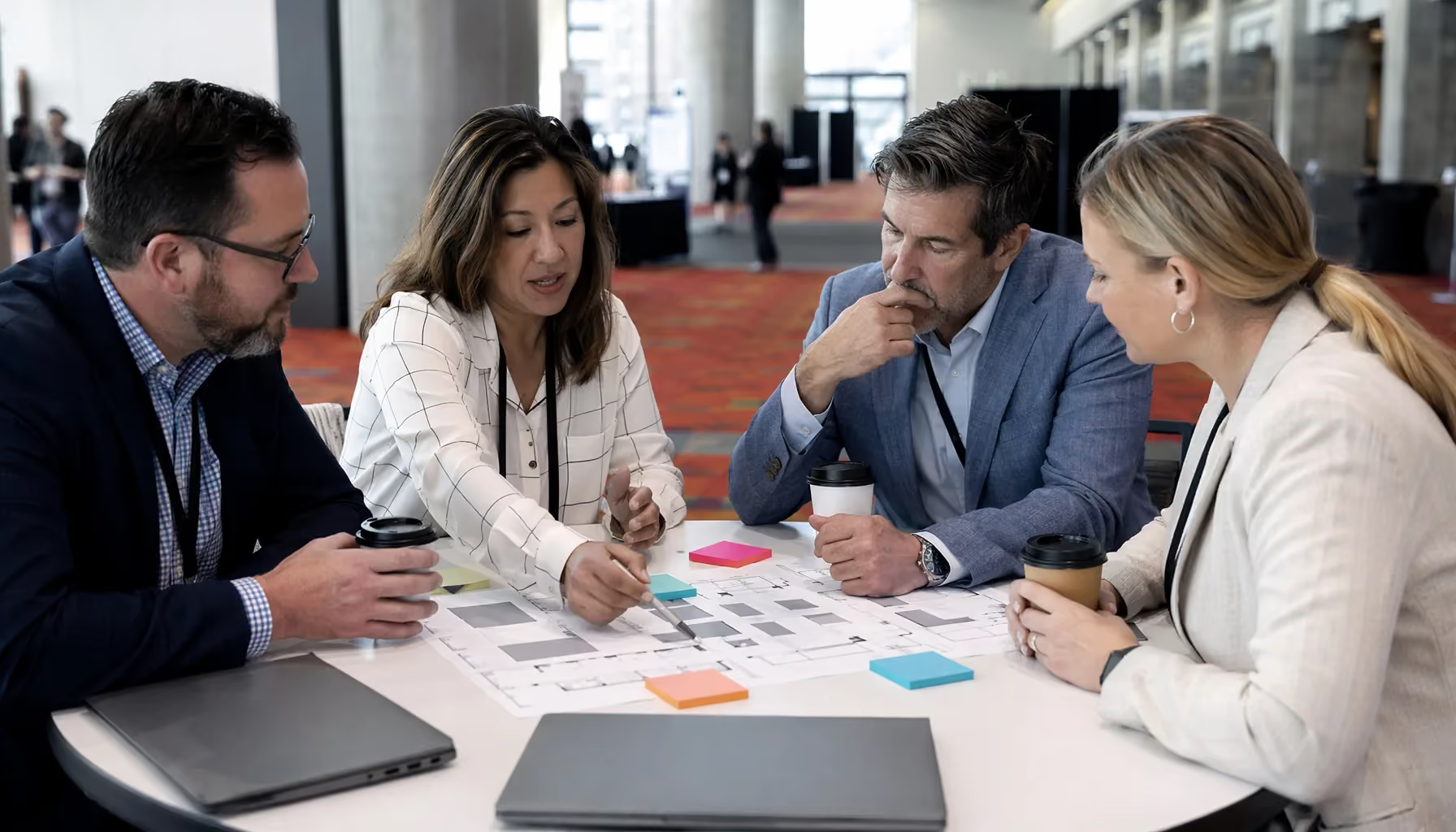
Before choosing a show, define the account set that would make a trade show worth your time. That might be your top 200 named accounts, a segment like AI infrastructure companies, a list of strategic partners, or a cluster of companies entering a region.
Once you have that account set, the event question becomes more concrete: which shows contain the highest density of these companies?
This prevents a common mistake. Teams often choose events because the brand name is familiar. But a famous event with low target-account density can be worse than a niche event where 40 high-fit accounts are visible in the same week.
2. Map events by exhibitor and sponsor behavior
Exhibiting and sponsoring are stronger signals than general industry interest.
When a company pays for booth space or sponsorship, it is committing budget, staff, and message. That does not automatically mean they are ready to buy from you, but it does mean the company has a current business reason to be visible in that market.
This is why I care so much about reverse event discovery. Instead of searching only by event name, you should be able to start with a company and see where it shows up.
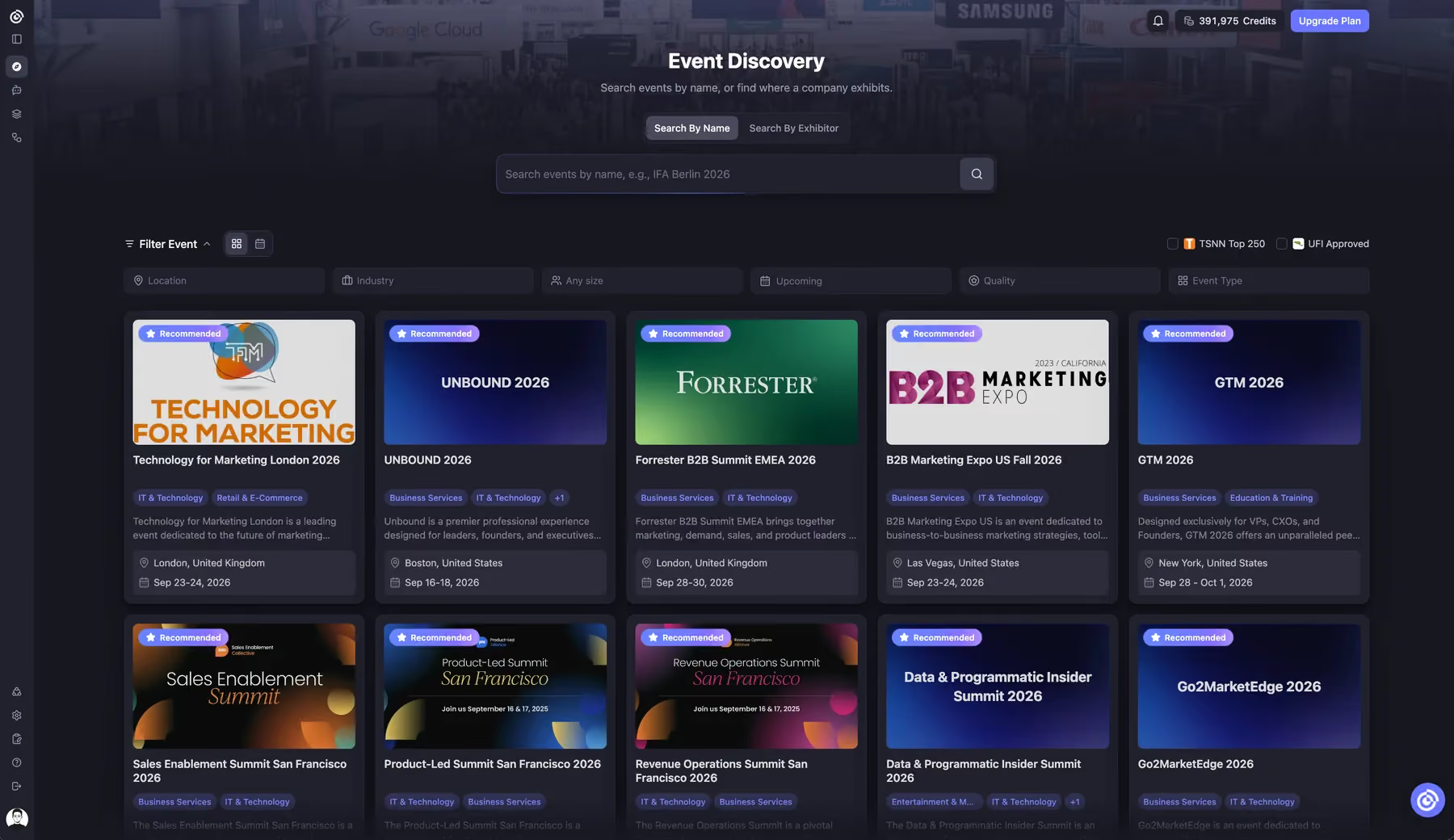
In Lensmor, this is one of the core workflows: search events by name when you know the show, or search by exhibitor when you want to understand where a market is gathering. The product view matters because this should not feel like a research project that takes 10 tabs and a spreadsheet. It should feel like a repeatable GTM workflow.
If you want to see how that workflow looks inside Lensmor, I recorded a short product overview here.
3. Separate exhibitors, attendees, and decision-makers
Event data gets messy when every person and company is treated the same.
An exhibitor is not the same as an attendee. A speaker is not the same as a sponsor. A booth contact is not always the buying committee. A LinkedIn post about attending is not the same as a confirmed meeting.
You need to label the signal type before assigning action.
For example, an exhibitor may be a strong target for suppliers, agencies, service providers, partnership teams, and field marketing vendors. A predicted attendee may be better for sales outreach, executive networking, or account-based advertising. A speaker may be useful for founder outreach or analyst-style relationship building.
The point is not to create a perfect taxonomy. The point is to stop treating "event list" as one flat bucket.
Pro Tip: Build separate outreach paths for exhibitors, likely attendees, speakers, and sponsors. They are at the same event for different reasons.
4. Score the event before committing the trip
One of the most useful event intelligence workflows is deciding not to attend.
That sounds strange from a company building event intelligence software, but it is true. Not every event deserves travel, booth spend, or executive time. Some events are better used as remote prospecting signals.
A simple pre-show scorecard can help:
- Account density: how many high-fit companies are tied to the event?
- Contact clarity: can you identify the right people before the event?
- Timing: is there enough time to reach out before calendars fill?
- Action path: can the team turn the signal into meetings, ads, partnerships, or sales conversations?
- Strategic value: does the event reveal a market movement you need to understand?
If an event has weak account density and no clear action path, attending may be a vanity decision. If it has strong account density but weak travel ROI, it may still be useful for pre-show outreach and audience building.
5. Write outreach that proves you understand the event
Bad pre-show outreach sounds like a generic sales email with the event name pasted into the first line.
Good pre-show outreach uses the event as context, not decoration.
The structure is simple:
- Reference the specific event signal.
- Explain why it matters to their current priority.
- Make a narrow ask that fits the event timeline.
For example, "Saw your team is exhibiting at Automate next month" is only the opening. The useful part is the reason: "Companies in your category often use that show to meet integrators and manufacturing buyers, so I thought this might be timely."
The message does not need to be long. It needs to make the recipient feel that you understand why the event matters.
Pro Tip: If your message would still work after replacing the event name with any other event, it is not using event intelligence.
Why I decided to create Lensmor
I created Lensmor because event data is too valuable to stay trapped in scattered web pages and post-show exports.
The raw material is everywhere.
Exhibitor lists live on event websites. Sponsor pages sit inside PDFs. Speaker lists are separated from company context. Attendee signals appear across LinkedIn posts, event agendas, partner announcements, and historical show behavior. Sales teams copy names into spreadsheets. Marketing teams debate which events deserve budget. Founders discover relevant companies after the show is already over.
That is not only a data problem. It is a workflow problem.
Lensmor is my attempt to make the better workflow easier:
- Start with target accounts and market segments.
- Find where those companies exhibit, sponsor, speak, or likely attend.
- Identify the relevant people before the event.
- Enrich contact paths where there is a real reason to reach out.
- Prioritize accounts by fit, timing, and context.
- Decide whether the event deserves travel, remote outreach, advertising, or partner work.
- Use the event itself as a conversion moment, not the starting line.
The product will keep evolving. The data will get cleaner. The workflows will become sharper as customers push us into more real-world use cases.
But the belief is stable:
B2B events should become structured GTM intelligence.

The difference between a database and event intelligence
Static contact data answers who exists. Event intelligence answers why now.
Tools like ZoomInfo, Apollo, LinkedIn Sales Navigator, and Clay all have a place in modern GTM stacks. Most teams need company records, contacts, enrichment, and workflow automation.
But a contact record alone is not a buying moment.
If your message says, "I noticed you are the VP of Marketing at a manufacturing company," that is still generic. If your message says, "I saw your team is exhibiting at Automate next month, and companies in your category often use the show to meet system integrators and channel partners," the conversation starts with context.
Context changes the temperature of outreach.
The event creates a deadline. It narrows the topic. It makes the message feel less random because both sides are oriented around the same upcoming moment.
That is why I think event intelligence belongs in the modern B2B signal stack. Not as a replacement for CRM, enrichment, or sales engagement tools, but as the timing layer those tools often lack.
What I want this category to cover
This category is where I will share how I think about events as GTM intelligence.
Some articles will be tactical: how to prioritize exhibitors before a show, how to build pre-show outreach, how to turn an exhibitor list into account research, and how to decide whether an event is worth attending.
Some will be strategic: why badge scanning is often too late, why field marketing and outbound sales are converging, why trade shows may become one of the most underused GTM channels again, and why event signals deserve a place beside intent data, CRM data, and product usage data.
Some will be more personal: what I learn on show floors, what customers teach me, what assumptions I get wrong, and how those lessons shape Lensmor.
This will not be a polished success diary. Building in this space is messy. Event data is inconsistent. Official sources are incomplete. Attendee signals are hard to verify. Sales workflows vary by industry.
That messiness is exactly why the space is worth building in.
Why this matters for B2B GTM
B2B GTM is moving from volume-driven outbound to signal-driven engagement.
The winners will not be the teams that send the most emails. They will be the teams that know who to contact, when to contact them, and what context makes the conversation worth having.
Trade shows are one of the clearest examples of that shift.
They are expensive. They are time-bound. They reveal buying intent, partnership intent, competitive movement, product launches, hiring signals, and market-expansion clues.
But many teams still underuse them because they see the event mainly as logistics.
I see events differently.
Events are intelligence.
That is the story behind Lensmor.
This is also the starting point for what I want to keep writing in this category. I will keep sharing how I think about trade shows, event signals, pre-show GTM, customer workflows, product decisions, and the founder lessons I learn while building Lensmor.
Not every post will have a finished answer. Some will be field notes. Some will be frameworks. Some will be opinions that may get sharper as the product and market teach me more.
But the direction is clear: I want to help more B2B teams stop treating events as isolated offline moments, and start treating them as intelligence they can act on before the opportunity passes.
Start Free — Start using Lensmor's event intelligence platform today. Predict attendee lists, discover relevant events, and enrich contact data for your next trade show.
Related reading: trade show intelligence guide and event intelligence platform comparison; also see the complete B2B event marketing framework.