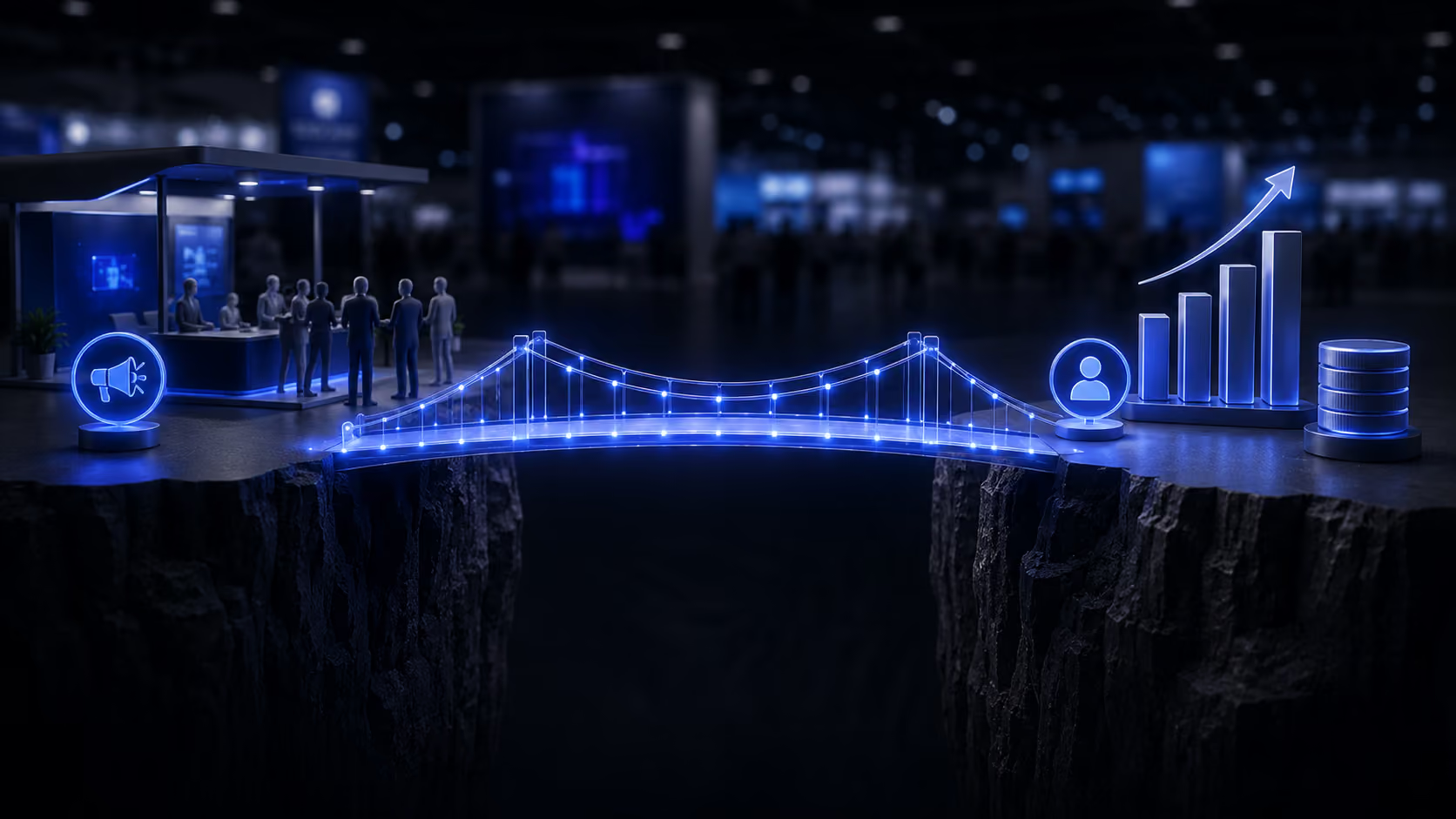
The benefits of trade shows are real when your team treats the event as a pipeline channel, not a booth rental with branded shirts.
TL;DR
- Trade shows help B2B teams generate qualified leads, build trust, launch products, study competitors, and meet partners in one place.
- They are worth it when the attendee profile matches your ICP and your follow-up system is ready before the show starts.
- The biggest risks are cost, weak booth execution, poor qualification, and delayed follow-up.
- The best teams build a target account list before the event instead of relying on badge scans after it.
What Are the Benefits of Trade Shows?
Trade show benefits are the business outcomes a company can create by exhibiting: lead generation, brand visibility, market feedback, customer relationships, partner conversations, and sales pipeline.
If you need a broader definition of what a trade show is, think of it as a concentrated market. Buyers, vendors, competitors, suppliers, analysts, and media are in the same room.
Trade show benefits definition
The benefit is not the booth itself. The benefit is access. Trade shows compress months of prospecting, product feedback, competitor research, and relationship-building into a few days.
Why trade shows still matter in B2B
B2B buying is slow. Digital outreach is crowded. Ads are expensive. Trade shows give your team one thing online channels struggle to create: a real conversation with someone already spending time in your category.
That is why trade shows still sit inside serious B2B event marketing plans. They put your sales and marketing teams close to buyer intent.
9 Benefits of Trade Shows for B2B Companies
The strongest benefits of trade shows show up when you connect each benefit to a measurable outcome.
| Benefit | What It Gives You | How to Measure It |
|---|---|---|
| Lead generation | Conversations with active buyers | Qualified leads and meetings booked |
| Brand visibility | Category presence in front of the right audience | Booth visits, mentions, content reach |
| Market insight | Buyer language, competitor moves, product feedback | Messaging changes and CRM notes |
1. Higher-quality lead generation
Trade shows attract people with a reason to be there. Some are researching vendors, looking for partners, or comparing options before a purchase.
That does not mean every badge scan is useful. Strong trade show lead generation depends on qualification: role, company fit, active need, timing, and next step.
Pro Tip: Measure qualified conversations, not total scans. A smaller list with buyer context beats a large list nobody remembers.
2. Face-to-face trust building
In-person conversations shorten the trust gap. A buyer can ask follow-up questions, read your confidence, see the product, and decide whether your team understands their problem.
For complex B2B sales, that matters. A short booth conversation can do work that several cold emails cannot.
3. Brand awareness in a concentrated market
A trade show gives your company visibility in a focused industry setting. You are seen beside competitors, partners, and category leaders.
Brand awareness is useful when it supports later sales activity. A prospect who saw your booth, attended your session, or met your team is easier to re-engage after the show.
4. Live product demos and faster feedback
Trade shows let buyers react to your product in real time. You can see what confuses them, what makes them lean in, and what questions repeat.
That feedback should go back to sales, marketing, and product. Write down the buyer's exact words.
5. Competitor and market intelligence
Your competitors are telling the market who they are. Their booth design, demos, session topics, sponsorships, and messaging all reveal priorities.
Crowded booths, repeated questions, and session attendance can all point to category demand.
Pro Tip: Pick three intelligence questions before the show. For example: which competitors are changing messaging, which accounts are active, and which buyer objections keep repeating.
6. Stronger partner and customer relationships
Trade shows are useful beyond new leads. You can meet current customers, renew dormant relationships, and find channel or integration partners.
The best meetings often happen outside the booth. Dinners, coffee meetings, and hallway conversations can move deals faster than a formal pitch.
7. Better content and media opportunities
Trade shows create natural content: product demos, customer conversations, session takeaways, partner announcements, and event recaps.
That content can support your wider event marketing strategies.
8. Industry learning for your sales team
Sales teams learn faster when they hear buyer language directly: what prospects compare you against, which problems feel urgent, and which claims fail.
That knowledge improves objection handling and follow-up.
9. Clearer sales and marketing alignment
Trade shows force alignment. Marketing needs the right audience and message. Sales needs target accounts and qualification criteria. Leadership needs a way to judge ROI.
When those pieces are clear, the event becomes a shared pipeline project.
Are Trade Shows Worth It?
Yes, trade shows are worth it when the right buyers attend, your offer fits the audience, and your team has a process for outreach, qualification, and fast follow-up.
They are not worth it when you pick events by brand name alone, send an untrained booth team, or judge results only by badge scan volume.
When trade shows are worth the cost
Trade shows make sense when your deal size supports the cost, your ICP is present, and your sales cycle benefits from trust-building.
If you want to judge event returns properly, connect the show to pipeline instead of stopping at lead count. Lensmor's guide on how to measure event ROI goes deeper on that.
When trade shows are not worth it
The event may not be worth it if the audience is too broad, your booth is underfunded, your team cannot explain the offer, or follow-up takes two weeks.
Cost matters too. Booth space, travel, shipping, design, internet, and staff time add up quickly. Use event budget planning before committing.
Advantages and Disadvantages of Trade Shows
The advantages of trade shows are strongest when you control the risks. A useful event plan looks at both sides.
| Advantage | Risk | How to Control It |
|---|---|---|
| Buyer access | Wrong attendee profile | Review attendee and exhibitor fit |
| Lead volume | Low-quality scans | Score leads before follow-up |
| Market insight | Random notes | Assign collection questions |
Advantages to measure
Track qualified leads, meetings booked, sales conversations, opportunities created, partner meetings, demo requests, and content captured. These are stronger signals than booth traffic alone.
Disadvantages to control
The biggest disadvantages are cost, staff time, competition, poor location, and uncertain results. Most are manageable if you plan early.
How to Get More Value From Trade Shows
Trade show value starts before the show opens.

Choose shows by ICP fit, not size
A huge event with the wrong audience is expensive noise. A smaller event filled with your buyers is often better.
Ask who attends, which companies exhibit, and whether your best customers have gone before.
Build a target account list before the show
Do not wait for the right people to pass your booth. Use exhibitor, sponsor, and attendee signals to decide who deserves outreach.
If your team wants to know which exhibitors and sponsors are worth contacting before the show opens, you can start with Lensmor and build a target account list before the first booth conversation.
Segment leads before follow-up starts
Every lead should leave the show with a tier: hot, warm, nurture, or no follow-up. Add notes on pain, timing, role, company fit, and promised next step.
Pro Tip: Run a daily lead review before the team leaves the venue. Waiting until Monday turns specific conversations into vague memories.
Trade Show Benefits by Team Goal
Different teams get different value from the same event.
For sales teams
Sales gets direct conversations, account context, objection patterns, and warm follow-up reasons.
For marketing teams
Marketing gets message testing, campaign content, brand exposure, and event performance data.
For founders and agencies
Founder-led teams get pre-show pipeline without waiting for inbound. Agencies get a repeatable client workflow: event research, account scoring, contact discovery, outreach, and follow-up.
How Lensmor Helps Capture the Real Benefits
The real benefit of a trade show is not being listed as an exhibitor. It is knowing which accounts matter and having context before the first conversation.
From exhibitor lists to prioritized accounts
Lensmor helps B2B teams turn event and exhibitor data into account priorities, so sales can focus on companies that match the ICP.
To turn exhibitor data into prioritized accounts, contact discovery, and post-show follow-up context, use Lensmor before your next trade show.
From badge scans to pipeline context
Badge scans tell you who stopped. Pipeline context tells you who matters, why they matter, and what should happen next.
Conclusion
The benefits of trade shows are strongest when the event is treated as a pipeline system. Lead generation, trust, brand exposure, product feedback, and market insight all matter, but none of them happen automatically.
Pick the right show. Know your accounts before you arrive. Qualify conversations while they are fresh. Follow up fast. That is how a trade show becomes more than a busy booth.
Related reading: the complete trade show marketing guide.