Updated July 2026: COMPUTEX 2026 concluded on June 5. This guide now combines the official results with a reusable account-research and prospecting workflow for teams preparing for COMPUTEX 2027.
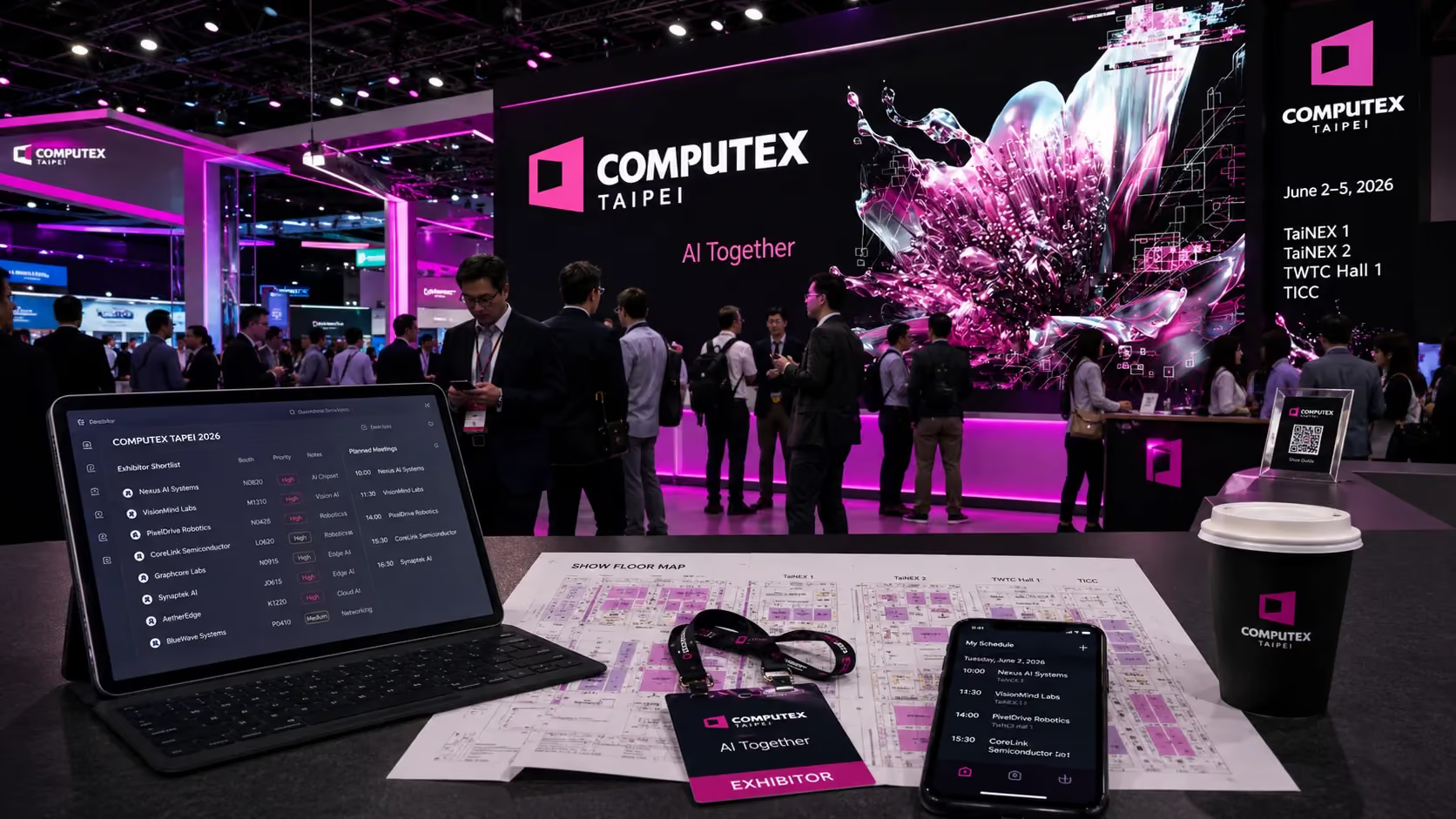
COMPUTEX Taipei 2026 ran from June 2 to June 5 across TaiNEX 1, TaiNEX 2, TWTC Hall 1, and TICC. According to the official post-show report, it drew 111,312 buyers and visitors from 152 countries and regions. The next edition is scheduled for June 1-4, 2027, so teams can use the 2026 exhibitor landscape to begin account planning early.
For a B2B sales team, the event is not just an industry calendar item. It is a prospecting window.
If you wait until you land in Taipei to figure out who matters, you are already late. The best meetings are usually shaped weeks before the badge printer spits out your name.
TL;DR
- COMPUTEX 2026 concluded on June 5 after drawing 111,312 buyers and visitors from 152 countries and regions.
- COMPUTEX 2027 is scheduled for June 1-4, making the 2026 exhibitor landscape useful for early account planning.
- The strongest B2B angle is pre-show targeting, not post-show badge cleanup.
- Sales teams should build an exhibitor shortlist, prioritize floor routes, and start outreach 4-6 weeks before the show.
COMPUTEX Taipei 2026: Results and Fast Facts
COMPUTEX Taipei 2026 ran June 2-5 across TaiNEX 1, TaiNEX 2, TWTC Exhibition Hall 1, and TICC. The official results reported 111,312 buyers and visitors from 152 countries and regions, with the program centered on AI computing, robotics and mobility, and next-generation technology.
The show brought together 1,500 companies across 6,000 booths. That scale makes random floor-walking inefficient: teams preparing for future editions should rank target accounts, map priority halls, and begin meeting outreach before arriving.
The basics:
| Item | Computex Taipei 2026 Detail | Why B2B Teams Should Care |
|---|---|---|
| Dates | June 2-5, 2026 | Pre-show outreach should start in late April or early May |
| Venues | TaiNEX 1, TaiNEX 2, TWTC Hall 1, TICC | Route planning matters because the event is not in one building |
| Theme | AI Together | Messaging should speak to AI deployment, not generic event networking |
| Scale | 1,500 exhibitors and 6,000 booths | You need scoring, segmentation, and meeting priority before arrival |
When is Computex Taipei 2026?
COMPUTEX Taipei 2026 ran from June 2-5, 2026, with official show hours from 9:30 a.m. to 5:30 p.m. GMT+8 on the main exhibition days. The event has concluded, and its exhibitor and attendance results now provide a useful benchmark for planning COMPUTEX 2027.
For a sales team, that means the event is already active before June 2. Exhibitors, partners, media, booth builders, and executives are making plans in the last week of May. If your first outreach happens during the show, you are asking for time that has already been claimed.
Where is Computex Taipei 2026 held?
The official venue list includes Taipei Nangang Exhibition Center Hall 1, Taipei Nangang Exhibition Center Hall 2, TWTC Exhibition Hall 1, and Taipei International Convention Center. In plain terms: you cannot plan meetings as if every booth is a five-minute walk away.
Put your best accounts into venue clusters. One 30-minute meeting across town can ruin three better conversations.
Who organizes Computex Taipei?
Computex is co-organized by TAITRA and the Taipei Computer Association. It is not just a product launch show. It is a trade and procurement event where Taiwan's manufacturing network, global chip companies, AI infrastructure vendors, startups, and buyers overlap.
How much of Computex is business-only versus public access?
Treat the core show as a professional B2B event. Public ticket information can change by year and access type, so check official registration before making assumptions. Computex Online currently notes that general public online ticket sales are expected to open in May 2026. Computex Online is the place to verify attendee access and registration details.
What should you know about Computex 2026 registration and tickets?
There are multiple registration paths: visitor pre-registration, keynote and forum registration, exhibitor registration, and public ticketing. The mistake is mixing them together.
If you are going for sales meetings, your first step is not buying a ticket. It is deciding who you need to meet and what access helps you reach them.
Pro Tip: Register for the parts of Computex that match your commercial goal. A forum pass can be useful if your buyers attend executive sessions. It is a waste if your targets are mostly on booth floors.
Which official channels should you follow before the show?
Use the official Computex website for dates, venues, and registration. Use Computex Daily for news and keynote updates. Use Computex Online for registration and attendee access. Use the official YouTube channel for livestreams and replays when they are available.
Do not build your schedule from secondhand posts alone. Computex 2026 has already had keynote and schedule updates. Your sales plan should be flexible enough to adjust when the official agenda changes.
Practical next step: Planning for the next COMPUTEX? Lensmor can help turn the exhibitor landscape into a ranked account list, enriched contact paths, and an outreach plan before Taipei gets busy. Research the next COMPUTEX with Lensmor.
Who Attends Computex Taipei 2026

Computex pulls a wide technology crowd, but the best attendee groups are not random. The event brings together AI infrastructure, components, robotics, mobility, systems integration, startups, and Taiwan's manufacturing ecosystem.
That mix is why a generic "let's connect at Computex" message fails. Everyone is busy. Everyone has a booth to visit. Everyone has a schedule conflict. Your outreach has to prove that the meeting belongs on their calendar.
Exhibitors: global ICT, AI infrastructure, components, robotics, and startups
Expect exhibitors across semiconductors, AI servers, storage, networking, cooling, robotics, smart mobility, drones, industrial IoT, embedded systems, consumer electronics, gaming, and startup technology.
That breadth is good for research. It is bad for focus. If your ICP is "industrial AI companies with edge deployment needs," you should not spend equal time on every AI-labeled booth.
Visitors: executives, buyers, engineers, investors, founders, and media
The buyer mix includes executives looking for partnerships, engineers evaluating systems, procurement teams checking suppliers, founders seeking investors, investors scouting startups, and media tracking the next AI cycle.
Each group needs a different reason to meet. A founder-led B2B team may care about distribution. A robotics system integrator may care about deployment partners. A data center infrastructure buyer may care about power density, cooling, and reliability.
International buyers and ICT professionals from 150+ countries
The reference brief frames Computex as a global ICT gathering with international buyers and professionals from more than 150 countries. Even if your company does not sell in Taiwan, the event can still be useful because international visitors compress months of market access into one week.
The useful question is not "Is Computex big enough?" It is "Which slice of the crowd matches our ICP?"
Startups, investors, and InnoVEX participants
InnoVEX is the startup layer of Computex. For investors, accelerators, service providers, and partnership teams, it is often more actionable than the biggest booths because founders are easier to reach and more open to new relationships.
For sales teams, InnoVEX can work if your product helps young companies move faster: cloud infrastructure, developer tools, hardware prototyping, manufacturing partnerships, compliance, market entry, or GTM support.
Who should prioritize Computex for B2B sales?
Prioritize Computex if you sell to AI infrastructure, manufacturing, industrial tech, robotics, mobility, data centers, cybersecurity, semiconductor-adjacent companies, embedded systems, retail tech, logistics, or B2B SaaS teams selling into those sectors.
If you are a founder-led B2B team, Computex is useful when you can name the exact companies you want to meet before you arrive. If you are an agency or lead-gen team, Computex is useful when you can turn the exhibitor list into a repeatable client deliverable.
For a primer on prospecting outside event contexts, use Lensmor's guide to B2B sales prospecting.
5 Tech Trends Defining Computex Taipei 2026

The 2026 theme, "AI Together," covers a lot of ground. For sales planning, that is not enough. You need to translate each trend into a buying signal.
These are the five trends I would turn into account filters.
1. AI infrastructure moves from training to deployment
The most useful Computex conversations will not be about "AI" in the abstract. They will be about deployment: servers, accelerators, networking, storage, edge inference, software stacks, power, and cooling.
This changes your outreach. A weak message says, "I saw you are attending Computex and would love to connect." A better message says, "Your booth focus on edge AI servers suggests you are speaking to manufacturers that need local inference. We help teams identify those buyers before the show."
2. Physical AI brings robotics, sensors, and automation onto the floor
Physical AI is where AI leaves the browser and starts touching warehouses, factories, vehicles, hospitals, and retail operations. At Computex Taipei 2026, that means robotics, AMRs, drones, sensing, computer vision, smart mobility, and industrial automation.
For B2B sales teams, physical AI is a strong filter because it reveals urgency. Companies demoing robots and automation systems usually need partners across hardware, software, deployment, safety, integration, distribution, and after-sales support.
Pro Tip: Treat "physical AI" as a cluster of buying signals, not a phrase to repeat in your pitch. Look for evidence of deployment: industrial use cases, partner booths, field pilots, integrator language, and operations-heavy job titles.
3. Edge AI and localized inference become buying signals
Edge AI shows up when cloud-only AI is too slow, too expensive, too exposed, or too disconnected from the physical environment. That matters in manufacturing, healthcare, logistics, retail, security, and mobility.
If you sell data infrastructure, embedded systems, AI software, cybersecurity, monitoring, compliance, or deployment support, edge AI exhibitors are worth segmenting separately. They are often closer to real budgets than generic AI demo companies.
4. AI PCs, gaming hardware, and next-gen consumer devices keep Computex visible
Computex has always had a strong hardware identity. AI PCs, gaming systems, accessories, components, and consumer devices will still drive attention.
For pure B2B teams, do not dismiss these categories too quickly. A consumer hardware booth may still point to suppliers, distributors, component makers, gaming infrastructure vendors, or OEM partnerships behind the scenes.
5. Open chiplets, advanced packaging, and AI data centers shape the supply chain
AI infrastructure is not a software-only story. It depends on chips, packaging, memory, networking, storage, cooling, power, and manufacturing capacity. That is where Computex becomes more useful than many AI conferences.
If you sell into the AI supply chain, map companies by layer:
- Silicon and accelerators
- Boards, modules, and components
- Servers and rack-scale systems
- Cooling, power, and data center operations
- Integrators and deployment partners
- End-market application providers
Why power, cooling, and sustainability belong inside the AI infrastructure conversation
AI demand creates heat, power draw, and operating cost pressure. That makes liquid cooling, power management, energy efficiency, and data center design more than technical side topics.
They are budget topics. If a company is talking about dense AI systems, somebody nearby is worrying about power, cooling, floor space, and uptime.
Key Exhibitor Categories and Who to Watch at Computex Taipei 2026
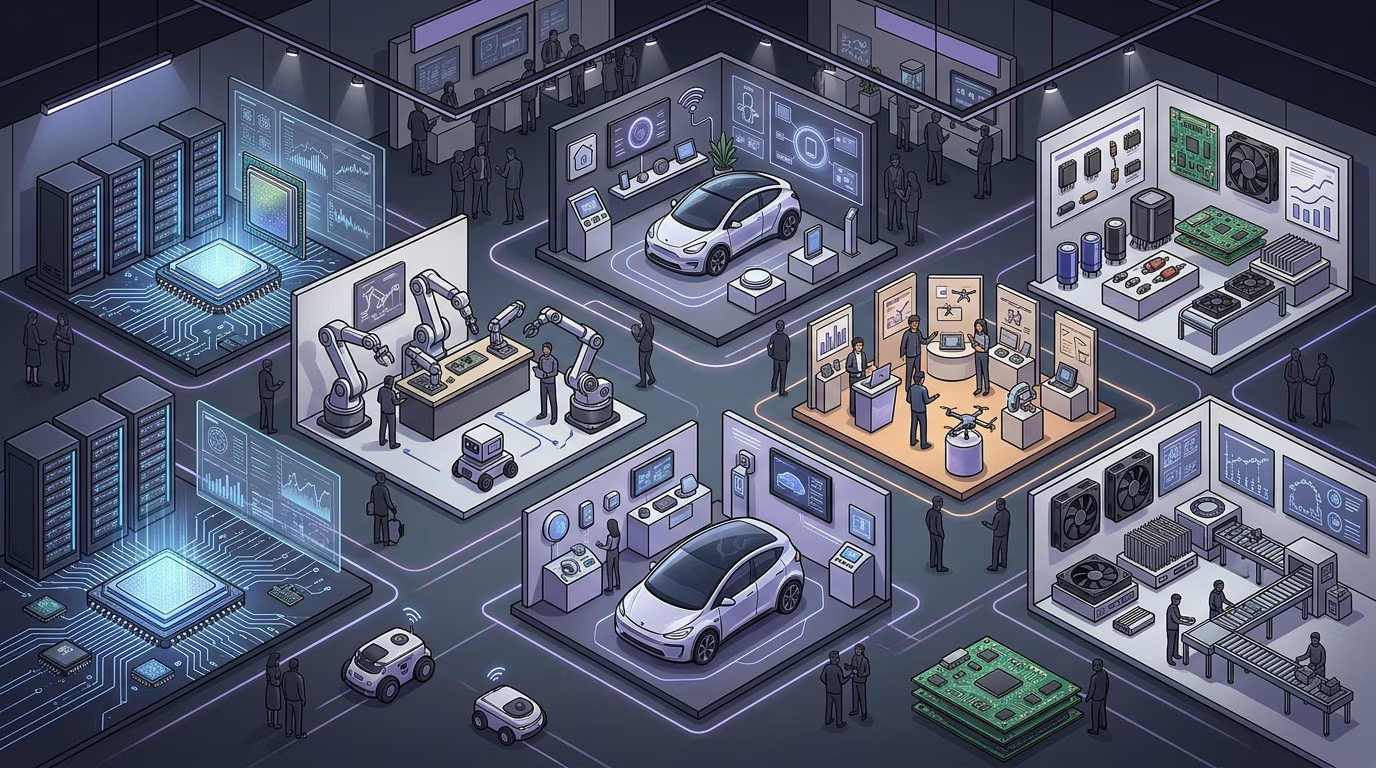
The official exhibitor information breaks Computex into areas such as AI & Robotics, Robotics & Mobility, Next-Gen Tech, and exhibition zones across TaiNEX and TWTC. The exhibitor registration page lists example theme keywords including cloud, HPC, cybersecurity, digital twin, liquid cooling, semiconductor, edge AI, AMR, drones, EV, 6G, WiFi 7, ESG, XR, gaming, and more.
For sales teams, the categories shake out like this:
| Category | Who to Watch | Prospecting Angle |
|---|---|---|
| AI & Computing | Chip, server, storage, cloud, and HPC vendors | Ask about deployment bottlenecks, partner channels, and infrastructure demand |
| Robotics & Mobility | AMR, drone, EV, sensing, and smart mobility companies | Look for integrator, safety, support, and market-entry needs |
| Next-Gen Tech | 6G, WiFi 7, XR, cybersecurity, ESG, and space tech vendors | Anchor outreach to regulation, pilots, ecosystem partnerships, and buyer education |
| Startups and InnoVEX | Founders, investors, accelerators, and early-stage tech teams | Offer partnership, GTM, data, infrastructure, or regional expansion value |
AI and computing: chips, servers, accelerators, cloud, and HPC
This is the commercial center of Computex Taipei 2026. Expect buyers and partners to be looking for what comes after model training: deployment, inference, cost control, reliability, and infrastructure fit.
When you build your shortlist, separate companies that sell AI infrastructure from companies that merely mention AI. The first group is usually much more useful for B2B prospecting.
Robotics and mobility: AMRs, drones, smart logistics, and physical AI systems
Robotics and mobility booths are useful because demos expose use cases quickly. You can see whether the company is targeting warehouses, factories, smart cities, healthcare, retail, defense-adjacent markets, or last-mile logistics.
That gives you better opening lines. Instead of "I saw your booth," say "Your AMR demo seems aimed at warehouse operators that need safer picking and route optimization. Are you prioritizing integrator partnerships in North America this year?"
Next-gen tech: 6G, B5G, XR, cybersecurity, quantum, and IoT
Next-gen tech can be noisy because many categories are still early or unevenly commercialized. That does not mean they are useless for sales. It means your qualification has to be sharper.
Ask: Is this company selling now, recruiting partners, seeking pilots, raising capital, or educating the market? Each answer points to a different outreach angle.
Startups and InnoVEX: where investors and early partners should spend time
InnoVEX should be a priority if your offer helps startups get customers, capital, partnerships, infrastructure, manufacturing, or market access.
For agencies, this can become a client deliverable: "We found 50 InnoVEX companies that match your ICP, with founder contacts and a reason to meet each one."
Companies and keynotes to watch
The reference packet includes major names such as NVIDIA, Qualcomm, Marvell, NXP, ASUS, Acer, MSI, GIGABYTE, ASRock, Foxconn, Compal, Pegatron, Wiwynn, Delta, and Vertiv. Treat these names as market signals, not automatically as sales targets.
Big brands pull attention. But the best prospects are often suppliers, partners, and fast-growing companies orbiting those brands.
Why COMPUTEX Forum and official keynotes matter for sales teams
The COMPUTEX Keynote & Forum site says keynotes will be livestreamed on the official YouTube channel and that forum recordings will be accessible to registrants for 90 days. The official Keynote & Forum page also lists forum programming across June 2-4, 2026.
For sales, keynotes tell you what buyers will talk about that week. If a keynote is about AI infrastructure scaling, your outreach into server, networking, cooling, and data center vendors should not sound like a generic trade show note.
Taiwan manufacturing ecosystem: Foxconn, Compal, Pegatron, Wiwynn, Delta, and Vertiv
Computex is useful because it sits near the manufacturing layer behind global tech. That is a different environment from a pure software conference.
If you sell into hardware-heavy markets, this ecosystem matters. Your best conversations may not be with the brand that launches the flashiest device. They may be with the manufacturer, integrator, cooling provider, or infrastructure partner that helps make deployment possible.
Computex Taipei 2026 Floor Plan: Navigating Taipei Nangang Exhibition Center
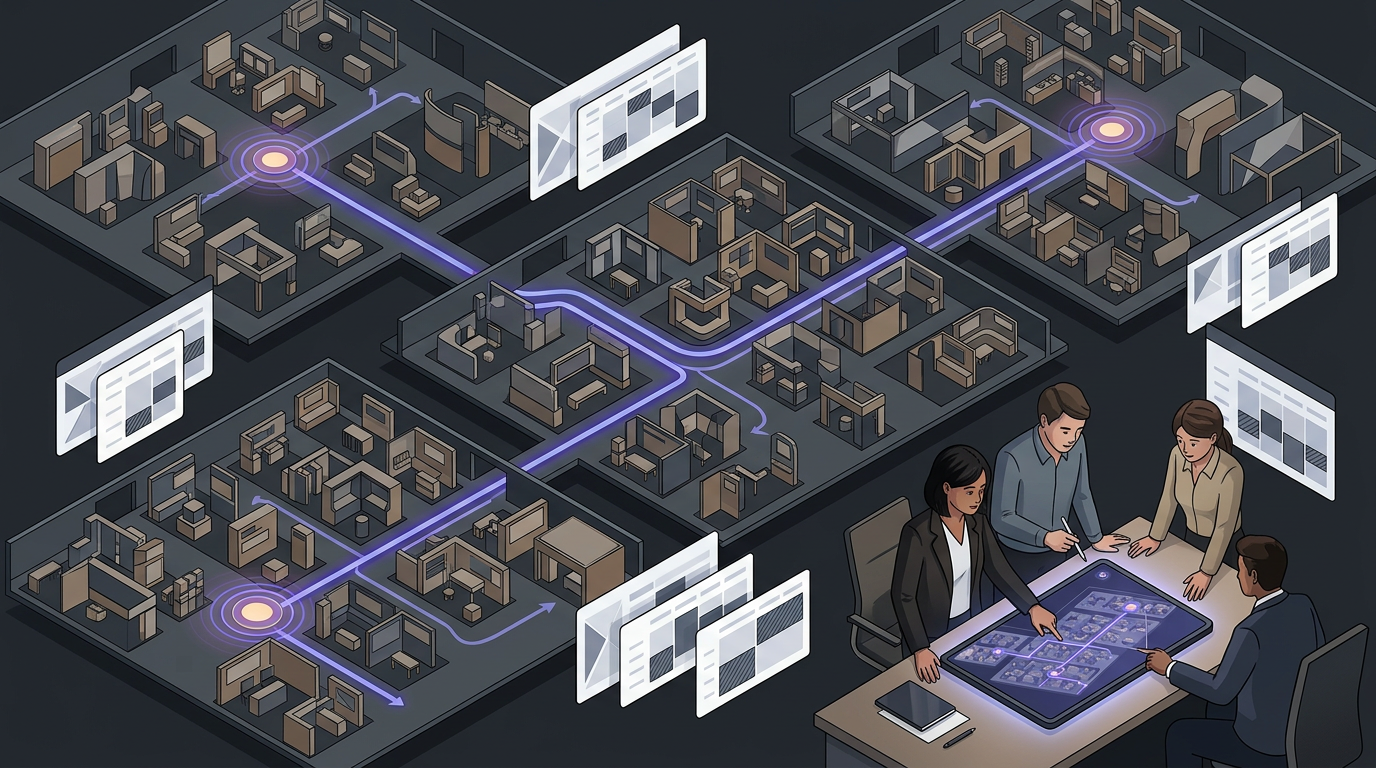
The Computex Taipei 2026 floor plan matters because the show spans multiple venues and floors. The exhibitor registration page lists TaiNEX 1 areas such as Advanced Communication & Networking, AI Computing & Tech, Components & Advanced Power Tech, Semiconductors & Hospitality Suites, Gaming, International Exhibitors Area, Smart Mobility & Drone Tech, and System Integration Solution. It lists TaiNEX 2 areas such as Consumer Electronic Accessories, Industrial IoT & Embedded Systems, Intelligent Business Solutions, Semiconductors & Hospitality Suites, InnoVEX, and Storage & Management Solutions. TWTC Hall 1 includes Robotics and TechXperience. <a href="" rel="nofollow">Official Computex exhibitor information</a> provides the area breakdown, and QNAP has also published a Computex 2026 floor map PDF that is useful when you need a booth-level visual reference.
That is a lot of ground. Your calendar needs geography built into it.
How the venues split across TaiNEX 1, TaiNEX 2, TWTC Hall 1, and TICC
Use TaiNEX 1 and TaiNEX 2 as your primary booth-planning anchors. Use TWTC Hall 1 for Robotics and TechXperience. Use TICC and forum venues for executive programming and session-driven networking.
Do not schedule a meeting in one venue, another across the event footprint, and then assume you can squeeze in three booth visits between them. You will end up rushing, late, and unfocused.
Which zones to prioritize in TaiNEX 1, TaiNEX 2, and TWTC Hall 1
Start with your ICP, then pick zones.
If your target market is AI infrastructure, prioritize AI Computing & Tech, Components & Advanced Power Tech, Semiconductors, Storage & Management, and System Integration. If your target market is robotics or smart mobility, build a route around TWTC Hall 1 and Smart Mobility & Drone Tech. If your target is startups, block time around InnoVEX.
How to read official floor maps and booth codes before building your route
Once you have the floor map open, sort booths into four groups:
- Must meet
- Worth visiting if nearby
- Useful for market research
- Skip unless a trigger appears
Then add venue and booth location to every target account record. A strong account that is impossible to reach between meetings may need a pre-show call instead of an on-site meeting.
How to plan around forums, keynotes, and Conference Room 701
Forum and keynote sessions change traffic patterns. Some people disappear into sessions. Others gather outside rooms afterward. If a session topic matches your ICP, the time around that session can be more useful than the session itself.
Plan for hallway conversations, not just booth visits.
The route-planning mistake that costs teams meetings
The mistake is ranking accounts by value without ranking them by route feasibility.
A $100K opportunity matters. But if reaching that booth makes you miss two $60K meetings with better timing and stronger intent, your route is doing damage.
For a prep workflow, Lensmor's trade show checklist for first-time exhibitors is useful even if you are attending as a sales team, because the same prep discipline applies.
B2B Prospecting Strategy for Computex 2026
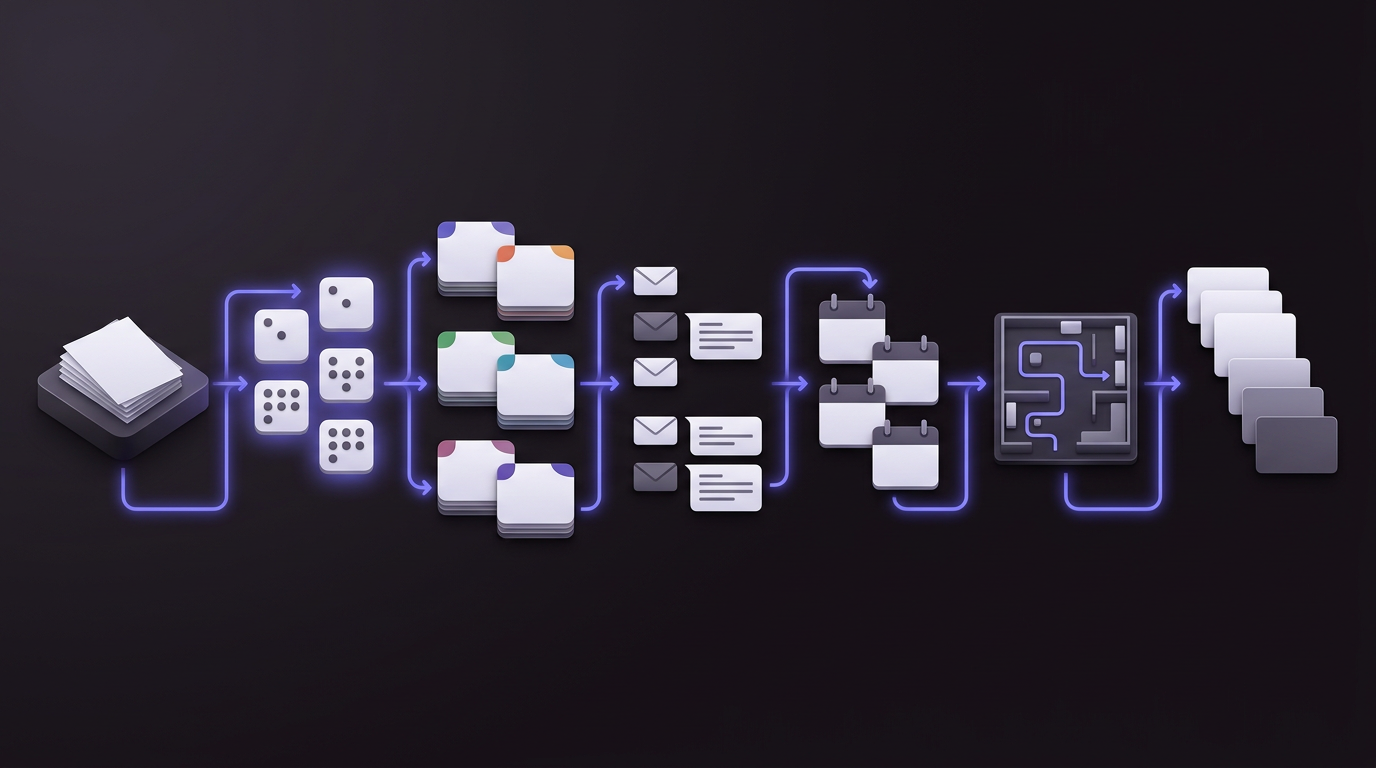
Computex 2026 prospecting should start before the event. The exhibitor list is not the outcome. It is raw material.
Run the math. Say your trip costs $30,000 across booth, flights, hotels, sponsorship, prep, and team time. If you come home with 10 qualified conversations, that is $3,000 per qualified conversation. If pre-show outreach helps you book 25 ICP-fit meetings or serious booth conversations, your cost drops to $1,200 per qualified conversation.
Same event. Different preparation.
For deeper event pipeline tactics, Lensmor's guide to trade show lead generation pairs well with this Computex-specific plan.
Step 1: Build your ICP filter before touching the exhibitor list
Do not start with "Who is exhibiting?" Start with "Who is worth meeting?"
Define your filters:
- Industry
- Product category
- Company size
- Region
- Buyer persona
- Likely pain point
- Partnership or revenue potential
Then score every exhibitor against those filters. A 1,500-exhibitor event becomes manageable when you are only looking for the top 80.
Step 2: Segment exhibitors by category, buying signal, and urgency
Categories are useful, but they are not enough. Add buying signals.
For example, an AI server company may be high-fit if it is expanding into North America, hiring channel roles, launching a new rack-scale system, or speaking about deployment problems. A robotics company may be high-fit if it is targeting warehouses and looking for integrator partners.
Step 3: Build a "golden circle" of accounts, journalists, analysts, and partners
Your best network is bigger than the target account list. It also includes analysts, journalists, investors, partner companies, integrators, and event organizers who influence where attention goes.
Build a golden circle around each priority segment. If you sell to robotics companies, map the robotics exhibitors, the media covering robotics, the investors backing robotics, and the integration partners around them.
Step 4: Start pre-show outreach 4-6 weeks before the floor opens
The best outreach window is before calendars harden. Four to six weeks out is usually the sweet spot.
Your message should be short, specific, and tied to the event:
- Why this company
- Why Computex
- Why now
- What useful sample or reason you can offer
- A light next step
Do not lead with a demo request. Lead with a reason to respond.
Step 5: Personalize outreach around AI deployment, not generic event attendance
Bad outreach says, "I saw you are attending Computex."
Better outreach says, "Your Computex focus on industrial edge AI suggests you are speaking with manufacturers that need local inference. We mapped a shortlist of companies in that category and found several that match your likely buyer profile."
That is the difference between event spam and useful context.
Step 6: Plan meetings around halls, not just account value
After you score accounts, group them by location. Your daily plan should have zones:
- Morning: priority meetings in one venue
- Midday: nearby booth visits and opportunistic conversations
- Afternoon: second venue cluster
- Evening: dinners, side events, follow-up messages
This is also where a basic networking plan helps. Lensmor's guide on <a href="https://www.lensmor.com/blog/how-to-network-at-a-conference">how to network at a conference</a> is a useful companion for turning scheduled meetings into better conversations.
Step 7: Use InnoVEX matchmaking and forum attendance as warm signals
If a company attends a specific forum session, joins InnoVEX, or participates in matchmaking, that is a signal. It tells you what they are trying to solve that week.
Use those signals in your follow-up. "I saw your team was focused on robotics and edge AI sessions" is better than "Following up from Computex."
Step 8: Follow up by context, not by badge scan
Badge scans are weak unless you attach context. A useful follow-up record includes:
- What the company does
- Why it matched your ICP
- Who you met
- What they cared about
- What next step made sense
- What timing was mentioned
If you collect leads at the show, use a system that captures notes fast. Lensmor's article on how to collect leads at a trade show covers the mechanics of turning booth interactions into usable follow-up.
Step 9: Reuse on-demand sessions and post-show news as follow-up hooks
The official Keynote & Forum page says forum recordings will be available to registrants for 90 days. That gives you post-show material for follow-up. Instead of "checking in," reference a session, keynote topic, or product announcement that connects to the prospect's business.
Post-show outreach works best when it feels like a continuation of the event, not a reset.
| Stage | What Most Teams Do | What Works Better |
|---|---|---|
| Before Computex | Download the exhibitor list and skim it | Score exhibitors by ICP, signal, and meeting priority |
| During Computex | Walk booths and scan badges | Run a route by venue cluster and protect high-fit meetings |
| After Computex | Send generic follow-ups to every scanned lead | Follow up by conversation context, session interest, and buying signal |
To connect this strategy to reporting, use Lensmor's guide on how to measure event ROI. It helps turn Computex activity into pipeline math your team can defend later.
3 Pro Tips for Computex Taipei 2026
Most event advice is too polite. This is the version I would give a team spending real money to attend.
Pro Tip 1: Treat physical AI as a buying-signal cluster, not a buzzword
If a company is talking about physical AI, ask what they are actually deploying. Robots? Cameras? Sensors? Warehouse systems? Factory automation? Smart vehicles?
The more physical the use case, the more likely there are real operational problems behind it.
Pro Tip: Your best opening question is often not "What do you do?" It is "Where does this system break when a customer tries to deploy it outside a demo environment?"
Pro Tip 2: Separate keynote interest from sales priority
Keynotes set the topic map. They do not automatically set your target list.
Everyone may crowd around NVIDIA, Qualcomm, Marvell, NXP, or other major names. Your job is to identify the companies that move when those companies speak: suppliers, partners, startups, infrastructure vendors, integrators, and buyers responding to the same trend.
Pro Tip 3: Use the last public-access day differently from business-only days
If public access is available on the final day, treat that day differently. It may be better for product observation, booth energy, informal conversations, and market sensing than for senior buyer meetings.
Do not leave your most important B2B meetings for the final hours of the show.
Bonus tip: Book fewer meetings, but protect the ones with real buying context
A packed calendar looks good in Slack. It often feels terrible on the ground.
Book fewer, better meetings. Leave room for the conversations you could not predict. The goal is not to prove you were busy. The goal is to come home with pipeline your team believes in.
For planning budget around that reality, read Lensmor's guide to event budget planning.
What Lensmor Shows You Before Computex Taipei Opens
Lensmor helps teams turn event data into pre-show pipeline. For Computex Taipei 2026, that means starting from the exhibitor universe, narrowing it to ICP-fit companies, finding contacts, and deciding which accounts deserve outreach before the floor opens.
You can view the Lensmor Computex event page here: Computex Taipei 2026 on Lensmor.
Which Computex exhibitors match your ICP
The raw Computex exhibitor list is too large to work manually. Lensmor's job is to help you answer a sharper question: "Which exhibitors look like companies we can sell to, partner with, or help?"
That is especially useful for founder-led B2B teams and agencies. Founders need speed. Agencies need repeatable delivery. Both groups need a shortlist, not a spreadsheet.
Which companies deserve outreach before Taipei
Lensmor helps you prioritize by account fit, event context, and sales motion. A company exhibiting in AI Computing & Tech needs a different note than a company in InnoVEX or Robotics.
A trade show intelligence platform helps here. Reps should not have to guess from a giant event directory. Give them a ranked target list and a reason to reach out.
Which meetings are worth protecting on your calendar
The best Computex calendar is not full. It has room to breathe.
If a company matches your ICP, has a relevant booth category, shows a live buying signal, and sits in a route cluster you can actually visit, that meeting deserves priority. If it looks interesting only because the brand is famous, move it lower.
Start with 2,000 free credits and no credit card required on Lensmor pricing, then build a Computex shortlist before your team starts booking flights.
Conclusion
COMPUTEX Taipei 2026 was big enough to waste a whole week without a plan. The 2026 show ran June 2-5 across multiple Taipei venues, with AI infrastructure, robotics, mobility, next-gen tech, startups, and Taiwan's manufacturing ecosystem all competing for attention.
The teams that get the most value will not be the ones that scan the most badges. They will be the ones that know which exhibitors match their ICP, which meetings matter, and which conversations should happen before the doors open.
Use Computex as a market map. Then turn that map into a sales plan.
For more event strategy context, read Lensmor's guides to B2B event marketing , event marketing strategies, and what a trade show is.