Trade shows are expensive. You know this. You pay for the booth, the flights, the hotel, the staff time, the swag. And then you spend three days on the floor talking to maybe 30 people, hoping that a few of them turn into real pipeline.
Sound familiar?
Here's the part nobody really wants to talk about. Most of those 30 conversations didn't matter. They were never going to buy. They had the wrong title, the wrong budget, or they were just there to grab a t-shirt.
So what if you could figure out who actually mattered before you got on the plane?
The Hidden Cost of Walking In Blind
Walk into a 5,000-attendee event without a plan, and your sales team is basically guessing. They'll prioritize whoever happens to wander past the booth. They'll spend 30 minutes with a junior coordinator and completely miss the VP who was on the floor for exactly two hours on Tuesday afternoon.
The math is brutal. A typical $10K trade show generates two to three qualified pipeline opportunities for most B2B teams. That's not luck working in your favor. That's luck barely working at all.
Meanwhile, the teams pulling 10+ pipeline opportunities from the same event aren't smarter and they aren't working harder. They just know who to talk to before they walk through the door.
What "Knowing Who to Talk To" Actually Means
Pre-show research isn't a new idea. But pulling up a few LinkedIn profiles the night before isn't research, it's a panic move.
Real pre-show prep looks more like this: two weeks out, you've got a list of 15 to 20 people you actually want to meet, you know their roles, you've sent each of them a quick message, and roughly 12 have agreed to grab 20 minutes during the show.
This is the part that changes everything. You walk the floor with a plan. You spend your best hours on people who can actually buy. And when you bump into someone interesting at the booth, it's a bonus rather than your entire strategy.
The Three Signals That Predict Trade Show Value
Not every attendee is worth your time. Three signals tell you which ones are.
Does Their Company Fit Your ICP?
If you sell to mid-market SaaS companies in North America, a procurement lead from a 50-person agency in Singapore probably isn't your buyer. ICP fit covers the basics: company size, industry, geography, business model.
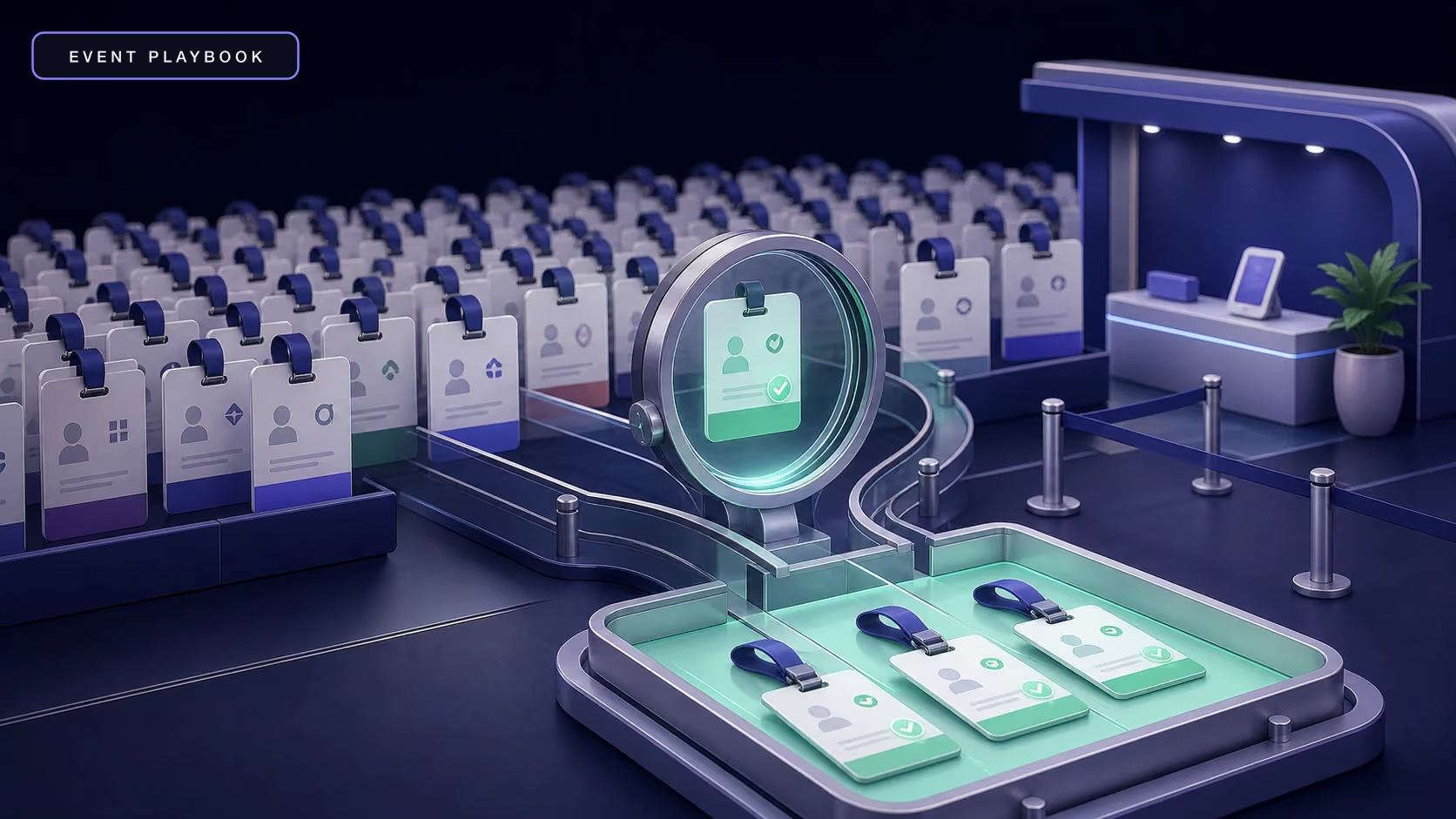
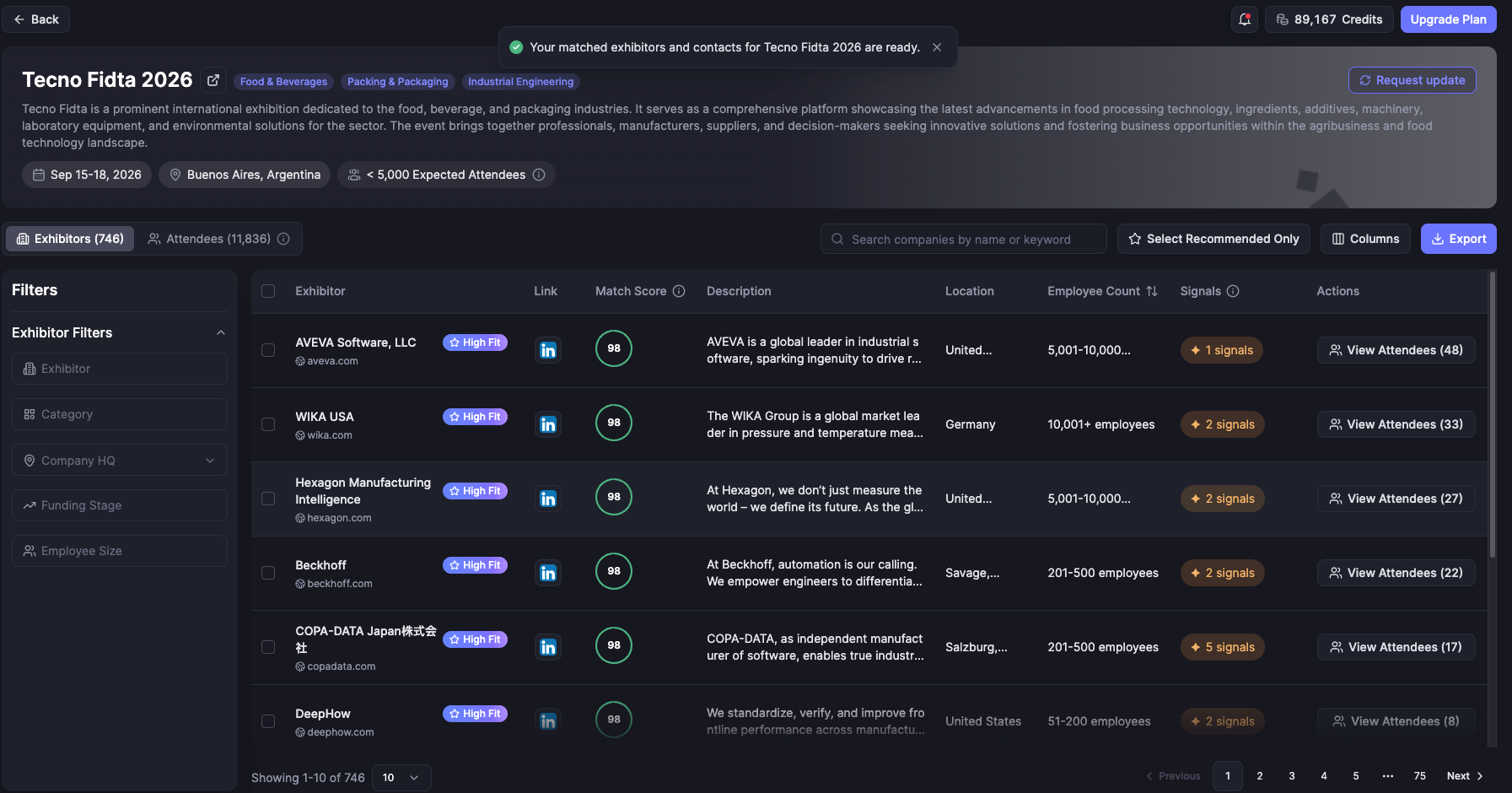
This is where ICP matching comes in. Lensmor scores every attendee against your criteria automatically, so a pool of 5,000 attendees becomes a focused list of around 1,500 worth a second look.
Are They Actually Engaged With the Event?
This is the filter most teams miss. Some attendees are genuinely interested in the event. They follow it on LinkedIn, comment on speaker posts, share related content. Others are there because their boss told them to go.
Engaged attendees show up to sessions, take meetings, and ask real questions. That's who you want.
Do They Actually Have Authority?
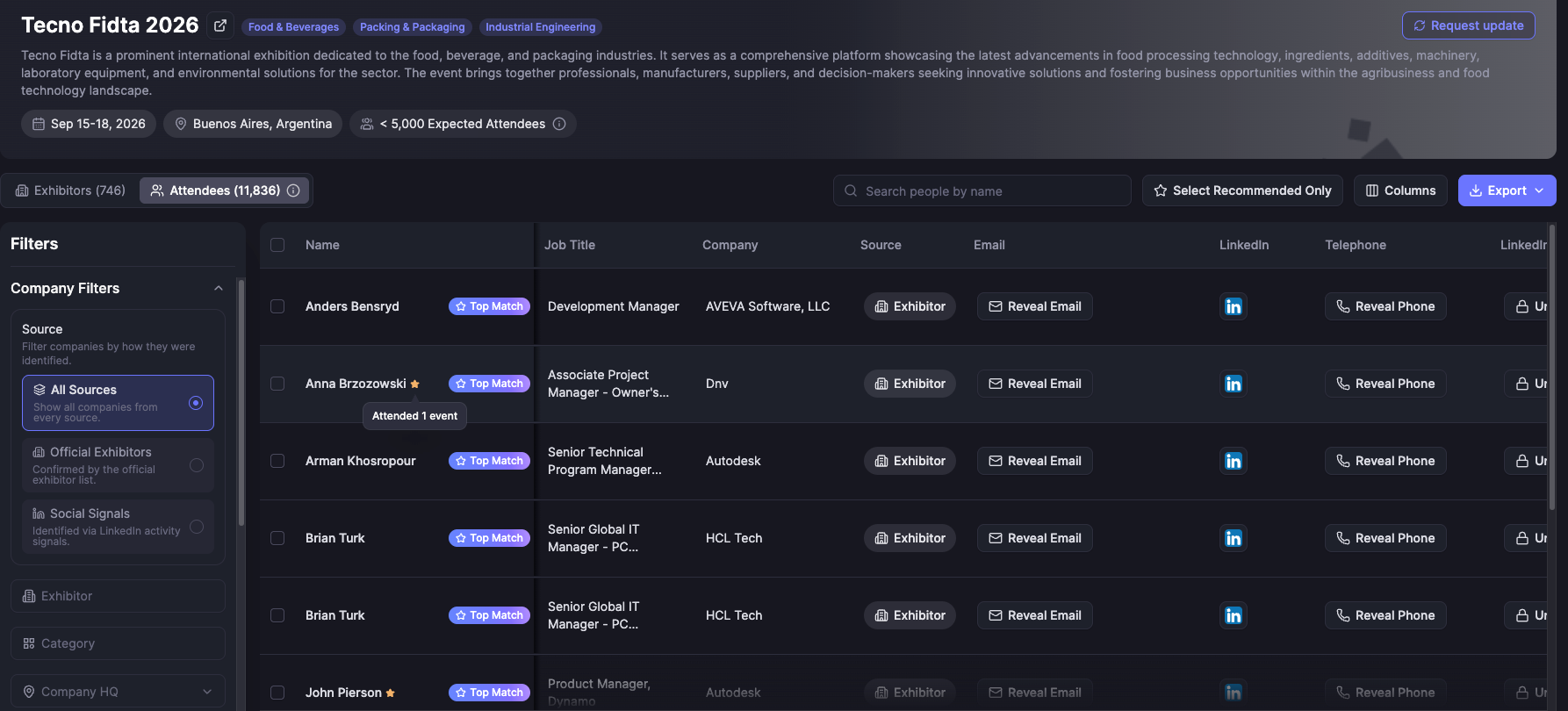
A Sales Coordinator and a VP of Sales are not the same person, even when they work at the same company. Title filtering takes your 1,500-person pool down to roughly 50 people who actually influence buying decisions.
A Two-Week Pre-Show Playbook
You can run this whole process in under an hour. Here's how.
Three weeks out. Find your show in Lensmor Discover. The ICP Match score is already calculated. Filter to your top 30%.
Two weeks out. Narrow further. From the 1,500, pick the 50 people with the right titles and clear engagement signals. Unlock their contact info.
Ten days out. Send 15 to 20 LinkedIn Connection Notes or short emails. Something simple works best: "I'll be at [Show] next week. We help [problem statement] and I think there's a fit. Worth grabbing 20 minutes?"
Day of the show. You arrive with 12 to 18 confirmed meetings already booked. The rest of your time is upside.
What This Actually Looks Like in Practice
Take a real comparison.
Without pre-show targeting: 30 booth conversations across three days. Five feel worth following up on. After follow-up, one or two become actual opportunities.
With pre-show targeting: 15 booked meetings plus 8 to 10 high-fit walk-ups. Result: 8 to 12 qualified opportunities in the pipeline before the show is even over.
Same event. Same booth. Same team. Completely different outcome.
Why This Matters Right Now
B2B buyers don't have more time than they used to. If anything, they have less. Your VP of Sales target is on six different platforms, gets 80 cold emails a week, and ignores most of them.
Catching them at a trade show is one of the few moments when they're physically present, mentally available, and actively learning about solutions. Wasting that window because you didn't know who they were is the most expensive mistake you can make at a $10K event.
The companies that figure this out first will keep winning more pipeline from fewer shows. Everyone else will keep wondering why their trade show ROI is so unpredictable.
Related reading: exhibitor lists vs attendee lists and how to find buyers before a trade show; also see the complete trade show ROI framework.