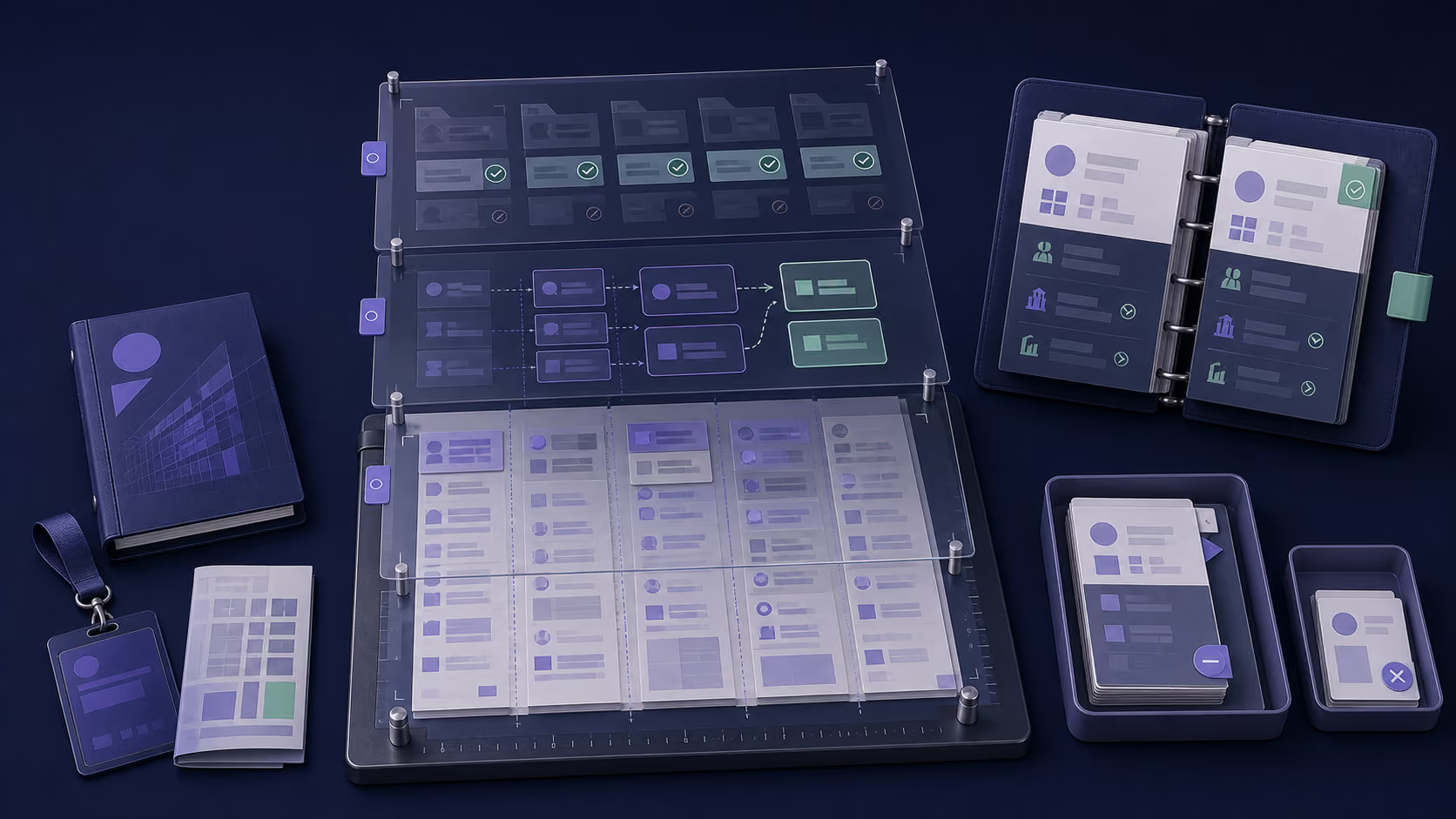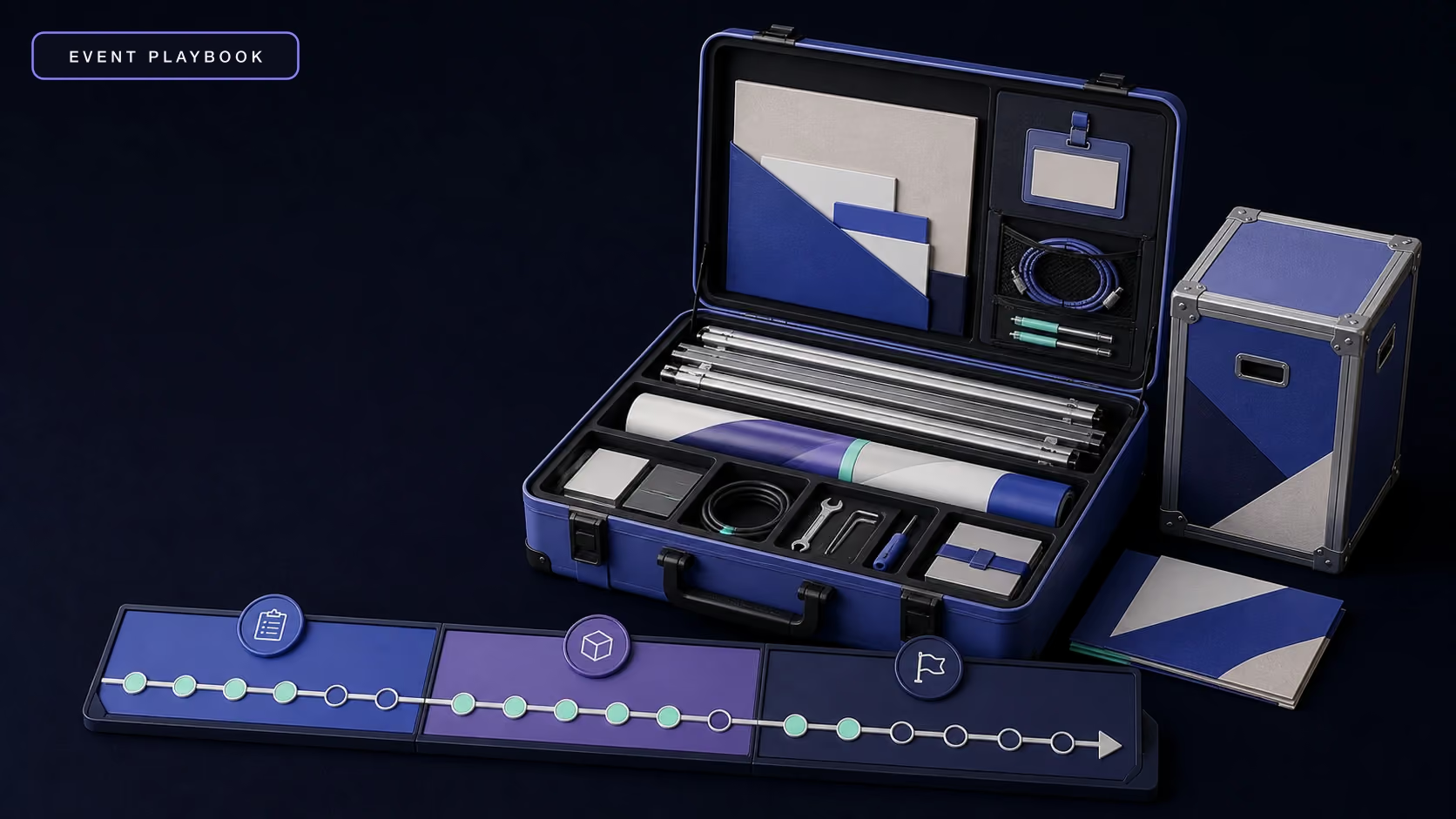

An exhibitor list looks useful the moment you download it.
Then the spreadsheet grows. Company names are inconsistent. Categories are too broad. Some rows have no clear product fit. Some look promising, but nobody knows who should review them first.
That is where most pre-show outreach slows down.
The problem is not that the list is bad. The problem is that it is still a directory. Sales needs a smaller queue with fit reasons, buying signals, contact paths, and a clear next action.
Short answer
Exhibitor list cleanup means turning a raw trade show list into a reviewed sales queue before outreach starts.
The cleaned list should answer:
- which accounts match your ICP
- why each account deserves review
- what public signal supports the fit
- what data is complete, missing, or risky
- what contact path sales should review
- what first outreach angle makes sense
- whether the row is accepted, rejected, revised, or held
It is not the same as buying an attendee list or scraping private contact data.
The goal is to make the public event list usable for account planning, not to promise meetings or pretend every row is ready to contact.
Why raw exhibitor lists create weak outreach
Most exhibitor lists are built for event navigation.
They help visitors find booths, product categories, sponsors, and company profiles. That is useful, but it is not enough for a sales team trying to decide who to contact before the show.
A raw list usually has four problems.
First, it treats every exhibitor as equally important. A booth number and category do not tell you whether the company is a strong ICP fit.
Second, the categories are often too broad. A packaging event may group machinery makers, component suppliers, software vendors, distributors, and service providers under labels that do not match your sales motion.
Third, the list rarely shows why an account matters. Sales still has to inspect the company site, product pages, region, partner language, and public event context.
Fourth, there is no review status. A long list with no accept, reject, revise, or hold field turns into a place where rows go to die.
Cleanup fixes that by adding the missing decision layer.
What cleanup should add
A cleaned exhibitor list should not just be prettier.
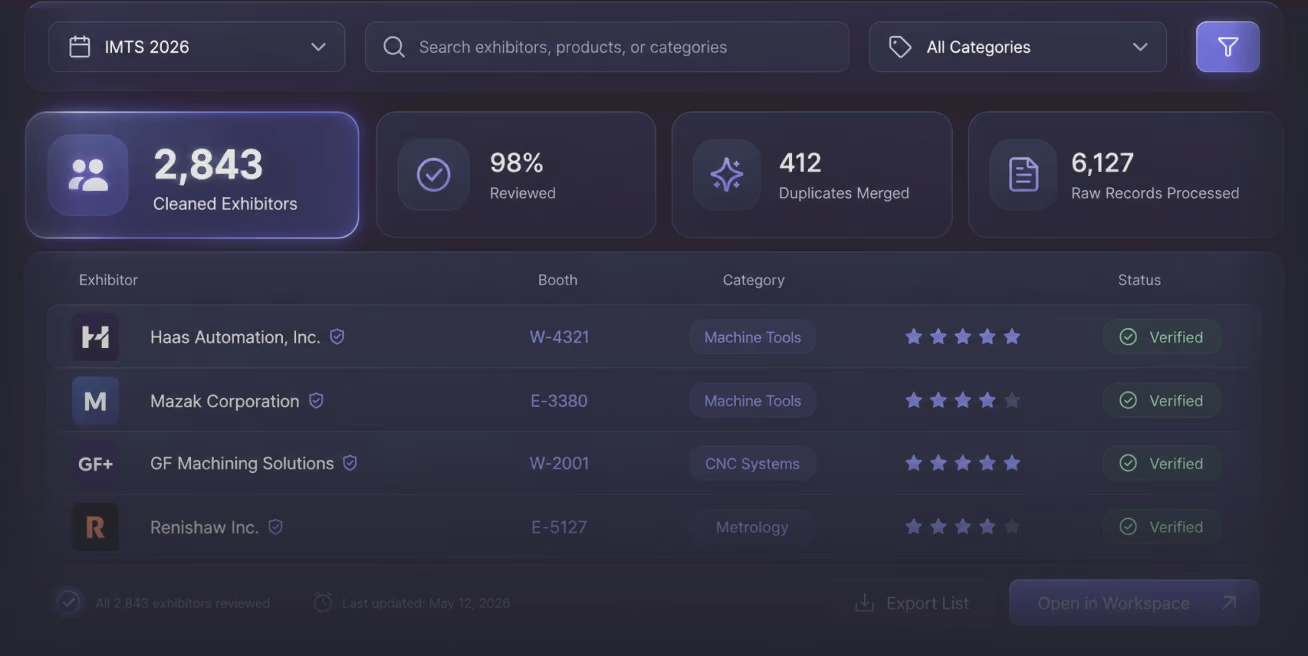
It should change what the team can decide.
Start by adding a small set of fields that support review:
That structure helps the team avoid two bad outcomes: contacting everyone with a generic message, or over-researching the whole show before anyone can act.
The first cleaned batch can be small. Ten to twenty accounts is enough to test whether the scoring logic makes sense.
Start with one ICP lane
Do not clean the whole show at once.
Pick one buyer or partner lane first.
For a manufacturing company, the lane might be CNC distributors, automation integrators, machine tool buyers, or industrial software partners.
For a packaging machinery company, it might be line-upgrade accounts, system integrators, food and beverage manufacturers, or channel partners.
For a semiconductor supplier, it might be equipment vendors, materials companies, test and measurement teams, or factory automation providers.
The lane matters because cleanup is not neutral data entry. It is a judgment call.
The same exhibitor can be high value for one sales motion and irrelevant for another. Without the lane, match scores become mushy and the team ends up ranking companies by name recognition instead of fit.
A good ICP lane should be narrow enough for review, but not so narrow that the first batch has no volume.
Score accounts with visible reasons
A match score is useful only when the reason is visible.
If a row says "90" but nobody can see why, sales will not trust it. If a row shows the fit reason, signal, and missing data, sales can accept or challenge the logic quickly.
Use plain scoring inputs:
- product category match
- industry or vertical fit
- geography or market relevance
- channel, distributor, partner, or buyer language
- public event participation
- relevant case studies or customer segments
- evidence that the company sells into the same market
Avoid treating any one signal as proof of intent.
An exhibitor profile can show relevance. A product page can show category fit. A regional expansion page can support the contact angle. None of those facts guarantee a meeting, reply, purchase, or pipeline outcome.
That boundary is important. It keeps the list useful and honest.
Check data completeness before sending
Many outreach problems are really data completeness problems.
The account may fit, but the row is not ready for action.
Before sales sends anything, mark what is complete and what still needs review:
- official company name
- website
- booth or event source
- product category
- ICP fit reason
- public signal
- suggested role or department
- contact path
- first outreach angle
- risk note
Use simple status labels:
This is where many teams improve quickly.
They stop asking, "Do we have a list?" and start asking, "Which rows are complete enough for a human to review?"
Turn the list into a pre-show account queue
The cleaned list should end as a queue, not a warehouse.
That means every row needs a next action.
For example:
- review LinkedIn company activity
- check the phone path
- inspect partner or distributor pages
- draft a first email angle
- assign to booth visit planning
- hold until sales confirms the ICP lane
- reject because the company is outside scope
This also makes the list easier to reuse.
The same cleaned queue can support a blog CTA, a sales deck example, a cold email opening line, a LinkedIn research task, or a small paid search landing page. The asset is no longer just an export. It becomes a working plan.
For Google Ads traffic, this distinction matters. Someone searching for an exhibitor list may not be ready to buy a large platform. But they may understand the pain of turning a list into a phone-ready and LinkedIn-ready outreach queue before the show.
Where Lensmor fits
Lensmor helps B2B teams turn one event list into a reviewed pre-show account plan.
The output can include ICP fit, match score, public buying signals, data completeness notes, contact paths, and first outreach angles. The point is to help the team decide which accounts deserve review before the show, not to replace human judgment.
Lensmor stays inside a few clear boundaries:
- no private attendee list claims
- no guaranteed meetings
- no guaranteed replies
- no promise of personal email coverage
- no automatic sending without approval
That makes the workflow better suited for teams that need a practical first event pack, a reviewed 10 to 20 account sample, or a focused pre-show queue for a manufacturing, packaging, automation, semiconductor, or medical manufacturing event.
To get started, request a first event pack for one upcoming show so the team can review a small account queue before outreach starts.
Related reading: what to do with an exhibitor list and exhibitor list cleanup guide.