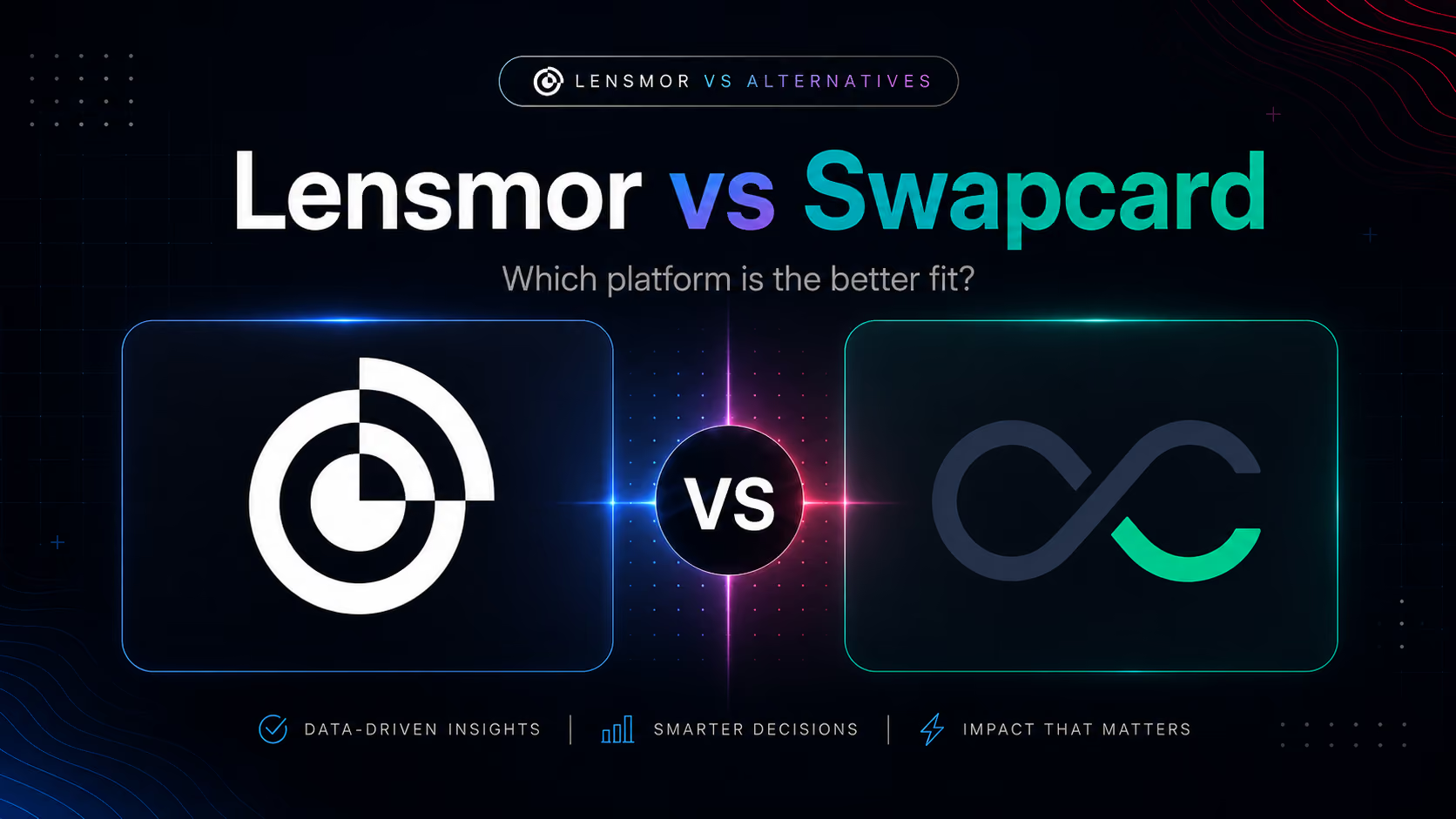
Swapcard and Lensmor can appear in the same evaluation because both sit near trade shows and events. But they are not trying to do the same job.
Product note (checked July 2026): this comparison is about current product positioning and workflow fit, not a permanent price sheet. Confirm plan-level features, availability, and commercial terms directly with Swapcard and Lensmor.
Short answer: choose Swapcard when you own the event experience and need an event-management platform. Choose Lensmor when your B2B team is attending, sponsoring, or selling around a known event and needs to decide which companies deserve sales time before the doors open.
That distinction matters because an event platform and a pre-show sales workflow have different owners, data inputs, and success criteria. A good tool for the organizer is not automatically the best tool for an exhibitor or sponsor.
What Swapcard is built to do
Swapcard describes its product as a revenue-first event-management platform. Its current product catalogue spans event registration, ticketing and payments, onsite check-in and access, attendee engagement, networking and matchmaking, exhibitor and sponsor tools, content management, communications, analytics, and administrator controls.
For organizers, that is a coherent operating system: the platform can shape how people register, find sessions, meet, interact with exhibitors, and access event services. Swapcard also lists an exhibitor lead center, exhibitor-management portal, lead scanning and qualification, and hosted-buyer meeting workflows among its exhibitor and sponsor products.
Pro Tip: If you are evaluating Swapcard as an exhibitor or sponsor, ask the organizer which modules are enabled for the specific event. Platform capability and the configuration available to your team are not the same thing.
What Lensmor is built to do
Lensmor is not an event app, registration product, or onsite-access system. Its public product positioning is about helping B2B teams find relevant events, identify high-fit exhibitors and attendees, verify decision-makers, and prepare context-rich outreach before an event begins.
In practical terms, the Lensmor workflow starts before the event experience. A team begins with a target show or exhibitor universe, narrows it to accounts worth reviewing, identifies relevant people, and prepares outreach or meeting context. The unit of work is a sales-ready account queue, not a participant experience inside the event app.
Pro Tip: Do not confuse a company appearing in an event list with proof that a specific person is registered. Review the source and freshness of each record before outreach, and keep official registration data distinct from research or predictive signals.
Where the workflows differ
Swapcard’s catalogue is centered on the organizer-operated event lifecycle. Lensmor’s is centered on the attending team’s pre-show pipeline workflow. That is why the two can be complementary rather than mutually exclusive.
An organizer may run a conference on Swapcard. A sponsor at that same conference may still use Lensmor to decide which companies to research and contact before the event. The sponsor does not need to recreate the event platform; it needs a focused sales motion around the event.
Which teams should choose Swapcard?
Swapcard is the closer fit when your team owns the event experience: registration, attendee engagement, networking, meetings, exhibitor activation, sponsor value, onsite operations, or portfolio-wide event delivery.
It is also the more natural choice when the outcome depends on people using a shared event platform. For example, an organizer that wants participants to discover sessions, browse exhibitors, make connections, schedule meetings, and interact with the event needs platform-level infrastructure.
Pro Tip: Put the event owner, operations lead, exhibitor or sponsorship lead, and CRM owner in the same evaluation. A platform can look complete in a demo while still creating a weak handoff between registration, engagement, exhibitor activity, and reporting.
Which teams should choose Lensmor?
Lensmor is the closer fit when the buyer is an exhibitor, sponsor, agency, founder, or B2B sales team that wants to make an event produce a better pipeline motion before show week.
That buyer usually does not need to launch an app or operate the event. It needs to answer more practical questions: which companies on this event list fit our ICP, which deserve research first, who are the relevant decision-makers, and how should outreach be prepared?
The boundary is important. Lensmor can help an attending team prepare its own sales plan; it does not replace the organizer’s registration, ticketing, badge, agenda, or attendee-engagement stack.
Matchmaking is not the same as account prioritization
The overlap in language is real. Both workflows may mention relevance, recommended connections, meetings, profiles, and exhibitors. That does not make them interchangeable.
Event matchmaking is part of the participant experience. It typically asks how people who are already inside an event can discover relevant people, sessions, exhibitors, or meeting opportunities. The organizer controls the environment, the profile prompts, the permissions, and the event-specific rules.
Account prioritization comes earlier and starts from the attending company’s own commercial goal. A sales team may have a broad exhibitor list, a named-account list, or a set of industries it wants to work. Before it asks for a meeting, it needs a defensible answer to a simpler question: which accounts deserve human research time at all?
Lensmor is built for that earlier decision. It helps a team begin from event and company context, narrow the universe, identify relevant decision-makers, and prepare an outreach path. That is useful even when the organizer has not opened networking or when the team is not relying on a shared event app.
Swapcard can make the in-event connection experience stronger when the organizer has chosen it and configured the relevant modules. But a sponsor should not assume that an attendee-facing recommendation or meeting feature replaces its own account-selection process. The two can work together; they answer different questions at different moments.
Pro Tip: Write down the first decision each tool must help your team make. If it is “How should participants experience our event?”, evaluate the platform. If it is “Which accounts should our sales team work first?”, evaluate the pre-show research workflow.
Data, access, and handoffs deserve separate scrutiny
Feature lists can make two products look closer than they are. The harder question is who controls the data, what information is available for a specific event, and where the workflow ends.
With an organizer-operated event platform, access to exhibitor, attendee, lead, meeting, and engagement workflows is governed by the organizer’s implementation and the entitlements attached to that event. An exhibitor should ask what it can see, what it can export, how long access lasts, and whether the fields needed by sales are actually available.
With a pre-show sales workflow, the team should ask a different set of questions: what is the source of the event and company information, how fresh is it, how is contact information verified, what exports or integrations are permitted, and which signals are research context rather than confirmed registration data?
These checks are not procurement trivia. They decide whether a rep can move from an event list to a useful next action without recreating the research in a spreadsheet. They also prevent a common mistake: treating any event-related record as permission to contact a person or as proof that person will attend.
For both products, make the evaluation concrete. Use one upcoming event, the actual people who will operate the workflow, and the CRM or outreach destination that matters to the business. A clean handoff is more valuable than a long list of features that never reaches the team responsible for revenue.
How to run a fair evaluation
Do not try to compare Swapcard and Lensmor with one generic checklist. The right test gives each product the job it says it is built to do, then measures whether that job is completed without workarounds.

For Swapcard, use an event scenario that includes the real organizer requirements: registration or access where relevant, participant engagement, exhibitor workflows, sponsor needs, meeting or networking controls, and reporting. Invite the event operations owner and an exhibitor or sponsorship stakeholder into the test, because their definitions of success can be different.
For Lensmor, start with an upcoming event that matters to the sales team. Ask the team to identify its target-account criteria, review the resulting company universe, select a working queue, find the relevant decision-makers, and prepare outreach context. The output should be a smaller, reviewable set of accounts that a seller can actually work.
Then compare the handoffs. Can the organizer operate the event without manual patches? Can sales explain why each account was selected, who should own it, and what the next action is? Can the team distinguish confirmed event information from research or predictive context? Those are usable success conditions; vague claims about “better engagement” or “more intelligence” are not.
A pilot also protects against buying the wrong category. A team that needs event infrastructure will quickly discover whether a sales-research tool is insufficient. A team that needs pre-show pipeline will quickly discover whether an event app alone leaves the account-selection problem unsolved.
When using both makes sense
The strongest combined setup has clear ownership. The organizer runs the event experience in Swapcard. The exhibitor, sponsor, or attending sales team uses its own approved process to decide which accounts to pursue and how to approach them before the show.
For example, an organizer can use Swapcard to operate registration, engagement, and exhibitor services. A sponsor can use Lensmor in the weeks before the event to turn its target market into a reviewed account plan. Once the event is live, the sponsor can work within the organizer’s platform rules while continuing to own its account research and sales follow-up.
This separation keeps the tooling honest. Swapcard does not need to be presented as a general-purpose sales intelligence database. Lensmor does not need to be presented as a replacement for an event platform. Each earns its place by handling the workflow its buyer actually owns.
It also makes internal adoption easier. Event operations can optimize for a reliable participant experience. Sales can optimize for a disciplined account queue and timely outreach. Neither team has to bend its process around software purchased for the other team’s problem.
A practical pre-show sales cadence
A useful Lensmor evaluation should produce a repeatable cadence, not a one-off spreadsheet. The process starts once a team has identified an event worth working and has agreed on the market it wants to reach.
First, define the account lens. That may include company type, geography, role in the event ecosystem, existing customer status, partner potential, or disqualifying criteria. The point is not to automate judgment away; it is to give the team a shared basis for deciding why one company belongs ahead of another.
Second, review the event company universe in batches. A list becomes useful only when someone can distinguish high-fit target accounts from competitors, partners, suppliers, customers, and companies that are simply out of scope. Record the reason for the decision so the queue can be reviewed and improved rather than rediscovered next time.
Third, enrich the smaller queue with the people and context needed for a credible first action. A sales rep should not need to start from a blank screen after the account has been selected. The output should state the company, the relevant decision-maker or contact path, the event context, and the next research or outreach action.
Finally, keep the workflow separate from any claim of confirmed attendance. A company can be relevant to a show without a named person being confirmed as a participant. Treat source labels and uncertainty as part of the workflow, then let the rep choose an appropriate message and outreach channel.
Pro Tip: Review the target-account queue with the seller who will own the follow-up before the event gets busy. If they cannot explain why an account is included or what the next action is, the list is not ready yet.
Questions to put in each vendor demo
A strong buying process turns the product boundary into concrete questions. For Swapcard, ask the event owner to demonstrate the exact event lifecycle your team must run: how participants register or access the event, how exhibitors and sponsors manage their presence, how networking or lead workflows are enabled, and how results are reported after the event.
Ask which features are included in the proposed configuration, which ones depend on a particular plan or module, and which roles can see or export information. That protects the team from assuming that a feature listed on a product page will be available to every event participant in the same way.
For Lensmor, ask the sales team to use a real event and a real account-selection rule. Have them show the companies they would include, the reasons for prioritization, the contact information or contact path available for review, and how the final queue enters the team’s existing outreach process.
Ask the same basic questions of both vendors: Where does this data come from? How current is it? What rights do we have to use and export it? What does the integration actually pass into our CRM or outreach tool? What still requires manual work? Direct answers to those questions are more valuable than broad positioning language.
Do not ask either product to prove it can replace the other. Ask it to prove it can handle the workflow you own. That is the comparison that reduces procurement risk and gives both event operations and sales a fair voice in the decision.
Three mistakes this comparison helps avoid
The first mistake is buying an event platform to solve a sales-targeting problem. The platform may be excellent, but a rep can still arrive with no practical account plan if nobody has narrowed the event company universe beforehand.
The second is buying a pre-show research workflow when the team actually needs to run registration, content, participant engagement, and exhibitor operations. Sales intelligence does not make an event experience work on its own.
The third is evaluating software without the people who will operate it. Include the event owner, a sales owner, and a representative exhibitor or sponsor stakeholder when those roles matter. Their workflows will expose gaps that a feature checklist cannot.
Real-world scenarios
For an event organizer, the answer is usually clear: the event platform is the operating priority. For an attending sales team, the answer is also clear: account selection and outreach preparation come first. The only confusing case is when a company tries to buy event software to solve a pre-show sales problem, or buys prospecting tooling when it actually needs to run the event.
Buying and procurement checklist
A fair evaluation does not use a static blog post as a substitute for a live product review. Ask each vendor to walk through one real upcoming event, the actual attendee or exhibitor workflow, the data sources involved, the integrations required, and the export or access terms that apply to your plan.
A short pilot is usually more useful than a generic feature scorecard. For Lensmor, measure whether the team produced a credible target-account queue and usable meeting preparation. For Swapcard, measure whether the event workflow works end to end for your organizer, exhibitors, sponsors, and participants.
Final verdict
Swapcard is the better fit for teams operating the event experience. Lensmor is the better fit for B2B teams that need to turn a known event into a focused pre-show account and outreach plan.
If your question is, “How do we run registration, engagement, exhibitor workflows, and the event itself?” start with Swapcard. If your question is, “Which companies should sales work before this show?” start with Lensmor.
Start Free — Start using Lensmor's event intelligence platform today. Predict attendee lists, discover relevant events, and enrich contact data for your next trade show.
Related reading: event intelligence platform comparison.