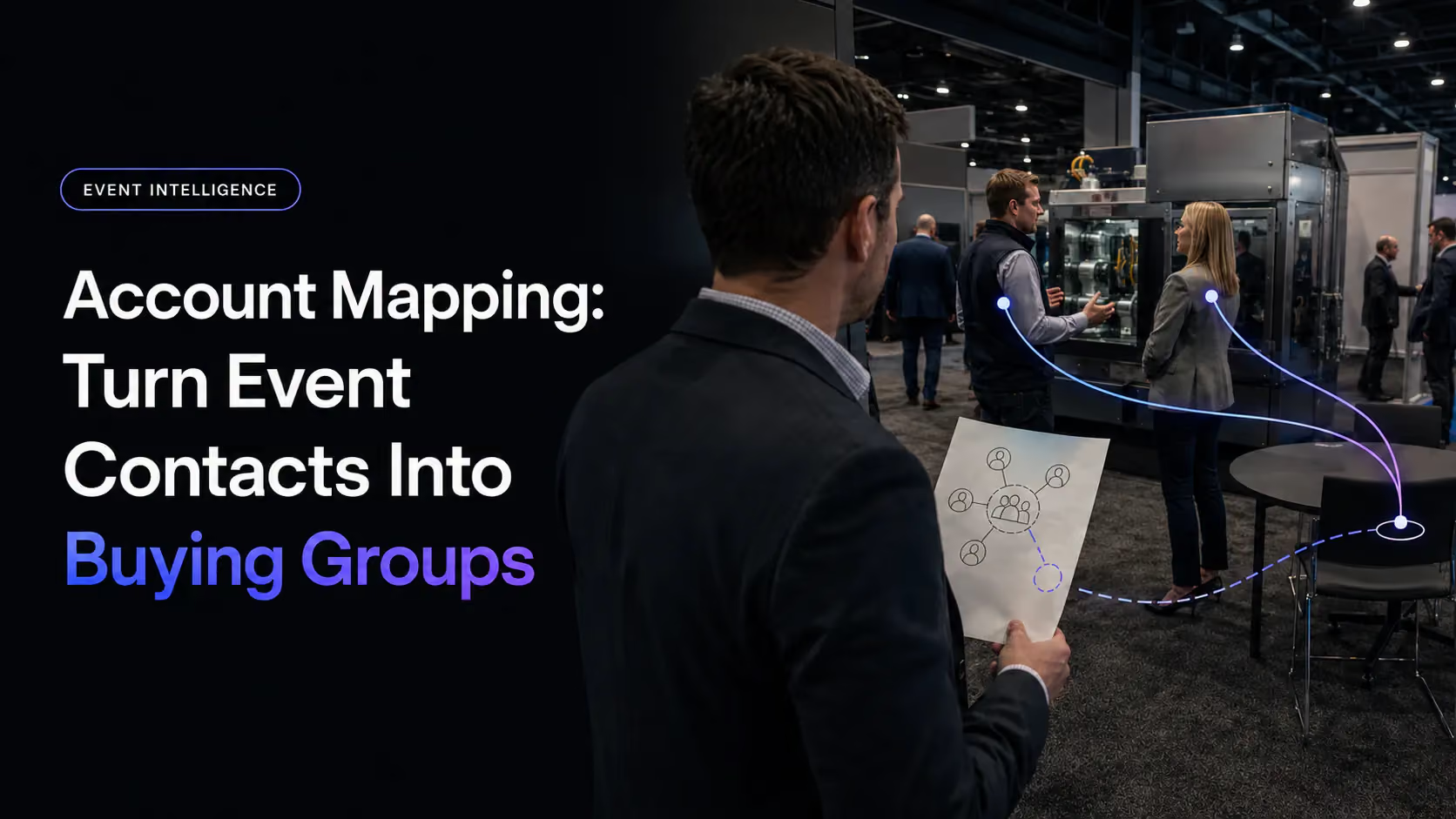

What is field marketing?
Field marketing is a B2B growth motion that uses in-person, regional, virtual, and account-based experiences to create qualified pipeline with specific buyers. In practice, it turns trade shows, roadshows, executive dinners, workshops, webinars, and partner events into a measurable bridge between demand generation and sales.
That definition matters because many teams still treat field marketing as "the people who run events." That is too narrow.
A field marketer is not only booking venues, printing badges, or ordering booth carpet. The real job is to understand which accounts matter, where those accounts will be, what message will make sense in that context, and how each conversation should move into the sales process afterward.
This is why the best field marketing programs feel different from generic event programs. They are not built around attendance alone. They are built around target accounts, buying moments, and sales follow-through.
Think about the usual post-event scene. The booth is packed into crates. The team is tired. Someone exports a scanner file, someone else updates a spreadsheet, and sales asks the awkward question: "Which of these people should we actually call?"
That question should not be answered after the event. It should be answered before the event starts.
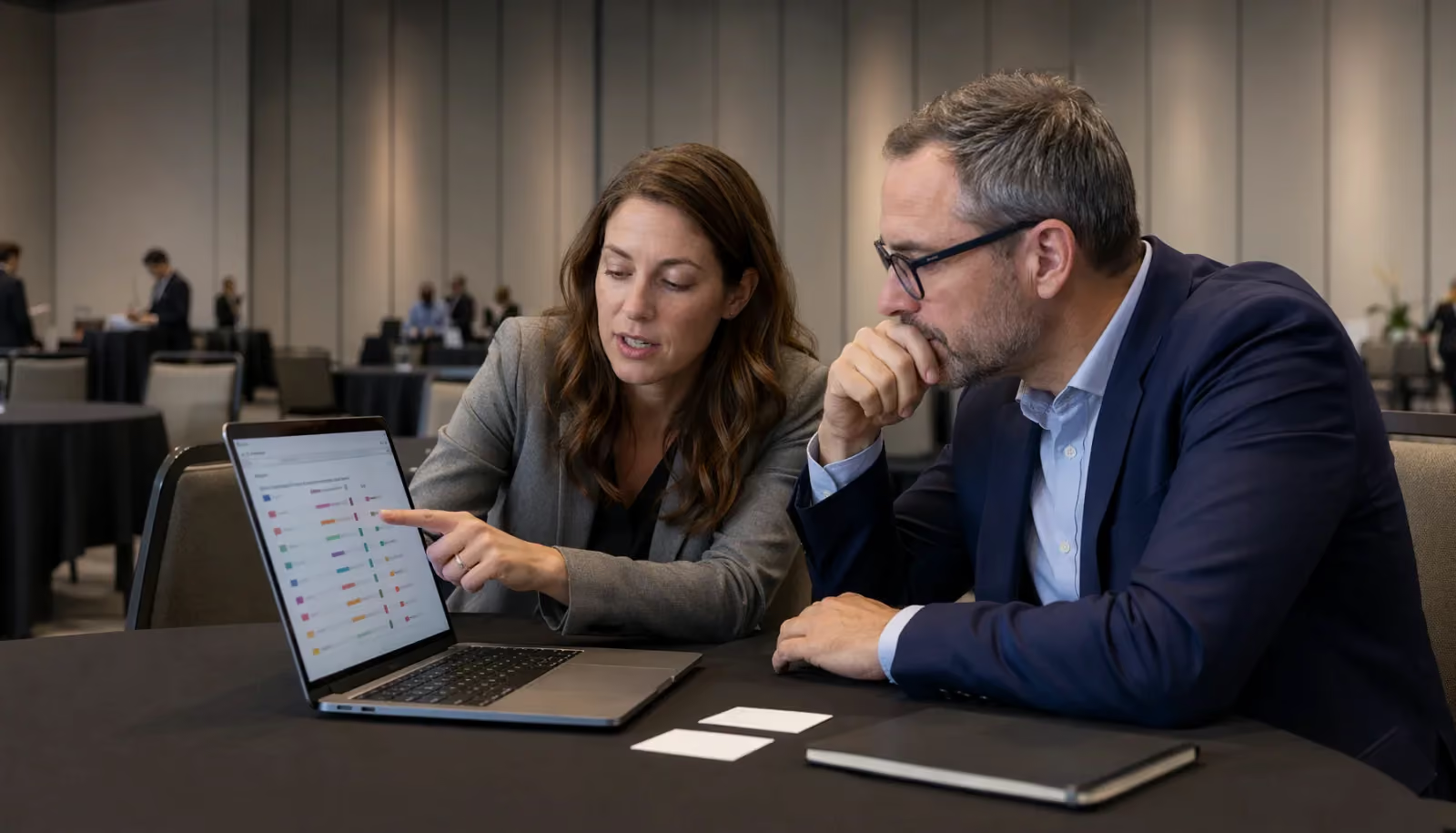
Why field marketing matters now
Field marketing matters because digital channels are crowded and buyer trust is harder to earn online.
AI has made it easier to write emails, generate ads, publish content, and automate follow-up. That does not make the buyer's attention easier to win. It often does the opposite. The more automated the market becomes, the more valuable a real conversation becomes.
This is not nostalgia for business cards. It is a pipeline problem.
Imagine a B2B team spending $40K on one regional field program. That cost may include sponsorship, travel, booth setup, staff time, dinner, gifts, follow-up content, and sales support. If the team walks away with 12 qualified conversations, each conversation effectively costs about $3,333.
Now change only the preparation. The same team identifies target accounts four weeks ahead of time, prioritizes likely attendees, warms the audience with pre-show outreach, and books 20 meetings before anyone gets on a plane. Add 18 qualified floor conversations during the event, and the same $40K now creates 38 qualified conversations.
The cost per qualified conversation drops from $3,333 to about $1,053.
The budget did not change. The workflow changed.
That is the core field marketing lesson. The event is only the visible part. The pipeline is created by the planning system around it.
The market is moving in that direction. Content Marketing Institute's 2026 B2B research reported that 78% of B2B marketers allocate budget to experiential marketing, but only 30% rate their efforts as established, advanced, or leading. That gap is where field marketing teams can win.
There is also still a measurement gap. Bizzabo's 2026 event marketing benchmarks found that 40% of organizers still report difficulty proving event ROI, even as leadership increasingly measures events by pipeline influence, deal velocity, and customer retention.
Those two facts belong together. Teams are spending on experiences again, but many still lack the account context and event data needed to prove what worked.
Pro Tip: Do the ROI math before you approve the event. Write down the minimum number of qualified conversations, meetings, opportunities, and pipeline dollars required to justify the spend. If nobody can name those numbers, the field program is still a brand activity.
Field marketing vs event marketing vs demand generation vs ABM
Field marketing sits between demand generation, event marketing, and sales.
That is why the role can become confusing. One company expects field marketing to run the event calendar. Another expects it to support sales territories. Another treats it as account-based marketing with venues attached.
The cleanest way to understand the difference is to look at the job each motion is hired to do.
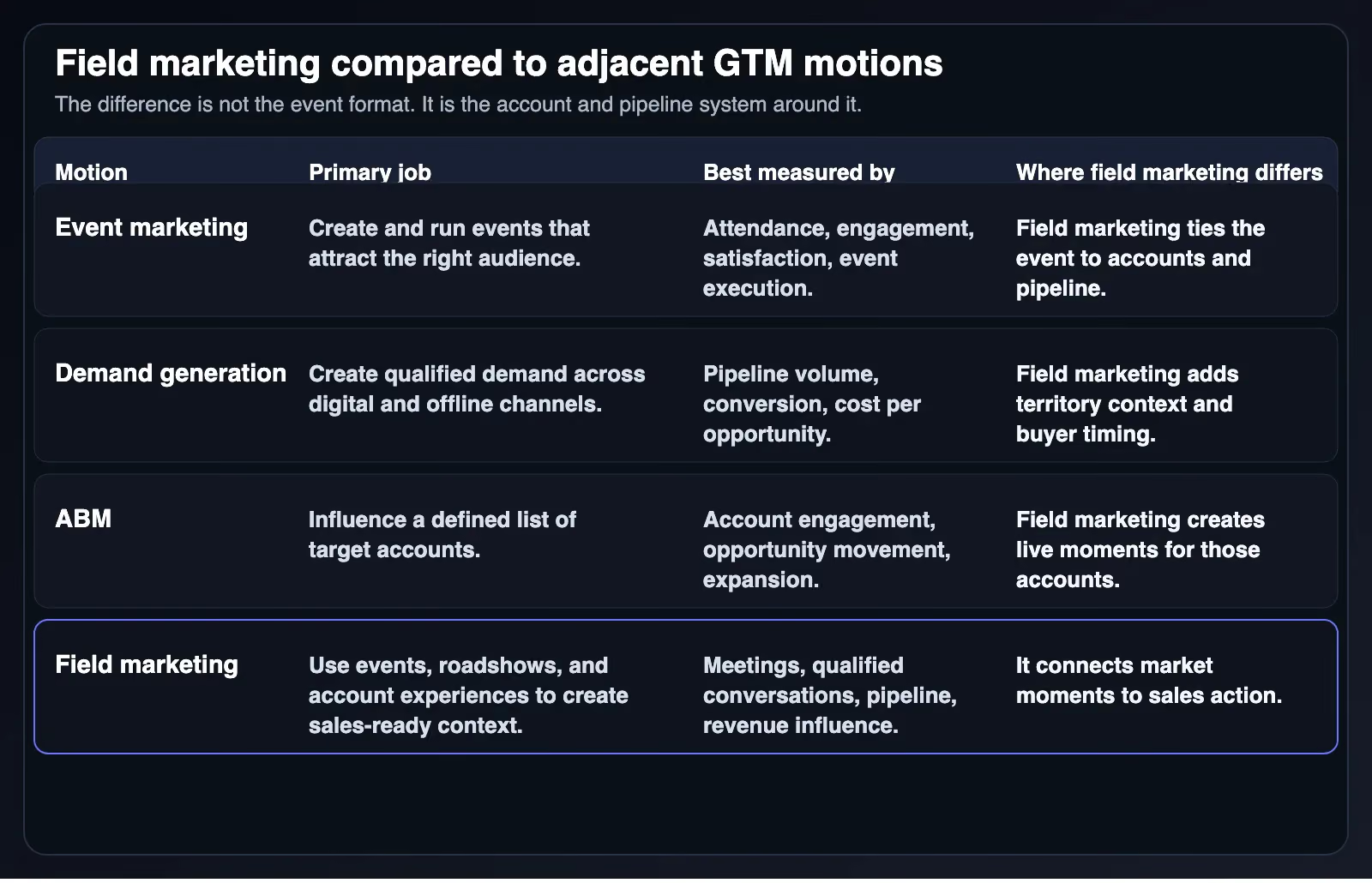
Event marketing asks, "How do we create and run the event well?" Demand generation asks, "How do we create enough qualified demand?" ABM asks, "How do we influence specific accounts?" Field marketing asks, "How do we use real market moments to help specific accounts move forward?"
Those market moments can happen at a massive trade show, a 12-person dinner, a partner-hosted workshop, or a virtual session. The format matters less than the account motion around it.
Cvent defines field marketing as direct promotion through face-to-face or live interactions, including trade shows, conferences, roadshows, conventions, webinars, and other direct formats. That is a useful starting point.
For B2B teams, the stronger definition is more operational: field marketing is how marketing creates sales-ready context in places where buyers are already gathering.
That context is the difference between a cold follow-up and a useful conversation.
What does a field marketer do?
A field marketer turns account strategy into in-market conversations.
The work usually starts long before the event brief. A strong field marketer asks which accounts the company wants to influence, which territories need support, which industries are active this quarter, and which buying committees are showing signs of movement.
Then the field marketer translates that into a plan. Which event is worth attending? Which accounts should be targeted? Who should sales meet? What message should be used? What content should support the conversation? How will success be measured inside the CRM?
Goldcast describes field marketing as work that sits at the intersection of marketing and sales. That is exactly right. A field marketer has to understand campaign planning, event operations, sales priorities, account research, and revenue reporting.
The job usually includes:
- Selecting trade shows, regional events, roadshows, dinners, and webinars that match the ICP
- Building the target account list for each program
- Coordinating with sales on meeting goals and account ownership
- Creating pre-event outreach and audience warming plans
- Preparing messaging, offers, demos, collateral, and follow-up paths
- Capturing event context in the CRM
- Reporting on meetings, opportunities, pipeline, and revenue influence
The hard part is not any single task. The hard part is making the tasks connect.
Field marketing breaks when event selection happens in one spreadsheet, outreach happens in another tool, meeting notes sit in someone's inbox, and reporting is rebuilt manually two weeks later. The team may have worked hard, but the system cannot explain what happened.
Pro Tip: Give every field program a named sales owner before you build the event plan. If there is no sales owner, the program will drift toward attendance, swag, and booth traffic instead of pipeline.
What are examples of B2B field marketing?
B2B field marketing works best when the format matches the buyer's stage and the sales team's account priorities.
There is no single field marketing playbook. A company selling enterprise cybersecurity will not run the same program as a manufacturing supplier, a developer tool, or a professional services firm. But the best programs share one pattern: they create a reason for the right people to talk now.
1. Trade shows and industry conferences
Trade shows are the most obvious field marketing example because they concentrate buyers, competitors, partners, analysts, media, and service providers in one place.
The mistake is treating the show as a booth traffic machine.
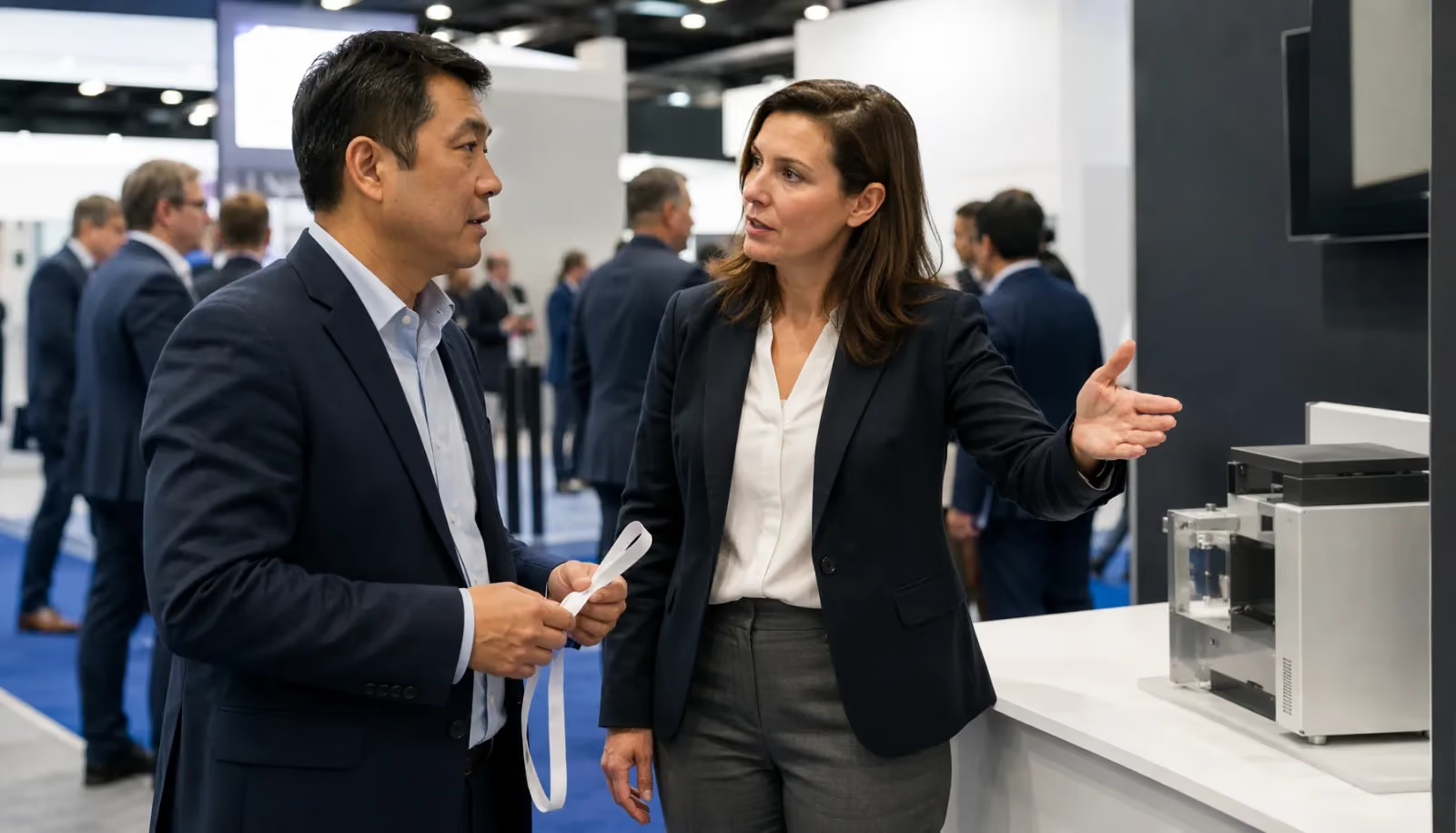
A trade show becomes a field marketing channel when the team knows which target accounts are exhibiting, sponsoring, speaking, attending, or sending decision-makers. Without that context, the booth team reacts to whoever walks past. With that context, sales can prepare account-specific conversations before the floor opens.
Cvent's trade show statistics point to the same tension: trade shows are expensive, but their ROI can be measured through sales outcomes, new relationships, and event-sourced opportunities. The issue is not whether trade shows matter. The issue is whether teams can connect event activity to revenue activity.
For field marketing, the useful question is not "How many badge scans did we get?" It is "Which target accounts moved because of this show?"
2. Executive dinners and private roundtables
Executive dinners are smaller, but they can carry more trust. A room of eight to 15 relevant buyers often creates better signal than hundreds of low-intent booth scans.
The key is curation. A dinner with the wrong audience becomes a nice meal. A dinner with the right accounts becomes a sales acceleration moment.
Good field marketers build these programs around a narrow audience. For example, CFOs from manufacturing companies evaluating automation, revenue leaders from AI infrastructure companies, or heads of partnerships from event technology vendors.
The topic should be specific enough that the right person feels, "This room is for people like me."
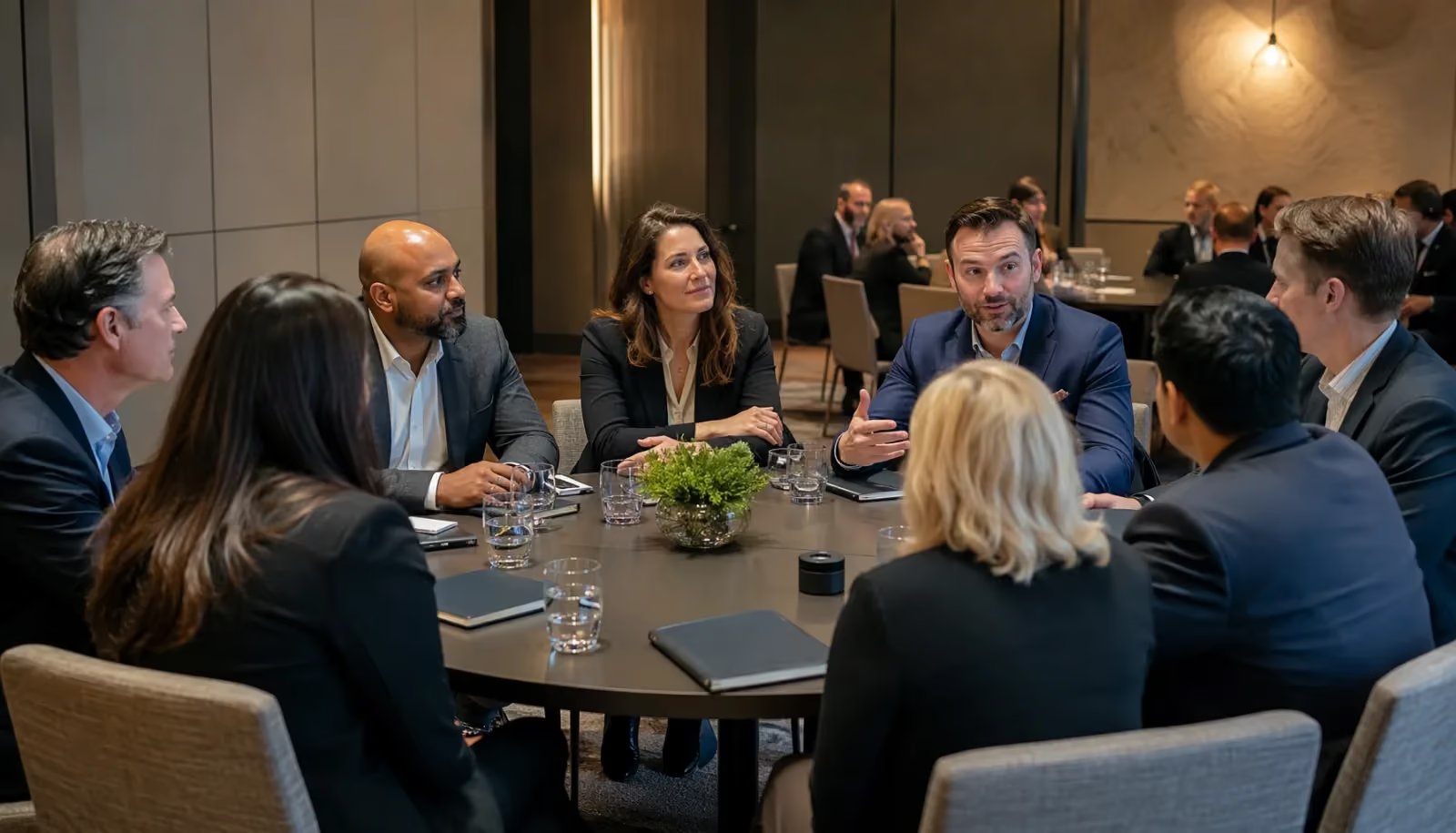
Pro Tip: Do not let the dinner topic become your product pitch. The best topic names the buyer's current problem. Your product earns attention after the room agrees the problem is real.
3. Regional roadshows
Roadshows work when target accounts are concentrated by geography or territory. Instead of waiting for buyers to attend one national event, the company brings the conversation closer to the buyer.
A roadshow can be a breakfast briefing, partner workshop, product demo day, customer panel, or sales-led meeting series. The format is flexible. The planning discipline is not.
Before choosing cities, field teams should know where target accounts are located, which territories need pipeline support, and where the sales team can create enough pre-booked meetings to justify travel.
The danger with roadshows is mistaking movement for progress. Visiting six cities does not matter if each stop creates weak conversations and poor follow-up. A three-city roadshow with strong account fit is better than a 10-city tour built on hope.
4. Partner field programs
Partner programs can help a field team borrow trust. This is especially useful when entering a new market, launching into a new vertical, or selling into accounts where a partner already has relationships.
The partner may provide the venue, audience, co-branded content, customer story, or local credibility. But the same rule applies: the field marketer still needs a target account plan.
The weak version is "Let's co-host an event and invite everyone." The stronger version is "These 60 accounts matter to both teams, 22 are likely to care about this topic, and sales will prioritize 15 before the event."
Partner field marketing only works when both sides agree on the account list and the follow-up rules.
5. Workshops and customer education sessions
Workshops are useful when the buyer needs to learn before they buy. They work well for technical products, workflow changes, compliance-heavy categories, and high-consideration services.
The best workshops give the buyer something practical. A framework, teardown, benchmark, checklist, or live diagnostic often performs better than a demo-heavy session.
This is also where virtual field marketing can fit. A webinar alone may look like demand generation. A webinar tied to a territory, a named account list, a sales follow-up plan, and a post-session workshop can become field marketing.
The format is digital. The motion is field.
How to build a field marketing strategy
A field marketing strategy should start with accounts, not events.
Most teams build the calendar first. They ask which events are popular, which sponsorship packages are available, and which cities the team can visit. That creates activity, but it does not guarantee pipeline.
A better strategy starts with a different sequence:
- Define the accounts and segments that matter this quarter. Pick the industries, geographies, deal sizes, and sales territories where field marketing can create the most lift.
- Find where those accounts will gather. Identify trade shows, conferences, partner events, and regional moments where the target audience is already likely to appear.
- Map the people behind the accounts. Sales needs names, roles, contact paths, and event context, not just company names.
- Start outreach before the event. Warm the audience, book meetings, invite prospects to side events, and give sales a reason to engage.
- Design the on-site motion. Decide who handles booked meetings, booth conversations, partner introductions, executive sessions, and customer expansion conversations.
- Record the right data. Track account status, meeting outcomes, pain points, objections, follow-up owner, and next step.
- Measure pipeline movement. Report on qualified conversations, meetings, opportunities, pipeline created, pipeline influenced, deal velocity, and revenue.
The sequence looks simple, but it forces the right discipline. It prevents the team from saying yes to events that feel important but do not match the account plan.
It also helps marketing and sales argue less.
Sales teams often complain that events create low-quality contacts. Marketing teams often complain that sales does not follow up. Both sides may be right if the event was never planned around agreed accounts in the first place.
The fix is not a longer post-event report. The fix is a better pre-event operating system.
Pro Tip: Build two target lists for every major field program. The first is the "must meet" list of target accounts. The second is the "watch closely" list of companies that may not be ready yet but are worth monitoring because their event activity suggests movement.
How field marketing software changes the workflow
Field marketing software is useful when it connects event activity to account and revenue context.
Many tools help with one part of the workflow: registration, webinar hosting, event apps, badge scanning, CRM sync, email outreach, or meeting scheduling. Those tools matter. But a field team still needs to answer one strategic question before the program begins:
Who should we target, and why now?
That is where event intelligence becomes useful.
A field marketer preparing for a trade show usually needs to know:
- Which relevant events exist in this market
- Which target accounts are exhibiting, sponsoring, speaking, or likely attending
- Which decision-makers may appear at the event
- Which contacts can be reached before the event
- Which events are worth attending, sponsoring, or skipping
- Which account movements should sales prioritize
Traditional research makes this painful. Teams search event websites, scrape exhibitor pages, check LinkedIn manually, buy static lists, and ask sales for account suggestions. The result is often incomplete and late.
Lensmor is built for this pre-show intelligence layer. It helps teams discover relevant events, predict likely attendees, identify target accounts, enrich decision-maker contact paths, and export lists for pre-event outreach.
The value is not only time saved. The bigger value is better timing.
If your team reaches a prospect after the show, you are one of many follow-up messages. If your team reaches them before the show with a relevant reason to meet, the conversation feels different.
That timing changes the math.
How to measure field marketing ROI
Field marketing ROI should be measured by pipeline movement, not event attendance alone.
Attendance, booth traffic, session check-ins, gift redemption, and badge scans are useful operational signals. They are not enough.
A field marketing scorecard should connect activity to revenue logic. At minimum, track:
- Total program cost
- Target accounts identified before the program
- Pre-booked meetings
- Qualified conversations
- New opportunities created
- Existing opportunities influenced
- Pipeline created and influenced
- Sales cycle movement for target accounts
- Revenue closed from event-sourced or event-influenced accounts
The simplest starting formula is:
Program ROI = revenue influenced by the field program divided by total program cost.
But that formula only becomes credible when the team agrees on attribution rules before the program starts. Did the event create the opportunity, accelerate an existing deal, expand a customer conversation, or revive a stalled account? Each outcome is valuable, but each should be labeled differently.
Do not hide behind one giant ROI number. Break the story into the movements sales leaders care about.
For example, a $55K field program may create only $80K in new pipeline but influence $420K in active opportunities. Calling it a failure because "new pipeline was low" would miss the point if the program helped move late-stage accounts.
This is where field marketing becomes more strategic. It is not just sourcing demand. It can create trust, unblock deals, support expansion, and help sales see account intent in the real world.
Common field marketing mistakes
Most field marketing mistakes happen before the event begins.
The first mistake is choosing events by reputation alone. Famous events can be useful, but they are not always the best events for your specific ICP. A smaller show where 40 target accounts gather may outperform a famous conference where your team has no account focus.
The second mistake is treating the official attendee list as the starting point. By the time a public list appears, calendars are crowded and the best meeting windows may already be gone. Strong field teams build predicted and inferred audience lists earlier.
The third mistake is overvaluing booth traffic. A busy booth looks good in photos, but traffic only matters if it creates qualified conversations with people your company can actually serve.
The fourth mistake is weak handoff. If sales gets a spreadsheet with no context, the follow-up becomes generic. The CRM should include why the person mattered, what was discussed, what they cared about, and what should happen next.
The fifth mistake is letting field marketing become an event service desk. If the field marketer spends all their time solving logistics, nobody owns account strategy.
Logistics matter. They just should not consume the whole role.
What great field marketing feels like
Great field marketing feels calm before the event and obvious after it.
Before the event, everyone knows why the team is going. Sales knows which accounts matter. Marketing knows which story to tell. Leadership knows what success should look like. The team has already started conversations before the venue opens.
During the event, the booth team is not waiting passively. They know who to watch for, which meetings are booked, which accounts are nearby, and which conversations deserve immediate follow-up.
After the event, the report is not a photo album with a scanner count. It explains what changed in the pipeline.
That is the difference between "we attended an event" and "we used a market moment."
Field marketing is becoming more important because B2B buyers are harder to reach, online channels are noisier, and trust increasingly depends on context. The companies that win will not be the ones that attend the most events. They will be the ones that know which events matter, who will be there, and how to create the right conversation before everyone else arrives.
Start Free - Start using Lensmor's event intelligence platform today. Predict attendee lists, discover relevant events, and enrich contact data for your next trade show.
Related reading: B2B event marketing strategy and event marketing strategies that convert.