What is the best field marketing software?
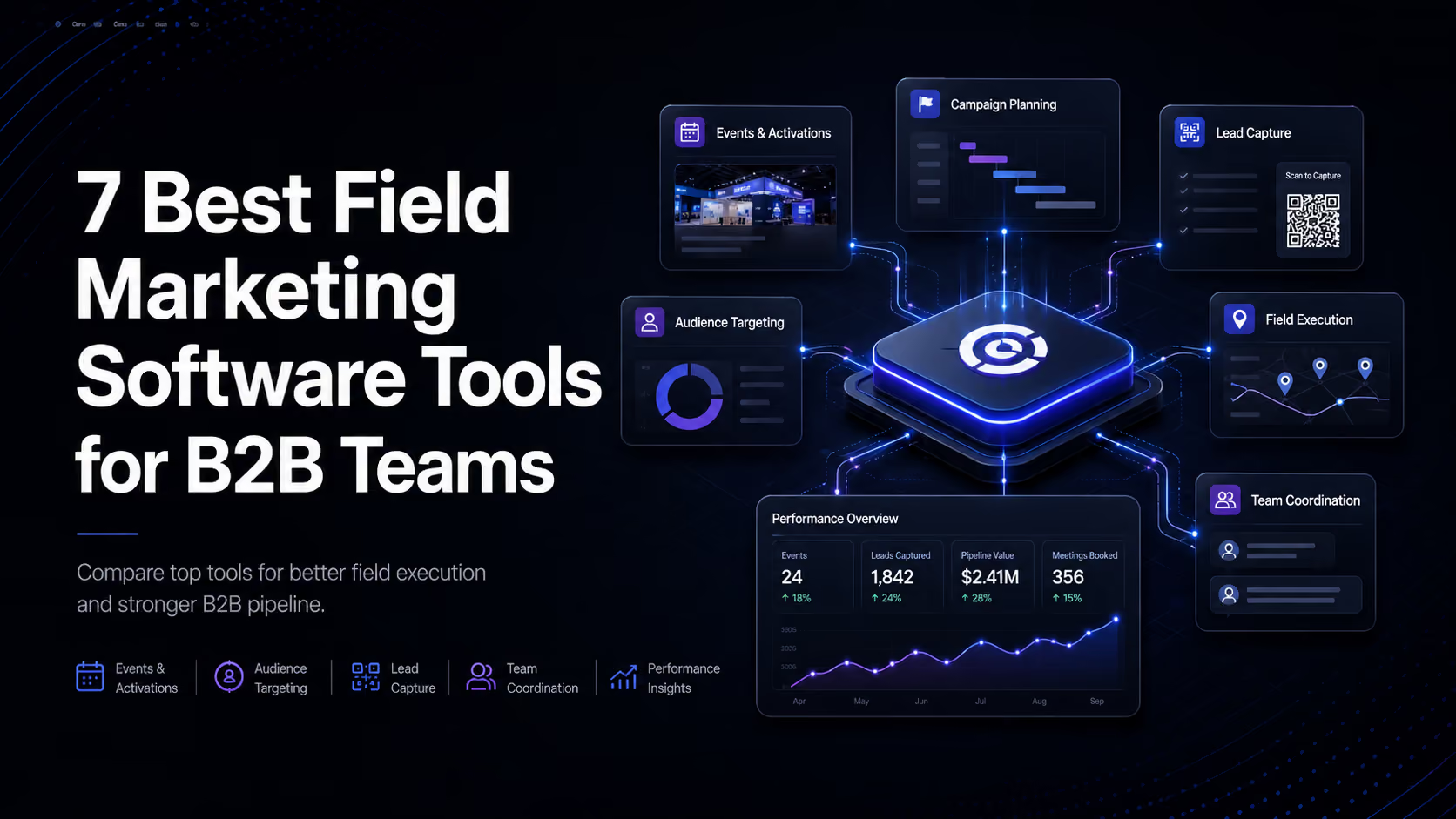
The best field marketing software matches the part of your event workflow that is actually broken. Lensmor is strongest for pre-event intelligence, Splash for repeatable field programs, Swoogo for flexible registration, Cvent and Bizzabo for enterprise event operations, Goldcast for digital events and content, and Captello for on-site contact capture.
Compare all seven tools, or start with pre-show research, owned event programs or on-site capture.
That answer is less convenient than naming one winner. It is also more useful.
A field marketing manager rarely has one software problem. The team may choose events in a spreadsheet, research target accounts in LinkedIn, build registration pages elsewhere, scan badges with the organizer's app, and report pipeline in a CRM. Each tool can work. The handoffs usually do not.
The wrong buying process starts with feature lists. The right one starts by asking where context disappears.
This guide compares seven field marketing software tools by the job they perform, their strengths, their limitations, published pricing, and the team each one fits best. For the broader strategy behind the category, start with our guide to what field marketing means for B2B pipeline.

Field marketing software comparison
Start with the task you need to fix. The tools below cover different stages of an event program; they are not interchangeable replacements.
| Tool | Main job | Best fit | Pricing basis | What to check |
|---|---|---|---|---|
| Lensmor | Choose shows and research target accounts before the event. | B2B sales and field teams researching third-party shows. | $499/month or $4,990/year for Basic; credits fund event access and contact reveals. | Coverage varies by show. Registration, on-site scanning and sending stay in your existing tools. |
| Splash | Run repeatable branded field events. | Distributed teams hosting dinners, roadshows and regional programs. | Pro / Enterprise; request a quote. | Plan your audience and third-party event research separately. |
| Swoogo | Manage registration, websites and event operations. | Teams that need configurable registration across event formats. | Professional: $11,800/year, with one Full User and one Reporting User. | Confirm add-ons, implementation and the API scope included in your plan. |
| Cvent | Operate enterprise event programs. | Event operations teams managing registration, agendas and on-site delivery. | Quote-based packages. | Evaluate the specific products and integrations in the proposed contract. |
| Bizzabo | Produce branded conferences and attendee experiences. | Teams running their own large or flagship events. | Published annual minimum: $17,999; three users. Add-ons may cost more. | Check which on-site, networking and integration options are included. |
| Goldcast | Run digital events and reuse their video content. | B2B demand generation and content teams. | Request package pricing. | Confirm in-person add-ons; independent trade-show audience research is a separate task. |
| Captello | Capture and qualify contacts at events. | Exhibitors standardizing lead capture and CRM handoffs. | Request a quote. | Test badge access, qualification fields and the receiving CRM workflow. |
Public vendor pricing and product pages reviewed October 20, 2026. Figures are published entry points, not equivalent package quotes. Confirm seats, add-ons and current terms with each vendor.
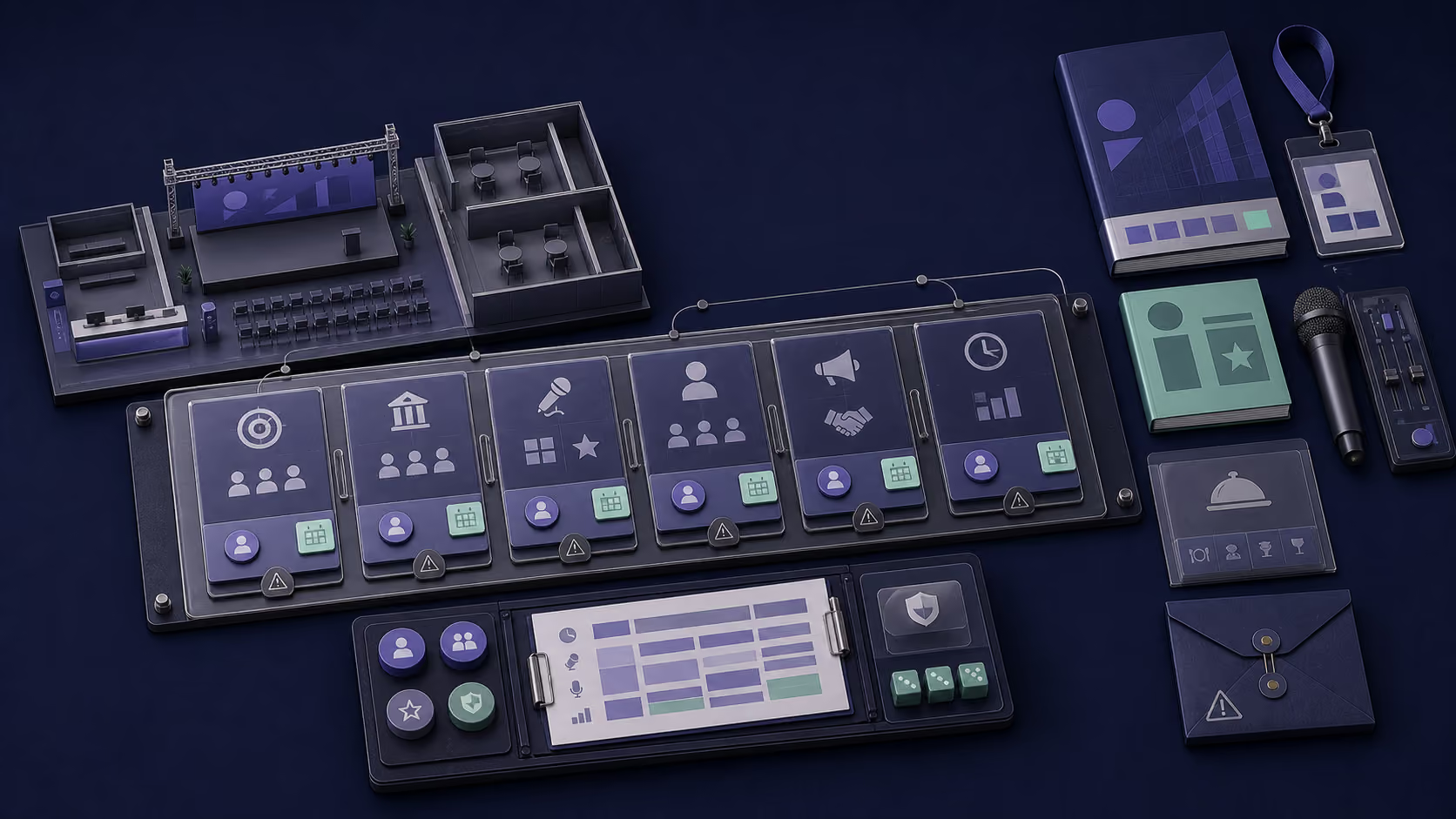
View the illustrated comparison

Why field marketing software should be evaluated by workflow
Software creates value when it removes a costly handoff.
Consider an illustrative $40K trade show program. Without a pre-show target list or booked-meeting plan, the team creates 10 qualified conversations. The cost is $4,000 per conversation.
Now add a $15K annual software stack used across six events. That adds $2,500 to this event's allocated cost. If better targeting, registration, capture, and follow-up increase the result to 20 qualified conversations, the cost becomes $42,500 divided by 20, or $2,125 per conversation.
That is a 47% reduction in acquisition cost, even after paying for the software.
The example is not a benchmark or guarantee. It shows the math your team should run before signing a contract. A tool does not need to replace five systems. It needs to improve a measurable constraint enough to justify its allocated cost.
Pro Tip: Calculate software ROI per event, not only per year. Annual pricing feels abstract. Allocating the contract across the events it supports makes the buying decision easier to defend.
What should field marketing software include?
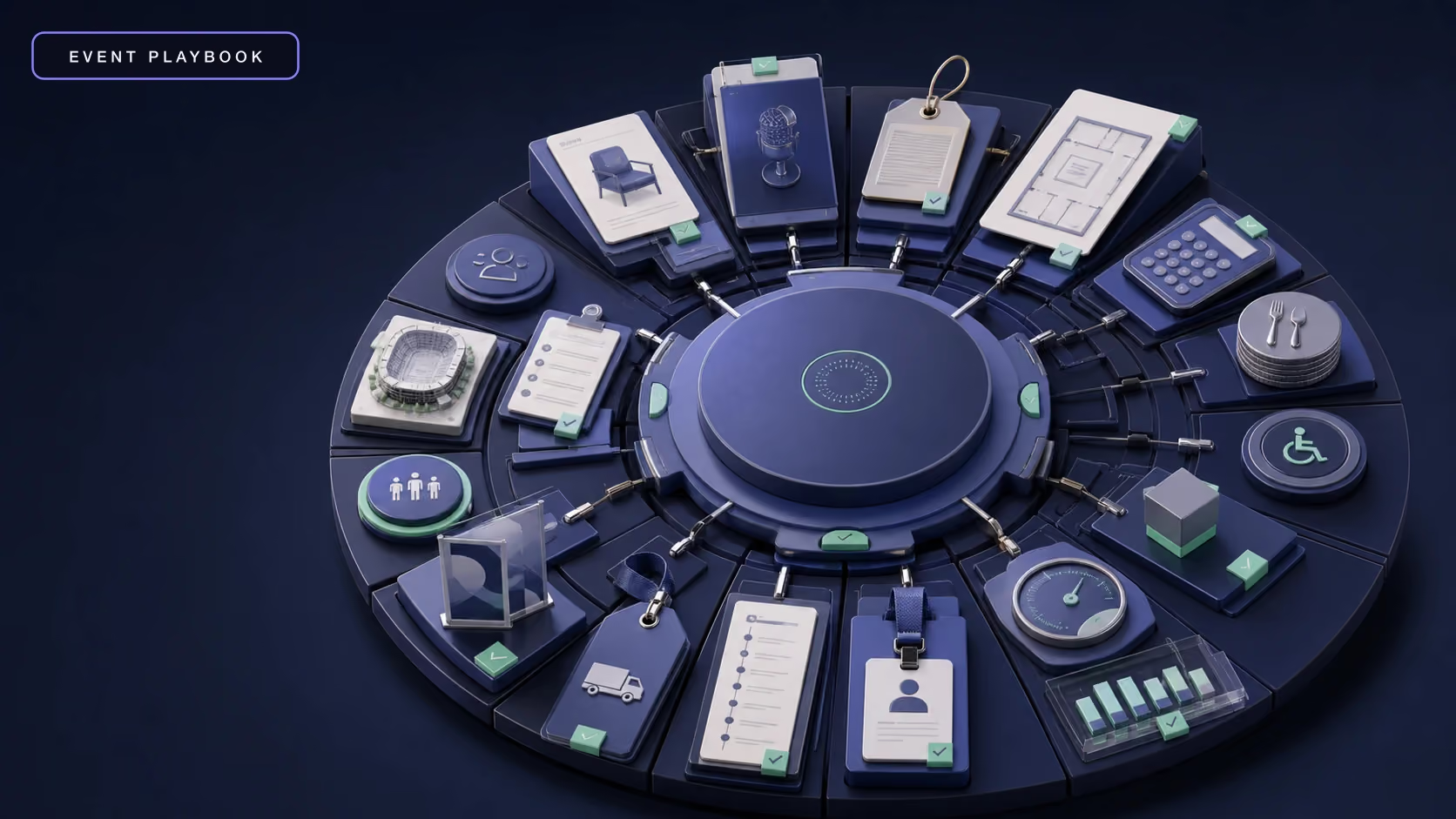
A complete field marketing workflow has six distinct jobs.
- Event and audience intelligence. Decide which events deserve budget and which accounts or decision-makers matter before the program starts.
- Registration and promotion. Build branded pages, manage invitations, collect registrations, and communicate with guests.
- Meeting and experience management. Coordinate agendas, sessions, dinners, appointments, check-in, and attendee communication.
- On-site contact capture. Record who the team met, what was discussed, and what should happen next.
- CRM activation. Route context to the correct owner quickly enough for a relevant follow-up.
- Revenue measurement. Connect event spend and engagement to meetings, opportunities, pipeline, and closed revenue.
No product in this review is equally strong at all six jobs. That is not a criticism. Specialized products are often easier to adopt and replace than a large platform purchased for features nobody uses.
The practical question is whether you need a system of intelligence, a system of execution, or a system of record.
The seven best field marketing software tools
1. Lensmor: Best for pre-event intelligence and targeting
For a focused product workflow, see Lensmor for field event prospecting. It covers account and contact research for a regional invitation shortlist, with outreach and registration managed in your existing tools.
Lensmor helps B2B teams decide where to go and who to contact before an event begins.
It covers the intelligence layer that most event management platforms leave open. Teams can search more than 160,000 events, inspect exhibitor activity, start with a target company and find where it is exhibiting, identify relevant decision-makers, and export enriched contact paths for pre-show outreach.
That makes Lensmor useful when the core problem happens before registration or booth setup. A field team may already have Salesforce, HubSpot, Outreach, or a badge scanner. What it lacks is a reliable way to know which events contain the right accounts and who is likely to appear.
Strengths: Reverse exhibitor lookup, global event search, exhibitor intelligence, attendee prediction, decision-maker discovery, contact filtering, and a free trial with no card required.
Limitations: Lensmor does not run registration, check-in or virtual sessions. Confirm current API and integration access in the product documentation and your plan. Native HubSpot export is available; other CRM handoffs require a configured workflow.
Pricing: The current Lensmor pricing page lists 2,000 free signup Credits, Basic at $499 per month or $4,990 per year, Growth at $14,900 per year, and Enterprise on a custom annual agreement.
Best for: B2B field marketing, demand generation, and sales teams that need to select better trade shows, find target exhibitors, predict likely attendees, and start outreach before the show.
Pro Tip: Use event intelligence before approving sponsorship. A cheaper event with 30 target accounts can outperform a famous event with thousands of irrelevant attendees.
Watch the workflow
Watch Lensmor’s field-marketing workflow before evaluating the rest of the stack. It covers the research and targeting stage; registration, on-site lead capture and revenue reporting remain separate jobs to test in the tools that handle them.
Watch on YouTube · 0:47
2. Splash: Best for repeatable field event programs
Splash is designed for teams running branded events frequently across regions.
Its workflow centers on creating event pages, handling RSVP or paid registration, managing contacts, sending communications, checking guests in, and giving distributed teams reusable templates. That is a strong fit for executive dinners, partner events, roadshows, customer programs, and small regional gatherings.
The operational advantage is consistency. A central field marketing team can create an approved format, then let regional marketers launch programs without rebuilding the design, registration logic, and reporting process every time.
Strengths: Branded registration, unlimited events and registrations, contact management, mobile check-in, reusable templates, permissions, and enterprise controls.
Limitations: Splash manages audiences that your team already knows or attracts. It does not replace pre-event market intelligence for discovering which external trade shows contain your target accounts. Pricing also requires a sales conversation.
Pricing: Splash offers Pro and Enterprise plans with custom quotes. Both plans advertise unlimited events and registrations.
Best for: Growth and field teams running a high volume of dinners, roadshows, partner events, webinars, and regional programs under one brand system.
3. Swoogo: Best for flexible registration and event operations
Swoogo is a configurable event management platform with transparent entry pricing.
It supports unlimited events and registrations, conditional registration logic, websites, email, check-in, reporting, integrations, and event workflows. Teams can adapt the same platform to conferences, seminars, webinars, dinners, training programs, and hybrid formats.
Swoogo stands out when event operations are complex but the team does not want registration volume to determine the software bill. Its pricing is based primarily on users, while events and registrations remain unlimited.
Strengths: Flexible registration paths, strong conditional logic, unlimited events, unlimited registrations, built-in check-in, 30+ integrations, REST API access, and responsive support.
Limitations: The platform starts after the team has chosen the event or decided to host one. It is not built to predict attendance at third-party trade shows or discover where target companies will exhibit. Some on-site, mobile, and enterprise features are add-ons.
Pricing: Swoogo lists Professional at $11,800 per year for one Full User and one Reporting User. Enterprise pricing is custom.
Best for: Event teams that need configurable registration and operations across many programs without per-event or per-registration pricing.
4. Cvent: Best for enterprise event portfolios
Cvent covers the broadest enterprise event management footprint in this comparison.
Its platform spans registration, event websites, agenda and session management, mobile attendee experiences, check-in and badging, venue sourcing, meetings, contact capture, integrations, budget management, and analytics. Large organizations can standardize multiple event formats across business units and regions.
That breadth is valuable when governance, procurement, security, and global consistency matter as much as speed. It also means the buying and implementation process can be heavier than a focused field team needs.
Strengths: Deep event operations, registration, on-site tools, mobile experiences, enterprise security, integrations, venue sourcing, appointments, and portfolio reporting.
Limitations: Cvent requires a custom quote for its core Professional and Enterprise platform. It can be more platform than a small team needs, and its core strength is operating known events rather than discovering the right third-party events from target-account behavior.
Pricing: Cvent publishes Professional and Enterprise packages, but core platform pricing is quote-based. Individual products and services can carry separate licenses.
Best for: Global enterprises, associations, and event departments that need one governed platform across large conferences, field programs, meetings, and on-site operations.

5. Bizzabo: Best for flagship event experiences
Bizzabo combines event management software with attendee experience and on-site technology.
The Event Experience OS includes unlimited events and registrations, contact management, ticketing, email campaigns, websites, registration flows, a mobile app, and reporting. Its Klik SmartBadge product adds networking, engagement, contact capture, gamification, and passive attendance data.
Bizzabo is most compelling when the event itself is a major branded experience. The platform is less attractive for a small team that only needs a single workflow, especially because the core subscription has an annual minimum.
Strengths: Flagship event production, registration, mobile experience, contact management, analytics, smart wearables, networking, and professional services.
Limitations: Bizzabo requires an annual subscription for the Event Experience OS. The public starting price assumes three users, and on-site wearables or services may add cost. It does not replace independent pre-show intelligence for third-party exhibitions.
Pricing: Bizzabo publicly lists its core platform at $499 per user per month, billed annually, with a three-user minimum. The vendor lists a starting annual price of $17,999 per year.
Best for: Enterprise marketing teams producing high-value conferences, customer events, and branded experiences where attendee engagement matters as much as registration.
6. Goldcast: Best for digital events and content reuse
Goldcast connects B2B events with video and content production.
It supports webinars, digital events, in-person field events, on-demand experiences, recordings, and AI-assisted content repurposing. A team can run a webinar or customer session, then turn the recording into clips, articles, social content, and an on-demand library.
This makes Goldcast particularly useful when the event calendar is also a content engine. A single executive conversation can support live attendance, post-event nurture, sales enablement, and ongoing organic distribution.
Strengths: Webinars, digital events, video quality, automatic calendar holds, engagement tools, on-demand delivery, integrations, analytics, and content repurposing.
Limitations: Goldcast publishes plan structures but not dollar amounts. In-person field event support appears as an add-on on several plans. It is not a substitute for trade show discovery, exhibitor research, venue operations, or universal on-site scanning.
Pricing: Custom quote for Events and paid bundles. Content Lab offers a free entry point for content repurposing.
Best for: B2B demand generation and content teams running webinars, executive sessions, digital summits, and field events whose recordings should continue producing value.
7. Captello: Best for on-site contact capture and attribution
Captello records event conversations and routes the resulting context into revenue systems.
Its Universal Lead Capture product can scan badges, business cards, QR codes, LinkedIn profile codes, and paper across different events and registration systems. Captello also supports enrichment, qualification, automated follow-up, CRM connections, meeting management, engagement experiences, and revenue attribution.
The appeal is consistency across third-party events. Instead of training the team on a different organizer-provided scanner at every show, a company can use one capture workflow and one data model.
Strengths: Multi-format scanning, offline capture, enrichment, configurable qualification, meeting scheduling, CRM and marketing automation connections, engagement tools, and event revenue reporting.
Limitations: Captello becomes valuable when a person is already in front of the team. It does not solve event discovery or pre-show target-account identification by itself. Public dollar pricing is not listed.
Pricing: Custom quote.
Best for: Enterprises and frequent exhibitors that need one on-site capture and attribution workflow across many events and organizer systems.
How to choose field marketing software
Choose the smallest set of tools that preserves context from planning to revenue.
Start with one recent event. Trace what happened from the first budget discussion to the first sales follow-up. Mark every spreadsheet, export, manual lookup, duplicated field, delayed handoff, and missing owner.
Then score the problem in four dimensions:
- Frequency. Does the problem happen at every event or only at one complex annual conference?
- Cost. How many hours, missed meetings, or delayed opportunities does it create?
- Ownership. Which team is accountable for fixing it: field marketing, event operations, sales, marketing operations, or revenue operations?
- Integration risk. Will the new tool create another data island, or can it pass useful context into the CRM and existing workflows?
A repeatable field program often needs a modular stack. Lensmor can identify the right external events and contacts. Splash or Swoogo can run owned programs. Captello can capture on-site context. Salesforce or HubSpot can remain the revenue system of record.
That architecture is easier to understand than an all-in-one promise. Each tool has a defined job, and each handoff has an owner.
When should you buy an all-in-one field marketing platform?
An all-in-one platform makes sense when governance is the main constraint.
Large organizations often need shared security reviews, approved templates, global reporting, user permissions, data retention rules, service agreements, and predictable procurement. Cvent or Bizzabo can justify their cost when consolidating vendors matters more than optimizing every individual workflow.
Smaller teams usually have a different problem. They need speed, clear ownership, and fast proof that a program can create pipeline. A focused intelligence tool plus existing CRM and outreach systems may produce value sooner than a full platform rollout.
The threshold is not company size alone. It is operational complexity.
If 20 regional marketers are launching programs independently, governance has real value. If three people are trying to find the right trade shows and book meetings, a large event suite may slow them down.
What should you test during a field marketing software trial?
A useful trial should reproduce one live event workflow.
Do not evaluate software with sample data and an imaginary conference. Pick an event happening in the next 30 to 90 days and ask the team to complete a defined sequence.
For intelligence software, find five target companies, locate relevant events, identify likely decision-makers, and export a small outreach list. For registration software, clone a real event, create conditional registration paths, and test reminder emails. For capture software, simulate a busy booth conversation and measure how quickly the context reaches the CRM.
The trial should answer five questions:
- Can a normal user complete the workflow without vendor assistance?
- Does the data match what the team already knows about the event?
- Does the tool preserve account, person, and event context?
- How much manual work remains after the workflow ends?
- Can the team measure one business outcome within the trial period?
If the vendor cannot help define a concrete success test, the implementation is likely to remain vague after purchase.
Build the stack around the buyer, not the event
Field marketing software should make the buyer journey easier to see. The event calendar is only the container.
Start with the moment your workflow loses context. Fix that first. Then connect the result to the next owner and the next system. A modest stack with clear handoffs will outperform an expensive platform nobody can explain.
Start Free Trial — Start using Lensmor's event intelligence platform today. Predict attendee lists, discover relevant events, and enrich contact data for your next trade show.