Why B2B trade show marketing is becoming important again
B2B trade show marketing is becoming more important because AI has made online channels faster, cheaper, and more crowded, while in-person events still create trust, context, and buyer intent. The difference now is that event intelligence lets teams identify target accounts, likely attendees, and relevant decision-makers before the show starts, so trade shows can be measured as a growth channel instead of treated as brand exposure.
I did not always think about trade shows this way.
For a long time, the standard B2B playbook was simple: build a website, publish content, run ads, scrape lists, send outbound emails, then use analytics to optimize the funnel. Trade shows sat in a separate bucket. They were expensive. They were hard to attribute. They were often owned by the events team, not the revenue team.
So companies kept going, but many treated the booth as a brand expense.
That made sense when online channels still had room. Search traffic was more predictable. Email reply rates were better. LinkedIn feeds were not flooded with AI-written posts. A small team could look sophisticated online if it moved faster than competitors.
That advantage is fading.
What changed in online B2B marketing?
AI has reduced the cost of producing marketing activity, but it has not reduced the cost of earning buyer trust.
Content Marketing Institute's 2026 B2B research found that 95% of B2B marketers now use AI-powered applications, with 89% using AI for written content and 53% using it for creative assets. HubSpot's 2026 marketing statistics report that 80% of marketers use AI for content creation and 75% use it for media production.
That does not mean every company suddenly became better at marketing.
It means every company can now produce more emails, more posts, more landing pages, more ads, more webinars, and more content variations with less effort. The buyer sees the result. Their inbox looks the same. Their feed looks the same. Their demo requests are screened more carefully. Their tolerance for generic messaging goes down.
Online growth is not dead. It is still essential. But it is no longer scarce enough to carry the whole GTM motion for many B2B teams.
This is why trade shows are coming back into the conversation.
In-person moments are harder to fake. A booth conversation, a product demo, a dinner near the venue, or a planned 20-minute meeting creates a different kind of signal than a cold email open. The buyer is physically present. Their company spent money to send them. The market is gathered in one place. The timing is real.
That is the part many teams underpriced.
What is B2B trade show marketing?
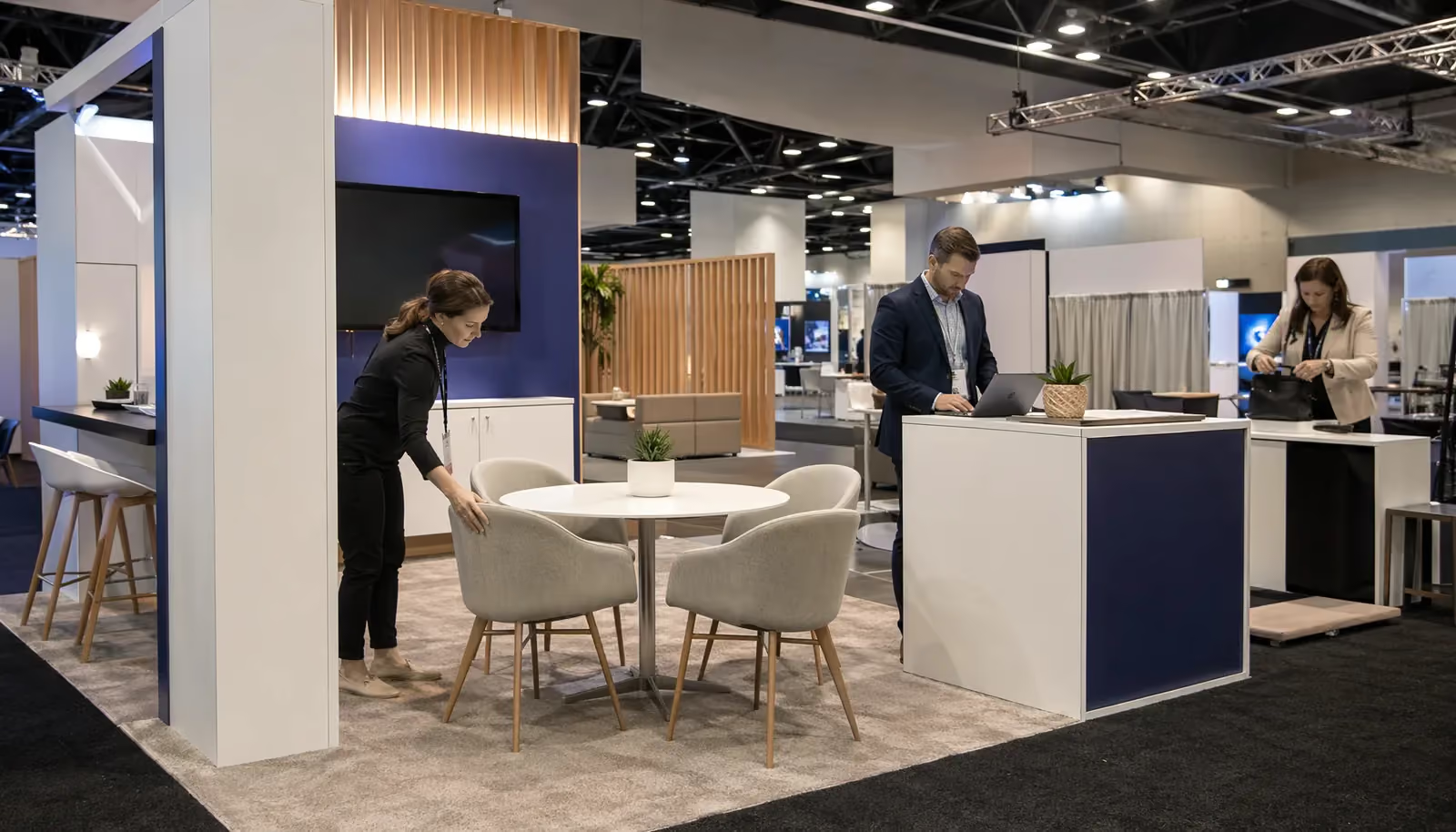
B2B trade show marketing is the process of using industry trade shows to identify, engage, and convert target accounts through pre-show planning, on-site conversations, and post-show follow-up. It works best when the team treats the show as a timed market signal, not a two-day booth rental.
The old version was booth-first. Buy the space. Design the booth. Ship the materials. Staff the floor. Scan as many badges as possible. Send the list to sales. Hope the pipeline report looks defensible.
The better version is account-first.
Start with the customers you want to reach. Find where those companies exhibit, sponsor, speak, attend, or send executives. Build the target list before the event. Run pre-show outreach. Book meetings. Use the booth as a trust accelerator, not a passive waiting area.
Cvent's trade show statistics make the stakes clear. The company cites trade shows as the second most effective marketing tactic after company websites, and notes that 81% of trade show attendees have buying authority. It also reports that 72% of attendees are more likely to buy from exhibitors they meet at trade shows.
That is not a weak signal.
The problem is not that trade shows lack buyer intent. The problem is that most teams wait too long to act on it.
Why did B2B teams treat trade shows as brand exposure?
Trade shows became a brand channel because teams could see the cost before the show, but they could not see the right buyer context before the show.
The cost side is obvious. A booth can cost $10K to $30K before you include travel, staff time, shipping, giveaways, dinners, sponsorships, and opportunity cost. Cvent also notes that exhibitors spend a meaningful share of marketing budgets on trade shows and still face pressure to reduce exhibit costs.
The revenue side has always been harder.
If you only measure foot traffic, you reward volume. If you only measure badge scans, you reward activity. If you only measure post-show follow-up, you punish the channel for work that should have happened weeks earlier.
That is how a serious growth channel gets mislabeled as "brand."
I have seen this pattern repeatedly while building Lensmor. A team spends weeks planning the booth, but only a few hours planning who they actually want to meet. They know the carpet color, the booth size, the shipment deadline, and the hotel block. They do not know which target accounts are likely to be in the building.
That is backwards.
Pro Tip: If your event plan starts with booth logistics instead of target account selection, your ROI model is already late.
The ROI problem is really a timing problem
Trade show ROI improves when the sales motion starts before the booth opens.
Take a simple example.
A B2B team spends $30K on a trade show. If it relies mostly on booth traffic and walks away with 10 qualified conversations, the rough cost is $3,000 per qualified conversation. That number may still work for enterprise deals, but it gives leadership a reason to question the channel.
Now change the workflow.
The same team researches target exhibitors and likely attendees four weeks before the show. It identifies 150 relevant accounts, enriches contacts, runs pre-show outreach, books 12 meetings, and prioritizes 40 high-fit companies for on-site conversations. After the show, it has 30 qualified conversations instead of 10.
The booth did not get cheaper. The channel became planned.
That moves the same $30K from $3,000 per qualified conversation to $1,000. If even one mid-market or enterprise deal is created, the economics change quickly.
Bizzabo's 2026 event marketing benchmarks point in the same direction: event measurement is moving beyond attendance and satisfaction toward pipeline influence, deal velocity, and customer retention. The article also notes that ROI confidence improves when event data is centralized and connected to CRM and revenue systems.
The real shift is not "events are back." The shift is that events are finally becoming measurable before the post-show report.
Why trade shows fit the AI era
AI makes digital outreach cheaper, so physical trust becomes more valuable.
This is the uncomfortable part of the AI marketing wave. The more automated the first touch becomes, the more valuable the real human moment becomes.
Buyers know when they are being processed by a sequence. They know when a message was built from a template. They know when an email references their company but not their actual situation. AI can help with research, writing, and personalization, but it also raises the baseline noise level across the market.
Trade shows create a different constraint.
You cannot show up to every event. You cannot talk to every buyer. You cannot fake a useful product conversation for long when the buyer is standing in front of you. You cannot hide poor positioning behind another email variation.
That constraint is useful.
It forces prioritization. It forces clarity. It creates a moment where buyer, vendor, competitor, partner, analyst, and supplier all exist in the same market map.
Content Marketing Institute's 2026 research says experiential marketing is roaring back after years of digital-first everything, with brands rediscovering the value of showing up in person to earn trust and loyalty. Freeman's 2025 Trust Report also says live events have a positive impact on how audiences think and feel about brands, and that the impact is getting stronger.
This matches what I hear from operators.
They are not abandoning digital. They are trying to find channels where attention, intent, and trust still meet in one place.
Trade shows do that.
Why buyer behavior makes events more strategic
B2B buyers often form preferences before they ever talk to sales.
6sense's 2025 B2B Buyer Experience Report describes a buying journey where buyers research, debate, and form a preliminary vendor preference before direct seller engagement. It says the favored vendor at that stage is the one buyers ultimately purchase from about 80% of the time.
That should change how teams think about events.
If buyers are already forming preferences before they talk to you, waiting for inbound demand is risky. Waiting for a badge scan is also risky. You need to be part of the buyer's context earlier.
A trade show gives you one of the cleanest ways to do that.
The buyer has a reason to pay attention. Their company may be exhibiting, attending, sponsoring, speaking, launching, hiring, buying, or evaluating vendors. The event creates a deadline. The city creates a meeting window. The topic creates relevance.
This is why pre-show outreach feels different from normal outbound when it is done well.
"I saw you are attending Automate next month" is not the same as "checking in to see if improving efficiency is a priority." One is tied to a real moment. The other could have been sent to anyone.
Pro Tip: The strongest pre-show message is not "come visit our booth." It is "you are already going to be there, and I have a reason this meeting should be useful."
The old workflow versus the event intelligence workflow
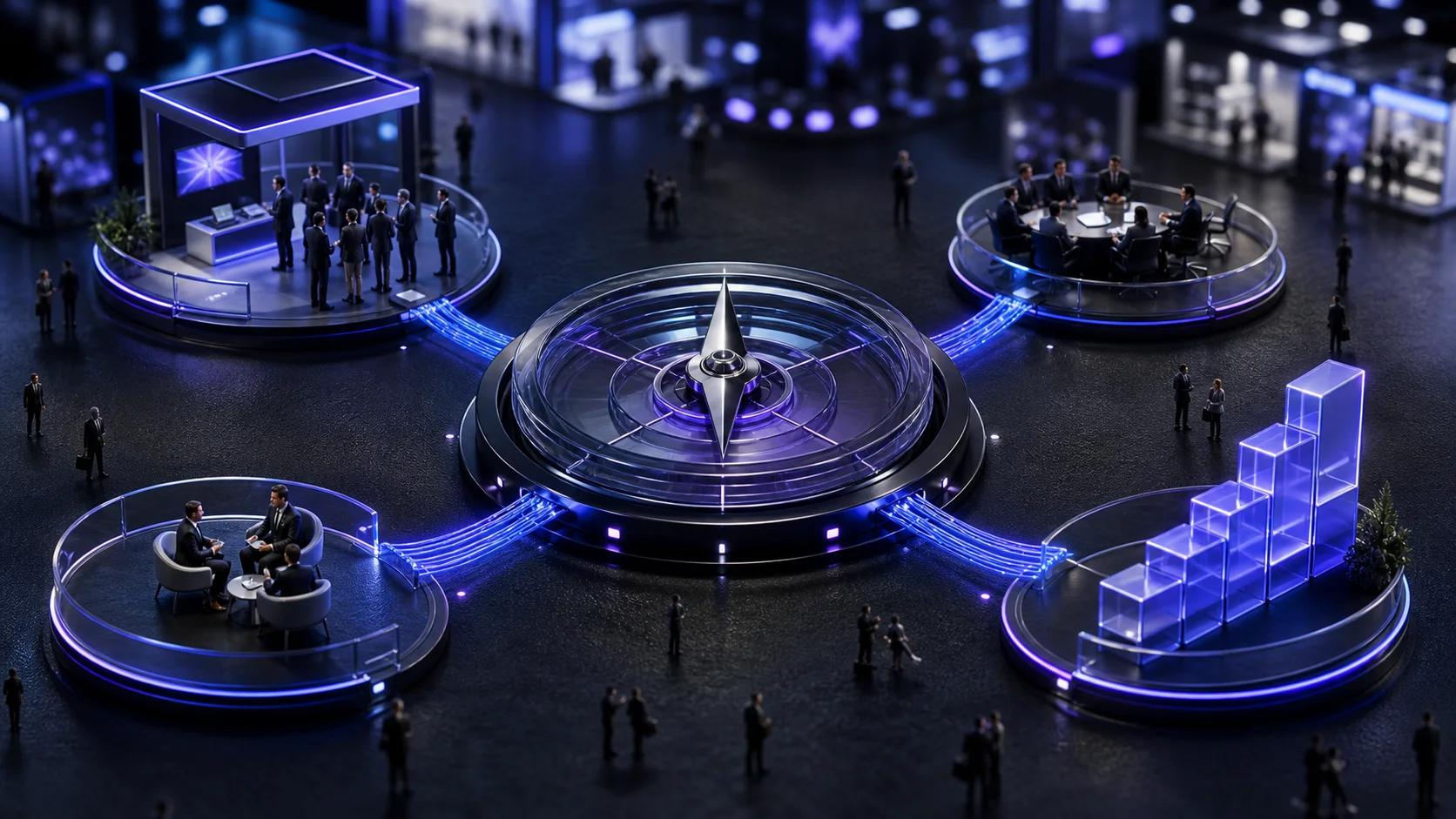
Event intelligence turns trade show marketing from reactive capture into pre-show account planning.
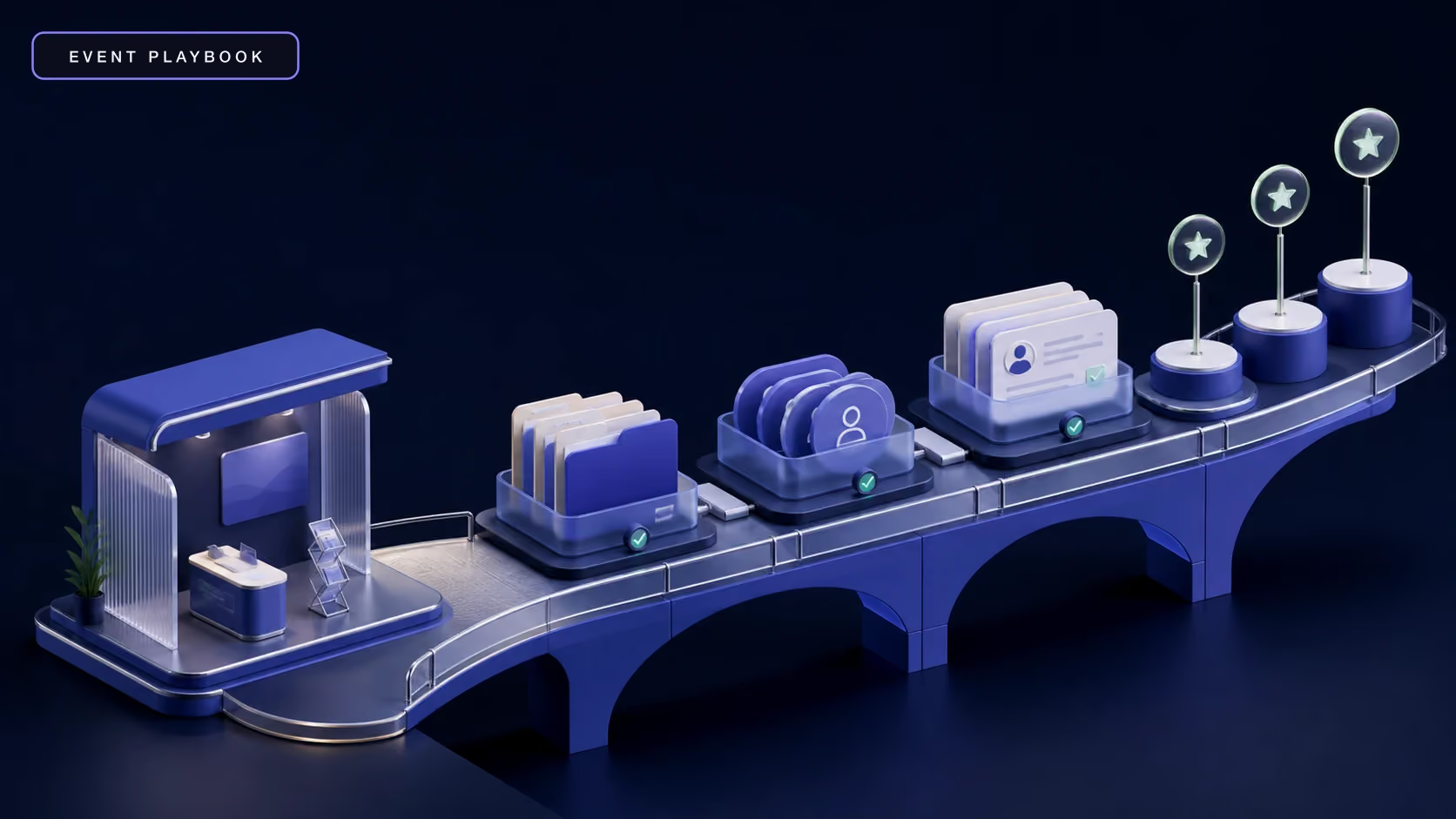
The difference is easiest to see as a workflow change. The old model measured what happened after the booth opened. The new model prepares the right conversations before anyone arrives.
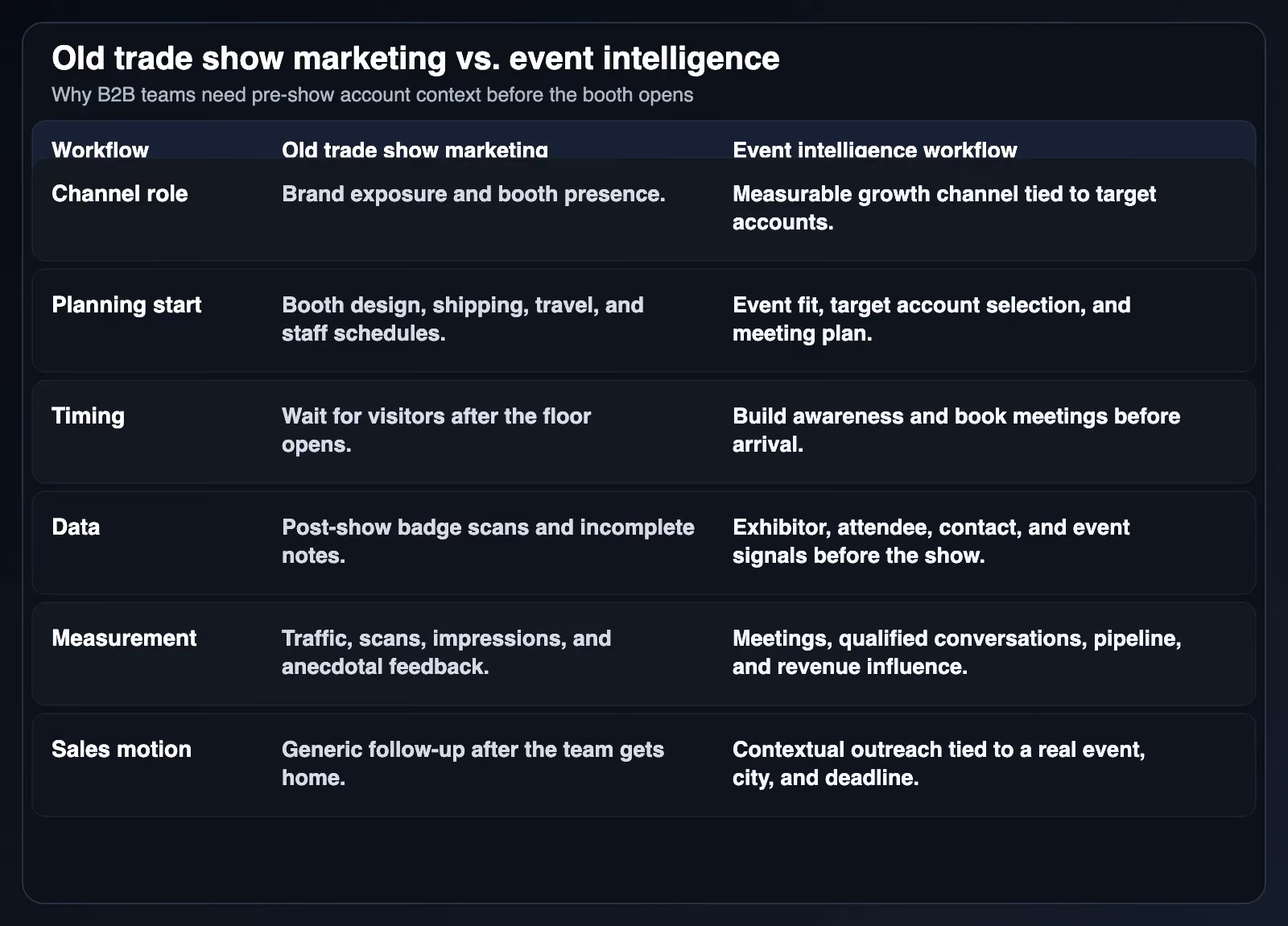
This is not only a marketing change. It is an operating model change.
The event team still owns logistics. The sales team still owns conversations. The demand generation team still owns campaigns. But the planning layer becomes shared. Everyone works from the same account list, event context, meeting plan, and measurement model.
That is when trade shows stop feeling random.
How to make trade shows a measurable B2B growth channel
A measurable trade show program starts with account selection, not booth traffic.
Here is the workflow I would use if I were building a B2B event program from scratch today.
1. Choose events based on where your market actually gathers
Many teams choose trade shows by reputation. The biggest show in the category gets the budget because everyone knows the name.
That is not enough.
The better question is: which events concentrate the accounts you care about? If your top 100 target companies attend a smaller vertical event, that show may be more valuable than the giant industry expo. If your competitors exhibit at a regional conference three years in a row, that is a market signal. If your customers send product leaders to a niche technical summit, that matters.
This is where reverse event discovery becomes useful. Instead of searching for event names, start with target companies and identify where they show up.
Pro Tip: A smaller event with 30 high-fit target accounts usually beats a massive event where your team cannot identify who matters.
2. Build the pre-show account list early
Cvent's guide to trade show capture argues that the work shaping prospect quality happens before arrival: teams need to know who they want in front of them and do something to make that more likely.
I agree with that framing.
Your pre-show account list should not be a scraped directory dumped into a spreadsheet. It should answer four questions:
- Which target companies are likely to be present?
- Why are they present?
- Which people from those companies matter?
- What is the right reason to contact them before the show?
Once you have that, the event starts to look like a pipeline motion.
You can segment exhibitors, attendees, sponsors, speakers, and partners. You can separate strategic accounts from opportunistic accounts. You can give sales a ranked list instead of a messy export.
3. Run pre-show outreach while the event is still a live deadline
The best trade show outreach is time-bound and specific.
A generic pitch says, "We help companies improve revenue performance." A better pre-show message says, "I noticed your team is exhibiting at [event]. We work with companies preparing for that same audience and thought it might be useful to compare notes before the floor opens."
The second message has context.
It does not need to be long. It does need to be grounded in the event. Mention the show, the company role, the reason for contact, and the meeting ask. If the account is high priority, personalize more. If the account is lower priority, keep the message useful and concise.
You can also build retargeting or audience campaigns around likely attendees when the data supports it. The point is not to spam people because they are attending a show. The point is to create familiarity before your team tries to talk to them in person.
4. Use the booth as a trust accelerator
The booth is not the whole strategy. It is the physical proof point.
A booth gives buyers a place to see the product, meet the team, ask hard questions, and build confidence. It is also where your pre-show work either pays off or gets exposed. If your team booked meetings with the wrong people, the booth will not fix that. If your team booked the right meetings, the booth makes those conversations easier.
This is why I do not think trade shows should be measured only by scans.
Cvent notes that scanning every badge can create a long list with little indication of who is worth pursuing. That is exactly the problem. Volume without context creates work. Context creates prioritization.
5. Measure pipeline movement, not only activity
The post-show report should answer more than "how many people stopped by?"
It should show:
- Target accounts identified before the show
- Meetings booked before arrival
- Qualified conversations held on site
- Opportunities created or accelerated
- Pipeline influenced
- Revenue connected to event-sourced or event-influenced accounts
This does not require perfect attribution. It requires a better baseline.
If you know the target list before the event, you can measure which accounts engaged, which converted, and which should be followed up later. If you only collect contacts after the event, you spend the next month reconstructing context from memory.
Pro Tip: Add a "reason for event relevance" field to your CRM notes. It gives sales a better follow-up hook than "met at booth."
Where Lensmor fits in this shift
Lensmor helps B2B teams know who to target before a trade show starts.
We built Lensmor around a simple belief: trade shows should not be expensive guesses. If a company is going to spend $30K, $80K, or $200K around an event, the team should know which accounts matter before the show opens.
Lensmor supports that workflow in three ways.
First, it helps teams discover events by searching where target companies exhibit or participate. That is reverse event discovery.
Second, it helps teams predict who may attend before official lists are useful. That gives sales and marketing teams time to plan meetings, campaigns, and account coverage.
Third, it enriches contact records so the team can export relevant decision-makers and start outreach before everyone is already on the floor.
The product does not replace the human work of selling. It makes that work earlier, sharper, and easier to measure.
That distinction matters.
AI can write more messages. Lensmor is designed to help teams decide which event, account, and person deserve a message in the first place.
What I think B2B teams should do next
The winning teams will not choose between digital and trade shows. They will connect both around event timing.
Use content to educate the market. Use paid campaigns to create awareness. Use outbound to start conversations. Use trade shows to compress trust. Use event intelligence to decide where the best offline moments are likely to happen.
That is the modern version of B2B trade show marketing.
The companies that keep treating events as brand exposure will keep struggling to defend the budget. The companies that treat events as timed account signals will build better pre-show pipeline, cleaner measurement, and more useful sales conversations.
My bet is that the next few years will make this distinction obvious.
As AI makes online activity easier to produce, trust will become harder to earn. Trade shows are one of the few channels where trust, timing, and buyer context still meet in the same room.
Start Free - Start using Lensmor's event intelligence platform today. Predict attendee lists, discover relevant events, and enrich contact data for your next trade show.
Related reading: complete trade show marketing guide and trade show ROI measurement framework.