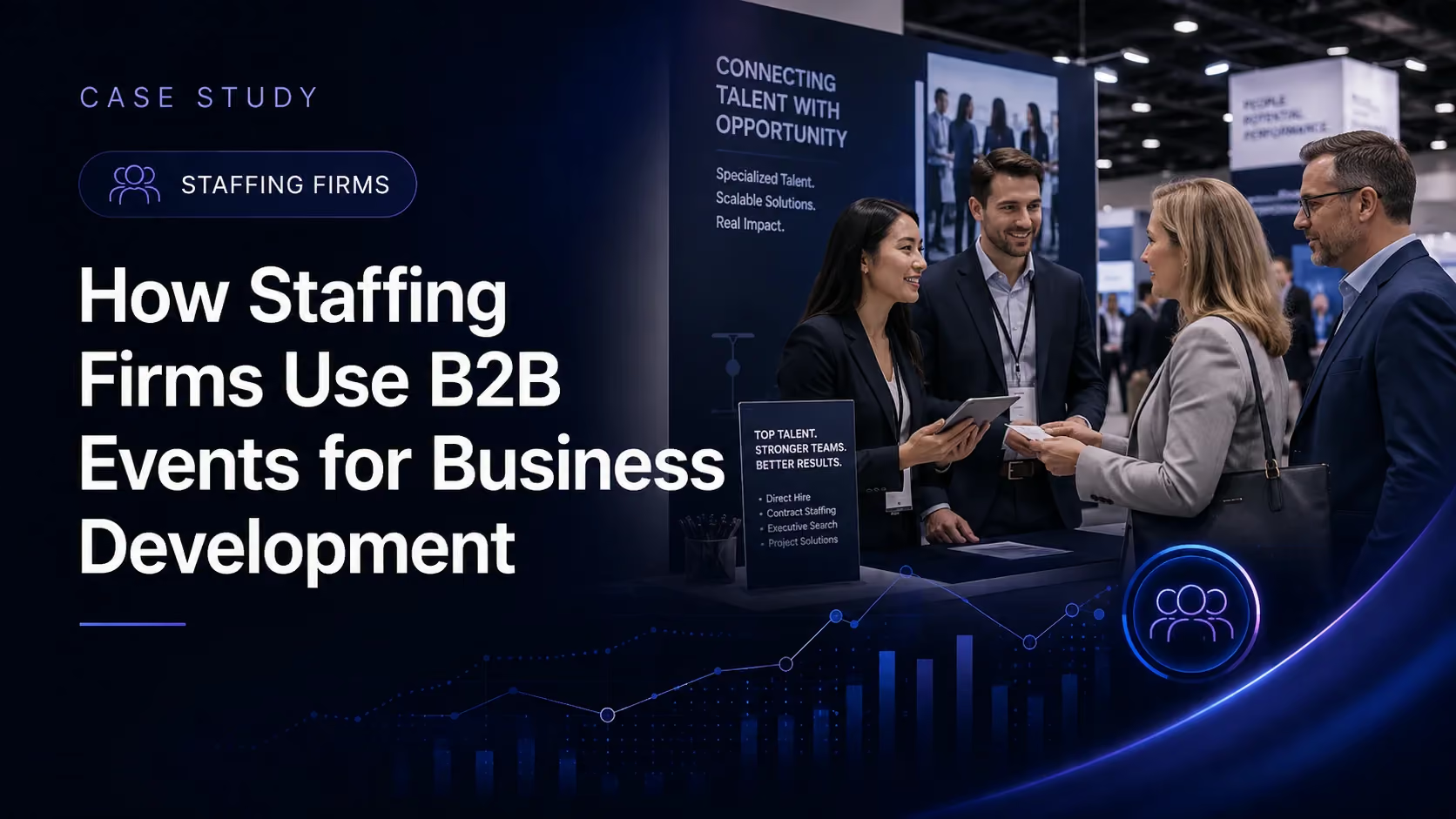
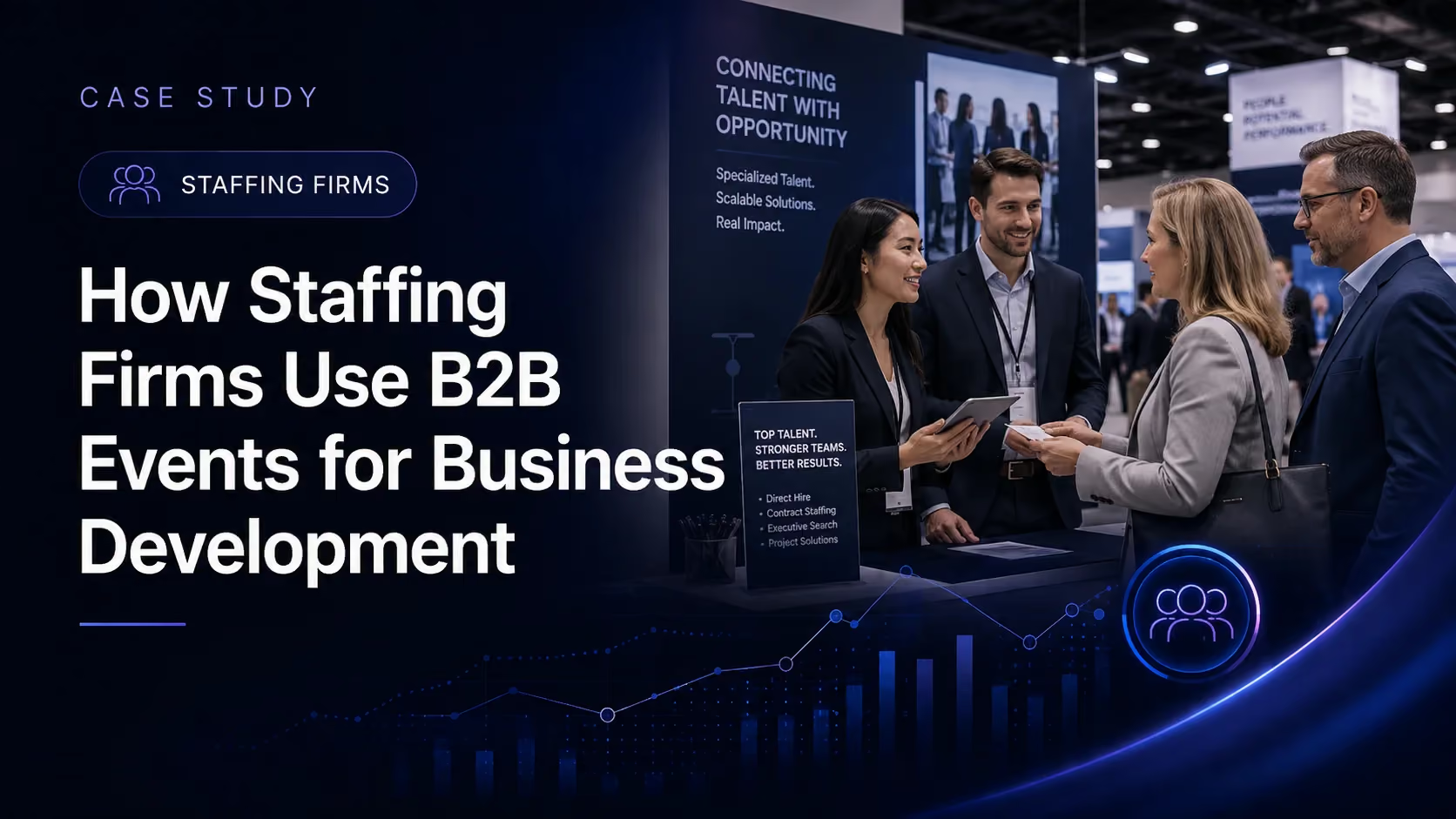
Technology staffing companies can use B2B event intelligence to find potential client companies, compare events by audience fit, and research the people likely to attend before committing budget. This anonymized case study follows a global technology staffing and software services company that chose Lensmor because its team needed to evaluate more events, across more industries, than its previous workflow allowed.
The company name, employee names, commercial terms, and identifying account details have been removed. The buying problem has not.
Its commercial support team had two connected jobs. First, decide which events were worth attending. Second, understand which companies and people would be there. The team did not need another generic contact database. It needed event context early enough to guide both decisions.
What is staffing business development through events?
Staffing business development through events means using conferences and trade shows to identify companies with potential hiring, staffing, or software delivery needs. The work begins before anyone arrives at the venue: selecting the right events, finding relevant accounts, and researching likely decision-makers.
For this company, that definition had to stay broad.
Technology hiring demand does not live inside technology conferences alone. A manufacturer may need software engineers. A financial services company may be expanding its data team. A retailer may be rebuilding its commerce stack. A healthcare company may need product, cloud, or security specialists.
That meant a narrow event category filter could hide valuable opportunities. The team needed access to events across industries, then a way to judge the company mix inside each one.
The same principle applies to many staffing businesses. The best event is not always the event that describes your service. It is the event where your future clients are investing, launching, hiring, and meeting partners.
The American Staffing Association's industry research reflects how broadly staffing services support U.S. businesses. For business development teams, that breadth makes event selection an account-fit problem rather than a simple industry-calendar problem.
Why event selection became the first constraint
The company used attendee and company data to decide whether an event deserved investment. Outreach came later.
Its team examined location, event type, the mix of attending companies, the presence of technology businesses, and signs that participating organizations might need technology talent or delivery support. Exhibitors mattered, but so did sponsors, speakers, and people connected to attending companies.
The existing workflow capped how many events the team could inspect in a typical month. That limit was uncomfortable because the team needed to evaluate far more events than it would eventually attend.
This distinction is easy to miss.
An event intelligence product may treat an unlock as access to a contact list. The customer treated that same access as research for an investment decision. If only a fraction of reviewed events make the calendar, the team must study a wide funnel before committing to a short list.
Pro Tip: Track “events evaluated” separately from “events attended.” A company may need to research 20 options to choose three with confidence.

What does the event selection math look like?
A weak event choice concentrates the whole cost of participation in the wrong audience.
Consider an illustrative planning model, not this customer's financial result. A team has two events under consideration, and each would require a $30,000 commitment across sponsorship, travel, staff time, and activation.
Event A contains 12 relevant target accounts. Event B contains three. Before any meeting or opportunity is counted, the planned cost per relevant account is $2,500 for Event A and $10,000 for Event B.
The budget is identical. The audience is not.
This is why pre-event research should happen before a sponsorship decision. Event intelligence cannot guarantee revenue, but it can show whether the audience contains enough relevant companies to justify deeper evaluation.
For a staffing business selling into multiple industries, that audience check matters more than event popularity. A famous show with thousands of attendees may be a weaker fit than a smaller conference with 25 companies actively building technology teams.
What the company needed from an event intelligence workflow
The team needed breadth, context, and flexible activation. It was not looking for a system to run outbound campaigns because those tools already existed internally.
The comparison shows why this was not a standard “buy a list” request. The customer needed to move from market-level event discovery to company-level analysis, then to people-level research without losing the event context between steps.
That context also made exports more useful. A LinkedIn profile in a generic spreadsheet says who a person is. A LinkedIn profile attached to a specific event, company, and participation signal says why the person matters now.

Why broad event access mattered more than recommendations
Recommendations are useful only when users can inspect the market behind them.
During evaluation, the team asked whether Lensmor would show only events recommended from its ICP inputs. The answer affected the buying decision because strict ICP and job-title filters did not match the company's market.
Job titles change across countries and industries. A technology staffing opportunity might sit with talent acquisition, procurement, engineering leadership, operations, a business unit head, or an executive sponsor. Starting with a tiny approved-title list would create false precision.
Lensmor allowed the team to keep filters broad, adjust them, or remove restrictive title criteria while still searching the full event database. The customer could compare recommendations with its own research rather than accepting a closed ranking.
Pro Tip: Start with exclusion filters when buyer titles vary. Removing clearly irrelevant roles often protects recall better than requiring every prospect to match one approved title.
This workflow also separates discovery from judgment. Software can surface events and participation signals. The customer still decides whether the account mix, timing, geography, and commercial objective make the event worth pursuing.
For a deeper framework, see Lensmor's guide to B2B event marketing strategy.
How attendee research supported the investment decision
Attendee research helped the company qualify the event before using it for outreach.
The team wanted to understand exhibitors, sponsors, speakers, and relevant people connected to participating companies. Event organizers were not the default target. The commercial question was whether the event brought potential client organizations into one place.
This creates a different research order from the standard event playbook:
- Review the event market. Search across regions and industries instead of beginning with a fixed list of famous conferences.
- Inspect the company mix. Look for organizations whose technology hiring, transformation, or delivery needs could fit the staffing company's offer.
- Assess participation signals. Separate confirmed roles such as exhibitors, sponsors, and speakers from likely or predicted attendance where the data supports that distinction.
- Research relevant people. Use roles, LinkedIn profiles, historical participation, and public event signals to prioritize further investigation.
- Activate in existing systems. Export the selected records into the customer's established research and outreach workflow.
That sequence keeps the event decision ahead of the contact volume.
It also limits wasted enrichment. A team does not need to unlock every email or phone number before it knows the event and account are relevant. It can evaluate the market first, then spend contact resources on the smaller set that deserves activation.
Pro Tip: Separate event access, contact enrichment, and export in your buying checklist. Combining them into one credit metric makes it hard to see which constraint is actually limiting your team.

Why the company chose Lensmor
The customer chose Lensmor because its event research volume and decision workflow had outgrown the previous setup.
The buying decision centered on five requirements:
- Broad global event discovery beyond technology-only conferences.
- Access to the full searchable event pool alongside ICP recommendations.
- Exhibitor, sponsor, speaker, and attendee context for event evaluation.
- LinkedIn profiles and flexible exports for use in existing systems.
- A commercial structure that could support a higher event-research volume.
Lensmor also gave the team a path for missing or incomplete event data. Users could request an update, and the Lensmor team could prioritize review as new official and public signals appeared.
The product did not need to replace the customer's outreach stack. It needed to improve the decision that came before outreach: where should the commercial team focus?
The company signed with Lensmor after its evaluation. This case study does not claim a specific revenue lift, time reduction, meeting count, or event ROI because those post-purchase results have not yet been documented for publication.
That boundary makes the conclusion narrower, but more credible. Lensmor solved a buying requirement: help a high-volume research team evaluate more events with richer company and people context.
What other staffing companies can copy
Staffing companies can turn events into a repeatable business development channel by evaluating audience fit before building a prospect list.
Start with the client problem you solve, not the event category printed on the badge. A technology staffing company should not restrict itself to staffing or HR events if the buyers sit inside manufacturing, healthcare, finance, retail, or software businesses.
Then build an event scorecard around five questions:
- Does the event contain enough potential client companies to justify further research?
- Which participating companies show relevant technology, hiring, expansion, or transformation signals?
- Can the team identify credible participation evidence for relevant accounts and people?
- Does the commercial team have enough time to research and contact them before the event?
- Can event and contact data move into the systems the team already uses?
This approach turns event research into a portfolio decision. Teams can reject weak events earlier, compare stronger events on the same criteria, and concentrate outreach only after the audience passes review.
For teams comparing platforms, Lensmor's guide to event intelligence tools explains how discovery, exhibitor intelligence, attendee prediction, and contact activation differ across products.
Conclusion
The key lesson is simple: staffing business development at events starts with choosing the right audience, not collecting more contacts. This technology staffing company needed to evaluate a wide global market, inspect the company and attendee mix, and keep its own judgment in the workflow. That is why it chose Lensmor.
The next proof point will come from post-purchase usage: events evaluated, relevant accounts found, research time, meetings, and pipeline. Until those results are documented, the honest story is the decision itself—and the workflow that earned it.
Start Free Trial — Start using Lensmor's event intelligence platform today. Predict attendee lists, discover relevant events, and enrich contact data for your next trade show.