Your Booth Costs More Than Your First Office. Are You Treating It That Way?
A 20x20 booth at a major B2B trade show runs about $40,000 when you factor in the space rental, build-out, shipping, travel, hotels, and the energy drinks your team burns through on day two. That's before you've scanned a single badge or shaken a single hand.
Yet most companies approach trade show marketing the same way they'd approach a spontaneous road trip — show up, see what happens, hope for the best. The booth looks great. The swag is on point. But six weeks later, the pipeline report tells a different story: 200 badge scans, 15 follow-up emails sent, 2 meetings booked, zero closed deals. That's a $20,000-per-meeting habit, and nobody's CFO is going to fund it forever.
The companies that consistently generate real revenue from trade shows aren't doing anything magical. They're doing something disciplined: treating every event as a three-phase marketing campaign with a defined strategy, measurable goals, and a tech stack that connects the dots from first touch to closed deal. This guide breaks down exactly how they do it.
What Is Trade Show Marketing?
Trade show marketing is the practice of using industry events and exhibitions as a strategic channel to generate pipeline, build brand awareness, and accelerate deals. It encompasses everything that happens before, during, and after the event — from selecting which shows to attend, to pre-show outreach, to booth experience design, to post-show follow-up and attribution.
What separates trade show marketing from simply "having a booth" is intentionality. A booth is a cost center. A trade show marketing strategy is a revenue engine.
For B2B companies in particular, trade shows remain one of the few channels where you get face time with decision-makers who are actively evaluating solutions. According to CEIR research, 81% of trade show attendees have buying authority, and 67% of attendees represent a new prospect for exhibiting companies. No LinkedIn campaign delivers that kind of qualified attention.
Why B2B Trade Show Marketing Still Wins in 2026
Digital marketing gets cheaper to execute every year. It also gets noisier. The average B2B buyer receives over 120 emails per day and ignores most of them. Meanwhile, trade shows offer something digital channels can't replicate: concentrated attention from people who flew across the country because they have a problem to solve.
The math makes the case. A well-executed trade show marketing strategy typically delivers leads at $150-$400 per qualified contact — competitive with paid search and significantly better than outbound SDR programs that run $500-$1,200 per qualified meeting. The key word is "well-executed." The gap between companies that treat events strategically and those that wing it is enormous.
Consider the difference between two real approaches:
The reactive company spent the same money and got 10x less pipeline. That's not a marketing problem — it's a strategy problem. And it's exactly what the rest of this guide is designed to fix.
Pro Tip: Track your cost per qualified lead (CPQL) at every event, not just total leads collected. A show that produces 50 qualified leads at $400 each is dramatically more valuable than one that produces 500 badge scans at $80 each. For a deeper dive on measurement, see our framework for measuring trade show ROI.
Building Your Trade Show Marketing Strategy: The Three-Phase Framework
To compare available event data in practice, browse the Event Directory and review each show's source labels and coverage notes.
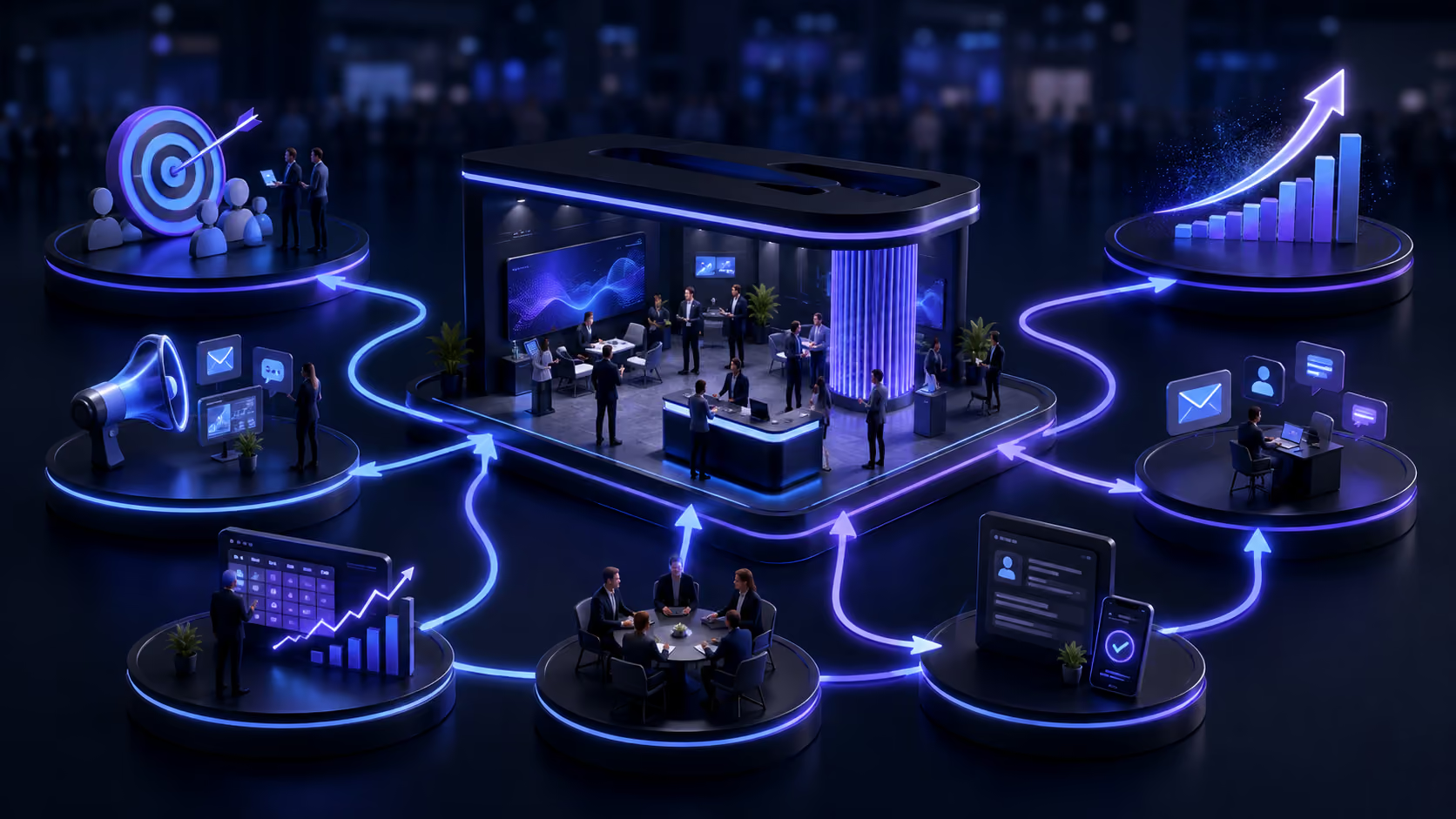
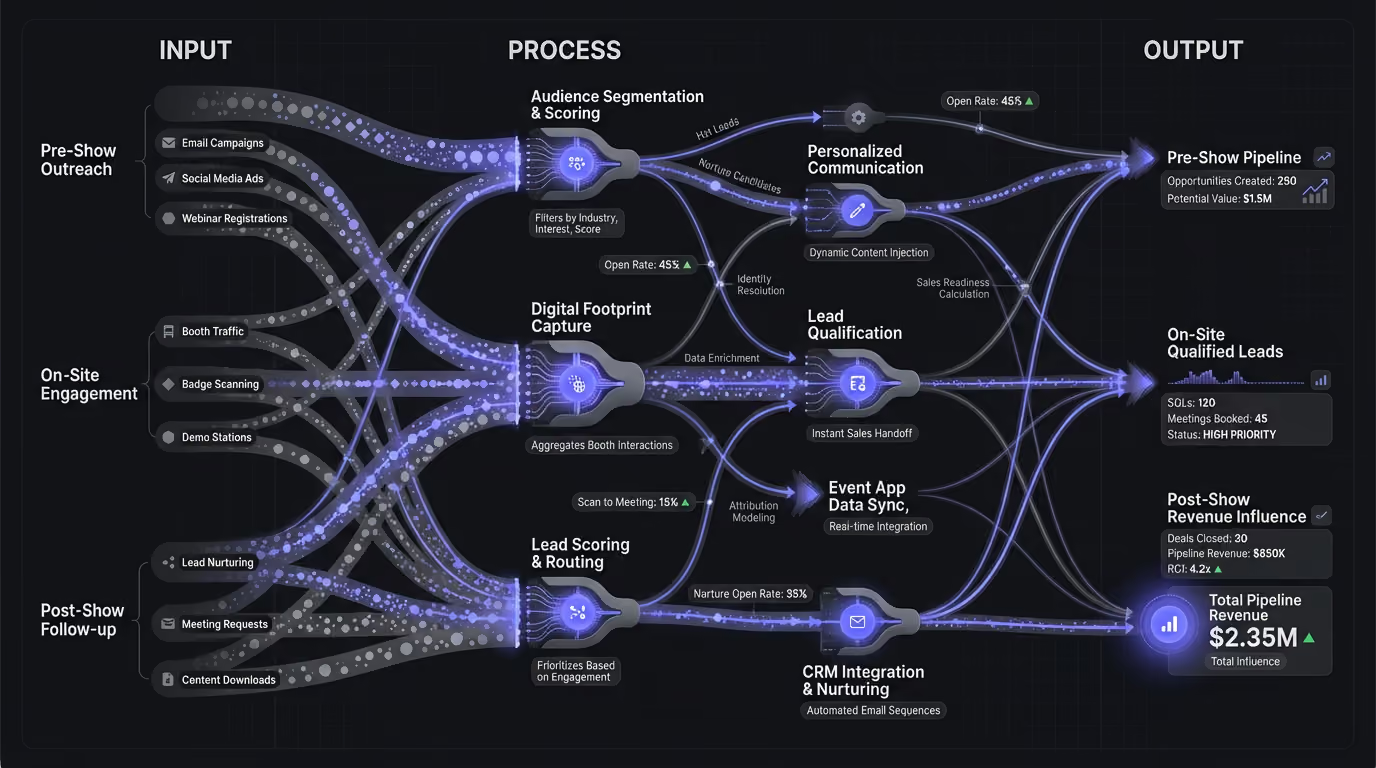
The biggest mistake in trade show marketing is thinking it starts when the doors open. In reality, 60-70% of your event ROI is determined before you ever set foot on the show floor. The three-phase framework — pre-show, on-site, and post-show — ensures nothing falls through the cracks.
Phase 1: Pre-Show (6-8 Weeks Before the Event)
Use the exhibitor marketing workflow to connect event selection with a target-account brief, relevant buying roles, and an owned handoff to sales.
This is where strategic teams separate themselves from everyone else. Pre-show marketing is the highest-leverage activity in your entire event program, and most companies either skip it entirely or do it poorly.
Select the right events first. Not every trade show deserves your budget. Before committing $30K+ to a show, you need to know: Does your ICP actually attend? Are your competitors exhibiting? What's the historical attendee quality? Tools like Lensmor's reverse event discovery let you search which shows your target accounts exhibit at — so you're choosing events based on data, not industry habit. We wrote a detailed guide on how to choose the right trade shows if you need a structured framework.
Build your target account list. Once you've committed to a show, identify 30-50 high-value accounts you want to meet. Cross-reference the exhibitor list, predicted attendee data, and your CRM to build a prioritized hit list. Your sales team should know exactly who they're looking for before they pack their bags.
Launch pre-show outreach. Start email and LinkedIn campaigns 4-6 weeks before the event. The goal isn't to sell — it's to book meetings. A simple "We'll be at [Show] — would love 15 minutes to discuss [specific problem]" converts surprisingly well when it's targeted at the right person. Companies that run pre-show outreach book 3-5x more qualified meetings than those that rely on walk-up traffic alone.
Prepare your booth team. Every person staffing your booth should know the target account list, the qualifying questions to ask, and the specific next step for each conversation type. This isn't optional. A booth staffer who can't articulate your value prop in 30 seconds is actively costing you money.
Pro Tip: Create a shared document your booth team can access on their phones with your top 50 target accounts, their key pain points, and the name of the person most likely to visit your booth. When someone from that list walks up, your rep already knows who they're talking to and what to say. It's the difference between "So what does your company do?" and "I noticed your team just expanded into APAC — are you dealing with the same localization challenges everyone else is hitting?"
Phase 2: On-Site (During the Event)
The show floor is a 72-hour window where preparation meets execution. Everything you built in pre-show either pays off here or doesn't.
Prioritize conversations over scans. Badge scanning is the trade show equivalent of vanity metrics. A meaningful 10-minute conversation with a qualified buyer is worth more than 50 badge scans from people who wanted your free t-shirt. Structure your booth so that at least one team member is always available for deeper conversations while others handle drive-by traffic.
Run a qualification framework. Not every conversation deserves the same follow-up. Train your team to quickly qualify visitors using a simple framework — budget, authority, need, timing (BANT) still works, or create your own lightweight version. Tag leads in your capture system immediately: hot (book a follow-up this week), warm (nurture sequence), or cold (add to newsletter). For a detailed lead scoring approach, see our guide on trade show lead qualification criteria.
Capture context, not just contacts. The name and email are table stakes. What actually drives conversion is the context: What problem did they describe? What solution are they currently using? What's their timeline? Who else is involved in the decision? Your reps should be logging notes after every meaningful conversation. Six weeks from now, "VP of Sales at mid-market SaaS, frustrated with current intent data vendor, evaluating alternatives for Q3" is infinitely more useful than "John Smith, Acme Corp."
Pro Tip: Schedule a 15-minute team standup at the end of each show day. Review who you met, which target accounts showed up, which ones didn't, and adjust tomorrow's approach accordingly. If your top 5 target accounts haven't visited your booth by day two, go find them — walk the floor, attend their sessions, find their booth. The best meetings at trade shows often happen away from your own booth.
Phase 3: Post-Show (The First 72 Hours Are Everything)
Here's where most trade show marketing programs die. Your team flies home exhausted, the leads sit in a spreadsheet for two weeks, and by the time someone sends a follow-up email, the prospect has forgotten who you are and moved on.
Follow up within 24-48 hours. Not 24-48 business days. Hours. The data is clear: leads contacted within 48 hours of an event convert at 5-7x the rate of leads contacted after a week. Your follow-up sequences should be drafted before the event and ready to deploy the morning after the show closes.
Segment and personalize. The hot leads get a personal email from the rep who spoke with them, referencing the specific conversation. The warm leads get a personalized nurture sequence tied to their stated interest. The cold leads get added to your general marketing nurture. One-size-fits-all "Thanks for visiting our booth!" emails are a waste of everyone's time.
Close the attribution loop. Connect your event leads to pipeline and revenue in your CRM. If you can't tell your CEO exactly how much pipeline came from a specific trade show, you'll have a hard time defending next year's event budget. Tag every opportunity sourced from or influenced by the event, and track it through to close. For the complete post-show playbook, read our guide on following up on trade show leads.

Trade Show Marketing Ideas That Actually Drive Pipeline
Every "trade show marketing ideas" article gives you the same advice: bring good swag, use a lead scanner, follow up fast. That's table stakes. Here are the ideas that actually move the needle for B2B companies in 2026.
Host a private dinner or happy hour. Instead of competing for attention on the crowded show floor, invite your top 15-20 target accounts to an exclusive off-site dinner the night before the show opens. The cost — $3,000-$5,000 for a private dining room — is a fraction of your booth investment, and the conversations are ten times more meaningful. No badge scanners, no noise, no competition for attention.
Run a "live intelligence" demo at your booth. Static product demos are forgettable. Instead, pull up a prospect's actual competitive landscape or event data live at the booth. When someone from a target account walks up, show them something specific about their market that they didn't know. That kind of personalized insight creates a memory — and a reason to take the next meeting.
Create a pre-show content piece tied to the event. Publish a report or data analysis specific to the show's industry — "The State of [Industry] in 2026" or "What 500 [Industry] Leaders Told Us About Their Biggest Challenges." Promote it in your pre-show outreach and have printed copies at the booth. This positions your company as a thought leader, not just another vendor. Our breakdown of how Gong generated $2.3M from one trade show is a great example of a company that nailed this approach.
Deploy event intelligence tools for pre-show targeting. The biggest innovation in trade show marketing over the past two years is the emergence of event intelligence platforms that tell you who's attending before the official list drops. Instead of showing up and hoping your ICP walks by, you can identify high-intent prospects weeks in advance and schedule meetings before your competitors even know those prospects are attending.
Partner with a complementary exhibitor. Find a non-competing company that shares your ICP and co-host a session, a booth activation, or a joint happy hour. You split the cost and double the audience. The key is choosing a partner whose customers are your prospects — a CRM vendor if you sell marketing automation, an HR platform if you sell employee engagement tools.
The Trade Show Marketing Tech Stack
Your tech stack determines how efficiently you can execute across all three phases. Here's what a modern B2B trade show marketing stack looks like in 2026:
You don't need all of these on day one. Start with event intelligence (to choose the right shows and identify targets), lead capture (to collect data on-site), and email automation (to follow up fast). Add ABM orchestration as your event program matures.
For a deeper dive into the full tech stack, read our guide to event marketing tools for B2B teams.
Your Trade Show Marketing Plan: A 6-Week Timeline
Timing matters. Here's a week-by-week breakdown of what a disciplined trade show marketing plan looks like:
Pro Tip: Block time in your team's calendar for the T+1 day follow-up before the event starts. If your reps fly home on Friday and don't have time blocked Monday morning for follow-up, it won't happen. Treat post-show follow-up like a product launch — it needs dedicated, protected time.
Common Trade Show Marketing Mistakes (and How to Avoid Them)
Use the following failure modes to review your own event plan:
Choosing events based on tradition instead of data. "We've always gone to [Show X]" is not a strategy. Every year, evaluate whether each event still delivers qualified pipeline relative to its cost. Some companies discover that a $10K regional event outperforms a $50K national show because the attendee quality is better for their ICP.
Treating the booth as the entire strategy. Your booth is one touchpoint in a campaign, not the campaign itself. Companies that rely entirely on walk-up traffic leave 70% of potential value on the table compared to those running integrated pre-show and post-show programs.
Collecting leads without qualifying them. Scanning 500 badges feels productive. But if your SDRs spend three weeks calling through unqualified contacts, you've wasted their time and your event investment. Qualify on-site, segment immediately, and only send high-quality leads to sales. Read more about proven lead collection methods that actually work.
Ignoring competitive intelligence. You're not the only company marketing at the show. Knowing which competitors are exhibiting, what they're positioning, and which prospects they're targeting lets you differentiate in real-time. Pre-show competitor analysis is a force multiplier that most companies skip entirely.
No post-show attribution. If you can't tie event leads to pipeline and revenue, your event program will eventually lose its budget. Build attribution into your CRM workflow from day one, not as an afterthought.
Turning Trade Show Marketing Into a Predictable Growth Channel
The difference between companies that view trade shows as an expense and those that view them as their highest-ROI channel comes down to one thing: process. The strategy, tactics, and tools in this guide aren't complicated. They just require the discipline to execute consistently across every event.
Start with one show. Run the three-phase framework. Measure the results. Refine and repeat. Within two or three events, you'll have a repeatable playbook that your team can execute without reinventing the wheel every time.
The companies winning at trade show marketing in 2026 aren't the ones with the biggest booths or the flashiest swag. They're the ones who know exactly who they want to meet before the doors open, have meaningful conversations while they're there, and follow up with surgical precision after they leave.
If choosing the right events and identifying the right prospects before the show is your bottleneck, Lensmor's event intelligence platform was built to solve exactly that problem — predicting attendees, enabling reverse event discovery, and surfacing buying signals so your team walks in prepared.
Start Free — Start using Lensmor's event intelligence platform. who want to turn their next trade show into a pipeline machine.