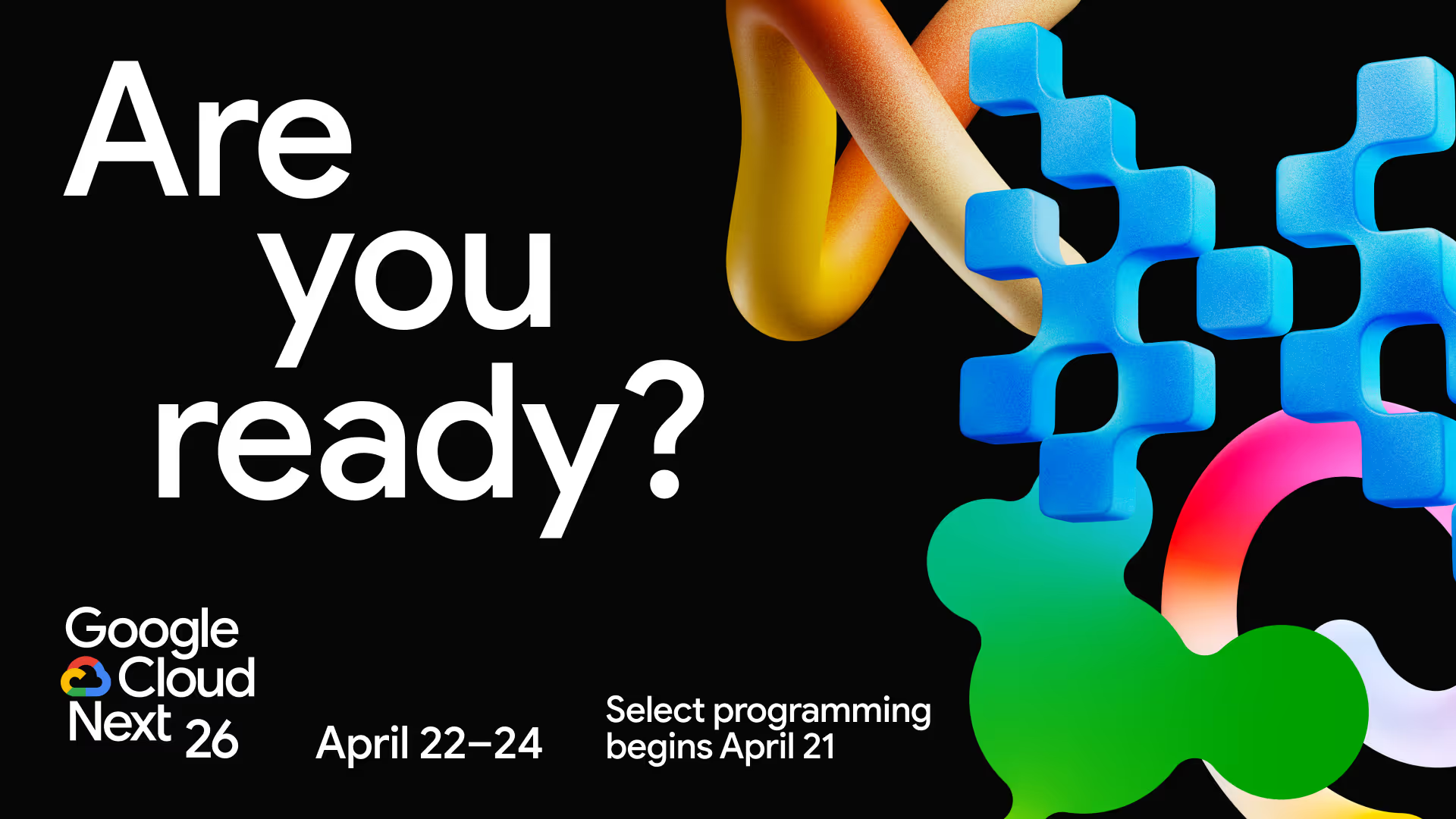
2026 event status: The Google Cloud Next 2026: Sessions & Exhibitors edition beginning April 22, 2026 has concluded. This page is maintained as a 2026 reference for exhibitors, sessions, market research and planning the next edition. Confirm future dates, registration and program changes through the official event source.
What Is Google Cloud Next 2026
Google Cloud Next 2026 is Google's flagship annual conference for cloud practitioners, enterprise technology leaders, and AI builders — and this year's edition carries a distinctly sharper focus: the Agentic Cloud. After years of positioning generative AI as an emerging capability, Google is using Next 2026 to declare that AI agents are no longer experimental. They are in production, at scale, across enterprise environments — and the platform has been rebuilt to support them.
The event runs April 22–24, 2026, at the Mandalay Bay Convention Center in Las Vegas, with a dedicated Partner Summit on April 21 for Google Cloud's ecosystem partners to preview upcoming roadmaps and deepen strategic alignment before the main conference begins. With over 500 sessions spanning keynotes, technical breakouts, hands-on labs, and partner programming, Next 2026 is the most comprehensive gathering of the Google Cloud ecosystem anywhere in the world.
Google uses Next as its primary stage for major platform announcements — new Gemini capabilities, Vertex AI updates, infrastructure releases, security products, and industry-specific solutions are unveiled here before being communicated through any other channel. For enterprise technology teams evaluating or already using GCP, attending Next means receiving product news at its source rather than through secondary media.
The conference has grown substantially over the past several years, driven by enterprise adoption of Google Cloud services and the broader explosion of interest in generative AI. Google Cloud has evolved from a clear third-place public cloud provider into a vigorously competitive force in enterprise AI workloads — and Next reflects that momentum in its production scale, programming depth, and executive investment.
In addition to the in-person event, Google Cloud Next includes a live-streamed component for global audiences, significantly expanding the total reach of keynote announcements beyond the Las Vegas venue.
Who Google Cloud Next 2026 Was Built For
Google Cloud Next draws a technically sophisticated attendee base, but the conference is designed to deliver value across a wide range of roles and organizational contexts. If your work intersects with cloud infrastructure, enterprise AI, data platforms, or security — Next 2026 is built for you.
Technical Practitioners are the conference's core audience. Cloud architects, software engineers, data scientists, DevOps and platform engineering teams, and security professionals will find sessions that go well beyond marketing overviews — hands-on labs and architecture deep-dives require meaningful technical background and reward it generously.
Enterprise IT & Technology Leaders — CTOs, VPs of Engineering, and enterprise architects — will find Next strategically essential this year. Google's Gemini platform has moved from preview to production across a wide range of enterprise use cases, and understanding what is genuinely available versus what remains in preview requires access to primary sources. Next provides exactly that, directly from Google's engineering and product leadership.
Google Cloud Partners & ISVs rely on Next as a critical business development and relationship-building event. Google's partner teams are accessible in ways that are difficult to replicate outside the conference context, and the density of GCP customers on the expo floor creates pipeline opportunities that partners consistently rate among the year's most productive.
Startup Founders & AI-Native Teams benefit from the Google for Startups presence at Next, which provides access to technical mentors, partnership discussions, and customer introduction opportunities. The generative AI startup cohort has grown significantly, and Next has become a genuine platform for AI-native companies to demonstrate traction with enterprise buyers.
Teams Evaluating GCP or Multi-Cloud Strategies — including AWS or Azure customers exploring migration or expansion — will find the content accessible and strategically valuable. Google designs Next as an explicit market positioning event, so sessions are built to be compelling even for attendees who are not yet customers.

Who's Coming to Google Cloud Next 2026
Google Cloud Next 2026 brings together tens of thousands of cloud professionals, AI practitioners, enterprise architects, and technology decision-makers from across the globe. The attendee base spans Fortune 500 enterprises, fast-growing technology companies, government agencies, systems integrators, and AI-native startups — all converging on Las Vegas for three days of product announcements, technical depth, and ecosystem networking.
Knowing who else is in the room before you arrive turns three days of hallway conversations into a structured pipeline. Whether you're looking to connect with potential customers, identify technology partners, or benchmark how peer organizations are approaching GCP adoption, understanding the attendee landscape gives you a meaningful head start.
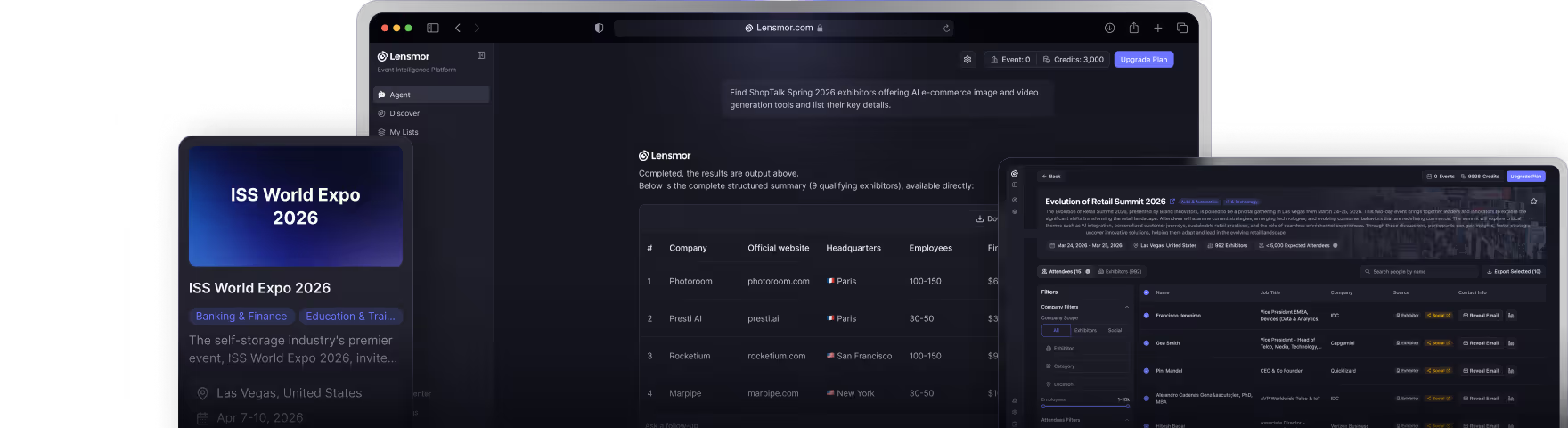
Want to know which companies are exhibiting? Lensmor tracks exhibitor profiles, booth data, and product categories for Google Cloud Next and 1,000+ other trade shows. Explore Google Cloud Next exhibitors on Lensmor →
Confirmed Speakers / Key Sessions at Google Cloud Next 2026
Google Cloud Next 2026 features keynotes from Google Cloud's leadership alongside industry customers and technology partners. While the full speaker roster is curated and disclosed progressively in the weeks leading up to the event, the conference's structure reliably centers on a set of anchor presentations.
Day 1 Keynote — Google Cloud's opening keynote typically features the CEO of Google Cloud alongside product leaders and engineering executives. In 2025, Sundar Pichai, Google's CEO, made a surprise appearance to underscore the centrality of cloud and AI to Google's enterprise strategy. The opening keynote is where major Gemini updates, new infrastructure announcements, and strategic partnerships are unveiled.
Technical Keynotes — Separate from the main stage, technical keynotes dive into product areas including Gemini for Developers, AI infrastructure (TPU and GPU updates), BigQuery and Looker announcements, and security product launches.
Key session tracks at Next 2026 include:
Next at Night — The conference's signature evening event, held at Allegiant Stadium, features headline musical performances. The Killers headlined the 2026 edition, with supporting performances from Wyclef Jean and Tate Renner. This event has become one of the most talked-about evening programming offerings of any enterprise tech conference.
Sponsors and Exhibitors at Google Cloud Next 2026
The Google Cloud Next partner and exhibitor ecosystem reflects GCP's central role in enterprise technology. The Innovation Expo floor brings together Google product teams alongside independent software vendors, systems integrators, and technology partners who have built offerings on top of GCP.
Key categories represented at Next 2026:
Lensmor provides real-time exhibitor intelligence for Google Cloud Next, including company profiles, product categories, and booth locations. Access the full exhibitor list →
Google's own product zones often generate the longest queues on the expo floor, as attendees seek hands-on time with newly announced features and access to product managers for direct technical questions.
Why Google Cloud Next 2026 Still Matters
For engineering and technical teams, Next offers access to product information and technical depth that is simply not available anywhere else before or immediately after the conference. Google's engineering leads present roadmap details, best practices documentation, and architectural guidance that takes weeks to surface in official documentation. Attending in person enables direct access to product managers and engineers who can answer specific implementation questions.
For enterprise architects and IT leaders, the scale of Google's AI announcements at Next 2026 makes attendance strategically important. Google's Gemini platform has moved from experimental to production-grade across a wide range of enterprise use cases, and understanding what is actually available versus what is in preview versus what is still aspirational requires access to primary sources. Next provides exactly that.
For Google Cloud partners and ISVs, the conference is a critical business development and relationship-building event. Google's partner teams are accessible in ways that are difficult to replicate outside the conference context, and the density of Google Cloud customers creates pipeline opportunities that partners consistently rate among the year's most productive.
For startup founders, the Google for Startups presence at Next provides access to Google technical mentors, partnership discussions, and customer introduction opportunities. The generative AI startup cohort at Next has grown significantly, and the conference has become a genuine platform for AI-native startups to demonstrate traction with enterprise buyers.
Beyond the formal programming, the concentration of the Google Cloud ecosystem — customers, partners, Googlers, and investors — in a single venue for three days creates a networking environment that is difficult to replicate in any other context.
Travel & Logistics
Getting There
Las Vegas Harry Reid International Airport (LAS) is one of the most accessible airports in the US, served by direct flights from virtually every major North American city and many international routes. Mandalay Bay is at the south end of the Strip, approximately 4 miles from the airport — about a 10–15 minute drive. Rideshare services are readily available; a dedicated rideshare pickup area at the airport avoids taxi queue congestion. Several ground transportation services also offer flat-rate rides between the airport and major Strip properties.
Accommodation
Mandalay Bay and the connected Delano Las Vegas are the obvious first choices, though they sell out months in advance for major conferences. The Four Seasons (a hotel within the Mandalay Bay complex) is a premium option. Nearby alternatives within 5–10 minutes by car or rideshare include MGM Grand, Aria, Vdara, and Park MGM. The conference hotel block typically opens through Google's registration portal at a discounted rate; monitor the event website for housing block availability.
Registration and Badge Types
Google Cloud Next offers full conference passes and a lower-cost option for those primarily interested in the Innovation Expo. Hands-on Labs are often separately ticketed and sell out quickly — reserve lab sessions at registration rather than waiting until arrival. Google for Startups participants may have access to dedicated registration pathways.
On-Site Navigation
Mandalay Bay's convention space is extensive, spanning multiple levels and wings. The Google Cloud Next app includes room-by-room navigation and session bookmarking — configuring this before arrival is strongly recommended. Sessions in the most popular technical tracks (particularly those covering Gemini and Vertex AI) fill to capacity; arriving 15–20 minutes early ensures a seat.
Hands-On Labs
The Hands-On Labs at Google Cloud Next are among the event's highest-rated offerings. These instructor-led or self-paced lab sessions provide direct access to sandbox GCP environments, allowing attendees to work with new features before they are broadly available. Reserve lab spots through the event app as soon as schedules are released — popular sessions reach capacity days before the conference begins.
Full Agenda & Featured Events at Google Cloud Next 2026
Google Cloud Next 2026 is structured across four days of programming — including a dedicated Partner Summit before the main conference opens — with over 500 sessions spanning every major area of the Google Cloud platform.
Event Schedule at a Glance:
- Tuesday, April 21 — Partner Summit: ecosystem partner networking, roadmap previews, and strategic sessions before the main conference begins
- Wednesday, April 22 — Main Conference Day 1: Opening Keynote, Innovation Expo opens, and technical sessions kick off across all tracks
- Thursday, April 23 — Main Conference Day 2: Technical Keynotes, Hands-On Labs, and full session programming — plus Next at Night at Allegiant Stadium in the evening
- Friday, April 24 — Main Conference Day 3: Deep-dive sessions and closing programming, with the expo floor closing out the event
Featured Session Tracks:
- Gemini & Generative AI — Model capabilities, enterprise deployment patterns, and agent frameworks
- Vertex AI & MLOps — Production AI infrastructure, model management, and pipeline tooling
- Data & Analytics — BigQuery, Looker, and the modern data stack on GCP
- Infrastructure & Compute — TPU/GPU updates, GKE, serverless, and hybrid cloud
- Security & Compliance — Chronicle, Mandiant integrations, and zero-trust architecture
- Developer Tools & Platforms — Cloud Code, Duet AI for developers, and API management
- Industry Solutions — Healthcare, financial services, retail, and public sector tracks
Hands-On Labs are among the event's highest-rated offerings — structured learning experiences running in actual GCP sandbox environments, ranging from beginner-level introductions to advanced architecture labs. Completing labs earns Google Cloud skill badges for professional profiles. Reserve lab spots through the event app immediately when schedules are released; popular sessions reach capacity days before the conference begins.
The official Session Library is currently live, and registered attendees can use the Agenda Builder to reserve seats for high-demand sessions well in advance of arrival.
Registration & Ticket Pricing for Google Cloud Next 2026
Registration for Google Cloud Next 2026 is tiered by timing, with meaningful price differences that reward early commitment. Hands-On Labs and select sessions are separately managed through the Agenda Builder and sell out independently of badge type — reserve these at registration rather than waiting until arrival.
Badge Pricing:
Registration for Google Cloud Next 2026 is tiered by timing, with meaningful price differences that reward early commitment. The Regular Rate of $1,599 was available through March 25, 2026 — that window has now closed. Attendees registering between March 26 and April 20 are on the Standard Rate of $2,299. Anyone who hasn't registered by April 20 can still purchase a badge on-site at $2,999, though availability at that rate is not guaranteed and walk-up capacity is limited.
Note: if you're registering now, the Standard Rate applies — and locking in before April 20 avoids the on-site premium entirely.
Turn the 2026 Record Into Useful Research
Use archived exhibitor, sponsor and agenda information to understand the market, compare companies and prepare for the next edition. Separate facts announced for 2026 from assumptions about a future program.
Priority areas
- cloud infrastructure and operations
- data, analytics and databases
- AI and machine learning
- security, applications and partner services
Questions that improve vendor and partner conversations
- Which product, region and architecture assumptions apply?
- What data, security and governance boundaries are required?
- How should teams validate performance, cost and operational fit?
- Which lab, reference architecture or partner review should follow?
Relevant stakeholders
- cloud architects and engineers
- data and AI teams
- security and platform operations
- enterprise buyers and partners
Record the reason each company fits, the evidence still needed and one owned next step. Lensmor can help organize public exhibitor and company information into a reviewable account list with verified decision-maker contacts. Event participation is context, not proof of purchase intent, so keep human review before outreach.
FAQs
What is the scale of Google Cloud Next, and how does it compare to AWS re:Invent?
Google Cloud Next is a large enterprise technology conference drawing tens of thousands of attendees over three days. AWS re:Invent, held in Las Vegas each November/December, is roughly 4–5 times larger by attendance. However, Next's more concentrated format and shorter duration create a different energy — the programming density per day is very high, and the event moves quickly. For GCP-focused practitioners, Next is the equivalent of re:Invent for AWS teams.
Is Google Cloud Next primarily for current GCP customers?
Current customers get the most immediate operational value from Next, but the conference is equally relevant for teams evaluating multi-cloud strategies, AWS or Azure customers exploring GCP migration, and anyone tracking the state of enterprise AI infrastructure. Google uses Next as an explicit market positioning event, so the content is designed to be accessible and compelling to attendees who are not yet customers.
What major announcements can we expect at Google Cloud Next 2026?
Based on Google Cloud's trajectory, Gemini 2.0 and subsequent model releases, new Vertex AI capabilities for enterprise agents, TPU and GPU infrastructure updates, and expanded healthcare and financial services verticals are all likely announcement areas. Google typically reserves its most significant AI and infrastructure news for Next rather than drip-releasing through blog posts. The opening keynote is the primary venue for these announcements.
How do the Hands-On Labs work?
Labs are structured learning experiences that run in actual GCP sandbox environments provided by Google. They range from beginner-level introductions (no prior GCP experience required) to advanced architecture labs requiring significant technical background. Labs are either instructor-led in scheduled sessions or self-paced through the conference's lab portal. Completing labs earns Google Cloud skill badges that can be added to professional profiles.
I want to meet with Google Cloud sales or technical teams. How should I approach this?
Google's sales and technical account teams are present in force at Next. If you are an existing customer, coordinate with your account team before the conference to schedule in-person time during the event — demand for account team meetings is high and calendars fill. If you are not yet a customer, the Innovation Expo's product zones are staffed by Googlers who can connect you with appropriate commercial contacts. The conference's meeting request function in the app also facilitates introductions.
Is it worth attending just for the keynotes if I can't take time for full three-day attendance?
The opening keynote on Day 1 is the single most information-dense event of the conference and is streamed live for free. If attending in person is not feasible, the livestream captures the major announcements effectively. That said, the on-site experience — Hands-On Labs, partner expo, technical sessions, and networking — delivers value that is genuinely not replicated by the stream. For anyone whose organization uses or is evaluating GCP, the full three days justify the investment. Tools like Lensmor help you research exhibitors before arriving — you can filter by industry, company size, and product category to build a target list.

Shirley An
Shirley An is a Growth Marketing specialist at Lensmor, writing about trade shows, event prospecting, and B2B growth. Lensmor helps teams identify ICP-matched exhibitors and likely attendees, and find verified decision-maker contacts for outreach before the event.