Last verified August 15, 2026. Medical Manufacturing Asia 2026 begins September 9, 2026 at Marina Bay Sands, Singapore. Confirm future dates, registration and program changes through the official event source.
Medical Manufacturing Asia 2026 runs September 9-11, 2026, at Marina Bay Sands in Singapore.
The event covers medical manufacturing, medtech production, components, materials, automation, testing, quality systems, and supplier relationships.
What Is Medical Manufacturing Asia 2026?
Medical Manufacturing Asia is a specialist trade event for medical device manufacturing and healthcare production supply chains.
It covers manufacturing technologies, components, materials, process equipment, automation, testing, quality systems, packaging, sterilization, and services used by medical and medtech companies.
Dates and Location
Medical Manufacturing Asia 2026 is scheduled for September 9-11, 2026.
The venue is Marina Bay Sands in Singapore.
Registration Details
Visitor registration is available for Medical Manufacturing Asia 2026.
The event site also links to visitor information, why-visit pages, conferences and forums, exhibitor list, exhibitor profiles, product highlights, business matching, and travel planning.
Exhibitors and Supplier Areas
The event site includes exhibitor list and exhibitor profile pages.
Expected supplier areas include:
- medical device manufacturing equipment
- components, materials, and precision parts
- contract manufacturing and assembly services
- automation and production systems
- testing, inspection, and quality control
- packaging, sterilization, and cleanroom-related suppliers
- engineering, tooling, and supplier services
Agenda and Program
The event site includes conferences and forums.
Session details should be checked closer to September 2026. For a supplier-research workflow, the exhibitor list, exhibitor profiles, and product highlights are the first pages to review.
How Lensmor Can Help
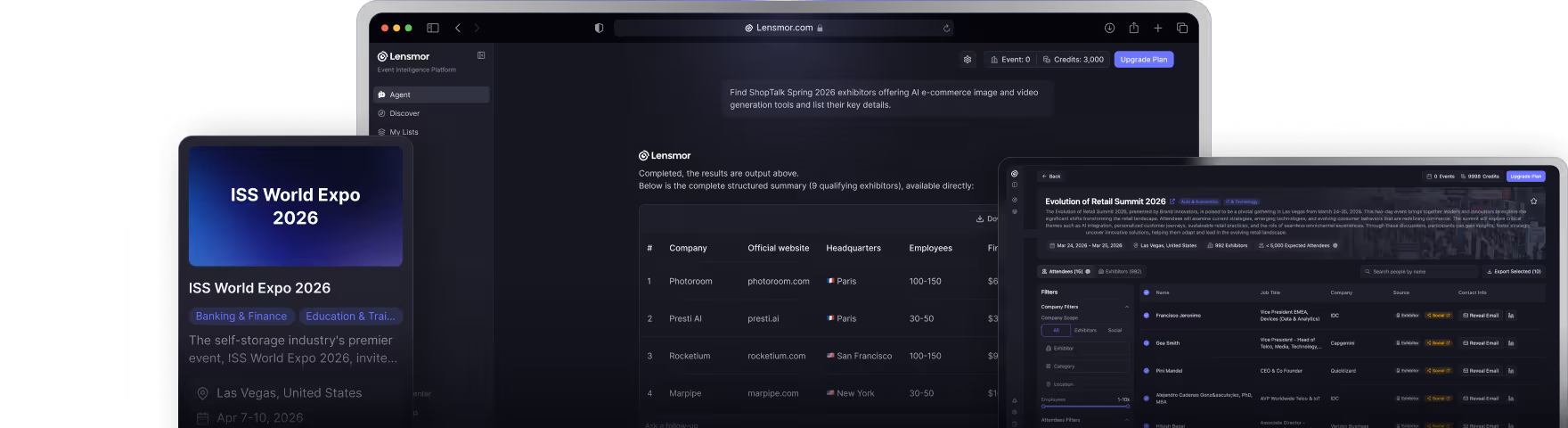
Lensmor can help prepare a company-level medtech manufacturing supplier shortlist before the event.
The safest Lensmor workflow for this event should focus on:
- contract manufacturing companies
- component and material suppliers
- testing and quality-system providers
- automation and production equipment vendors
- packaging and cleanroom-related suppliers
Lensmor's workflow for this event focuses on company-level supplier research and public exhibitor context, not patient, clinical, or private attendee data.
FAQ
When is Medical Manufacturing Asia 2026?
Medical Manufacturing Asia 2026 is scheduled for September 9-11, 2026.
Where is Medical Manufacturing Asia 2026 held?
The event is held at Marina Bay Sands in Singapore.
Is visitor registration available?
Yes. Visitor registration is available for the 2026 event.
Is there an exhibitor list?
Yes. The event site includes exhibitor list and exhibitor profile pages.
Can I check this event in Lensmor?

Build a Decision-Ready Event Plan
Start with a specific learning, buying, partnership or pipeline outcome. Then use the official agenda and exhibitor information to choose a manageable set of sessions and companies.
Priority areas
- precision components and materials
- automation and cleanroom production
- quality, inspection and validation
- contract manufacturing and packaging
Questions that improve vendor and partner conversations
- Which device class, material and tolerance are supported?
- What validation, traceability and quality-system evidence exists?
- How are cleanroom, sterilization and packaging needs handled?
- What capacity, lead time and change-control process apply?
Relevant stakeholders
- medical-device engineering
- quality and regulatory
- operations and sourcing
- contract manufacturing partners
Record the reason each company fits, the evidence still needed and one owned next step. Lensmor can help organize public exhibitor and company information into a reviewable account list with verified decision-maker contacts. Event participation is context, not proof of purchase intent, so keep human review before outreach.
How to Prioritize Exhibitors Before Arrival
- Group companies by the priority areas above instead of reading the directory alphabetically.
- Define one relevant use case, buying question or partnership hypothesis for every shortlisted company.
- Identify the stakeholder who can answer that question; a generic contact is rarely enough.
- Check the official directory again for additions, removals or booth changes.
- Rank targets by fit, evidence and the value of a live conversation.
Event Research Checklist
- Verify the official date, venue, registration status and access rules.
- Save the current agenda, exhibitor directory and floor-plan links.
- Separate must-attend sessions or meetings from optional discovery.
- Write comparable evaluation questions before speaking with vendors.
- Capture the company, person, evidence, constraint and agreed follow-up in every note.
- Assign owners and due dates within 48 hours of the event or research review.
Build an Agenda That Leaves Room for Meetings
Schedule fixed-capacity sessions and priority meetings first, group exhibitors by hall or category, and leave buffer time for travel and notes. A completely full calendar usually produces weaker follow-up because there is no room for discovery or extended conversations.
Before the event or next-edition announcement
- Choose one primary business outcome and two supporting questions.
- Build a short account list with explicit inclusion criteria.
- Prepare role-specific outreach that explains why a conversation is relevant.
- Decide what evidence would justify a demo, pilot, technical review or commercial discussion.
During research or onsite conversations
- Use the same core questions for comparable companies.
- Distinguish product claims from live evidence, customer references and published documentation.
- Record constraints, integrations, implementation resources and service coverage.
- End with a specific next action instead of collecting an unqualified contact.
After the event
Consolidate duplicate notes, score companies against the original criteria and close low-fit follow-up quickly. For priority accounts, send the promised material, schedule the next technical or commercial step and update the owner. Measure decisions, meetings and qualified opportunities rather than badge scans or raw contact volume.

Shirley An
Shirley An is a Growth Marketing specialist at Lensmor, writing about trade shows, event prospecting, and B2B growth. Lensmor helps teams identify ICP-matched exhibitors and likely attendees, and find verified decision-maker contacts for outreach before the event.