Consider a marketing lead at a B2B services company preparing next quarter’s event plan. The business attends around 20–25 events a year. Some are repeat bookings: the team knows the organizers, has exhibited before, and reserves space early. Others enter the calendar through competitor activity, organizer emails, or recommendations from sales.
This quarter, the company wants to reach software businesses that need help building demand-generation programs. Its sales director wants conversations with marketing leaders who own that problem. Two salespeople are available to travel. Before another booth contract is signed, marketing needs to bring them a shortlist they can act on.
The brief sounds straightforward. The existing research process makes it difficult. One organizer supplies sample company names, another shares a broad audience profile, and last year’s spreadsheet lists an event as “good for networking.” None tells the sales team whom to approach or what they should discuss.
One campaign gives the shortlist a purpose
Marketing and sales begin with the campaign, before opening the event calendar. They agree to focus on growth-stage and mid-market software companies in their sales territory. Relevant people include heads of demand generation and marketing leaders responsible for pipeline. Agencies selling similar services belong in competitor research, not the prospect list.
An account is worth pursuing when the team can describe a plausible reason for a conversation. A software company expanding into a new market, for example, might need a local demand-generation program. That is a research hypothesis to explore with the prospect, not a buying intention to assume.
This event selection brief guides research in Lensmor. Marketing uses the industry, geography, company profile, and buyer roles to keep the search tied to the campaign’s trade show goals.
The sales director adds one practical constraint: the traveling team needs enough time to prepare for each meeting. A long contact list is useful only if someone can prioritize it and own the next step.
Competitor activity reveals a candidate the team had missed
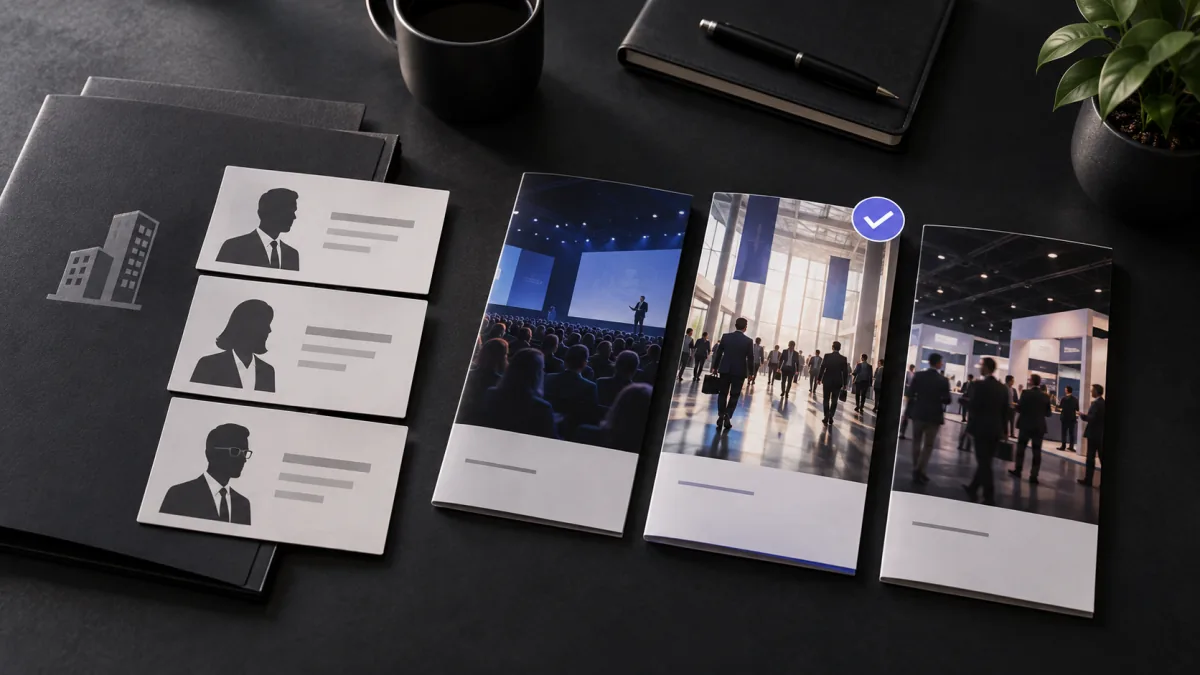
The familiar industry exhibition is already on the draft calendar. Marketing also has a large technology expo recommended by an organizer. To look beyond those options, the lead researches events associated with competing service providers in Lensmor.
A smaller marketing-focused conference becomes a third candidate. It had not appeared in the team’s usual organizer conversations, but its subject matter is close to the campaign. Marketing adds it to the shortlist for investigation.
A competitor’s presence is a discovery clue. It does not settle the decision: that competitor may be recruiting partners, serving a different segment, or pursuing existing customers. The next task is to find out whether this team’s prospective buyers are represented.
For each candidate, marketing reviews the companies and relevant people connected to the event. The lead keeps the same campaign brief across all three, so a well-known logo cannot quietly replace the original targeting criteria.
The people behind the company names change the plan
The large technology expo initially looks promising. Its company list includes software businesses the sales team recognizes. Looking more closely at the people and roles in this example changes the picture: several relevant companies are represented by partnership or technical teams. Those relationships could matter later, but they do not make this event an obvious fit for a demand-generation campaign.
At the smaller marketing conference, the useful research question is more direct: which of the software companies have people responsible for marketing programs and pipeline? Marketing checks the people’s roles and company context, then brings a focused set of accounts to sales for review.
Sales removes an account that is already in an active conversation with another owner. It also flags one attractive company whose need is outside the service team’s scope. Another account stays because the account owner can explain the business problem they would explore in a meeting.
That review changes the output from “interesting audience” to a set of prospects with reasons to engage. It also exposes where further research is needed before anyone starts outreach.
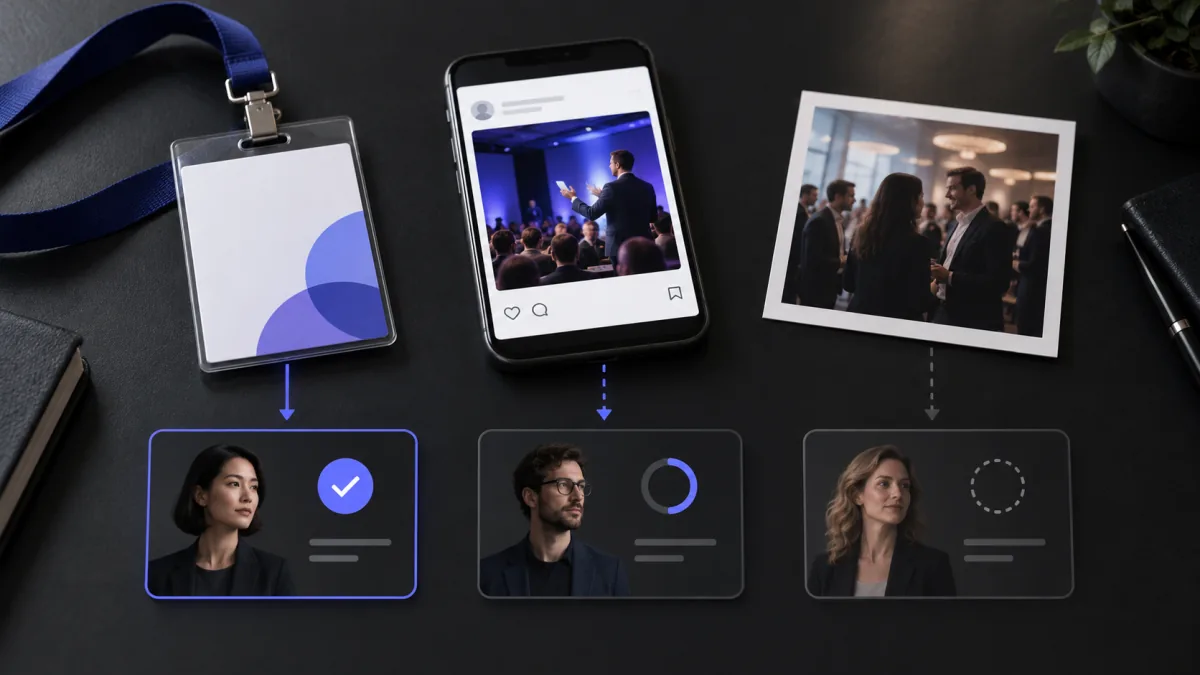
For a priority account, the researcher preserves the event connection alongside the person’s role and the reason for inclusion. The sales owner can then ask whether the contact plans to attend and propose a relevant conversation. An event research record starts that exchange; the meeting becomes part of the travel plan when the prospect accepts.
The shortlist becomes three different commitments
At the planning review, marketing brings three recommendations, each tied to the campaign and the work still required.
Keep the familiar exhibition, with a named-account plan. It remains the quarter’s established booth commitment in this scenario. Sales assigns owners to the relevant accounts identified in research and adds existing customer meetings separately. Marketing can now explain what the team will do there beyond staffing the stand.
Test the marketing conference through meetings. The newly discovered event offers a plausible route to the right buying roles. The team starts pre-event outreach and considers a small attending team before adding a booth. Its next decision depends on the conversations it can arrange and the available participation options.
Defer the large technology expo for this campaign. Its size and recognizable companies do not outweigh the mismatch between the roles found and the conversations sales wants. Marketing keeps the research for a future partnership campaign instead of stretching the current brief to justify attendance.
The smaller conference has earned a place in the plan, but not automatically the largest commitment. The familiar exhibition has a clearer purpose. The third option no longer consumes sales preparation time for this quarter.
Sales receives a working list, not another research presentation

Marketing saves the selected prospects in Lensmor Target Groups, obtains the contact details needed for outreach, and exports the selected records for sales handoff. The team adds its own campaign notes and ownership information to the working list.
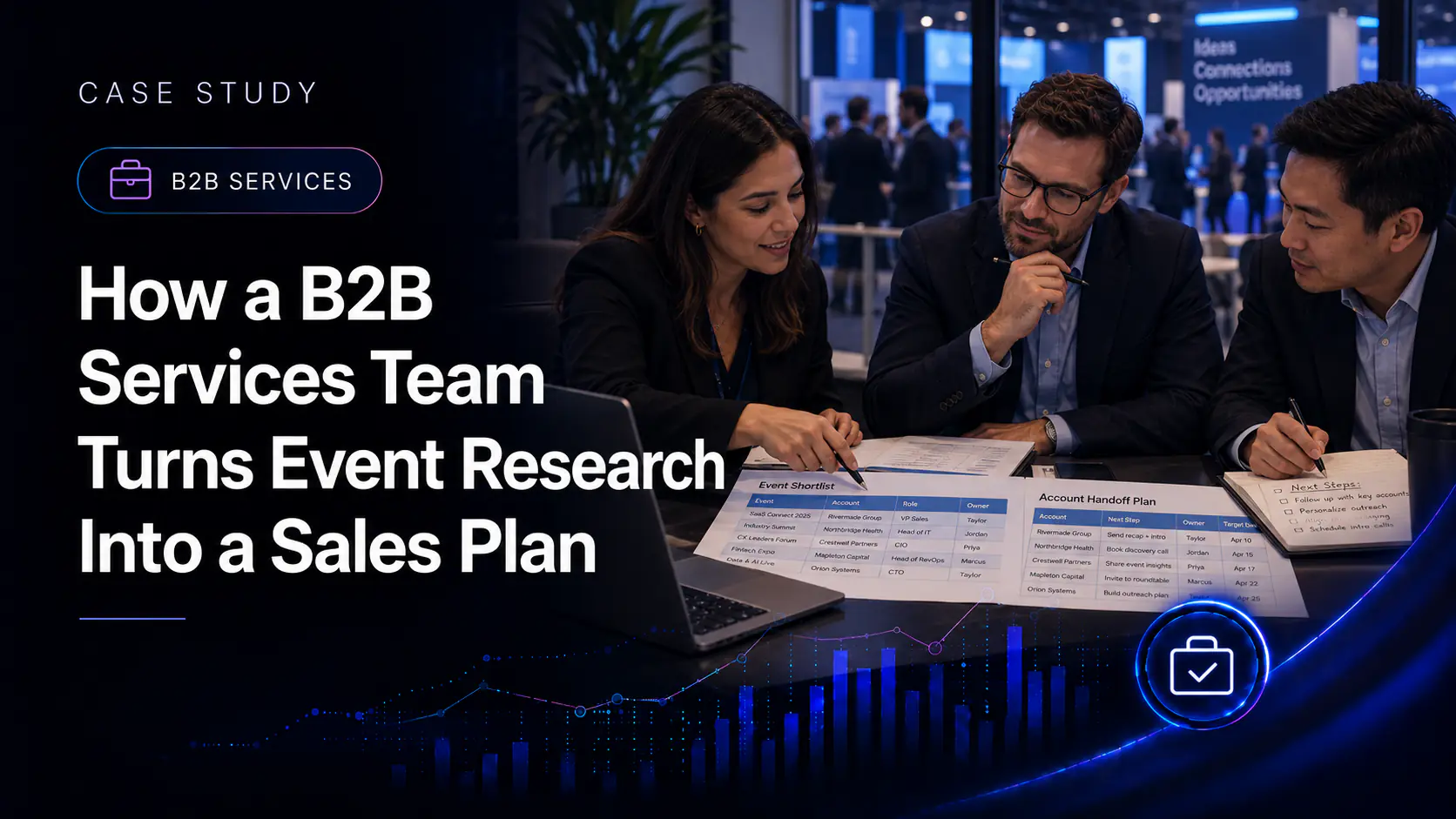
A useful handoff row looks like this illustrative example:
The company’s expansion and the contact’s role are checked before the outreach message uses them. The seller starts with the specific business context, rather than sending a generic “we’ll be at the same event” pitch.
The sales owner records replies, meeting agreements, and follow-up in the team’s existing CRM process. Marketing uses that feedback to revise the event plan. If promising accounts do not turn into relevant conversations, the meeting-led test can remain small; a large research list alone does not trigger a booth purchase.
After the event, the team can revisit the original decision
The same list supports the post-event report. Sales records which planned meetings happened, what problems were discussed, and which next steps were agreed. Marketing compares that evidence with the reasons each event entered the shortlist.
That gives next year’s planner something more useful than “good for networking”: the audience the team sought, the accounts it approached, the participation format it chose, and what happened in the resulting conversations.
The output of this use case is a connected event plan and sales worklist. Competitor research introduces an overlooked option. Company and attendee research helps the team judge its relevance. Sales review turns that research into owned actions before travel and booth commitments expand.
Explore Lensmor to research your next event shortlist around the accounts and people your team wants to meet.