B2B cold calling before an event works better when you treat answer rate as a system. Verify that you have the right person’s number, protect the reputation of the number you call from, create context before dialing, and coordinate voicemail with email.
If most calls go straight to voicemail, the script may not be the main problem.
Our team learned this the frustrating way. We had relevant companies, named contacts, and a real reason to speak before an upcoming event. Yet the calling pattern looked familiar: voicemail, rejection, another voicemail, then a temptation to rewrite the opener again.
The more useful diagnosis was upstream. Some “phone numbers” were not direct mobile lines. Unknown callers already face a trust problem. A legitimate outbound number can still acquire a spam label. And a relevant event does not create context if the prospect has never seen your name before.
This playbook explains how to diagnose those failures in the right order.
What is B2B cold calling before an event?
B2B cold calling before an event is a phone outreach motion tied to a specific trade show, conference, or in-person meeting window. The call is not a generic product pitch. Its purpose is to test relevance and, when there is a fit, secure a short conversation or meeting around the event.
The event gives you a legitimate reason to call now. It does not give you permission to be vague.
A strong pre-event call answers four questions quickly:
- Who are you?
- Why are you calling this person?
- Why does the event make the timing relevant?
- What small next step are you asking for?
That is different from dialing a broad list and hoping the person happens to care about your category.
Why do B2B cold calls go straight to voicemail?
A voicemail-heavy campaign usually contains more than one failure mode. The same visible outcome—no conversation—can be caused by bad data, normal recipient behavior, poor caller reputation, or a completely cold sequence.
| Failure layer | What may be happening | What you will observe | What to test first |
|---|---|---|---|
| Number quality | Main line, switchboard, virtual number, voicemail service, reassigned or inactive number | IVR menus, generic greetings, disconnected messages, wrong people | Audit a sample and classify every line |
| Recipient behavior | The person ignores numbers they do not recognize or uses call screening | Valid personal voicemail, no obvious spam label, occasional manual rejection | Create context before the next call |
| Caller reputation | Carrier or analytics systems label or filter the outbound number | “Spam,” “Scam Likely,” blocked calls, sudden answer-rate decline | Test across devices and review number reputation |
| Sequence design | The call arrives before any recognizable interaction | “Who is this?” followed by a quick rejection, even when the person answers | Pair the call with a specific email and event reason |
A “direct dial” field in a database is not proof that the number reaches the intended mobile phone. Phone intelligence services can identify categories such as mobile, landline, fixed VoIP, non-fixed VoIP, toll-free, and voicemail, as shown in Twilio’s Line Type Intelligence documentation. But line type still does not prove that the current owner is your contact.
That distinction matters. A working mobile number, a number assigned to the correct person, and a number the person is willing to answer are three separate checks.
Unknown calls also face a structural trust problem. Hiya’s 2026 survey of more than 12,000 consumers across six countries found that only 14% immediately answer calls from numbers they do not recognize; 41% wait to see whether the caller leaves a voicemail.
The survey is vendor-produced, not a controlled study, but it matches the behavior outbound teams see every day. Hiya’s published findings are a useful reminder that “no answer” is not automatically a data failure.
Pro Tip: Treat “straight to voicemail” as an outcome to classify, not a reason code. One outcome can hide several different causes.
How much does an undiagnosed call list cost?
Bad calling systems consume rep time before they create any learning. A simple model makes the cost visible.
Assume a pre-event list contains 500 contacts. The team makes three attempts per contact, and each unanswered attempt takes an average of 60 seconds to dial, wait, classify, and record.
500 contacts × 3 attempts × 1 minute = 1,500 minutes, or 25 hours.
At a loaded SDR cost of $40 per hour, that is $1,000 spent on unanswered attempts. This is an illustrative model, not an industry benchmark. It excludes connected conversations, research, email follow-up, management time, and the opportunity cost of calling the wrong numbers.
The point is not that voicemail is always waste. A good voicemail can support another channel. The problem is repeating an unclassified failure at scale.
| Campaign behavior | 500-contact example | Operational cost |
|---|---|---|
| One unanswered attempt | 8.3 hours | $333 |
| Three unanswered attempts | 25 hours | $1,000 |
| Five unanswered attempts | 41.7 hours | $1,667 |
Fixing the script before you know whether the number works is usually the most expensive order of operations.
How to audit phone-number quality before calling
Audit a sample before you load the full list into a dialer. A 30- to 50-record review can reveal whether the dominant problem is the source data, the contact match, or the campaign infrastructure.
Step 1: Normalize and deduplicate the numbers
Convert every number to a consistent format, retain the country code, and remove exact duplicates. Then deduplicate at the account level as well as the contact level.
Three contacts at one company may all point to the same main line. Without account-level deduplication, your dashboard shows three failed people when you actually tested one switchboard three times.
Step 2: Classify the line type
Use a reputable lookup service or your calling provider to separate mobile, landline, fixed VoIP, non-fixed VoIP, toll-free, voicemail, and unknown lines. Do not automatically discard every non-mobile number. A corporate landline may still reach the right executive.
Line type is a routing clue, not an identity check.
Step 3: Manually test a representative sample
Call a small, mixed sample and record what actually happens:
- Named personal voicemail
- Generic voicemail
- Company IVR or receptionist
- Invalid or disconnected line
- Wrong person
- Human answer
- Carrier block or warning
Do this across each data source. If one provider produces far more generic voicemail and main lines, stop blending the sources into one performance number.
Step 4: Score confidence before dialing
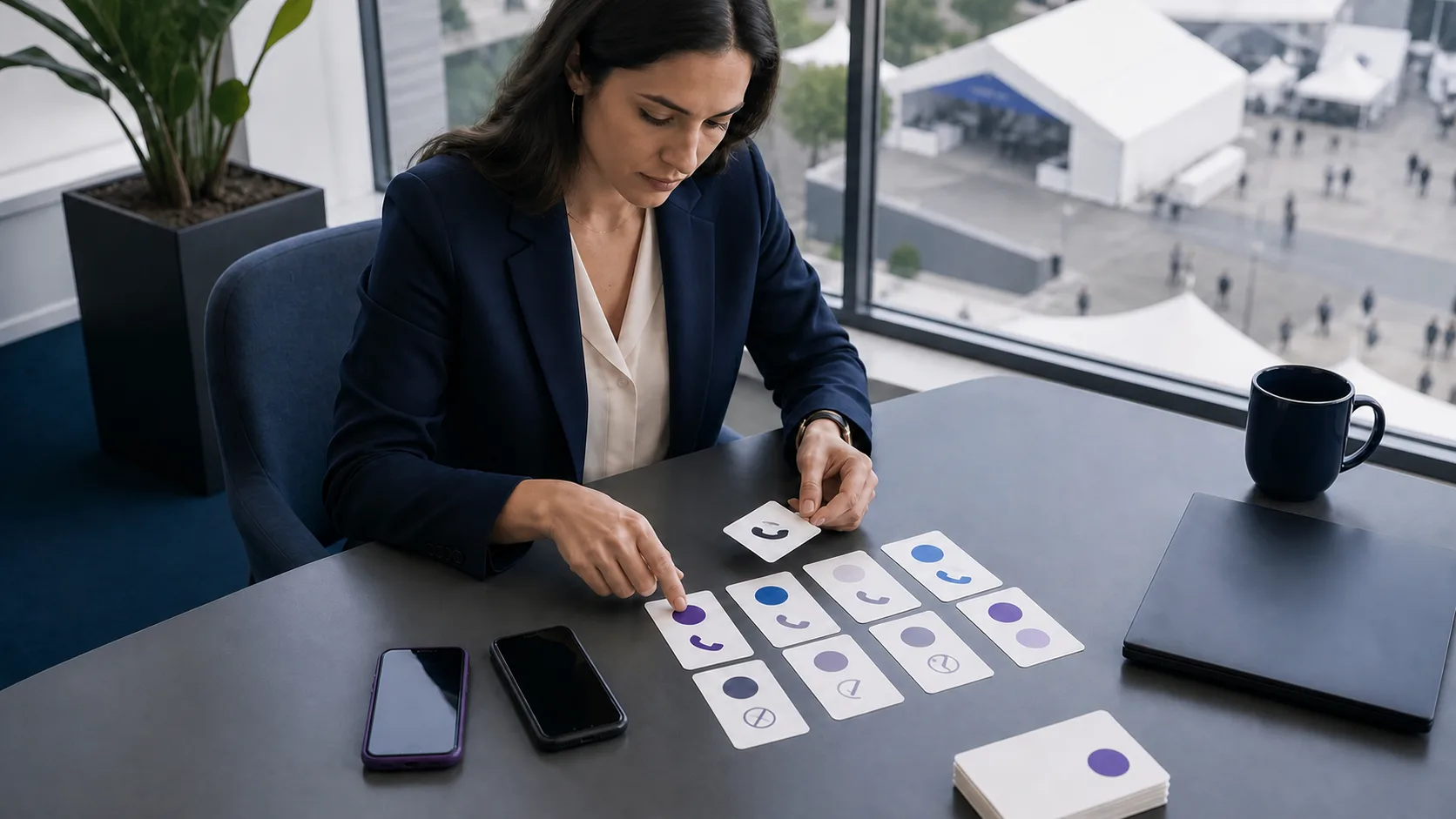
Give every phone record a confidence tier.
| Confidence tier | Evidence | Recommended action |
|---|---|---|
| A | Correct person, working direct line, recent verification | Include in the primary call sequence |
| B | Working mobile or direct line, ownership not recently confirmed | Call after email context; verify on connection |
| C | Main line, generic voicemail, VoIP, or uncertain ownership | Route to manual research or receptionist strategy |
| D | Invalid, disconnected, wrong person, or explicit do-not-call request | Suppress and correct the record |
Pro Tip: Never let a bad number remain a neutral CRM field. Mark the exact failure so the next campaign does not pay to rediscover it.
How to check caller ID reputation
Caller ID reputation is the set of signals carriers and analytics providers use to decide whether an outbound number looks trustworthy, unwanted, or risky. A legitimate business can still be mislabeled when its calling pattern resembles unwanted traffic or recipients repeatedly ignore, block, or report its calls.
Start with a controlled test. Call team-owned phones on several U.S. carrier networks and record what each device displays. Check whether the number appears normally, shows a business name, carries a spam label, or never rings.
One clean test is not enough. Labels can differ by carrier, device, and analytics partner.
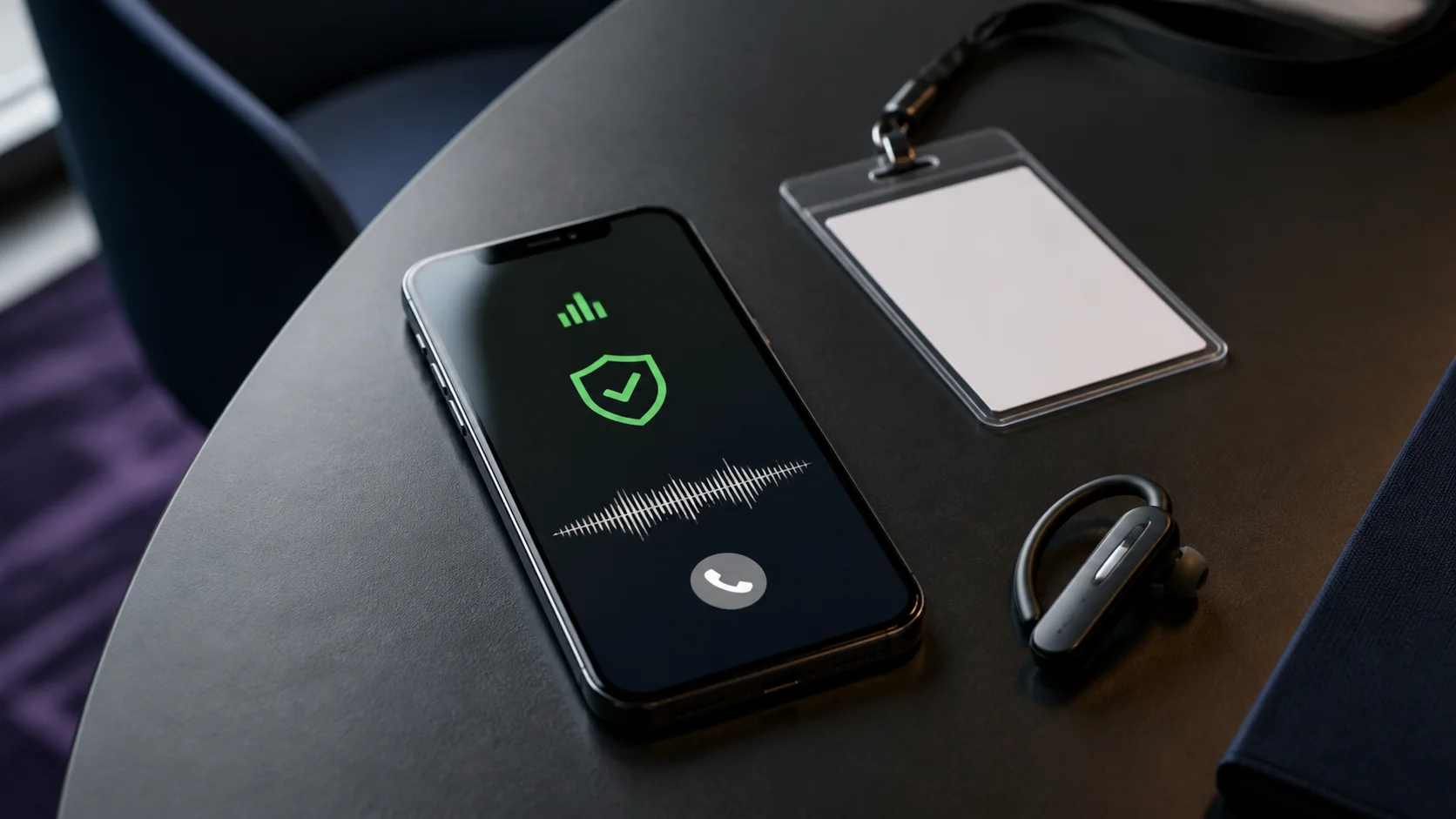
Next, ask your voice provider which trust features are configured for the number. These are related but different:
| Mechanism | What it does | What it does not guarantee |
|---|---|---|
| STIR/SHAKEN | Helps providers authenticate that the caller is authorized to use the displayed number | It does not guarantee a clean reputation or an answered call |
| CNAM | Associates a caller name with a number in supported caller-ID environments | It is not consistently displayed on every mobile device |
| Number registration | Gives call-protection providers verified business and calling-use information | It does not guarantee label removal |
| Branded calling | Can show verified business identity and, on supported devices, richer context | It is not universal across all carriers and devices |
Twilio’s caller-reputation guidance notes that analytics systems may consider call duration, answer rate, recipient feedback, traffic spikes, number consistency, and STIR/SHAKEN attestation. Its practical recommendations include gradual volume ramp-up, stable use cases per number, working callback handling, and avoiding disconnected or unassigned destinations. Review the full recommendations.
That creates a better operating rule: use a small, stable number pool with consistent purposes. Do not rotate through fresh numbers simply because a damaged number stopped performing. Constant rotation prevents a number from building a coherent history and can hide the real cause.
Pro Tip: Answer your own callback path. A prospect who returns a missed call should hear a real business identity, not a dead end or generic system message.
What does Free Caller Registry actually do?
Free Caller Registry lets a business submit U.S. outbound phone numbers and calling information to First Orion, Hiya, and TNS. It is a registration and review channel, not an instant whitelist.
The official Free Caller Registry accepts 10-digit U.S. business numbers, business details, call purpose, and estimated monthly volume. It is intended for businesses registering numbers they use on their own behalf.
The limitation matters more than the signup form. Free Caller Registry explicitly says registration does not guarantee redress because each protection provider analyzes the numbers independently. It also says registration is not a replacement for ongoing reputation monitoring and does not create a Caller ID name.
Use it when:
- Your business controls the outbound numbers
- Your business details and calling purpose are accurate
- You have confirmed the calls comply with applicable laws
- The number has a legitimate, stable calling pattern
- You are prepared to monitor results after registration
Do not use registration as cover for poor list quality, aggressive frequency, misleading identity, or calls people repeatedly reject. Recipient behavior remains part of the reputation system.
How to warm a prospect before the call
The goal of warming is recognition, not manufactured familiarity. A useful prior touch tells the prospect why your name may appear on their phone and gives them a low-friction way to inspect the context.
For pre-event outreach, the context should be specific enough that it could not have been sent to every company in the exhibitor hall.
Weak context sounds like this:
“I saw you’re attending the event and wanted to connect.”
Stronger context sounds like this:
“I saw your team is exhibiting at [Event]. We mapped the [buyer category] companies likely to be relevant to your booth. I sent a short note with three accounts that may be worth checking before calendars fill.”
The second version earns attention because the event, audience, and reason for the call are connected.
Before adding someone to a calling sequence, prioritize the trade show contacts who have a plausible event-specific reason to speak. A small list with a clear hypothesis beats a large list assembled from titles alone.
A five-touch pre-event sequence
A call works best as part of a coordinated sequence. The sequence below is a starting model, not a frequency rule for every market.

| Timing | Channel | Purpose |
|---|---|---|
| 4–5 weeks before | Introduce the event-specific reason and one useful observation | |
| Next business day | Call | Reference the email and test whether the issue is relevant |
| 3 weeks before | Add a concrete account, buyer, or scheduling insight | |
| 2–3 weeks before | Call + short voicemail if needed | Point the prospect back to the useful email; do not repeat the pitch |
| 7–10 days before | Final email | Offer two practical next steps and close the loop |
Stop immediately after an explicit rejection or do-not-call request. If the event is no longer relevant, move the contact out of the event sequence rather than converting it into an endless generic cadence.
For the rest of the meeting-booking workflow, use the pre-show meeting playbook.
Should you leave a voicemail after a cold call?
Leave voicemail to support the email, not to demand a callback. The message should create recognition and direct the prospect to a place where the context is easier to evaluate.
Gong analyzed more than 300 million cold calls and found a trade-off. In its dataset, leaving voicemail reduced the connect rate on later dials, but increased the associated email reply rate from 2.73% to 5.87%. The benefit disappeared after too many messages: Gong recommends no more than two voicemails. Read Gong’s voicemail analysis.
Those results are observational and come from Gong’s customer data, so test them against your own audience. The useful principle is channel coordination.
Voicemail one: 15 seconds of context
“Hi Maya, this is Ivan from Lensmor. I sent you a note about [Event] and the accounts we found around your target market. No need to call back—my email has the details. I’ll put ‘[Event] account list’ in the subject line.”
The voicemail names the caller, the event, and the location of the useful information. It does not squeeze a miniature product demo into the recording.
Voicemail two: context plus one proof point
“Hi Maya, Ivan from Lensmor again. We narrowed the [Event] list to companies matching the buyer profile on your site. I sent the short version by email. If the accounts are off-target, reply ‘not relevant’ and I’ll close the loop.”
The second message adds specificity and gives the prospect an easy exit.
Pro Tip: Do not ask an unknown prospect to write down a long callback number. Send the context in email and make the voicemail the bridge.
What should you say when the prospect answers?
State your identity and reason for calling before asking for time. Event context makes that reason concrete.
A practical opener is:
“Hi Maya, this is Ivan from Lensmor. I’m calling because your team is exhibiting at [Event]. We found several companies in the attendee market that match the buyer profile on your website, and I sent you the short list yesterday. Is that relevant enough for 30 seconds?”
This opener does four jobs without pretending the call is warm:
- Identifies the caller and company
- Names the event trigger
- Explains the work already done
- Requests a small amount of attention
If the person says no, clarify the reason once. “Wrong person,” “wrong event,” “wrong timing,” and “not interested” should become different dispositions. They lead to different fixes.
Do not turn a connected cold call into a full discovery meeting. The objective is to confirm relevance and agree on the next step.
Which cold-calling metrics should you track?
Track the funnel in layers so one problem cannot hide behind a single connect-rate number.
| Metric | Definition | What it diagnoses |
|---|---|---|
| Valid-number rate | Numbers that are active and correctly formatted | Source-data quality |
| Direct-person rate | Numbers that reach the named contact or their personal voicemail | Contact matching |
| Human answer rate | Attempts answered by a person | Timing, reputation, recipient behavior |
| Qualified conversation rate | Answers that reach the correct person and establish relevance | Targeting and opener quality |
| Voicemail-to-email reply rate | Email replies after a voicemail touch | Cross-channel coordination |
| Meeting rate per qualified conversation | Meetings booked divided by relevant conversations | Call execution and offer strength |
| Wrong-person rate | Calls reaching someone other than the target | Enrichment accuracy |
| Spam-label incidence | Test calls showing warning labels by carrier/device | Caller reputation |
| Opt-out rate | Contacts asking for no further calls | Targeting, frequency, and message fit |
Review these metrics by data source, rep, event, number used, carrier where available, and sequence stage. An aggregate campaign average is often too blunt to reveal the fix.
What should you fix first?
Fix cold calling in dependency order. Better downstream execution cannot repair a broken upstream layer.
- Compliance and suppression: Remove explicit do-not-call requests, document your policies, and confirm the campaign is permitted.
- Number validity and ownership: Prove that the list contains working routes to the intended people.
- Outbound identity and reputation: Test how your numbers appear, register legitimate numbers, and correct unstable calling patterns.
- Event-specific targeting: Call only when you can explain why this person and this event belong together.
- Sequence coordination: Give the prospect recognizable context before or alongside the call.
- Voicemail and opener: Improve the words after the system can reliably deliver them.
- Scaling: Increase volume only after the first six layers remain healthy.
This order prevents a common mistake: asking reps to “make more dials” while the list and calling identity are still producing bad signals.
What are the compliance basics for U.S. B2B cold calling?
B2B does not mean rule-free. The FTC says most calls made to solicit sales from a business are exempt from the federal Telemarketing Sales Rule, but that exemption has boundaries. Calls to employees for personal purchases are not B2B solicitations, and other federal, state, industry, recording-consent, carrier, and platform rules may still apply.
The FTC’s Telemarketing Sales Rule guidance also distinguishes live calls from automated or prerecorded messages and requires covered callers to honor company-specific do-not-call requests. Mobile numbers and automated technology can change the legal analysis.
At minimum:
- Identify the caller and business truthfully
- Call during reasonable local business hours
- Maintain and enforce an internal suppression list
- Stop after an explicit do-not-call request
- Do not use deceptive local-presence or spoofing tactics
- Get legal review before using prerecorded voice, automation at scale, or call recording
- Check state-specific requirements for the locations you call
This article is an operating playbook, not legal advice.
The practical takeaway
Cold calling before an event can work because the event creates timing, proximity, and a concrete business reason to speak. But those advantages disappear when the number is wrong, the caller looks suspicious, or the first touch asks a stranger to do all the work.
Start with a 50-record audit. Separate direct lines from switchboards, test your outbound identity across carriers, register the numbers you legitimately control, and pair the first call with one useful event-specific email. Then improve the script.
The call is only the visible moment. The system around it determines whether anyone hears you.
Start Free Trial — Start using Lensmor's event intelligence platform today. Predict attendee lists, discover relevant events, and enrich contact data for your next trade show.