
Data center marketing teams can choose events by matching participating companies to target accounts, checking the relevance of IT decision-makers, and separating predicted participation from confirmed registration. Audience size is useful context. Account fit is the more useful basis for deciding where to investigate and spend.
This anonymized case follows a data center service provider evaluating that approach. Its field-marketing team described a fragmented process spanning event searches, organizer conversations, account mapping, contact sourcing, and manual reporting.
Company and employee names, locations, event names, exact team size, calendar details, and commercial terms have been removed. The source is an evaluation conversation, not evidence of a purchase, completed rollout, increased pipeline, or improved ROI. Recommendations below are editorial applications of the recorded needs.
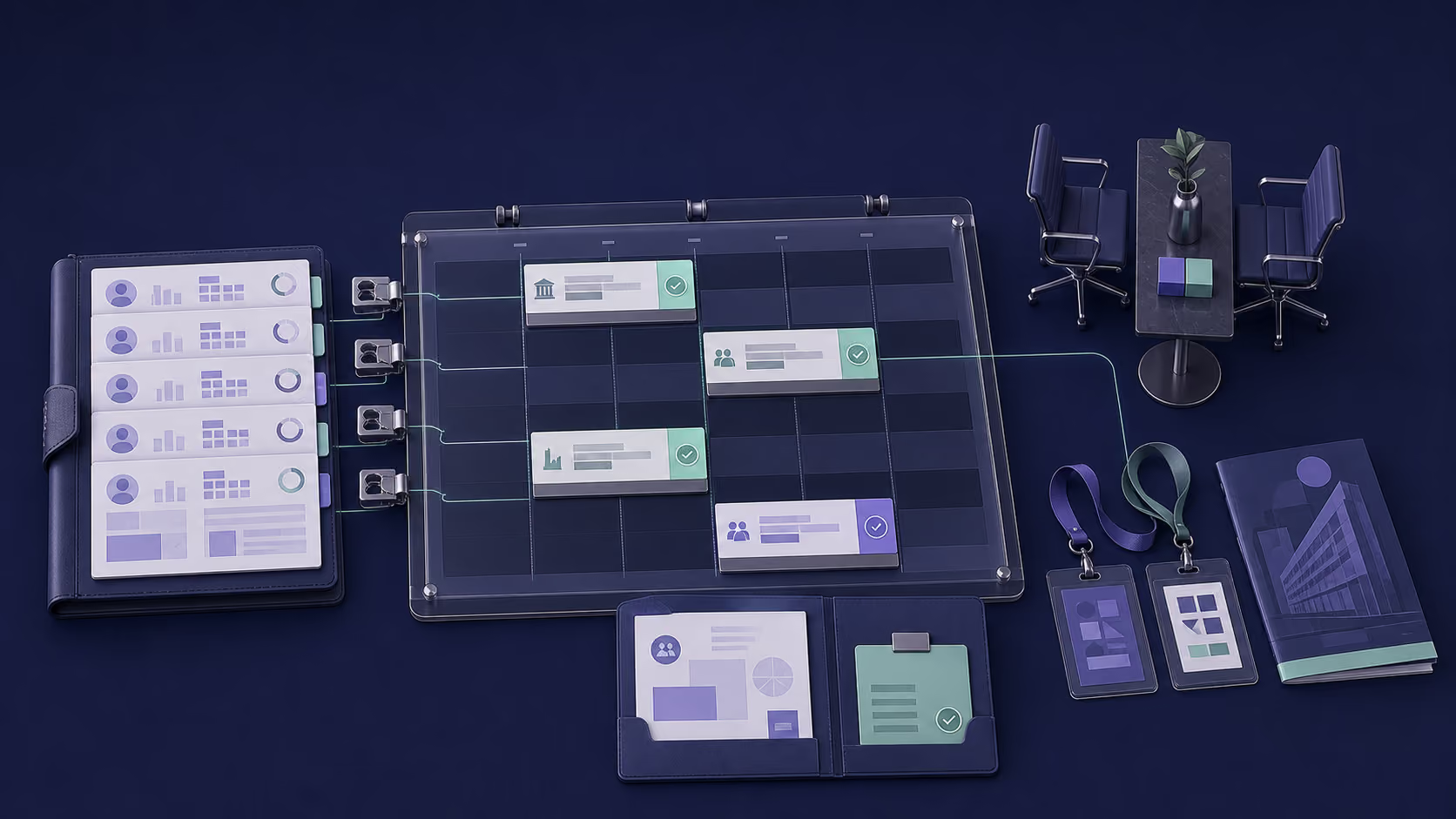
Images illustrate the workflow; they do not depict the company or its employees.
Why was event selection difficult for this team?
Research was scattered across tools and people. The team used search engines, AI research tools, and organizer outreach to discover events. It then mapped speakers and attendees against target accounts in spreadsheets to help decide which events to sponsor.
Contact sourcing happened separately. Researchers found details in other databases and handed them to teammates through spreadsheets. Post-event ROI reporting relied on a manually built dashboard. The problem was the effort required to connect those stages while preserving what the data actually meant.
Its target roles included CIOs, CTOs, and senior IT leaders at companies evaluating data center services. A busy technology conference could contain relevant buyers, suppliers, partners, competitors, and people with no purchasing responsibility. A large attendance figure did not resolve that distinction.
The financial decision should use the team's actual event costs. For an illustrative example only, a $20,000 program divided by 10 qualified meetings held costs $2,000 per meeting. The same cost divided by five costs $4,000. Those are invented planning inputs, not results from this case or a forecast of what any platform will deliver.
The example explains why qualification matters before sponsorship. It does not justify assuming that every relevant name will become a meeting. An event decision needs both account evidence and a realistic plan for reaching people.
How should data center marketers compare events?
Start with the accounts sales wants to reach. Instead of ranking events solely by reputation or headline attendance, compare the presence of companies relevant to the provider's commercial priorities.
The recorded workflow already included mapping event people to target accounts. In the demo, the team also explored reverse exhibitor search: starting from a company to investigate the events connected to it. This supports event discovery; it does not prove that a named executive will attend every event associated with the company.
For a repeatable evaluation, define the target-account set before comparing shows. Otherwise, one event may look attractive because it contains many familiar logos while another is judged against a much narrower standard.
Use a simple comparison with explicit evidence gaps. The table below is a recommended working structure, not a scorecard completed by the source company:
An event with fewer target accounts may still deserve attention if the access is more relevant and the team can act on it. Conversely, a famous event with many contacts can be a poor fit if the seller cannot explain why those accounts need the service.
Pro Tip: Include an “unknown” column in the event comparison. It makes the next research action visible instead of rewarding the event with the most optimistic assumptions.

What does an attendee record actually prove?
Prediction, registration, and attendance are different states. This distinction became a central issue during the evaluation. The prospect questioned an unexpectedly large group of people associated with one company in an exhibitor-related list.
The demonstration clarified that those records were predictive rather than confirmed registrations. Historical participation and social signals could help prioritize research, but the list should not be treated as a roster of people certain to appear onsite.
The conversation also distinguished registration from attendance. Someone may register and never arrive. A recently registered person may not yet appear in a dataset. Those limitations matter when sales writes an invitation or marketing estimates the reachable audience.
Our recommendation is to preserve the evidence state on every record. Use current official event information where available, inspect the supporting signal, and confirm plans with the person when appropriate. Keep an unknown state rather than silently promoting a prediction to confirmation.
The prospect also requested clearer speaker identification. That request is useful evidence of what the team needed; it is not evidence that a speaker filter was already delivered. Keep feature requests and live capabilities separate when evaluating a workflow.
Pro Tip: Review unusually large account clusters before export. Ask what produced the group, whether records repeat, and which evidence applies to each person.

How do you select IT decision-makers without losing account fit?
Filter roles inside relevant accounts, not in isolation. The team's stated audience included senior IT leaders, but the company still needed to be relevant to data center services. A senior title does not establish an infrastructure project or purchasing authority.
The demonstration included narrowing profiles by job title and selecting a subset for outreach. It also showed recent professional activity as a clue for choosing an outreach channel. Such activity can help research a person; it is not proof that they are evaluating a supplier.
A useful account note distinguishes the commercial hypothesis from the evidence. For example, the team might want to learn whether an account has a relevant infrastructure requirement, who owns the evaluation, and whether an event conversation would help. Those are discovery questions, not facts inferred from an attendee record.
Don't let contact availability determine the whole campaign. A readily available address for the wrong role may be less useful than a relevant account that requires another research step. Decide what makes a contact worth approaching before counting it as a qualified target.
How do you hand the shortlist to sales?
Transfer context with the contact. The original process involved spreadsheets passed between researchers and teammates. A better handoff needs to preserve the reason for selection and the limits of the evidence, regardless of which tool carries the file.
We recommend including account name, relevant role, event connection, evidence state, last review date, owner, and next action. The owner should be able to distinguish a researched prospect from someone who has agreed to a meeting without repeating the entire investigation.
The team raised an integration requirement during the evaluation. An estimate discussed in a sales conversation is not a completed integration. Before relying on a connection between systems, test the necessary fields, duplicate handling, and ownership transfer with a small sample.
For outreach, the demonstrated workflow included message generation for selected prospects. The seller still needs to check the underlying context and choose an appropriate next step. Avoid opening with “see you there” when the only evidence is a prediction.
Pro Tip: Have a salesperson review a sample handoff before broad export. If they cannot explain why an account was selected, add the missing context before increasing volume.

What would a useful pilot prove?
A pilot should test data trust and workflow fit. The source record ends with further team review and follow-up discussions, not a verified rollout. That makes a small, inspectable pilot the appropriate next step for a similar provider.
Select one event and a defined account set. Check a sample against information your team already knows, inspect questionable matches, and document which gaps remain. A familiar speaker appearing in a result can be a useful spot check, but it is not an accuracy study of the entire dataset.
Then test the full sequence: event comparison, account selection, role review, handoff, outreach, and response recording. Track research effort as well as counts. A workflow that finds more records but loses ownership at handoff has not solved the operating problem.
For commercial measurement, separate meetings proposed, meetings accepted, meetings held, sales-accepted opportunities, and won business. Keep sponsorship and delivery costs visible. Pipeline value is not realized revenue, and a successful meeting does not by itself establish ROI.
The first evaluation question is modest: can the team make a more defensible event decision and hand sales a useful, evidence-labelled shortlist? Longer-term results must be measured after the work occurs.
Choose one event with a clear account-level reason
This case highlights a common challenge for data center service providers: event research, contact sourcing, and reporting can all exist without forming a reliable decision process. The missing connection is often the evidence behind each account and person.
Start with target-account fit, preserve the difference between prediction and confirmation, and test the handoff with the people who will act on it. Lensmor can support the event research and contact-discovery stages; the provider still needs to validate commercial relevance and measure its own outcomes.
Start Free Trial — Start using Lensmor's event intelligence platform today. Predict attendee lists, discover relevant events, and enrich contact data for your next trade show.